
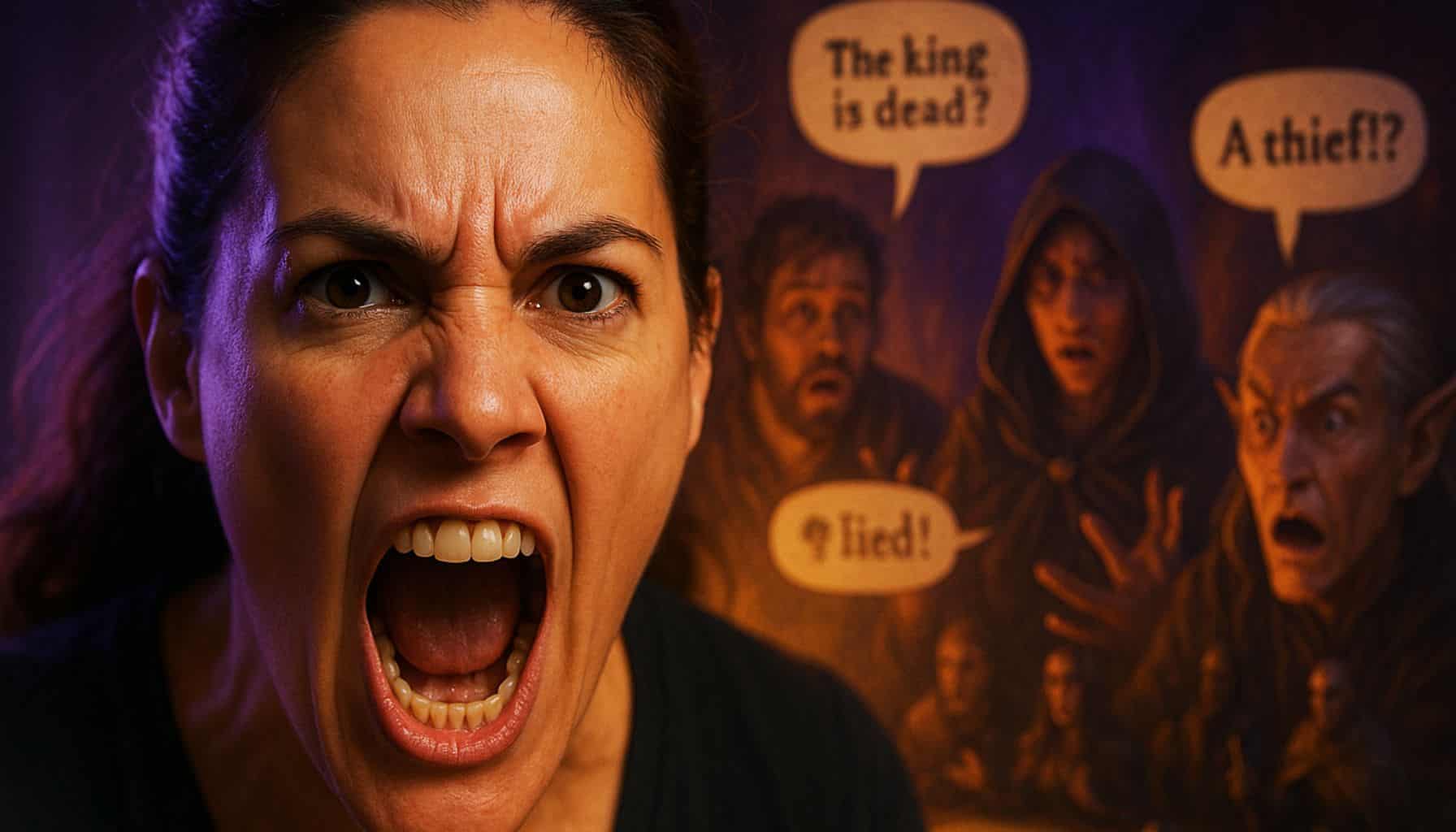
Great roleplay isn’t about funny voices, theatrical accents, or being a trained actor; it is about the precise control of emotion, pacing, and player psychology. While many Game Masters spend years practicing their Dwarven accents or writing encyclopedias of lore, expert DM advice suggests that true immersion comes from understanding the social dynamics at the table. Veteran DM tips often focus less on the performance of the individual and more on the atmosphere of the room, ensuring that every player feels the weight of the narrative. This article moves beyond the basics of “acting” to explore the psychological frameworks that allow advanced roleplay techniques to flourish.
We are writing this for experienced GMs who have already mastered the fundamentals and are looking to reach a level of roleplaying mastery that feels seamless and effortless. Most of the techniques discussed here are rarely written down because veteran DMs tend to internalize them over decades of play, often executing them subconsciously. These are secret DM tricks that operate in the background, influencing how players feel and react without them ever realizing the DM is pulling strings. The goal is to provide DM roleplay strategies that deepen agency and emotional impact without ever railroading the story or hogging the spotlight.
These methods are subtle, table-facing techniques designed to create immersive RPG storytelling by manipulating the flow of information and emotion. Instead of focusing on how to “perform” a character, we will look at how to frame the reality in which that character exists. By using advanced GM techniques, you can create moments that players will remember for years, not because you did a funny voice, but because the moment felt terrifyingly real. Let’s explore the toolkit that separates the hobbyist from the master storyteller.
- What Separates “Good Roleplay” from Veteran-Level Roleplay
- Emotional Anchoring: The Veteran Shortcut to Deep NPCs
- Fractal Character Design for Improvised Roleplay
- Social Conflict Micro-Scenes (How Veterans Pace Drama)
- Dynamic NPC Stances (Stop Playing NPCs as Static)
- Scene Framing with Thematic Reversals
- Unreliable NPC Narrators as a Roleplay Engine
- Player Emotional Priming (The Hidden Setup Move)
- Backstage NPC Interludes (The World Breathes Without the Party)
- Power-Sharing Roleplay Scenes
- Meta-Emotive Session Zero (Where Veterans Secretly Win)
- Common Mistakes DMs Make When Trying Advanced Roleplay
- The Invisible RPG Table: Silence, Space, and Sensory Stacking
- Final Thoughts: Veteran Roleplay Is About Control, Not Performance
What Separates “Good Roleplay” from Veteran-Level Roleplay
There is a significant gap between competent tabletop RPG roleplaying and the kind of transformative experience provided by a veteran GM. Good roleplay usually involves a DM who stays in character, reacts logically to player inputs, and provides distinct mannerisms for NPCs. However, veteran-level roleplay is characterized by invisible guidance; the DM intervenes less frequently but with much higher precision, shaping the scene through pressure and release rather than constant narration. Advanced roleplay techniques allow the DM to step back and let the silence or the tension do the heavy lifting, trusting the players to fill the void with their own emotional reactions.
Veterans understand that immersive RPG storytelling is not about how much content you output, but how much engagement you extract from the players. A novice DM might describe a horror scene by listing every gory detail, whereas a veteran DM knows that describing a single, out-of-place sound can be far more terrifying. This relies on veteran DM tips that prioritize player imagination over DM description, using ambiguity as a weapon to heighten engagement. By using advanced GM techniques, the veteran shifts the cognitive load onto the players, making them active participants in the mood rather than passive consumers of a performance.
Expert DMs also understand how to manage the energy of the table, using narrative pacing in TTRPGs to control the adrenaline of the session. They know when to break character to clarify stakes and when to stay deep in the weeds of in-character immersion to push a dramatic beat. This level of DM roleplay strategies involves reading the room—noticing when players are leaning in and when they are checking their phones—and adjusting the intensity of the roleplay instantly. It is a form of social engineering where the game mechanics and the narrative performance merge seamlessly.
Try my AI Tabletop RPG generators...and an extensive library of content!
Ultimately, the difference lies in intent: good roleplay aims to entertain, while veteran roleplay aims to implicate. Advanced roleplay techniques ensure that the players feel the consequences of their actions emotionally, not just mechanically on their character sheets. When you master these secret DM tricks, you stop playing NPCs as quest givers and start playing them as people who complicate the players’ lives in beautiful, tragic ways.
Why Most Roleplay Advice Plateaus Early
Common advice like “stay in character,” “do voices,” or “write detailed backstories” often stops working once you reach a certain level of experience. These tips are excellent for beginners, but they yield diminishing returns because they focus on surface-level aesthetics rather than the structural integrity of the scene. Voice acting for DMs is a fun tool, but it is not a substitute for emotional depth; a silly voice can actually undermine a serious moment if the underlying psychology of the scene is weak. Players can experience fatigue if the DM is constantly “performing” at 110% intensity, leading to a session that feels more like a one-person show than a collaborative game.
Advanced roleplay techniques acknowledge that roleplay is about control, not just output, and that doing “less” is often more effective. Expert DM advice warns against the burnout that comes from trying to act out every single shopkeeper with a unique accent and backstory. Instead, high-level TTRPG narrative techniques focus on efficiency—delivering the maximum emotional payload with the fewest words possible. Mastery involves knowing which scenes deserve high-effort immersion and which can be narrated in the third person to preserve pacing.
The best roleplay is often invisible; players walk away thinking they created the drama, unaware that the DM set the stage perfectly for it to happen. When you rely solely on performance tricks, you draw attention to yourself as the actor. When you use advanced GM techniques, you draw attention to the story and the conflicts between characters.
⚔️ Fantasy RPG Random Tables Books
Make life as a Gamemaster easier…
If you play Dungeons & Dragons, Pathfinder, or other fantasy RPGs, this
RPG random tables series
is packed with encounters, NPCs, treasure, and more. Available in eBook or print—either way, you’ll have a wealth of adventure ideas at your fingertips.







Emotional Anchoring: The Veteran Shortcut to Deep NPCs
One of the most powerful advanced roleplay techniques is “Emotional Anchoring,” which allows DMs to run complex characters without memorizing pages of notes. Instead of defining an NPC by a funny accent or a physical quirk, veteran DM tips suggest anchoring the character to a single, dominant emotional state. This anchor acts as a lens through which all the NPC’s dialogue and decisions are filtered, providing immediate consistency and depth. Whether you are running emotionally deep NPCs for a one-shot or a multi-year campaign, this technique ensures they feel real because their reactions stem from a coherent internal feeling.
When building NPC motivations, a veteran DM selects an anchor—such as “resentment” or “guarded optimism”—and lets that feeling dictate the scene. This is far more effective than trying to remember complex lore or specific phrasing because emotions are easier for the human brain to recall and embody. If you know an NPC is anchored in “fear of discovery,” you instantly know how they react to a bribe, a threat, or a compliment without needing to check a notebook. This creates immersive RPG storytelling because the NPC feels psychologically consistent, even if the players catch them off guard.
Emotional anchors also solve the problem of “same-face syndrome” where all NPCs start to sound like the DM. By forcing yourself to embody a specific emotion, your tone, cadence, and word choice naturally shift without you needing to force a “voice.” This is how veteran DMs create immersive roleplay without being trained actors; they simply channel a specific feeling and let the dialogue flow from there.
How Emotional Anchors Replace NPC Notes
A single emotional anchor governs reactions, dialogue choices, and decision-making during improvisation much faster than scanning a stat block. If the party insults a King anchored in “Insecurity,” he might lash out; if he is anchored in “Boredom,” he might laugh it off. This allows for improvisational roleplay tips that feel grounded in character reality.
- Regret: Speaks slowly, hesitates to make eye contact, sighs often, offers advice to prevent others from making their mistakes.
- Quiet Pride: Stands tall, refuses help unless necessary, speaks concisely, takes offense at interruptions but remains polite.
- Bitterness: Uses sarcasm, assumes the worst interpretation of player words, dwells on past slights, begrudgingly helps.
- Yearning: Distracted, asks questions about the outside world, romanticizes danger, easily persuaded by promises of change.
- Paranoia: Speaks in whispers, constantly checks exits, answers questions with questions, demands proof of loyalty.
- Moral Exhaustion: Slumped posture, speaks bluntly without sugar-coating, prioritizes efficiency over politeness, unfazed by threats.
- Performative Confidence: Loud, interrupts others, brags to cover silence, panics when challenged directly.
- Suppressed Grief: Stiff upper lip, changes the subject when things get personal, focuses intensely on the task at hand.
- Professional Detachment: Uses jargon, ignores emotional pleas, focuses on contracts and rules, treats violence as data.
- Desperate Optimism: Smiles too much, ignores red flags, agrees quickly to plans, terrified of silence.
- Cold Calculation: Pauses before answering, assesses value constantly, shows no empathy, transactional language.
- Smug Superiority: Condescending tone, explains simple concepts, amused by player ignorance, helps only to show off.
Players will rarely remember the specific color of an NPC’s tunic, but they will vividly remember how an NPC made them feel. By using emotional anchors, you ensure that every interaction leaves a lingering impression that drives the story forward.

Fractal Character Design for Improvised Roleplay
Improvisational roleplay tips often fail because they rely on random generation, which creates disjointed characters. Fractal character design is a veteran DM tip that uses the “Three Truths” model—Belief, Flaw, and Secret—to generate infinite behavioral nuance. This is one of the advanced GM techniques for character development that allows a DM to spin up a fully realized NPC in seconds. These three elements interact with each other to create complex, contradictory behaviors that mimic real human psychology.
The “Belief” drives their long-term goals, the “Flaw” dictates how they fail or cause conflict, and the “Secret” creates tension and subtext in every conversation. This triad scales perfectly; you can use it for a shopkeeper (low stakes) or a BBEG (high stakes) with equal effectiveness. It provides a framework for how to improvise complex NPCs as a DM without needing a pre-written script. Because the three truths often conflict, the NPC naturally generates drama just by existing.
Building Infinite NPC Behavior from Three Truths
These truths scale into dialogue, decisions, and conflict without prep because they provide a logic engine for the character. When players interact with the NPC, the DM simply cross-references the current situation with the NPC’s truths to determine the output.
| Belief | Flaw | Secret | Emergent Behavior |
|---|---|---|---|
| “Order is the only safety.” | Cowardice. | Working for the thieves’ guild. | Enforces petty rules strictly but folds immediately when threatened; sweats when asked about crime. |
| “Love conquers all.” | Naivety. | Murdered a rival suitor. | Gives terrible romantic advice; deeply denial-ridden; becomes terrifyingly defensive if the murder is investigated. |
| “Knowledge is power.” | Arrogance. | Can’t actually read magic. | Hoards books they can’t use; belittles wizards; desperate to hire the party to decipher a scroll without admitting why. |
| “Everyone has a price.” | Greed. | Is deeply in debt to a devil. | Tries to buy the players’ loyalty; counts coin constantly; takes reckless risks for high payouts. |
| “The gods are just.” | Wrath. | Lost their faith years ago. | Preaches loudly to convince themselves; punishes “sinners” brutally; refuses to use divine magic unless forced. |
| “Family comes first.” | Xenophobia. | Their child is a changeling. | Hostile to outsiders; fiercely protective of home; secretly visits the woods at night to bargain with fey. |
By using this fractal method, you prioritize narrative depth over lore volume. Speed is essential in tabletop RPG roleplaying, and this tool allows you to deliver complex performances instantly.

Social Conflict Micro-Scenes (How Veterans Pace Drama)
A major issue in narrative pacing in TTRPGs is the tendency for social encounters to become one long, meandering conversation. Veteran DMs utilize DM roleplay strategies to break these encounters into “micro-scenes” or dramatic beats, similar to how a movie director cuts a scene. Instead of a twenty-minute block of talking, the interaction is sliced into entrances, reveals, deflections, and power shifts. This technique manages the emotional beats in RPGs, ensuring that the tension rises and falls in a structured way.
By framing social combat as a series of micro-scenes, you maintain focus and prevent the players from talking in circles. Each beat should have a clear purpose: to gain information, to intimidate, to charm, or to deceive. When the objective of the beat is met or failed, the veteran DM shifts the scene immediately. This is how to create cinematic moments in TTRPGs—by cutting the fluff and zooming in on the conflict. It creates a rhythm that keeps players engaged and on the edge of their seats.
⚔️ Fantasy RPG Random Tables Books
Make life as a Gamemaster easier…
If you play Dungeons & Dragons, Pathfinder, or other fantasy RPGs, this
RPG random tables series
is packed with encounters, NPCs, treasure, and more. Available in eBook or print—either way, you’ll have a wealth of adventure ideas at your fingertips.
Turning One Conversation into Multiple Story Beats
Using micro-scenes transforms a flat discussion into a dynamic struggle for control. The DM identifies the shift in the conversation and marks it with a distinct change in the NPC’s tone or body language.
- The Accusation: The NPC drops a piece of evidence, demanding an explanation.
- The Denial: The NPC refuses to acknowledge reality, forcing players to escalate.
- The Concession: The NPC admits a minor fault to hide a major one (a “limited hangout”).
- The Threat: The NPC drops the mask and leverages power against the party.
- The Charm Pivot: The NPC realizes hostility isn’t working and suddenly becomes friendly/seductive.
- The Revelation: A third party enters or a secret is exposed, changing the context entirely.
- The Interruption: An external event (explosion, message) forces a pause in the tension.
- The Moral Reframing: The NPC justifies their evil acts as necessary good, challenging the players’ ethics.
- The Ultimatum: A final offer is made with a ticking clock attached.
- The Dismissal: The NPC ends the scene unilaterally, forcing players to chase or accept.
Short scenes feel more intense because there is no room to breathe. By compressing the timeline, you amplify the drama.

Dynamic NPC Stances (Stop Playing NPCs as Static)
Many DMs make the mistake of playing NPCs as static video game quest givers who have a fixed opinion of the party. Immersive RPG storytelling requires “Dynamic NPC Stances,” a living system where the NPC’s attitude shifts in real-time based on the conversation. DM roleplay strategies should include a mental tracker of where the NPC stands: supportive, cautious, resistant, hostile, or opportunistic. This responsiveness rewards player agency in roleplay because the players can feel their words moving the needle.
If an NPC starts as “Hostile” but the Bard rolls a 25 Persuasion, a veteran DM doesn’t just give them the item; they shift the NPC to “Transactional.” The NPC still hates the party, but now sees a profit in helping them. This nuance is key to roleplaying conflict resolution. It stops social encounters from being binary (Success/Fail) and turns them into a spectrum of evolving relationships.
How NPC Stances Shift During a Scene
The stance changes based on tone, leverage, and player choices, making the social encounter feel like a tactical combat.
- Hostile → Transactional: Triggered by a bribe or a display of overwhelming force.
- Supportive → Wary: Triggered by the players revealing a dangerous secret or dark magic.
- Neutral → Opportunistic: Triggered by the players revealing they are wealthy or desperate.
- Resistant → Concessive: Triggered by blackmail or leveraging the NPC’s bond/flaw.
- Friendly → Betrayed: Triggered by a caught lie or an insult to an emotional anchor.
- Cautious → Inspired: Triggered by a heroic speech or appeal to ideals.
- Dismissive → Intimidated: Triggered by a display of lethal competence.
- Dependent → Resentful: Triggered by the players helping but condescending to the NPC.
NPCs should move emotionally, not just react mechanically. When the stance shifts, players know their roleplay has had a tangible impact on the world. This emotional dynamism allows the NPCs to feel like real, complex individuals navigating their own struggles and desires. For instance, if a player employs humor to charm a previously hostile NPC, the shift from animosity to cautious curiosity can be a powerful way to validate player agency.
It would not only create a richer narrative experience but also enhance the players’ investment in the story, reinforcing the idea that their actions meaningfully alter the trajectory of encounters. When players witness immediate emotional consequences borne from their dialogue and decisions, it deepens their connection to the narrative, elevating the roleplay from a mere exchange of words to a collaborative emotional journey. This fluidity in NPC behavior cultivates a vibrant, evolving world, where every interaction has the potential to resonate, leaving players eager to explore further.

Scene Framing with Thematic Reversals
Scene framing TTRPG is an art form. Veteran DMs consciously alternate the emotional tone between scenes to prevent fatigue, a technique known as “Thematic Reversal.” If the previous scene was a high-stakes, tragic death, the next scene should be a quiet moment of camaraderie or dark humor. This contrast acts as the engine of engagement, keeping the dramatic tension in RPGs fresh. If everything is always at level 10 intensity, nothing feels intense.
By managing the emotional beats in RPGs across a session, the DM orchestrates a symphony of feelings. This is one of the secret storytelling tools for tabletop GMs that mimics the pacing of great novels or films. You force the players to switch emotional gears, which keeps them mentally alert and emotionally vulnerable.
Emotional Rhythm Across a Session
Grief, relief, humor, and tension should cycle rather than stack. This ensures that when the big moments hit, they hit hard against a backdrop of varied emotions.
- Triumph → Consequence: A victory is immediately followed by the realization of the cost.
- Intimacy → Betrayal: A heartfelt conversation makes the subsequent knife in the back hurt more.
- Calm → Dread: A peaceful campfire scene is interrupted by a silent, ominous omen.
- Humor → Horror: A funny shopping trip stumbles into a gruesome crime scene.
- Chaos → Order: A frantic battle ends, leading to a stiff, formal trial or negotiation.
- Isolation → Crowds: Being lost in the wilderness transitions to the sensory overload of a city.
- Power → Helplessness: The players feel godlike, then face a force they cannot fight.
- Mystery → Revelation: Confusion builds until a sudden, clarifying truth drops.
- Noise → Silence: A loud argument cuts to absolute, terrifying quiet.
- Nostalgia → Decay: Visiting a beloved childhood home to find it ruined.
Pacing is emotional, not chronological. A five-minute scene can feel like an hour if the emotional weight is heavy enough. In veteran-level roleplay, the true essence of pacing lies in manipulating the players’ emotional experiences rather than adhering to a strict timeline. This means that a seemingly simple interaction can stretch into a profound moment of tension or catharsis if it resonates deeply with the characters and their motivations.
When the stakes are high, even brief exchanges can ripple through the narrative like a stone tossed into a still pond, creating waves of impact that linger long after the scene has ended. By focusing on emotional resonance rather than the clock, you foster an environment where players feel compelled to engage, reflecting on the significance of their choices and the consequences that arise from them. This approach transforms mundane moments into pivotal scenes, driving the narrative forward while ensuring that each emotional beat is fully realized and explored.
Try my AI Tabletop RPG generators...and an extensive library of content!

Unreliable NPC Narrators as a Roleplay Engine
Veterans love social intrigue encounters where nobody is telling the whole truth. Using unreliable narrators is a staple of expert-level TTRPG GMing. This doesn’t mean every NPC lies; it means they have bias, limited perspective, and self-interest. Roleplaying conflict resolution becomes a puzzle where the players must triangulate the truth by talking to multiple people. This adds layers of social intrigue encounters without requiring complex plots—the complexity comes from the conflicting worldviews.
Designing NPCs who are “wrong” in useful ways creates friction. An NPC might genuinely believe the local Duke is a vampire because of superstition, not malice. Playing this conviction straight makes the world feel messy and real. This is how to emotionally engage players in RPGs—by forcing them to use their own judgment rather than relying on the DM to spoon-feed them objective facts.
Designing NPCs Who Are Wrong in Useful Ways
Bias, self-interest, and incomplete knowledge drive these interactions.
- The Self-Justifier: Admits to the bad act but frames it as the only logical choice.
- The Ideologue: Interprets all events through a specific political or religious lens, ignoring contradictory facts.
- The Traumatized Witness: Remembers the event vividly, but their fear has distorted the details (e.g., the monster was “50 feet tall”).
- The Propagandist: Deliberately omits facts that make their faction look bad.
- The Guilt-Blind Ally: Refuses to see the villainy in their friend or leader.
- The Rumor-Monger: Mixes one truth with three exaggerations for attention.
- The Cynic: Assumes everyone has an ulterior motive, potentially poisoning the players against helpful NPCs.
- The Naive Optimist: Downplays dangers, leading the party into traps they didn’t expect.
- The Broken Record: Repeats a specific lie so often they now believe it is true.
Encouraging players to discover the truth through interaction and cross-referencing turns dialogue into gameplay, transforming conversations into collaborative investigations rather than mere exchanges of information. By prompting players to engage with multiple NPCs, ask pointed questions, and reflect on the varying perspectives presented, you create an intricate web of social intrigue that elevates the stakes of their interactions.
This method not only enriches roleplay but also empowers players to become active agents in unearthing hidden truths. A veteran DM can set the stage for this exploration by crafting NPCs with distinct biases and motivations, ensuring that the players must navigate conflicting narratives to piece together the real story. When dialogue becomes a puzzle to solve, players become more invested, not just in their characters, but in the world and its complexities, leading to a deeper and more satisfying gameplay experience.

Player Emotional Priming (The Hidden Setup Move)
Immersive roleplay tips for DMs often overlook the setup. “Player Emotional Priming” is the act of preparing the table’s mood before the big scene occurs. A veteran DM might use a callback to a dead NPC, a moment of levity, or purely sensory description to “soften” or “sharpen” the players. This is how to run a D&D 5e pirate campaign or a horror game effectively—by ensuring the players’ heads are in the right space before the dice roll.
Using silence is a massive part of this. A long pause before a villain speaks primes the players for fear. A lighthearted joke from an NPC primes the players for camaraderie. DM roleplay strategies involve manipulating the table talk and the meta-game atmosphere to serve the narrative.
Softening or Sharpening the Table Before Impact
Knowing when to comfort and when to terrify is essential.
- Backstory Callbacks: Mentioning a player’s lost sibling right before they face a similar choice.
- Humor Beats: Using a joke to lower defenses before a tragedy strikes.
- Private Asides: Whispering to one player to create paranoia in the others.
- Sensory Grounding: describing the smell or temperature vividly to pull players out of “mechanics mode.”
- Music Shifts: Changing the playlist volume or track 30 seconds before the event happens.
- Breaking the 4th Wall: Asking “Are you sure?” to prime for high stakes.
- Physical Props: Handing a player a physical note to create a tactile connection.
- Meta-Silence: Stopping all speech and staring until the players quiet down.
Always respect consent and emotional safety; priming is about immersion, not genuine psychological distress.

Backstage NPC Interludes (The World Breathes Without the Party)
Collaborative storytelling RPG styles benefit from showing the world moving off-screen. Backstage NPC interludes are short, cinematic descriptions of things happening elsewhere—villains plotting, allies celebrating, or kingdoms falling. This is a next-level tabletop storytelling technique that reinforces the idea of a living world. It solves the issue of solipsism where the world only seems to exist when the players are looking at it.
These interludes must be brief to avoid spotlight theft. They are flavor text, not gameplay. Advanced roleplay techniques use these to foreshadow threats or show the consequences of player actions without the players needing to be present to witness the fallout. This can be achieved through short vignettes that hint at larger plot developments—perhaps a merchant nervously discussing a sudden shortage of goods, or a street urchin overhearing hushed conversations about the party’s recent decisions.
By layering these interludes into the narrative, you keep the world feeling alive, rich with consequence and urgency, while subtly informing the players that their choices ripple through the fabric of the game world. This method also builds tension; players may become increasingly aware that their actions have ramifications beyond their immediate scope, generating a sense of anticipation for the impending challenges they will face. Encouraging them to piece together the narrative threads from these snippets deepens their investment in the unfolding story, allowing them to feel the weight of their decisions even when they are not at the center of the action.
Showing Consequences Without Spotlight Theft
Scale, brevity, and restraint are key.
- Rumors: “Across the sea, they say the King has fallen ill…”
- Letters: Reading a missive sent between two NPCs that the players intercept or find.
- Overheard Arguments: Describing a shouting match behind a closed door.
- Aftermath Descriptions: “While you sleep, the rain washes away the blood at the tavern…”
- Secondhand Reports: A messenger describing a battle the players missed.
- Dreams: Abstract visions of the villain’s progress.
- The Villain’s Perspective: A 30-second scene of the BBEG reacting to the party’s success.
- Historical Echoes: Flashbacks to events that happened in the location centuries ago.
Remember! Absence increases weight; knowing something is happening that they cannot stop adds tension to the current objective.
Power-Sharing Roleplay Scenes
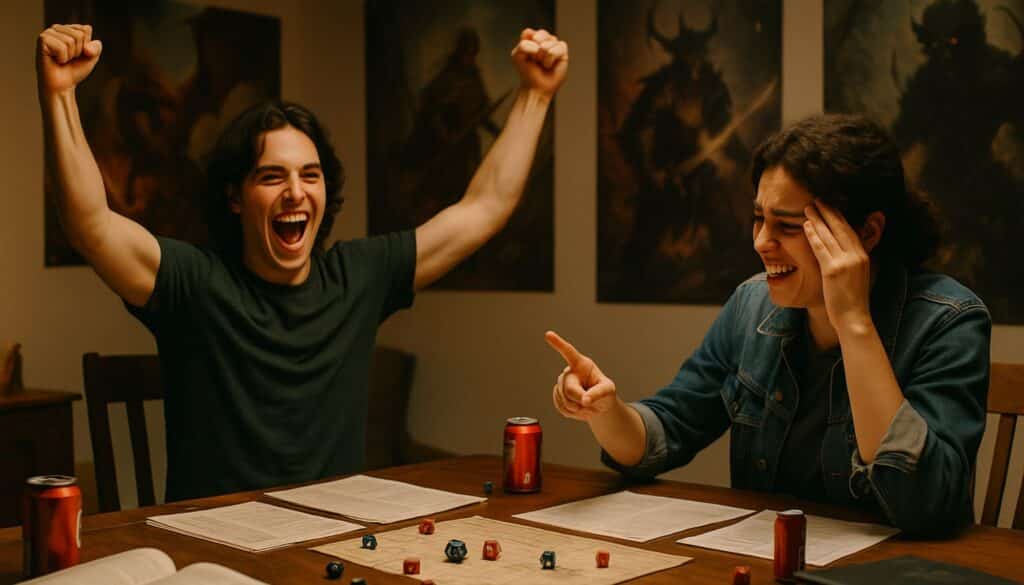
Sometimes, player agency in roleplay means giving the players the DM’s chair for a moment. Power-sharing is when the DM asks a player to describe an NPC reaction, a room, or a cultural custom. This is a collaborative storytelling RPG technique that creates massive buy-in. It signals that the DM trusts the players to co-author the world.
This must be done carefully to avoid breaking canon, but when it works, it is magic. Expert DM advice suggests using this for low-stakes flavor or personal backstory elements. It relieves the burden on the DM and makes the player feel like a true partner in the narrative.
Letting Players Co-Author Emotional Reality
Invite player narration safely with specific prompts.
- Crowd Reaction: “Bard, you rolled high. What does the crowd do to show they love you?”
- Family Response: “Cleric, when you tell your father the news, does he cry or get angry?”
- Rumor Spread: “Rogue, what is the wildest lie being told about you in the tavern?”
- Emotional Memory: “Fighter, this smell reminds you of your childhood. What is it?”
- Kill Cam: “How do you want to do this?” (The classic Mercer technique).
- Cultural Custom: “Druid, what is the traditional funeral rite for your people here?”
- The Rival’s Insult: “What is the one thing this guy could say that would truly hurt your feelings?”
Trust and boundaries are essential; if a player tries to narrate a game-breaking advantage, gently guide them back to the narrative flavor.
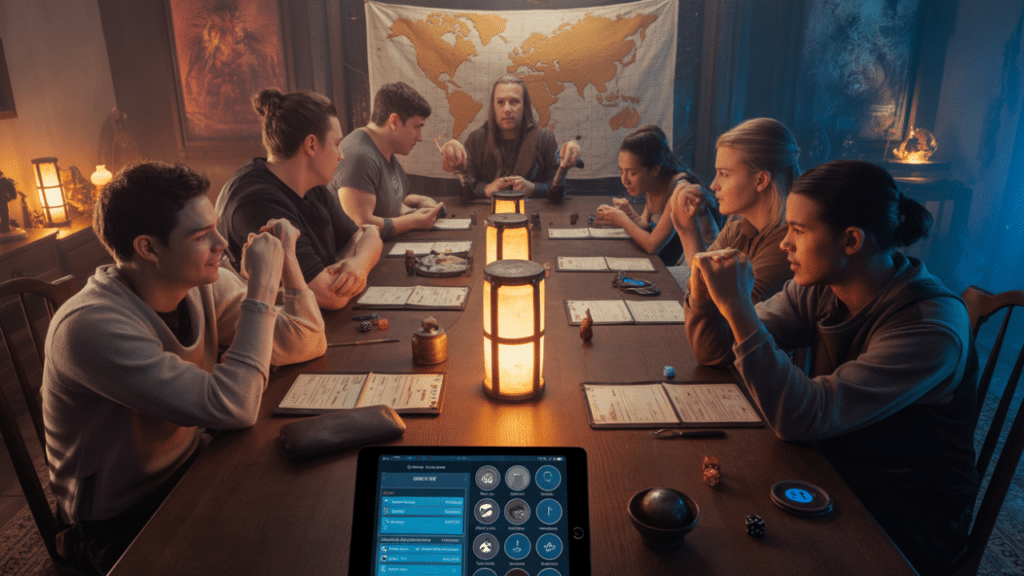
Meta-Emotive Session Zero (Where Veterans Secretly Win)
Session zero dynamics are often wasted on house rules and scheduling. Veteran DMs use this time for emotional alignment. They run character-driven campaigns by asking meta-emotive questions that define the tone. This is how veteran DMs create immersive roleplay before the game even starts. They ask about fears, narrative boundaries, and the specific kind of heroism the players want to enact.
By aligning on the emotional arc, the DM prevents future friction. Advanced roleplay techniques rely on everyone playing the same genre. You can’t run a grimdark political drama if the players think they are in a slapstick comedy.
⚔️ Fantasy RPG Random Tables Books
Make life as a Gamemaster easier…
If you play Dungeons & Dragons, Pathfinder, or other fantasy RPGs, this
RPG random tables series
is packed with encounters, NPCs, treasure, and more. Available in eBook or print—either way, you’ll have a wealth of adventure ideas at your fingertips.
Questions That Shape an Entire Campaign’s Roleplay
Focus on tone, themes, and emotional boundaries.
- “What is a fate worse than death for your character?”
- “How much intra-party conflict do we want? None, verbal only, or full betrayal?”
- “Are we playing heroes who change the world, or survivors trying to endure it?”
- “What is one NPC relationship you want to explore deeply?”
- “How does your character react to failure? Do they learn or double down?”
- “What tone do we want for romance? Fade-to-black or nonexistent?”
- “What are the ‘soft limits’ and ‘hard limits’ for horror themes?”
- “Do you want your backstory to be used as a weapon against you?”
- “How serious should the consequences of death be?”
- “What is the one emotional note you want to hit by the end of the campaign?”
The importance of emotional alignment during session zero extends beyond mere consent; it shapes the entire campaign experience, ensuring that all players understand and agree on the emotional tone and themes that will be explored. This proactive approach prevents the “Wait, I didn’t sign up for this” conversation six months later, which can arise if players feel misled about the game’s content or direction.
By discussing narrative boundaries and appropriate themes in advance, DMs can mitigate potential conflicts and set clear expectations. This shared understanding not only fosters a collaborative environment but also enhances the players’ sense of agency, allowing them to invest fully in a story that resonates with their desires and comfort levels. Ultimately, it lays a foundation of trust that empowers everyone at the table to dive deeper into character development and plot intricacies without fear of unexpected emotional dissonance.

Common Mistakes DMs Make When Trying Advanced Roleplay
When trying to implement advanced roleplay techniques, it is easy to go too far. The most common mistake is becoming overbearing. DM roleplay secrets 2025 aren’t about dominating the table; they are about facilitation. If the DM is the only one crying, shouting, or monologuing, something has gone wrong. Emotional exhaustion is real, and constantly high-stakes drama can be numbing.
Expert-level TTRPG GMing requires knowing when to stop. Spotlight imbalance occurs when the DM loves their NPC so much they forget the players are the protagonists. This can lead to lengthy monologues or intricate side plots that overshadow the main narrative, causing players to feel like mere spectators in their own story. To avoid this pitfall, a veteran DM must practice restraint, allowing moments for players to shine and take center stage.
When you prioritize player actions and decisions over NPC exposition, you create a dynamic environment where agency flourishes. Mastery lies in striking a balance; the moment you sense the spotlight shifting too heavily onto an NPC, pull back and redirect focus to the players. This isn’t about diminishing your characters’ presence; it’s about enhancing the players’ experience and ensuring that they feel like the true architects of the unfolding drama. Recognizing when to step back solidifies your role as a facilitator of stories rather than the sole narrator, transforming the session into a vibrant tapestry woven collaboratively by everyone at the table.
When “Advanced” Becomes Overbearing
Avoid these pitfalls to keep the game fun.
- Constant Intensity: Never letting the players relax or joke.
- Forced Emotion: Telling players “You feel sad now” instead of earning it.
- NPC Monologues: Villains talking for 10 minutes without interruption.
- Removing Player Control: Taking over a PC’s actions “for the story.”
- Over-Acting: Screaming or weeping at the table to the point of discomfort.
- Ignoring Dice: Fudging every roll to force a “narrative beat.”
- Spotlight Hogging: Spending more time on NPC-to-NPC conversations than PC interactions.
- Punishing Creativity: Shutting down player ideas because they ruin your “pre-planned scene.”
- Mystery Fatigue: Making every single NPC an unreliable narrator.
- Trauma Dumping: using the game to work through personal DM issues without consent.
Restraint is mastery. The best DMs know that the most powerful tool in the box is often listening. By intentionally holding back from interjecting their own narrative or emotional cues, DMs create a space for players to explore their characters and the unfolding story. This active listening allows DMs to pick up on player cues—subtle shifts in tone, body language, and engagement levels—that inform how to pivot the narrative or adjust the emotional temperature.
When DMs listen, they empower players to fill the silence with their own thoughts, fears, and ambitions, transforming the session into a collaborative tapestry of character-driven moments. This cultivation of player agency not only enriches the game but reinforces the notion that the story belongs to everyone at the table, not just the one controlling the narrative threads. By exercising restraint and truly hearing their players, DMs unlock deeper roleplay possibilities, fostering an environment rich with trust and creativity.

The Invisible RPG Table: Silence, Space, and Sensory Stacking
While we have discussed emotional frameworks and narrative structures, the most elusive advanced roleplay techniques are physical and sensory. Truly expert DM advice recognizes that the Dungeon Master is not just a storyteller, but a physical anchor in the room whose body language, volume, and use of silence dictate the energy of the entire group. Novice DMs worry about what they are saying; veteran DMs worry about how they are occupying space and how they are stimulating the players’ senses beyond simple sight and sound. This section covers the “invisible” mechanics—the manipulation of the physical environment and the sensory inputs that bypass the logical brain and hit the players directly in their emotional centers.
These secret DM tricks are often the difference between a session that feels like a game and one that feels like a lucid dream. By mastering your physical presence and the “texture” of your descriptions, you create a layer of immersive RPG storytelling that rules cannot replicate. This is about leveraging the biology of your players—their fight-or-flight responses, their mirror neurons, and their sensory associations—to create roleplaying realism in fantasy games. When you control the silence and the sensory input, you control the reality of the table.
Weaponizing Silence and The “Eight-Second Rule”
Most DMs are terrified of dead air, rushing to fill every pause with description or NPC chatter, but veterans know that silence is the loudest sound in the world. The “Eight-Second Rule” is a narrative pacing in TTRPGs technique where you deliberately hold silence for eight full seconds after a major revelation or a player’s question. This pressure cooker forces the players to sit with the weight of the moment, often causing them to reveal their character’s internal thoughts or anxieties just to break the tension. Dramatic tension in RPGs thrives in these gaps; it is in the silence that the players process fear, regret, or awe.
Silence also acts as a spotlight, signaling that what just happened is too important for immediate reaction. If a villain delivers a crushing line, do not describe the wind or the lighting—just stare at the player and wait. This forces in-character immersion because the player feels the social pressure to respond, not as a player waiting for a turn, but as a person being confronted. It is a dominance move in social encounters and a horror multiplier in dungeon crawls.
The DM’s Physicality as Terrain
Your body is the most immediate prop you have, and roleplaying mastery involves using it to change the “terrain” of the social encounter. Standing up abruptly during a tense negotiation signals a shift in power dynamics more effectively than any dialogue tag could. Leaning in close and lowering your voice forces the players to physically lean in as well, closing the circle and creating a sense of conspiracy or intimacy. Conversely, leaning back and crossing your arms signals detachment or arrogance, subtly telling the players that their words are not landing.
- The Tower: Standing up when a boss enters to physically look down on seated players.
- The Lean-In: Whispering key secrets to force physical proximity.
- The Closed Gate: Crossing arms and legs to signal an NPC’s mental block.
- The Open Hand: Exposing palms to subconsciously signal honesty or surrender.
- The Eye Contact Lock: Staring at one specific player to isolate them from the group support.
- The Nervous Tic: Tapping a pen or shaking a leg to transfer anxiety to the table.
- The Breath Check: Exhaling slowly and audibly to reset the room’s pacing.
- The Invasion: Walking around the table to stand behind a player (use with caution/consent).
Using your physical presence disrupts the “classroom” dynamic of a table and turns the room into a stage where safety is not guaranteed.
Synesthetic Description (The “Texture” of the World)
Amateur descriptions rely on visuals (“You see a green slime”), but immersive worldbuilding requires Synesthesia—crossing sensory wires to describe the “texture” of the scene. Veteran DM tips often involve describing sounds as having colors, or smells as having weight, because this forces the players’ brains to work harder to imagine the scene, locking in the memory. Instead of saying “The sewer smells bad,” say “The air tastes like copper and rotten onions, coating the back of your throat with a greasy film.” This triggers a visceral, physical reaction (disgust) that simple visual descriptors miss.
- Taste: “The magic in the air tastes like ozone and burnt sugar.”
- Touch (Distance): “The darkness feels heavy, pressing against your skin like wet wool.”
- Sound (Texture): “His voice is like grinding gravel under a boot.”
- Smell (Memory): “It smells like a nursing home—antiseptic masking decay.”
- Sight (Temperature): “The light is cold and sharp, hurting your eyes like a migraine.”
- Proprioception: “The hallway is so narrow you can feel your own heartbeat in your ears.”
- Vibration: ” The chanting isn’t just loud; it rattles your teeth in your skull.”
By targeting the “lower” senses like smell, taste, and touch, you bypass the players’ analytical tactical brains and speak directly to their primal instincts.
Leveraging “Bleed” and Table Meta-States
“Bleed” is the phenomenon where player emotions spill into the character and vice versa, and while it requires safety tools, expert-level TTRPG GMing involves leveraging existing table moods. If the players are exhausted after a long week of work, do not run a high-energy chase scene; instead, run a scene about their characters being exhausted, cold, and demoralized. Use the players’ actual physical state to fuel the roleplay, validating their real-world feelings through the narrative. Advanced GM techniques involve reading the “room tone” and pivoting the session to match it, rather than fighting against it.
If the table is paranoid and arguing in circles, introduce an NPC who is also paranoid and arguing, mirroring their energy to show them what they look like or to validate their fears. If they are giddy and making jokes, shift the tone to a surreal, manic encounter like a fey carnival. By aligning the fiction with the reality of the players’ mental states, you remove the friction of “getting into character” because the character is feeling exactly what the player is feeling. This is the ultimate secret storytelling tool for tabletop GMs: using the reality of the room as a material component for your spell.

Final Thoughts: Veteran Roleplay Is About Control, Not Performance
Mastering advanced roleplay techniques is a journey of shifting your focus from “performance” to “control.” It is about understanding the psychology of the table and using veteran DM tips to shape the environment in which the story unfolds. These DM roleplay strategies—from emotional anchoring to fractal design—are designed to give you leverage over the narrative without taking agency away from the players. They are tools of influence, not force.
Remember that immersive RPG storytelling is a shared hallucination. Your job is to maintain the integrity of that hallucination. By using secret DM tricks like dynamic stances and thematic reversals, you make the world feel responsive and alive. You don’t need to be a voice actor or a novelist; you just need to be an observant, empathetic facilitator who knows how to pace a scene.
Try my AI Tabletop RPG generators...and an extensive library of content!
Practice these techniques one at a time. Don’t try to implement all of them in your next session. Pick one, like Emotional Anchoring, and see how it changes your game. Over time, these advanced GM techniques will become second nature. The best roleplay moments will eventually feel inevitable—as if they had to happen that way—but you will know the truth. They happened because you, the veteran DM, quietly and invisibly shaped the space for them to exist. Mastery is when the players think they created the moment—because you let them.
