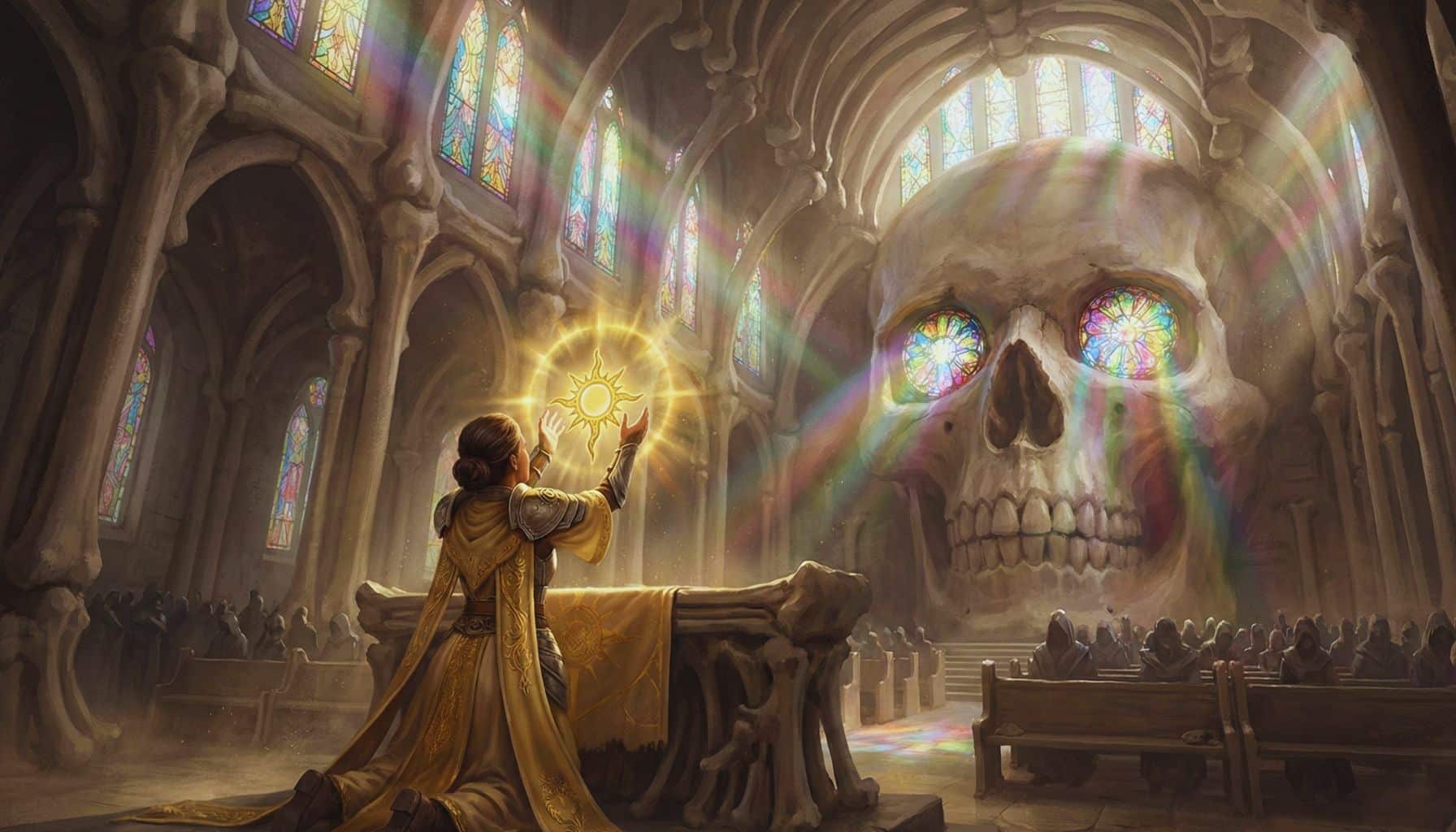
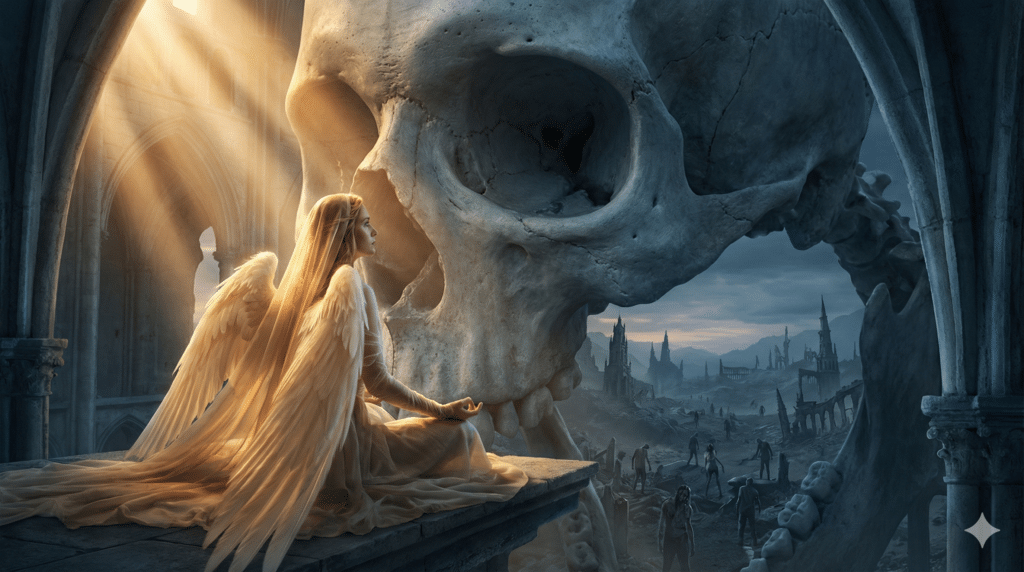
When you need a weird D&D location that instantly grabs player attention, few concepts hit harder than a cathedral built inside a colossal skeleton. This isn’t just a spooky set piece; it is a megastructure dungeon that promises ancient history, divine mystery, and visceral danger before the players even open the door. A giant skeleton cathedral D&D adventure hook works because it combines two potent symbols: the sanctity of a holy site and the terrifying scale of a dead titan. It immediately begs the question: Who killed this thing, and why did they decide to live inside it?
This guide is designed to help you build a D&D adventure hook location that feels like a real place with internal logic, playable architecture, and moral pressure—not just bone aesthetics. Whether you run this as a tight one-shot, a focused mini-dungeon, or a sprawling full arc location, the core appeal remains the same. You are exploring the boundary between the sacred and the profane. It is a holy place built inside something that, by all rights, should be an abomination.
To make this D&D cathedral dungeon memorable, we have to move beyond “it looks cool.” We need to establish a core design goal: every room must answer questions like: “why would people build this,” “what does it do mechanically,” and “what does it cost to use.” A cathedral inside a skeleton isn’t just a building; it is a purpose-built machine. It might be an amplifier for prayers, a prison for a dead god’s soul, or a massive lock keeping the skeleton from waking up.
This article provides concrete tools to make that happen. We will cover map logic that turns anatomy into level design, encounter frameworks that use light and acoustics, and factions that fight over the marrow. We will explore puzzles and traps themed around bones and saints, and we will build a boss fight that uses the cathedral itself as a weapon.
By the end, you will have a complete toolkit for a skeletal cathedral setting that supports environmental storytelling and high-stakes gameplay. You will understand how to balance the awe of a forgotten god corpse with the creeping dread of divine corruption. This is about building a location that feels inevitable, where the history haunts the players and the architecture tries to eat them. Let’s design a cathedral that is equal parts miracle and monster.
- The Builder Question: Why a Cathedral Inside a Colossal Skeleton?
- Skeleton Identity as a Plot Engine
- Map Logic: Turn Ribcage, Spine, and Skull Into a Vertical Dungeon Layout
- Architecture You Can Play: Bone-Carved Design That Creates Encounters
- Sacred–Profane Contrast: Make the Holy Site Feel Dangerous
- History That Haunts: Environmental Storytelling Inside the Bones
- Factions That Belong Here: Conflict That Turns a Hook Into an Arc
- The Reliquary Game: Saints as Keys, Sins as Triggers
- The Marrow Catacombs: Living Architecture That Rearranges Itself
- Encounter Design: Light, Shadow, and Echo as Combat Mechanics
- Boss Ideas for a Cathedral Inside a Titan Skeleton
- Twists That Turn the Hook Into a Full Arc
- Adventure Hook Pack: Ways to Drop This Location Into Any Campaign
- One-Shot, Mini-Dungeon, or Full Arc: Scaling the Skeletal Cathedral Setting
- Ecologies of the Bone: Random Encounters by Zone
- Final Thoughts: Make the Cathedral a Machine With a Soul
The Builder Question: Why a Cathedral Inside a Colossal Skeleton?
The most important step in creating a cathedral built in a colossal skeleton is answering the world-logic requirement: “why here, not anywhere else?” If the answer is just “because it’s metal,” your players will treat it like a theme park. A great D&D worldbuilding location idea needs a functional reason for existing. The cathedral must be a purpose-built machine. Perhaps the bones amplify divine magic, allowing clerics to cast high-level rituals they couldn’t perform elsewhere. Maybe the skeleton is actually a prison, and the cathedral’s daily rites are the only thing keeping the Titan’s soul from regenerating.
Try my AI Tabletop RPG generators...and an extensive library of content!
This single decision determines the entire adventure hook, the tone (gothic horror vs dark fantasy vs cosmic horror), and the rules of the place. If it’s a prison, the walls are fortified inward, and the relics are locks. If it’s an amplifier, the architecture is open and acoustic, and the danger comes from magical overload. If it’s a treaty monument, the layout is diplomatic, and the conflict is political. This function gives the location weight and makes the absurdity of building inside a corpse feel necessary rather than random.
Choose the Cathedral’s True Function
The cathedral’s public story and its true function can be different, creating immediate mystery and political intrigue. The players might arrive thinking they are visiting a holy shrine, only to realize they are standing inside a failing engine.
| True Function | Public Belief | Clergy Claim | Mechanical Effect in Dungeon |
|---|---|---|---|
| Divine Battery | Shrine of Miracles | A gift from the Gods. | Healing spells are maxed; radiant damage explodes on crit. |
| Soul Prison | Tomb of the Martyr | The Saint guards us. | Teleportation fails; death saves are harder (soul trap). |
| Resurrection Engine | Temple of Eternal Life | Death is conquered here. | Dead bodies reanimate in 1d4 rounds unless burned. |
| Cosmic Anchor | The World’s Foundation | We hold the sky up. | Gravity is inconsistent; “Up” is variable. |
| Prophecy Amplifier | The Oracle’s Seat | The God speaks here. | Divination spells work instantly but cause madness. |
| Planar Seal | Gatewatch Keep | Demons fear this place. | Banishment spells are permanent; summons are hostile. |
| Necrotic Filter | The Purifying Spire | We cleanse the land. | Necrotic damage heals Undead; living take 1/turn. |
| Memory Archive | The Library of Bone | History is preserved. | Players see echoes of the past; high Insight checks. |
| Mutation Lab | The House of Healing | We cure all ills. | Short rests cause physical mutations (fins, eyes). |
| Titan Pacifier | The Lullaby Chant | We sing it to sleep. | Silence spells cause earthquakes (the Titan stirs). |
| Void Beacon | The Lighthouse | We guide lost souls. | Psychic damage vulnerability; nightmares prevent rest. |
| Treaty Monument | The Peace Hall | War ended here. | Violence triggers “Sanctuary” spells on everyone. |
Function is the fastest way to make the location feel inevitable rather than quirky. When the players realize the cathedral must be here for the world to work, they invest in saving—or destroying—it.

Skeleton Identity as a Plot Engine
The skeleton’s origin is the spine of the entire arc. Is it ancient titan remains, primordial leviathan bones, a forgotten god corpse, or an ancient dragon colossus? This identity determines the environmental rules. If it’s a leviathan, the dungeon should have oceanic pressure magic and salt-encrusted walls. If it’s a god, the area might be subject to divine law and prophecy bleed.
⚔️ Fantasy RPG Random Tables Books
Make life as a Gamemaster easier…
If you play Dungeons & Dragons, Pathfinder, or other fantasy RPGs, this
RPG random tables series
is packed with encounters, NPCs, treasure, and more. Available in eBook or print—either way, you’ll have a wealth of adventure ideas at your fingertips.




This identity provides the “corpse-laws” of the dungeon. These are residual effects that shape every encounter. A dragon skeleton might still radiate fear or elemental heat. A titan might generate seismic pulses that knock players prone on initiative count 20. This isn’t just lore; it’s the physics engine of your dungeon.
What Died Here and What Laws Still Apply
“Corpse-laws” are the lingering echoes of the being that died, enforcing rules on the living who intrude.
- Primordial Leviathan: Room floods periodically; gravity shifts like tides; salt damages metal gear.
- Sun God Corpse: No shadows exist here (stealth impossible); radiant damage is doubled; gold melts.
- Void Titan: Silence is heavy (sound travels 10ft); lights dim automatically; darkvision is halved.
- Storm Colossus: Static shocks when touching metal; wind tunnels in ribcage; lightning hazards.
- Earth Mother Avatar: Plants grow instantly from blood; stone shapes itself to paths; resting heals max HP.
- War God Remnant: Weapons cannot break; rage cannot end voluntarily; critical hits cause bleed.
- Trickster Spirit: Doors move when not looked at; maps rewrite themselves; illusions are tangible.
- Time Dragon: Initiative is rolled every round; aging effects on crits; “Haste” zones.
- Plague Behemoth: Air is toxic (Con saves); healing magic deals damage; vermin are intelligent.
- Judge Archon: Lies cause psychic damage; zones of truth are permanent; oaths bind mechanically.
- Star-Eater: Gravity pulls toward the “Heart”; cold damage is prevalent; radiant light attracts predators.
- Machine-God Hull: Walls are metal/bone hybrid; magic acts wild; constructs regenerate.
- Beast Lord: Animal Handling works on monstrosities; primal fear auras; pack tactics for everyone.
- Dreamer Giant: Sleeping is dangerous; thoughts manifest as enemies; psychic landscape.
“Who died here” is not lore—it’s the dungeon ruleset. It tells the players how to survive and what tools will work.

Map Logic: Turn Ribcage, Spine, and Skull Into a Vertical Dungeon Layout
The core spatial trick of a cathedral inside a skeleton is translating anatomy into architecture: the ribcage nave, spine stairway, skull sanctum, and marrow catacombs. This creates a vertical dungeon layout that emphasizes 3D play. The ribcage isn’t just a hallway; it’s a massive, open-air sanctuary with balconies, bridges, and drops. The spine is a spiral staircase or elevator shaft. The skull is the command center or high altar.
Navigational clarity is key in such weird anatomy. Use strong landmarks like the “Sternum Altar” or the “Pelvis Plaza” to help players orient themselves. Build shortcuts like marrow-chutes or tendon-lifts to connect distant areas.
Bone Cathedral Map: A Practical Floorplan Model
This model breaks the megastructure into manageable zones: 3 main “organs” (Ribs/Spine/Skull) plus 2 optional “systems” (Marrow/External).
| Zone Name | Physical Feature | Gameplay Role | Signature Hazard | Return Path Shortcut |
|---|---|---|---|---|
| Ribcage Nave | Massive curved bone pillars, open air. | Combat / Exploration | Falling (60ft drops); Flying enemies. | Sternum Lift: A basket winch to ground floor. |
| Spine Stairway | Spiral stairs inside vertebrae. | Traversal / Choke Point | Grinding Bone (Dex saves); tight squeezes. | Marrow Chute: Slide down inside the spinal cord. |
| Skull Sanctum | Eye-socket windows, brain-pan dome. | Puzzle / Social / Boss | Psychic Echoes; Gaze attacks. | Tear Ducts: Hidden ladders to outside face. |
| Pelvis Plaza | Wide, bowl-shaped courtyard. | Social Hub / Market | Crowds; Pickpockets; Faction brawls. | Femur Gate: Main entrance/exit. |
| Marrow Catacombs | Spongy, wet tunnels inside bone. | Stealth / Horror | Disease; Suffocation; Wall-merging undead. | Vein Tunnels: One-way valves to main halls. |
| Heart Chamber | Suspended cage of iron and bone. | Relic Vault / Trap | Heat/Pulse damage; Rhythm-based traps. | Aorta Bridge: Connects to Ribcage balcony. |
| Hand Chapels | Five distinct shrines (fingers). | Mini-Boss / Puzzle | Grip Traps (crushing); Dexterity challenges. | Carpal Tunnel: Maintenance hatch to wrist. |
| Jaw Gate | Massive teeth portcullis. | Defense / Siege Point | Crushing Teeth; Acid spittle moat. | Throat Passage: Sewer access. |
| Eye Balconies | Glassed-in lookout points. | Sniper Nest / Recon | Blinding Light; Gaze reflection. | Optic Nerve: Rope slide to Spine. |
| Lung Wings | Balloon-like canvas structures. | Verticality / Flight | Strong Winds; Toxic gas pockets. | Bronchial Tubes: Air ducts to Ribcage. |
| Shoulder Bastion | Fortified joint plates. | Faction HQ / Barracks | Military patrols; Heavy weapons. | Clavicle Walk: Narrow ledge to Spine top. |
| Foot Crypts | Buried deep in earth/foundation. | Dungeon / Prison | Earth tremors; Crushing weight. | Shin Elevator: Long cargo lift. |
| Tail Spire | Long, segmented rear tower. | Isolation / Wizard Tower | Balance checks; Lightning strikes. | Vertebrae Ladder: External rung climb. |
| Ossuary Yard | Exterior bone piles/graveyard. | Skirmish / Scavenging | Animated Bone Piles; Weather exposure. | Rib Gaps: Squeeze points into Nave. |
Good megastructure dungeons are navigable first and weird second. If players can draw a simple flowchart of “Ribs -> Spine -> Skull,” they will feel smart exploring it.

Architecture You Can Play: Bone-Carved Design That Creates Encounters
Bone-carved architecture should be mechanics, not just flavor text. Ribs act as buttresses and catwalks, providing high ground and cover. Vertebrae act as locked gates that require specific keys or actions to open. Tendon chandeliers create moving terrain for swinging or dropping on enemies. This approach to cathedral dungeon design ensures that the environment creates choices every round.
Light-and-shadow random encounters are natural here. The ribs cast long, cage-like shadows that shift with the sun (or moon), creating dynamic stealth zones. The porous nature of bone means sound travels in weird ways, allowing for acoustic puzzles and ambushes.
Ribcage Nave as a Combat and Exploration Engine
The ribcage isn’t a hallway; it’s a multi-level arena. Ribs become lanes, cover, choke points, and vertical routes.
- Organ Lofts: Platforms suspended from ribs, housing choir or archers.
- Broken Rib Bridges: Gaps that require jumps or magic to cross.
- Hanging Ossuaries: Cages of smaller bones that rattle (stealth alarm) or can be dropped.
- Spiral Tendon Ropes: Elastic ropes that allow rapid vertical ascent/descent.
- Collapsing Sternum Platform: A central stage that can drop into the abyss.
- Echo Balconies: Spots where whispers carry to the floor (intel gathering).
- Marrow Leaks: Slick spots of grease-like fluid (Dex saves).
- Calcified Curtains: Thin bone sheets that block sight but break easily.
- Shadow Cages: Areas of permanent magical darkness between ribs.
- Wind Flutes: Holes in bone that scream when wind blows (deafening/thunder damage).
- Hook Points: Natural spurs for grappling hooks or anchor points.
- Rib-Run: The curved top surface of a rib, requiring balance but offering superior angles.
If the ribcage doesn’t change how fights and stealth work, it’s wasted design.
Spine Stairway With Vertebrae Locks
The spine is a natural chokepoint. Turn it into a procedural gating system where each vertebra segment is sealed by a ritual key.
| Vertebra Lock Type | Required Input | What It Tests | Complication on Failure |
|---|---|---|---|
| The Penitent’s Gate | A confession of a true secret. | Honesty / Vulnerability | The secret is shouted by the walls. |
| The Blood Price | 1 Hit Die of damage (fresh blood). | Sacrifice / Grit | The lock drains 3 Hit Dice instead. |
| The Hymn Seal | Singing a specific holy verse perfectly. | Knowledge / Performance | Silence spell cast on the party. |
| The Weight of Sin | Carrying a heavy “Sin Stone” up. | Strength / Endurance | Exhaustion level gained. |
| The Blind Walk | Navigating the stairs blindfolded. | Trust / Perception | Staircase shifts; Dex save or fall. |
| The Memory Tithe | Giving up a specific memory (XP cost?). | Loss / Identity | Short-term madness (confusion). |
| The Golden Toll | Melting gold coins into a slot. | Wealth / Greed | The gold animates as a Molten Construct. |
| The Pacifist’s Ward | Sheathing all weapons for 1 hour. | Peace / Restraint | Weapons heat up (fire damage) if drawn. |
| The Mirror Test | Facing a doppelganger without fighting. | Self-Control / Insight | Doppelganger escapes into the dungeon. |
| The Bone Key | A specific bone from a saint/enemy. | Fetch Quest / Looting | The lock bites the hand (grappled). |
Vertebra locks create campaign pacing without arbitrary “needs key” doors. They force players to engage with the cathedral’s themes to progress.
Skull Sanctum as an Acoustic Puzzle Space
Acoustics become mechanics in the skull. The dome shape focuses sound, making it a place of power and danger.
- Silence Zones: Areas where no sound is possible (anti-caster).
- Resonance Plates: Floor tiles that hum; stepping on the wrong one triggers thunder damage.
- Harmonics: Singing a specific pitch reveals invisible doors or illusions.
- Echo Traps: Anything said loudly is repeated by the walls for 1 hour (ruins stealth).
- Whisper Corridors: You can hear conversations from distant rooms if you stand here.
- Scream Battery: Shouting charges a crystal that powers a door.
- Lie Detector: Lies cause the air to vibrate violently (damage).
- Command Voice: The boss’s voice originates from everywhere at once.
- Deafening Chimes: Massive bone chimes that stun players on failed Con saves.
- Sonar Navigation: The room is pitch black; players must make noise to “see” (blindsight).
Audio-based play makes the skull feel alien without extra mapping.

Sacred–Profane Contrast: Make the Holy Site Feel Dangerous
The emotional hook is the tension of a cursed holy site. It is a blasphemous shrine where sanctity protects and imprisons simultaneously. The holy wards and seals create double-edged choices: purification might banish a useful undead ally, or a holy weapon might burn the user. This divine corruption makes the players question if the “good guys” built this or if they are just squatters in a monster.
The desecration theme should be pervasive. Relics are fused into bone; prayers are carved into marrow. It creates a sense of wrongness that permeates even the safe zones.
Holy Wards That Protect and Trap
Wards are defense against undead infestation, but they also serve as containment for something divine or catastrophic.
| Ward Type | What It Blocks (Defense) | What It Also Traps (Containment) | Moral Tradeoff if Damaged |
|---|---|---|---|
| The Radiant Wall | Undead cannot pass. | The Titan’s soul cannot leave. | Undead invade, but the Titan wakes up. |
| The Silence Seal | Psychic screams are blocked. | Prayers cannot reach the Gods. | Gods hear you, but so do the Old Ones. |
| The Life Cage | Necrotic magic fails. | Healing magic cannot be cast. | You can heal, but the Lich regenerates. |
| The Truth Circle | Illusions are dispelled. | Everyone must speak truth (no secrets). | Secrets are safe, but illusions hide traps. |
| The Time Lock | Aging stops inside. | No new memories are formed (amnesia). | You remember, but you start aging rapidly. |
| The Gravity Ward | The structure stands upright. | Flight is impossible. | You can fly, but the cathedral collapses. |
| The Peace Field | No violence allowed. | No defense against intrusions. | You can fight, but the sanctuary is defiled. |
| The Blood Bond | Demons cannot enter. | Only those of “Lineage” can leave. | Demons enter, but you are free to go. |
| The Light Prism | Shadows are banished. | Invisibility is impossible. | Stealth works, but Shadow Demons spawn. |
“Holy = safe” is boring; “holy = complicated” is playable.
Miracles With Side Effects
Miracles should be costed boons. Divine corruption means that receiving a blessing leaves a mark.
- Bone Armor: +2 AC, but your skin hardens like bone (-2 Dex).
- Saint’s Sight: Truesight 60ft, but you are blinded by normal light.
- Marrow Strength: Advantage on Str checks, but you require 4x food.
- Holy Fire: Weapons deal radiant damage, but you take 1 radiant/turn in combat.
- Voice of the Choir: You can cast Command, but you can only speak in whispers.
- Titan’s Blood: Heal to full HP, but gain a level of Exhaustion later.
- Ghost Touch: Can hit incorporeal, but ghosts are drawn to you constantly.
- Purified Soul: Immune to fear, but cannot benefit from Bardic Inspiration.
- Living Relic: You are a holy symbol, but cultists now hunt you specifically.
- Echo Walker: Teleport 30ft, but leave a shadow-copy that fights you later.
- Sacred Tears: Can heal others with touch, but you cry blood (Con damage).
- Stone Heart: Immune to charm, but you have Disadvantage on Insight/Persuasion.
- Divine Knowledge: Learn a secret, but gain a permanent madness quirk.
- Martyr’s End: Auto-succeed a Death Save, but max HP is reduced by 10.
Scary miracles are the fastest way to make the cathedral unforgettable.
History That Haunts: Environmental Storytelling Inside the Bones
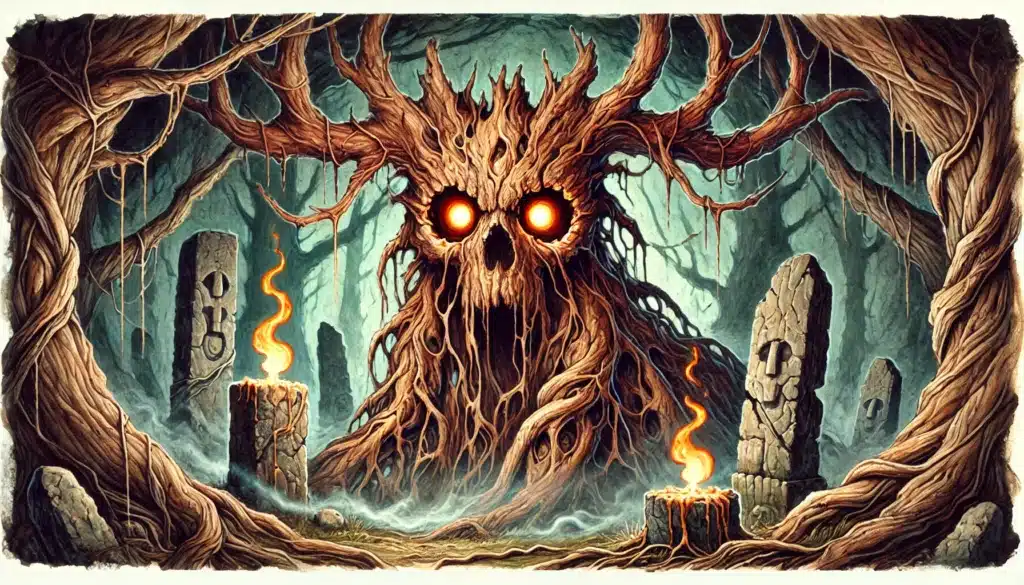
You can tell buried history through stratigraphy and layered construction. Older carvings sit beneath newer bone plating; ribs are patched with iron or stone; relics are bricked into the marrow. Environmental storytelling lets players “read time” by walking through it.
Trapped Souls as the Cathedral’s Choir
The choir consists of literal spirits: warning, lying, bargaining, begging release, or singing keys.
- The Warning Choir: Screams when enemies approach (free Alarm spell).
- The Liar Choir: Whispers false directions to lost travelers.
- The Bargaining Choir: Offers secrets in exchange for being released (requires breaking wards).
- The Key Choir: Sings a specific note needed to open a Vertebra Lock.
- The Mourning Choir: Weeps constantly, causing difficult terrain (tears/mud).
- The Vengeful Choir: Attacks anyone wearing the wrong holy symbol.
- The Silent Choir: Mouths open but no sound; creates a zone of Silence.
- The Mimic Choir: Repeats everything the players say, mocking them.
- The Forgotten Choir: Sings in a dead language (requires Tongues to decode clues).
- The Hiding Choir: Hushes the players when a Boss is near.
- The Battery Choir: Their souls power the lights; releasing them plunges the area into dark.
- The Judge Choir: Chants the players’ sins aloud during combat.
The choir delivers lore as atmosphere, not exposition.
Bone Stratigraphy: Layers of Construction as Clues
Different eras show up physically, and players can exploit them.
| Construction Layer | Visual Tells | What Secret It Hints At |
|---|---|---|
| The Primal Bone | Fossilized, gigantic, uncarved. | The Titan predates the Gods. |
| The Ancient Iron | Rusted bands, crude spikes, chains. | The Titan was bound/imprisoned first. |
| The First Temple | Simple stone altars, primitive runes. | The first worshippers were cultists, not saints. |
| The High Cathedral | Gothic arches, stained glass, gold. | The era of wealth and organized religion. |
| The Siege Scars | Burn marks, breached ribs, barricades. | The cathedral fell to war/invasion once. |
| The Necrotic Patch | Green-glowing mortar, bone grafts. | Necromancers tried to fix the decay. |
| The Modern Wood | Scaffolding, temporary bridges. | The current order is struggling to maintain it. |
| The Alien Growth | Crystal/Fungal protrusions. | Something else is infecting the skeleton. |
| The Secret Tunnels | Roughly hewn, hidden behind altars. | The clergy had secrets/escape routes. |
| The Final Seal | Fresh, glowing magical wards. | The danger is active right now. |
“Dungeon history” should be a solvable puzzle, not a speech.

Factions That Belong Here: Conflict That Turns a Hook Into an Arc
The cathedral becomes campaign-scale when cathedral factions collide. Conflict models like triangles, fault lines, and visible clocks keep the politics playable. Use specific factions like a cult in a cathedral, holy order secrets, or a necromancer cathedral group.
The Holy Order Split: Preservationists vs Purifiers
The central ideological conflict is often Containment vs. Cleansing.
- Preservationists: “The Titan is a vessel of God. We must keep it whole.”
- Slogan: “Bone is the Foundation.”
- Tactic: Magical wards, healing the bone, blocking access.
- Purifiers: “The Titan is a corpse and a sin. We must burn it to free the light.”
- Slogan: “Fire Cleanses All.”
- Tactic: Controlled burns, destroying relics, hunting undead.
This split forces meaningful choices without railroading.
The Bonewright Guild: Architect-Necromancers
Bonewrights are morally gray professionals who maintain living architecture and sell access.
| Bonewright Service | Price | Hidden Risk | Story Complication |
|---|---|---|---|
| Open a Sealed Door | A fresh corpse (intact). | They use it to make a new guardian. | The corpse was someone important. |
| Repair a Bridge | 500gp in gold dust. | The bridge is “alive” and hungry. | It might try to grab you later. |
| Guide to Sanctum | A magic item. | They lead you into a trap first. | They sell your location to rivals. |
| Heal a Bone Curse | A vial of your blood. | They have a blood-link to you now. | They can scry on you anytime. |
| Create a Skeleton Porter | A favor (kill a rival). | The porter spies on you. | The rival was actually a good guy. |
| Reinforce Armor | Bone fragments. | Armor is vulnerable to bludgeoning. | Looks like necromancy to Paladins. |
| Silence the Choir | A memory. | You forget why you came here. | The Choir screams louder later. |
| Identify Relic | First dibs on loot. | They lie about its value. | They steal it while you sleep. |
Practical leverage makes factions feel real.
Third Forces That Complicate Everything
A third party benefiting from the conflict prevents politics from stalling.
- Relic Brokers: Buy and sell stolen saints’ bones (neutral evil).
- The Spy Church: Agents from a rival god monitoring the Titan (lawful neutral).
- The Undead Court: Intelligent undead living in the marrow (lawful evil).
- The Inquisitors: External force coming to burn everyone (lawful stupid).
- The Scavengers: Kobolds/Goblins looting the outer ossuary (chaotic neutral).
- The Titan’s Immune System: Constructs/Oozes cleaning the “infection” (unaligned).
- The Scholar’s College: Archaeologists wanting to study, not worship (true neutral).
- The Pilgrim Wave: Masses of commoners clogging the halls (chaotic good).
- The Dream Cult: Warlocks trying to wake the Titan (chaotic evil).
- The Merchant Consortium: Selling supplies to all sides (neutral).
- The Monster Hunters: Here to kill the “Boss” monster (chaotic neutral).
- The Ghost-Talkers: Mediums trying to interview the Titan (neutral).
Triangles prevent politics from stalling.
The Reliquary Game: Saints as Keys, Sins as Triggers
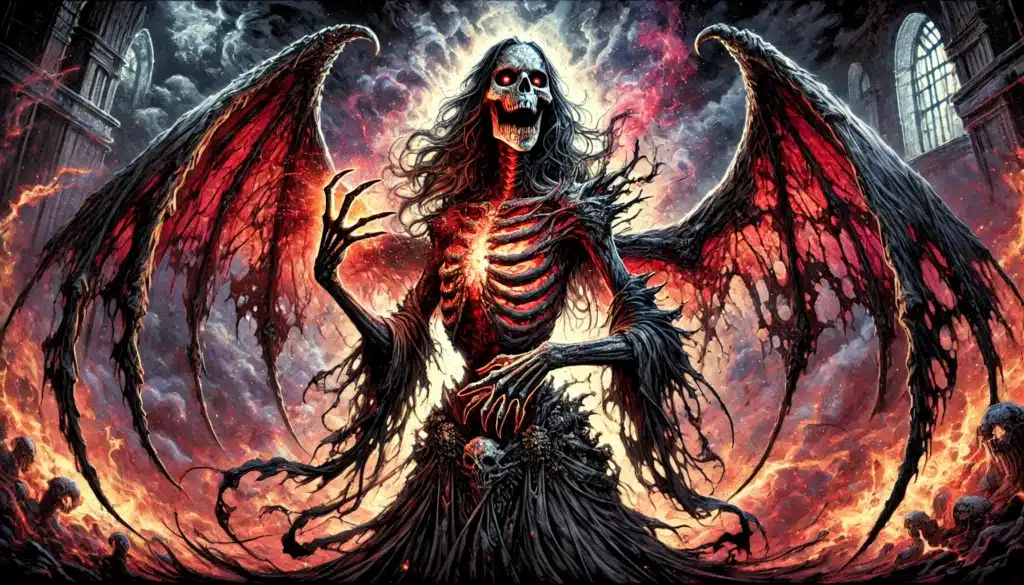
Reliquary logic is behavioral puzzle design. Doors respond to virtues, traps respond to sins, and relics demand oaths. The ossuary cathedral fantasy works best when roleplay is the puzzle input.
⚔️ Fantasy RPG Random Tables Books
Make life as a Gamemaster easier…
If you play Dungeons & Dragons, Pathfinder, or other fantasy RPGs, this
RPG random tables series
is packed with encounters, NPCs, treasure, and more. Available in eBook or print—either way, you’ll have a wealth of adventure ideas at your fingertips.
Virtue Doors and Sin Traps
Telegraph the moral rules fairly via iconography, choir hints, or historical evidence.
| Virtue / Sin | Door / Trap Behavior | Player-Facing Clue | Consequence |
|---|---|---|---|
| Humility / Pride | Door opens if you crawl. | Carving of a king on his knees. | Trap fires at head-height (standing). |
| Charity / Greed | Door opens if you leave gold. | Bowl worn smooth by coins. | Coins taken turn to heat/fire. |
| Silence / Noise | Bridge forms if silent. | Statues with fingers to lips. | Thunderwave knocks you off. |
| Courage / Fear | Ward drops if you walk fast. | “Only the bold pass.” | Slowing/Paralysis effect. |
| Sacrifice / Selfishness | Chest opens for blood. | Spiked handle on the lid. | Lid bites hand (damage/grapple). |
| Truth / Deceit | Barrier fades if you confess. | “Speak no lies here.” | Zone of Truth + Psychic damage. |
| Patience / Haste | Gate opens after 10 mins. | Hourglass symbol. | Door slams shut if rushed. |
| Faith / Doubt | Walk on invisible bridge. | “Trust the path unseen.” | Fall into pit. |
| Mercy / Wrath | Guardian steps aside if spared. | “Blood feeds the stone.” | Guardian enrages/heals. |
| Purity / Corruption | Water cleanses poison. | Font of clear water. | Water turns to acid if tainted. |
| Unity / Division | Door needs 2 people to open. | Two keyholes far apart. | Shock damage if one lets go. |
| Memory / Ignorance | Answer a riddle about lore. | Mural depicting the answer. | Symbol explodes (blindness). |
Fair telegraphing is what makes “holy puzzles” fun instead of gotchas.

The Marrow Catacombs: Living Architecture That Rearranges Itself
Organic topology keeps the dungeon fresh. Tunnels “heal,” routes close after rests, loud fights trigger bone growth, and new passages open like scar tissue. This living architecture emphasizes urgency and prevents trivial backtracking.
The Rearrangement Rule Set
A simple procedure to change the dungeon without heavy prep.
| Trigger | Dungeon Change | Player-Readable Sign |
|---|---|---|
| Short Rest (1 hr) | Small tunnels seal up. | “The walls look swollen here.” |
| Loud Combat (Thunder) | Bone spurs grow (difficult terrain). | “The ribs are vibrating.” |
| Ward Broken | A new path opens (Scar Tissue). | “A crack forms in the wall.” |
| Relic Taken | Doors lock (Immune Response). | “The gate slams shut.” |
| Fire Damage | Walls retreat (Fear response). | “The bone chars and shrinks.” |
| Necrotic Damage | Walls rot/crumble (Opening). | “The marrow turns black/liquid.” |
| Healing Magic | Walls grow/thicken (Blocking). | “Fresh bone knits together.” |
| Boss Death | Structural collapse (The Spine). | “Dust falls from the ceiling.” |
| Silence Spell | Doors open (Relaxation). | “The tension leaves the room.” |
| Blood Spilled | Floor becomes sticky (Adhesive). | “The stone is drinking the blood.” |
The cathedral should feel alive, not static.

Encounter Design: Light, Shadow, and Echo as Combat Mechanics
Encounter identity relies on visibility denial, verticality, acoustics, and sanctity as hazards. Light-and-shadow encounters and action economy pressure define the combat.
Exploration Encounters That Aren’t Just Fights
Non-combat scenes that still cost time, resources, and choices.
- Confession Toll Gates: Must confess a sin to pass.
- Choir Bargaining: Negotiating with spirits for directions.
- Marrow Collapse Rescue: An NPC is trapped in healing bone.
- Relic-Weight Curse: Carrying a relic slows movement.
- Silent Procession: Ghosts walk through; don’t touch them.
- The Bone-Smith: An undead crafting weapons; wants trade.
- The Vertigo Bridge: A narrow rib-walk; Con save or dizziness.
- The Shadow Play: Shadows enact a historical murder.
- The Echo Room: Players hear their own future plans whispered.
- The Living Door: A face in the door demands a joke/song.
- The Gravity Well: A zone where “down” changes briefly.
- The Holy Feast: A table of fresh food; is it a trap?
- The Draft: Strong wind threatens to blow out torches.
- The Prayer Circle: Cultists chanting; sneak or disrupt?
Exploration should alter the party’s options.
Combat Setpieces Built From Anatomy
Fights where the battlefield is the skeleton.
| Setpiece Name | Battlefield Gimmick | Enemy Style | Escalation Twist |
|---|---|---|---|
| The Rib-Run | Narrow curved bridges; 60ft drop. | Flying (Gargoyles/Harpies). | A rib breaks/collapses. |
| The Swinging Chandelier | Massive tendon-hung lights. | Swashbuckling Skeletons. | Fire burns the tendon rope. |
| The Spine Elevator | Fighting inside a moving vertical shaft. | Wall-crawling (Spiders/Ghouls). | Elevator speeds up/stops. |
| The Skull Echo | Thunder damage echoes x2. | Casters (Cultists/Banshees). | Silence spell triggers. |
| The Marrow Pit | Difficult terrain (sticky); acid pools. | Oozes/Slimes. | Pit fills with fluid. |
| The Heart Cage | Suspended iron cage; heat aura. | Fire Elementals/Azer. | Cage chain breaks (swinging). |
| The Hand Grip | Fingers close to crush (Dex saves). | Constructs (Bone Golems). | Fingers grapple players. |
| The Eye Socket | Blinding light beam sweeps room. | Shadows/Wraiths (hide in light). | Glass shatters (suction/wind). |
| The Lung Bellows | Strong wind gusts (push/pull). | Air Elementals/Kenku. | Toxic gas fills room. |
| The Jaw Crunch | Floor moves (chewing motion). | Devourers/Bulettes. | Teeth slam shut (instant kill zone). |
Location-driven setpieces cannot be reskinned elsewhere, which is the point.

Boss Ideas for a Cathedral Inside a Titan Skeleton
The boss should use the building like a weapon and reveal the true function of the site. A boss fight in cathedral settings should feel like fighting the purpose, not just a stat block.
The Boss Roster: 3 Finale Styles
| Boss Concept | What It Wants | How It Uses Architecture | Bargain Offer | Non-HP Defeat Condition |
|---|---|---|---|---|
| The Warden (Guardian) | To keep the Titan asleep. | Activates Wards; Seals doors; Uses holy light. | “Leave and I give you a relic.” | Destroy the 3 Ward-Anchors. |
| The Prophet (Usurper) | To wake/control the Titan. | Animates the Skeleton; Summons cultists. | “Join me and rule the city.” | Silence the Chant; Burn the brain. |
| The Remnant (Awakening) | To be whole again. | Shifts gravity; Absorbs HP; Warps reality. | “I will grant you a wish.” | Banish the Spirit; Seal the Heart. |
| The Parasite | To consume the marrow. | Spawns minions; Acid sprays; Rotting aura. | “I leave if you give me food.” | Purify the Blood; Starve it. |
| The Construct | To follow protocol (Kill). | Repair bots; Trap activation; Locking down. | Logic loop (Paradox). | Rewrite the Code/Rune. |
| The Shadow | To extinguish the light. | Darkness zones; Teleport via shadow. | “I give you power over fear.” | Light all the Beacons. |
| The Lich-Saint | To achieve apotheosis. | Uses Relic powers; Resurrects allies. | “I can revive your dead friend.” | Destroy the Phylactery (The Cathedral). |
| The Hive Queen | To infest the world. | Wall-merging; Spore clouds; Mind control. | “We will make you perfect.” | Poison the Hive Mind. |
| The Time-Echo | To revert to the past. | Rewinds turns; Ages players; Haste. | “I can fix your past mistake.” | Break the Hourglass; Anchor to Now. |
Boss bargains make holy sites feel dangerous and real.
Twists That Turn the Hook Into a Full Arc
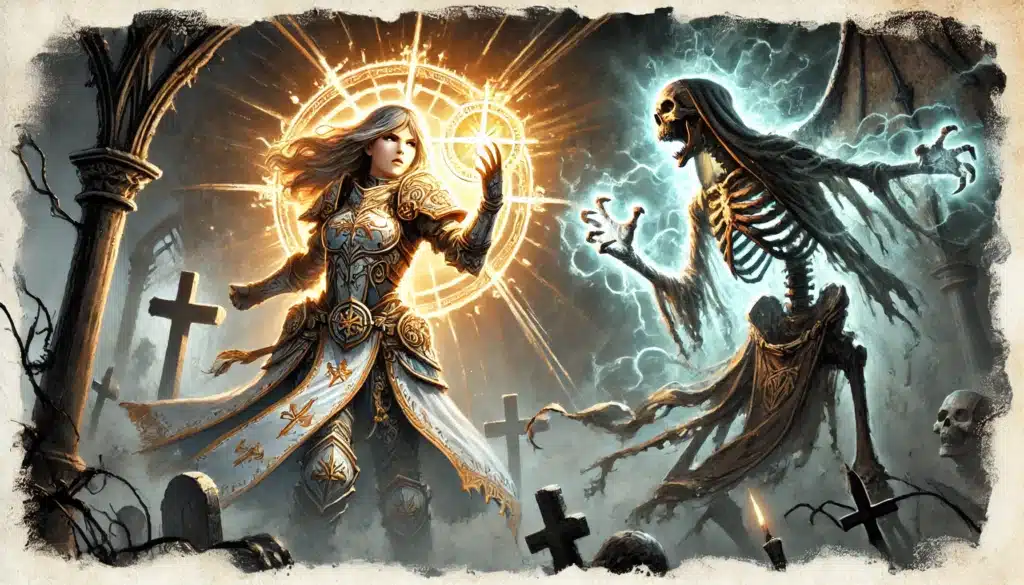
Twist design escalates the location into a campaign engine. A slow reanimation clock, ward failure cascade, or faction war spillover creates an apocalyptic prophecy.
The Skeleton Isn’t Dead: A Reanimation Clock
A visible, fair clock where prayers, bloodshed, and ward damage accelerate awakening.
| Clock Stage | Visible Symptom | Faction Reaction | Player Intervention |
|---|---|---|---|
| 1. The Twitch | Minor tremors; dust falls. | “It’s just settling.” (Denial) | Stabilize the foundation. |
| 2. The Pulse | Rhythm heard in walls; heat rises. | Preservationists panic; Purifiers act. | Cool the Heart Chamber. |
| 3. The Eye Opens | Light beams from skull; magic surge. | Evacuation begins; Cultists cheer. | Blind the Eye / Shield it. |
| 4. The Voice | Telepathic commands to everyone. | Chaos; Riots; Madness. | Silence the Mind / Debate it. |
| 5. The Movement | An arm shifts; structure cracks. | War for control of the “Pilot Seat.” | Sever the Nerves / Tendons. |
| 6. The Rising | The cathedral stands up. | Total destruction of surroundings. | Kill the Brain / Pilot. |
| 7. The Hunger | It begins to eat/absorb. | Alliance of all factions against it. | Feed it poison / Banish it. |
| 8. The Avatar | It becomes a God. | Apocalypse. | Divine Intervention / Artifact nuke. |
A ticking megastructure turns exploration into urgency.
Adventure Hook Pack: Ways to Drop This Location Into Any Campaign
The cathedral can be introduced as a rumor, pilgrimage, siege, relic heist, or disaster response. The entry point determines tone and initial faction alignment.
20 Session-Ready Hooks
- Pilgrimage Gone Wrong: The annual safe pilgrimage hasn’t returned; the gates are shut.
- Blasphemous Shrine Exposure: The skeleton is revealed to be a Demon, not a Saint.
- Relic Auction Theft: A thief stole a key bone; it must be returned before the Titan wakes.
- Cathedral Siege: An army surrounds the site; you must sneak in to rescue the High Priest.
- Missing Choir: The voices stopped; the wards are failing.
- Bonewright Sabotage: A rogue architect is collapsing the ribs to blackmail the city.
- Ward Breach Emergency: Something broke out of the cathedral; put it back.
- The Bleeding Walls: The bone is bleeding; investigate the disease.
- The Fallen Star: A meteor hit the skull; aliens/oozes are invading.
- The Ghost Storm: Spirits are flooding out; seal the breach.
- The New Saint: A child was born inside who controls the bone; factions want them.
- The Map Discovery: An old map shows a secret treasure vault in the marrow.
- The False Prophet: A charismatic leader has taken over and is “feeding” the Titan.
- The Time Loop: The cathedral resets every day; break the cycle.
- The Wedding: A political marriage is happening there; stop the assassination.
- The Trial: A PC is summoned to answer for crimes by the Judge Spirit.
- The Cure: The marrow holds the only cure for a plague.
- The Weapon: The cathedral is a weapon; stop the bad guys from firing it.
- The Dream: A PC keeps dreaming of the Heart; it calls to them.
- The Crash: The party’s airship crashes into the ribcage; escape.
Each hook should immediately present a conflict and an offer.
One-Shot, Mini-Dungeon, or Full Arc: Scaling the Skeletal Cathedral Setting
Scale scope by controlling depth, factions, and clocks. The same map can serve different campaign lengths if the pressures change.
Scaling Table: What to Keep, What to Cut
| Campaign Scope | Required Zones | Required Factions | Required Climax |
|---|---|---|---|
| One-Shot | Ribcage + Spine + Skull. | 1 (The Enemy). | Boss Fight in Skull. |
| Mini-Dungeon (3 Sessions) | Add Marrow + Heart. | 2 (Rivals). | Stop the Ritual / Reanimation. |
| Arc (10 Sessions) | Add External Ossuary + Limbs. | 3 (Triangle Conflict). | The Titan Wakes / Faction War. |
| Full Campaign | All Zones + Under-Crypts. | 5+ (Political Web). | Apotheosis / World Change. |
Scope control is how you keep the location usable.
Ecologies of the Bone: Random Encounters by Zone
A dungeon of this size is not a single room; it is an ecosystem. The primary mistake DMs make with megastructure dungeons is populating the entire map with the same three skeleton variants. To make the cathedral built inside a colossal skeleton feel real, you must treat the anatomy as biomes. The creatures that live in the sun-drenched, windy ribs are predators of opportunity, while the things crawling in the wet, claustrophobic marrow tunnels are scavengers and parasites. When you design encounter ideas for a bone cathedral dungeon, you are defining the food chain of a dead god.
Your random encounter tables should not just be a list of monsters to fight; they should be a list of problems to solve. In a weird D&D location like this, an encounter might be a combat challenge, a sudden shift in the architecture, or a social interaction with a terrified pilgrim. By segregating your tables by zone, you enforce the theme of the anatomy. The higher you go (The Skull), the more psychic and weird the threats become. The lower you go (The Marrow), the more physical and gross they become. Use these tables to keep the pressure high and the flavor distinct.
The Ribcage & Nave: Predators of the Open Air
The Ribcage Nave is defined by verticality, light, and deadly drops. Creatures here are adapted to flight, climbing, or knocking enemies off ledges. This is the “Public Zone,” so you will also find faction patrols trying to maintain order amidst the monsters. The danger here is gravity as much as it is claws; a cathedral inside a skeleton has no safety rails.
d20 Ribcage Encounter Table
| d20 | Encounter Type | Creature / Hazard | What They Are Doing |
| 1-4 | Faction Patrol | 1d6 Preservationist Knights (Paladins/Guards). | Demanding a “Toll of Bone” or checking for contraband relics. |
| 5-6 | Aerial Ambush | 1d4 Bone-Clad Harpies or Gargoyles. | Perched on high ribs, trying to grapple and drop PCs 60ft. |
| 7-8 | The Scavengers | 2d4 Giant Vultures or Pteranodons (undead). | Picking at a fresh corpse stuck on a lower rib ledge. |
| 9-10 | Construct Defense | 1 Bone Golem (re-skinned Flesh Golem). | Mindlessly repairing a crack in the wall; attacks if interrupted. |
| 11-12 | Hazard | Calcification Rain. | Dust falls from above; Con save or be Restrained (turning to stone). |
| 13-14 | Vermin Swarm | Swarm of Skeletal Rats. | Pouring out of a hollow bone pillar; hungry for marrow (rations). |
| 15-16 | The Lost | 1 Confused Pilgrim (Commoner). | Wandering the ledge, weeping, threatening to jump. |
| 17-18 | Spectral Echo | 1 Poltergeist (Invisible). | Throwing loose stones to test the acoustics; hostile to noise. |
| 19 | Elite Hunter | 1 Bone Naga or Wyvern. | Nesting in the Organ Loft; guarding a shiny trinket. |
| 20 | The Titan’s Breath | Environmental Event. | A massive draft blows through; Dex save or be blown 20ft sideways. |
When running these encounters, emphasize the acoustics and the fall risks. A fight with Harpies is standard fare in a forest, but in the Ribcage Nave, it is a terrifying balance act where being Grappled means death by gravity.
The Marrow Catacombs: Horrors of the Wet Dark
The Marrow is the “Underdark” of the skeleton. It is tight, hot, humid, and smells of copper and rot. Here, the undead infestation is primal and hungry. The architecture is soft and semi-living, meaning walls might bleed if cut. This is a place for cosmic horror and body horror, where the boundaries between the explorer and the dungeon blur.
d20 Marrow Encounter Table
| d20 | Encounter Type | Creature / Hazard | What They Are Doing |
| 1-4 | The Ooze | 1 Gray Ooze or Gelatinous Cube (White/Milky). | Blocking a narrow tunnel; filled with digested holy symbols. |
| 5-6 | The Parasites | 1d4 Carrion Crawlers or Gricks. | Camouflaged against the spongy walls; waiting for heat sources. |
| 7-8 | Fused Undead | 1d6 Skeletons fused into the wall. | They cannot move legs, but claw/grapple anyone passing by. |
| 9-10 | Tunnelers | 1 Umber Hulk or Ankheg (chitinous). | Chewing new paths; creates unstable tremors. |
| 11-12 | Disease Vector | Marrow Rot Cloud. | A cyst bursts; Con save or catch a disease that lowers Max HP. |
| 13-14 | The Cleaner | 1 Black Pudding (Necrotic). | scrubbing the floor of “impurities” (living flesh). |
| 15-16 | The Mutation | 1 Gibbering Mouther (Failed Resurrection). | Formed from a pile of bodies that failed to revive correctly. |
| 17-18 | Trap | Spastic Valve. | The tunnel creates a sphincter-lock; Str check to pry open. |
| 19 | The Surgeon | 1 Bonewright (Necromancer). | Harvesting parts from a still-living adventurer. |
| 20 | The Heartbeat | Pulse Wave. | The walls contract violently; Crushing damage to all in tunnels. |
In the Marrow, visibility should be near zero. Describe the heat, the sticky floors, and the feeling of being inside a stomach. The monsters here don’t hunt by sight; they hunt by scent and vibration.
The Skull Sanctum: Madness of the Divine Mind
The Skull is the seat of the Titan’s lingering consciousness. The threats here are psychic, magical, and abstract. It is the high-level zone where holy wards and seals distort reality. Encounters here challenge the players’ sanity and Wisdom scores rather than their AC. This is where the cathedral factions send their elites and where the sacred profane contrast is sharpest.
d20 Skull Encounter Table
| d20 | Encounter Type | Creature / Hazard | What They Are Doing |
| 1-4 | The Elite Guard | 1d4 Helmed Horrors or Wights. | Silent, floating sentinels guarding the Eye Balconies. |
| 5-6 | Living Magic | 1 Living Spell (Silence or Spirit Guardians). | A spell gone wrong that now roams the halls eating magic. |
| 7-8 | The Thought-Eater | 1d4 Intellect Devourers or Nothics. | Hiding in the shadows, whispering secrets to break concentration. |
| 9-10 | The Inquisitor | 1 Mind Flayer (Arcanist) or Wraith. | Trying to extract the “God-Thought” from the walls. |
| 11-12 | Reality Glitch | Gravity Reversal. | Gravity flips for 1 minute; players fall to the ceiling. |
| 13-14 | The Mirror | Doppelganger. | Poses as a lost party member or a version of a PC from the future. |
| 15-16 | The Memory | Psychic Haunting. | Players relive the Titan’s death; Wis save or Stunned. |
| 17-18 | The Angel | 1 Deva (Corrupted/Mad). | Believes the players are germs infecting the host. |
| 19 | The Eye | Beholder (or Spectator). | Dreaming new tunnels into existence; paranoid of intruders. |
| 20 | The Awakening | Divine Intervention. | The Titan speaks a word. 10d10 Thunder damage or a Wish. |
The Skull Sanctum should feel dreamlike and dangerous. Enemies here are intelligent and often willing to talk, but their logic is alien. Combat here is a debate as much as a brawl, usually interrupted by the Titan’s psychic echoes.
Final Thoughts: Make the Cathedral a Machine With a Soul
A cathedral inside a colossal skeleton works because it is simultaneously a place, a system, and a moral problem. It isn’t just a colossal skeleton dungeon; it is a weird D&D location where the architecture remembers who died to build it. When you design a D&D cathedral dungeon like this, you are inviting players to engage with a world that is bigger, older, and stranger than they are.
The best locations generate play through function, faction conflict, and readable consequences. Treat the anatomy as level design, the sanctity as narrative pressure, and the history as a solvable puzzle. If your players can predict the cathedral’s rules—knowing that silence opens doors and blood closes them—but never feel safe inside them, you have nailed it. This is a place where every step echoes, and every echo might wake the dead.