

Imagine a cozy D&D tavern idea where the beer is always cold, the hearth is always warm, and the date is always the same. This is the time loop inn DnD concept, a location trapped in a perpetual cycle that rewinds precisely at dawn. Unlike a typical linear adventure, this setting functions like a clockwork puzzle where the players must learn the schedule to break the curse. The tavern is the perfect vessel for a fantasy inn time loop because it naturally contains a high density of social interactions, secrets, and distinct personalities within a confined space.
You should view this D&D tavern idea not just as a roleplaying opportunity, but as a dungeon made of time rather than stone. In a standard dungeon, players move from room to room to find the boss; here, they move from hour to hour to find the solution. The “corridors” are the routines of the NPCs, and the “locked doors” are events that happen when the players are not present to witness them. By restricting the physical space to a single building, you force the players to explore the fourth dimension of the narrative.
This time loop inn that resets every morning offers a unique tactical layer that most campaigns lack. Players can memorize the exact moment a fight breaks out, the specific seconds before a drink is spilled, or the precise dialogue needed to unlock a secret. It turns the chaotic nature of Dungeons & Dragons into a game of mastery and execution. They are not reacting to surprises anymore; they are orchestrating a perfect sequence of events.
You can deploy this concept as a standalone one-shot, a bridge between major story arcs, or a recurring hub that the players return to throughout a campaign. It works exceptionally well because it changes the stakes from survival to information gathering. Since death is rarely permanent in a time loop tavern D&D adventure idea, players feel emboldened to take wild risks, jump off balconies, or insult powerful wizards just to see what happens. This freedom allows for a style of play that is both hilarious and deeply strategic.
- Core Loop Design: Turning a Time Loop into Actual Gameplay
- NPC Design for a Looping Tavern (How to Run It Without Losing Your Mind)
- Investigation Structure: Preventing Loop Paralysis
- Preventing Exploits and Maintaining Stakes
- Setpieces Unique to a Time Loop Inn
- Factions and Forces Tied to the Loop
- Endings: Choosing How the Loop Resolves
- After the Loop: Turning the Tavern into a Campaign Engine
- Scaling the Time Loop Inn
- Final Thoughts: Why a Time Loop Inn Works So Well in D&D
Core Loop Design: Turning a Time Loop into Actual Gameplay
The single biggest mistake Dungeon Masters make with a DnD time loop setting is failing to establish hard rules. If the mechanics of the time loop are vague or constantly changing to suit the plot, players will feel cheated and frustrated. A functional loop must be a rigid system that can be learned, tested, and eventually exploited by clever players. You want your table to have that “aha!” moment where they realize they can manipulate the reset to their advantage.
Therefore, you need to codify the laws of your fantasy inn time loop before the first session begins. These rules should be objective and unwavering, functioning like the physics of gravity within your game world. When players understand that the loop behaves consistently, they stop treating it like a random magical event and start treating it like a puzzle box they can solve. This shift in perspective is what makes the adventure engaging rather than repetitive.
Try my AI Tabletop RPG generators...and an extensive library of content!
The Loop Has Rules the Players Can Learn
You must define one or two immutable laws that govern the inn reset mechanic. These laws act as the constraints for the puzzle and prevent the players from solving the problem too easily. For example, perhaps physical objects reset, but magical auras persist, or maybe gold coins vanish at dawn while silver ones remain. These specific constraints force players to be creative with the resources they have available.
- Only spoken oaths persist through the reset and bind the speaker in the next cycle.
- Items can only leave the loop if they are traded to a specific entity at exactly midnight.
- Blood spilled on the floorboards remains there, staining the wood darker with every reset.
- Names written in the innkeeper’s ledger survive the reset, while all other writing fades.
- Music played after sunset echoes faintly in the background during the next loop.
- Any food eaten confers its nutritional benefit, but the hunger returns immediately at dawn.
- Magical spell slots do not refresh if they were used to harm an innocent within the tavern.
- A specific candle burns down permanently and does not reset, acting as a countdown timer.
- Injuries caused by silver weapons carry over to the next morning as phantom pains.
- Doors locked by magic remain locked unless opened with a physical key from a previous loop.
- Coins tipped to the bard stay in her pocket, slowly accumulating over countless cycles.
- A familiar or pet retains all memories of previous loops but cannot speak to the owners.
Explicit rules create a sense of fairness that allows players to feel smart when they find a workaround. Instead of the DM deciding arbitrarily what works, the players use the established logic to forge their own path.

Persistence Is a Balance Lever, Not a Default
Deciding what carries over in your DnD time loop inn concept is the most critical balance decision you will make. If the players keep their experience points, items, and injuries, the loop creates a feeling of progression and growing power. However, if they only keep their memories, the loop becomes a test of knowledge and efficiency. Most DMs default to “memories persist, everything else resets,” but this is often the least interesting option because it removes resource management from the game.
You should consider a mixed approach where certain statuses or abstract concepts carry over to create tension. Perhaps physical wounds reset, but exhaustion levels do not, forcing players to solve the mystery before they collapse from fatigue. Maybe reputation resets, meaning they have to win over their allies anew each day, or perhaps a curse creates a cumulative penalty. The table below outlines how different persistence models affect the gameplay feel of your time loop tavern adventure idea.
⚔️ Fantasy RPG Random Tables Books
Make life as a Gamemaster easier…
If you play Dungeons & Dragons, Pathfinder, or other fantasy RPGs, this
RPG random tables series
is packed with encounters, NPCs, treasure, and more. Available in eBook or print—either way, you’ll have a wealth of adventure ideas at your fingertips.



| Persistence Type | What Carries Over | How It Empowers Players | How It Creates Risk or Cost |
|---|---|---|---|
| The Mentalist | Memories & Knowledge only. | Total information retention allows perfect planning. | No physical progression; mistakes feel wasted. |
| The Grinder | XP & Class Features. | Players eventually overpower the threats through leveling. | The loop feels trivial if they just “farm” it. |
| The Materialist | Magic Items & Gold. | Resource accumulation allows bribing/buying solutions. | Players might ignore the plot to loot the room. |
| The Scarred | HP loss & Injuries. | Actions have permanent consequences; combat is scary. | A death spiral can make the loop unwinnable. |
| The Etched | Written Notes & Maps. | Complex plans can be stored without relying on memory. | Enemies can find and read these notes too. |
| The Haunted | Emotional States/Trauma. | NPCs react to the PC’s “vibe” or aura instinctively. | High stress leads to disadvantage on social checks. |
| The Marked | Magical Brands/Curses. | Specific keys or magical access codes stay active. | Accumulating too many marks attracts monsters. |
| The Debtor | Favors & Oaths. | Social leverage allows skipping persuasion checks. | Breaking a promise has compounding consequences. |
| The Echo | Sound & Music. | Players can send messages to their future selves. | The tavern becomes noisier and more chaotic. |
| The Glitched | Random Inventory Item. | One random item stays, sparking creative usage. | Unpredictability makes reliance on gear impossible. |
The choice of persistence determines whether your loop feels like a gritty survival horror or a heroic power fantasy. By carefully selecting what stays and what goes, you tune the difficulty and the tone of the entire adventure.
Reset Doesn’t Mean Undo: It Means Rewind With Scars
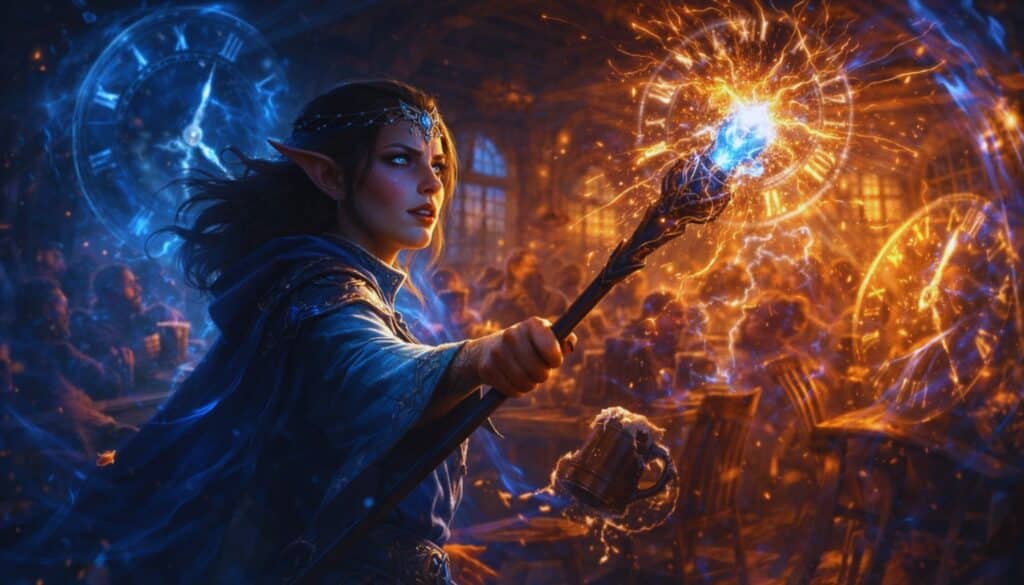
Although the physical timeline of the Groundhog Day tavern DnD scenario resets, the metaphysical fabric should accumulate damage. This prevents the players from feeling like their actions are meaningless or that they are simply reloading a save file in a video game. The universe should groan under the weight of the repetition, showing subtle signs of wear and tear. These “scars” serve as atmospheric reminders that the loop is unnatural and potentially dangerous.
- Mirrors develop spiderweb cracks in the exact same pattern every morning.
- The beer tastes slightly more stale or metallic with each passing cycle.
- Shadows lag behind the characters by a fraction of a second.
- NPCs experience intense déjà vu and hesitate before repeating their scripted lines.
- Paintings on the wall slowly morph to depict more disturbing or aged scenes.
- The fire in the hearth changes color, shifting from orange to blue to violet.
- Phantom footsteps echo on the stairs when no one is walking there.
- Reflections in the window show the characters as they looked in the previous loop.
- The smell of ozone or sulfur grows stronger near the reset time.
- Animals in the stable become increasingly aggressive or terrified of the PCs.
These timeline scars add a layer of urgency to the proceedings, hinting that the loop cannot last forever. They also provide tangible feedback to the players that their presence is having an effect, even if the world appears to reset.
NPC Design for a Looping Tavern (How to Run It Without Losing Your Mind)
Running a DnD unique tavern idea like this can be mentally exhausting for a Dungeon Master if you try to roleplay every NPC as a fully dynamic person. The secret to maintaining your sanity is to treat the NPCs as actors in a play who do not know they are on stage. You are not improvising their entire lives; you are executing specific scripts that only change when the players intervene to disrupt them.
This approach allows you to fast-forward through conversations the players have already heard five times. You can simply say, “The barkeep tells the same joke about the goblin and the duck,” rather than acting it out again. This keeps the pacing brisk and ensures that table time is spent on new interactions rather than rehashing old ones. It highlights the difference between the static world and the dynamic players.
NPC Loop Scripts (3 Beats, Every Day)
To organize your tavern NPCs and lore, assign each major character a simple three-part script that defines their location and action at morning, noon, and night. These “beats” are the anchors of your simulation and ensure that the world feels alive and moving without requiring complex tracking. If the players do nothing, these events happen exactly as written; if the players intervene, the script breaks.
| NPC Role | Morning Beat (Start) | Afternoon Beat (Midpoint) | Midnight Beat (Climax) |
|---|---|---|---|
| The Barkeep | Polishing the same glass, complaining of back pain. | Breaks up a fight between two drunk patrons. | Locks the cellar door with a heavy, secret key. |
| The Bard | Tuning a lute that keeps snapping a string. | Performs a ballad that makes the waitress cry. | collapses drunk in a corner, dropping a locket. |
| The Mysterious Stranger | Sits in the darkest booth, watching the door. | Receives a discreet letter from a courier. | Vanishes in a puff of smoke near the fireplace. |
| The Waitress | Drops a tray of mugs, causing a distraction. | Argues with the cook about food quality. | Sneaks out the back to meet a lover. |
| The Paladin | Praying loudly in the common room. | Accuses the Stranger of heresy (combat triggers). | Keeps watch by the window, refusing to sleep. |
| The Gambler | Winning heavily at dice, cheating subtly. | Is caught cheating and thrown out the window. | Returns with a dagger seeking revenge. |
| The Cook | Chopping carrots with aggressive rhythm. | Burns the roast, filling the room with smoke. | Secretly poisons the leftovers for the rats. |
| The Stable Boy | Sleeping in the hay loft. | Steals a coin purse from a saddlebag. | Witness to something he shouldn’t see outside. |
Scripts allow you to run the tavern like a clockwork machine. The players can rely on the Waitress dropping the tray to create a diversion, or they can count on the Cook burning the roast to provide cover for a sneak attempt.
The “Out-of-Sync” NPC
In every DnD time loop inn concept, there should be one NPC who does not quite fit the pattern. This character might exhibit micro-variances, such as arriving two minutes early, using a different word in a sentence, or aging slightly with each reset. This anomaly signals to the players that the loop is not perfect and that there is a flaw in the system they can exploit or investigate.
- An old man who hums a different tune every single day.
- A cat that stares directly at the players and hisses only at them.
- A patron whose drink level does not reset, getting drunker across loops.
- A child who draws a new picture daily, creating a flipbook of disaster.
- A merchant whose coin purse gets lighter every morning.
- A soldier who retains a physical scar from a fight in a previous loop.
- A wizard whose beard grows visibly longer with every reset.
- A bird that flies into a window, but at a different window each time.
These breadcrumbs encourage close observation and reward players who are paying attention to the details. The out-of-sync NPC is often the key to unlocking the inn mystery time reset.
The Memory-Leak NPC (Emotion Without Memory)
One of the most poignant tools for a resetting inn campaign idea is the character who forgets facts but retains feelings. This NPC might not remember meeting the party, but they feel an inexplicable surge of trust, fear, or affection toward them. This allows for roleplay continuity and relationship building even when the timeline is technically erasing progress.
This mechanic prevents the roleplay from becoming stale or purely transactional. It gives the players a reason to care about an NPC beyond just extracting information. When the barmaid instinctively recoils from the PC who got her killed in the last loop, or when the guard trusts the Paladin without knowing why, it adds emotional weight to the sci-fi mechanics.
⚔️ Fantasy RPG Random Tables Books
Make life as a Gamemaster easier…
If you play Dungeons & Dragons, Pathfinder, or other fantasy RPGs, this
RPG random tables series
is packed with encounters, NPCs, treasure, and more. Available in eBook or print—either way, you’ll have a wealth of adventure ideas at your fingertips.
- Instinctive Fear: The NPC trembles and avoids eye contact with the party.
- Unexplained Trust: The NPC hands over a key or secret without a persuasion check.
- Deep Sadness: The NPC bursts into tears upon seeing a specific character.
- Sudden Anger: The NPC becomes hostile and aggressive for no logical reason.
- Romantic Longing: The NPC feels drawn to a PC, feeling they are “destined.”
- Overwhelming Guilt: The NPC apologizes profusely for something they haven’t done yet.
Focusing on emotional continuity makes the story feel human and grounded, rather than just a cold logic puzzle.
Investigation Structure: Preventing Loop Paralysis
Players often freeze or flail when dropped into a time loop tavern adventure idea because the lack of linear direction is overwhelming. To combat this, you must structure the investigation as a mystery with distinct layers and a clear schedule. You are not guiding them by a nose ring; you are giving them a map of time and letting them choose the route.
The Three-Layer Truth Model
A good DnD adventure time loop tavern should have depth to its mystery. You can organize the truth into three concentric layers that the players must peel back one by one. This pacing mechanism ensures that they always have a new discovery to chase and prevents them from solving the entire plot in the first hour.
| Layer | Concept | Example Revelation | How Players Discover It |
|---|---|---|---|
| Layer 1: The Trigger | The immediate cause of the reset. | A magical artifact in the cellar activates at dawn. | observing the artifact or using Detect Magic. |
| Layer 2: The Beneficiary | Who is using the loop and why. | The innkeeper is keeping his dying daughter alive. | Finding the hidden room or reading the diary. |
| Layer 3: The True Nature | What the loop actually is. | The inn is a prison for a demon, not a sanctuary. | Interrogating the “daughter” or breaking the artifact. |
| Layer 1: The Curse | A witch cursed the land. | The bard stole a song from a fey creature. | finding the sheet music or speaking to the fey. |
| Layer 2: The Betrayal | Someone in the inn sold them out. | The Paladin is actually a warlock in disguise. | Catching the Paladin in a lie or finding their symbol. |
| Layer 3: The Sacrifice | How to end it permanently. | One player must stay behind to anchor the timeline. | Deciphering the ancient text on the hearth. |
Layering the truth creates momentum. Solving one layer immediately presents the hook for the next, driving the narrative forward naturally.
Clue Design for Time Loops
Clues in a time loop fantasy trope setting need to work differently than in a normal game. They must either be repeatable (appearing in the same place every time) or portable (able to be memorized or carried). If a clue is a one-time event that never repeats, players might miss it forever, stalling the game.
- Repeatable Clues:
- A hidden letter under a loose floorboard in Room 4.
- A specific conversation overheard between the cook and the supplier.
- A tattoo visible only when the blacksmith rolls up his sleeves.
- A key that the drunk drops at 9:00 PM exactly.
- A book in the library that falls off the shelf by itself.
- The symbol on the bottom of a specific tankard.
- A secret knock used by a visitor at the back door.
- The contents of the trash bin behind the bar.
- A magical aura that flares when the clock strikes noon.
- The flavor of the stew changing based on the cook’s mood.
- Portable Clues:
- The password to the speakeasy in the cellar.
- The true name of the demon hiding in the attic.
- The combination to the safe behind the painting.
- The knowledge that the merchant is actually a doppelganger.
- A spell scroll that can be memorized by a wizard.
- A map of the secret tunnels sketched into memory.
- The exact timing of the guard patrol route.
- A recipe for a potion that cures the specific poison used.
- The melody that soothes the savage beast in the basement.
- The identity of the killer revealed in a previous loop.
Designing clues this way respects the player’s effort. It rewards them for learning and remembering, which is the core satisfaction of the genre.

Replace Maps with a Time Budget
In this DnD time loop setting, the map is less important than the schedule. You should present the adventure as a “Timecrawl,” where players spend time slots rather than movement speed. The day is divided into distinct chunks, and players must choose where to be and what to do, knowing they cannot be everywhere at once. This forces meaningful choices and strategic splitting of the party.
| Time Slot | Recurring Event | NPCs Involved | Exploitable Angle |
|---|---|---|---|
| 08:00 AM | The Breakfast Delivery arrives. | Cook, Supplier. | Can sneak into the cart to enter unnoticed. |
| 09:00 AM | The Morning Brawl. | Drunk, Barkeep. | Can pickpocket the Drunk while he is distracted. |
| 10:00 AM | The Maid cleans the rooms. | Maid, Guests. | Perfect time to search the guest rooms. |
| 11:00 AM | The Merchant sets up shop. | Merchant, Guards. | Can sabotage his wares before he sells them. |
| 12:00 PM | The Noon Bell rings loudly. | Everyone. | The noise covers the sound of breaking glass/locks. |
| 01:00 PM | The Secret Meeting. | Stranger, Spy. | Can eavesdrop from the adjacent booth. |
| 03:00 PM | The Card Game begins. | Gambler, Paladin. | Join the game to win the quest item. |
| 06:00 PM | Dinner Service rush. | Staff, Patrons. | Kitchen is chaotic; easy to poison the food. |
| 08:00 PM | The Bard performs the “Song.” | Bard, Crowd. | The lyrics contain a hidden code or clue. |
| 10:00 PM | The Intruders attack. | Bandits, Guards. | Help defend or let them cause chaos for cover. |
| 11:00 PM | The Ritual preparation. | Cultist, Victim. | Intervene now to stop the midnight event. |
| 11:59 PM | The Reset triggers. | The World. | Last chance to write down notes or cast wards. |
By viewing time slots as rooms, you clarify the gameplay loop. Players will say, “Let’s hit the 10 AM cleaning event again,” just as they would say, “Let’s check the eastern corridor again.”
Preventing Exploits and Maintaining Stakes
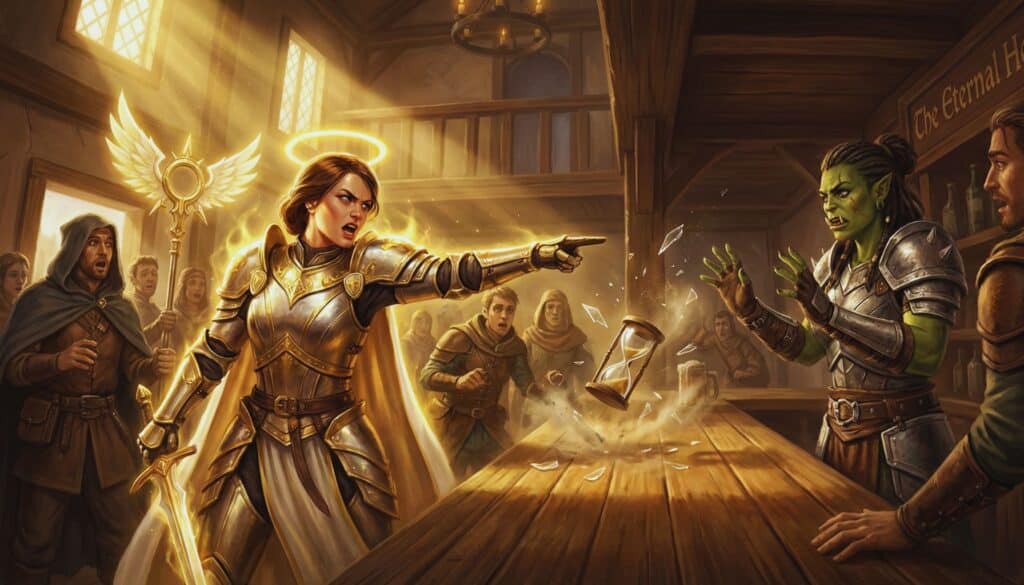
Time loops naturally invite degenerate play, which is a gamer term for behavior like “we murder the shopkeeper every morning to steal his potions.” While this can be fun for a bit, it quickly destroys the narrative tension. You need mechanisms that push back against this behavior without removing player agency. The goal is to make the world feel resistant to abuse, maintaining the serious tone of the fantasy inn time loop.
The Inn Pushes Back Against Repetition
The universe should exhibit adaptive resistance to the players’ actions. If they use the exact same tactic three times in a row, the world should change slightly to counter it. This isn’t the DM cheating; it’s the “immune system” of the timeline fighting back. This forces players to constantly innovate rather than relying on a single boring strategy.
- Locks that were picked yesterday are jammed or reinforced today.
- NPCs become inexplicably suspicious of players who lie to them repeatedly.
- The weather turns foul, making travel or stealth harder.
- A stray dog starts barking at the players whenever they try to sneak.
- Fate intervenes; a bowstring snaps or a floorboard creaks loudly.
- Potions stolen repeatedly turn into vinegar or poison.
- Information gained through torture becomes unreliable or false.
- Time glitches cause the players to arrive seconds too late for an event.
- The “random” encounters become harder and more specific to the party’s tactics.
- Shadowy figures begin watching the party from the corners of their vision.
This resistance creates an eerie atmosphere where the players feel like they are wrestling with a living entity, not just a static script.
The Paradox Meter (Replacing Death)
Since death is not the end in a time loop inn quest hook, you need a different fail state. Enter the Paradox Meter. This is a cumulative status that builds up when players die, abuse the loop, or cause massive disruptions. As their paradox score rises, they suffer debilitating effects that make the game harder, ensuring that they still fear failure.
| Paradox Level | Symptom | Mechanical/Narrative Effect |
|---|---|---|
| 1 | Migraines. | -1 to Investigation checks due to pain. |
| 2 | Flickering vision. | Disadvantage on Perception checks involving sight. |
| 3 | Temporal sickness. | Cannot regain Hit Dice during a short rest. |
| 4 | Ghostly whispers. | -2 to Stealth; the whispers give you away. |
| 5 | Reality lag. | -10 ft. movement speed; world moves faster than you. |
| 6 | Desynchronization. | 10% chance a spell fails or targets the wrong person. |
| 7 | Existence fading. | NPCs have trouble remembering you even during the day. |
| 8 | Loop rejection. | You take 1d10 force damage every hour. |
This system replaces the fear of death with the fear of erasing oneself. It adds a “health bar” to the campaign that spans across the resets.
Consequences That Escape the Loop
To give the story moral weight, allow certain terrible actions to “bleed through” into the wider reality. Even if the inn resets, the cosmic ledger might not. This prevents players from engaging in pure nihilism and reminds them that they are heroes, not monsters.
- Breaking a Paladin’s oath creates a permanent divine mark on the character.
- Killing a specific innocent soul haunts the killer’s dreams forever.
- Using dark magic stains the caster’s hands black permanently.
- stealing a cursed item binds it to the character’s soul, not their inventory.
- A deity notices the anomaly and sends an avatar to investigate.
- The character’s shadow detaches and acts independently.
- A powerful entity remembers the insults thrown at it in previous loops.
- The players age physically even though the day resets (grey hair, wrinkles).
These bleed-through consequences act as the moral compass of the adventure, ensuring that choices still matter.
Setpieces Unique to a Time Loop Inn
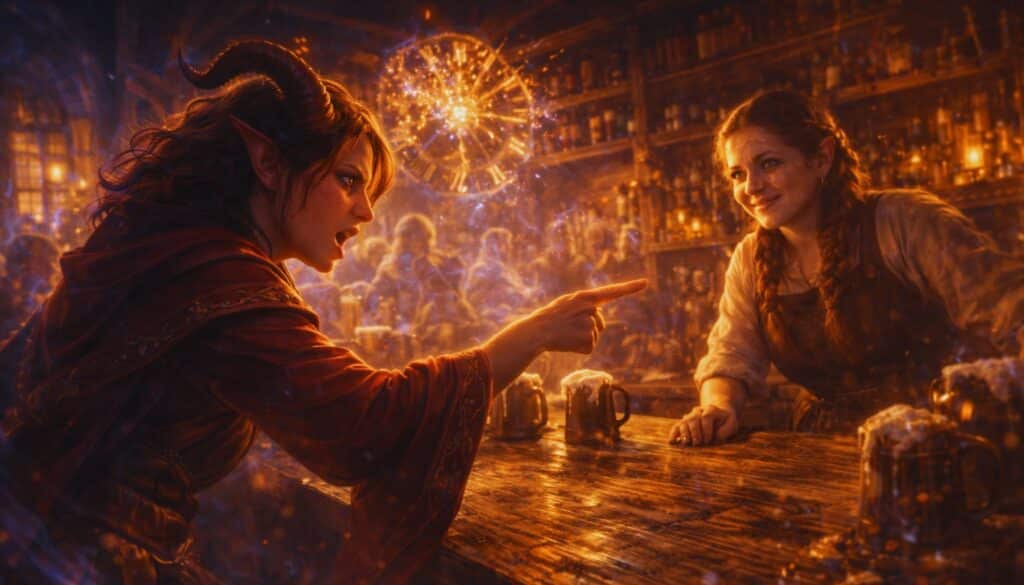
A time loop tavern plot twist allows you to design scenes that are meant to be played multiple times. These setpieces are like intricate puzzles where the players can try different inputs to see different outputs. The repetition allows for a depth of description and interaction that a one-off scene never could.
The Midnight Scene (Same Place, Deeper Truth)
Design one climactic event that happens every night at midnight. This is the centerpiece of the loop. Initially, it looks like a simple brawl or ritual, but as players intervene differently, they reveal new layers of the scene. It serves as the benchmark for their progress.
Try my AI Tabletop RPG generators...and an extensive library of content!
| Loop Count | What Appears the Same | What New Truth is Revealed |
|---|---|---|
| Loop 1 | The Innkeeper shoots the Stranger. | The Stranger was reaching for a weapon. |
| Loop 2 | The Innkeeper shoots the Stranger. | The “weapon” was actually a locket/gift. |
| Loop 3 | The Innkeeper shoots the Stranger. | The Innkeeper is crying while he pulls the trigger. |
| Loop 4 | The Innkeeper shoots the Stranger. | The Stranger whispers “Thank you” as he dies. |
| Loop 5 | The Innkeeper shoots the Stranger. | The bullet passes through the Stranger (illusion). |
This escalation rewards replayability. The players feel like detectives analyzing a crime scene frame by frame.
Rooms That Remember
Use environmental storytelling to hint at the loop’s history. Some rooms in the inn should retain “echoes” of the past cycles. These are not just spooky flavor; they are clues. They tell the players what has happened before and warn them of dangers they haven’t yet faced.
- A mirror that reflects a room full of corpses for a split second.
- Words scratched into the bedpost that appear freshly carved.
- A cold spot in the hallway where someone died violently.
- The sound of a woman weeping coming from an empty room.
- A painting that depicts the party members in various states of distress.
- A table that is always sticky with phantom ale.
- Dust motes that float in a pattern spelling out a warning.
- A fireplace that roars with heat but provides no warmth.
- A stain on the rug that changes shape to resemble a map.
- A window that looks out onto a different season or landscape.
These elements turn the inn itself into a character, a weary witness to the endless repetition.
Factions and Forces Tied to the Loop
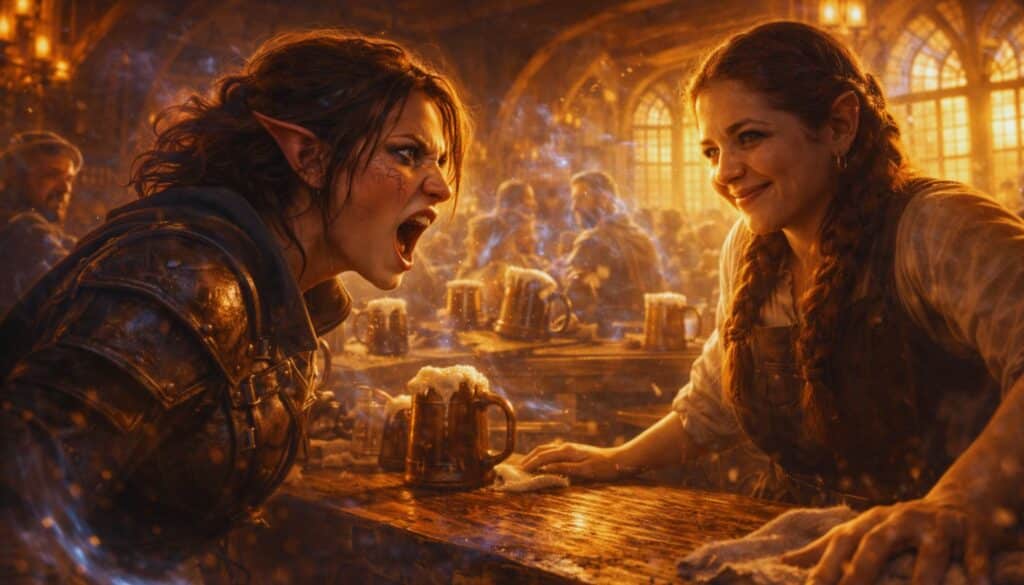
Even a single Dungeons & Dragons tavern idea can host conflicting factions. You need external and internal forces fighting over the loop itself. This conflict drives the plot and gives the players allies to recruit and enemies to defeat. It transforms the setting from a static puzzle into a dynamic battlefield.
Who Wants the Loop to Continue
Some entities benefit from the status quo. These are the antagonists who will try to stop the players from breaking the cycle. They might be tragic figures clinging to a moment of happiness or malevolent forces feeding on the energy.
- The Grieving Father: Wants to keep his daughter alive for one more day.
- The Time Devil: Feeds on the wasted potential and boredom of the trapped souls.
- The Perfectionist Wizard: Is trying to cast a spell that requires infinite practice.
- The Coward: Knows that execution awaits him the moment the sun rises tomorrow.
- The Lovers: Are having their first date forever and refuse to let it end.
- The Guardian Construct: Is programmed to reset the day to contain a plague.
- The Gambler: Knows the outcome of every game and is amassing a fortune.
- The Historian: Is studying a lost event and needs more time to document it.
These motivations make the villains sympathetic or at least understandable, adding complexity to the social encounters.
Who Wants It Broken (and at What Cost)
Conversely, there are forces that want the natural order restored. These potential allies often demand a high price for their help. They emphasize the theme that moving forward requires sacrifice.
- The God of Death: Is angry that souls are being denied to his realm.
- The Weary Spirit: Is tired of existing and just wants to fade away.
- The Inevitable (Construct): A cosmic enforcer sent to repair the timeline by force.
- The Trapped Demon: Wants to escape the prison of the loop to wreak havoc.
- The Rival Adventurer: Wants the glory of breaking the curse for themselves.
- The Merchant of Time: Offers a solution in exchange for the players’ memories.
- The Future Self: A version of a PC who sends messages begging for release.
- The Inn itself: The genius loci of the building is groaning under the strain.
The players must weigh the cost of these alliances. Is it worth releasing a demon to save the town?
Endings: Choosing How the Loop Resolves
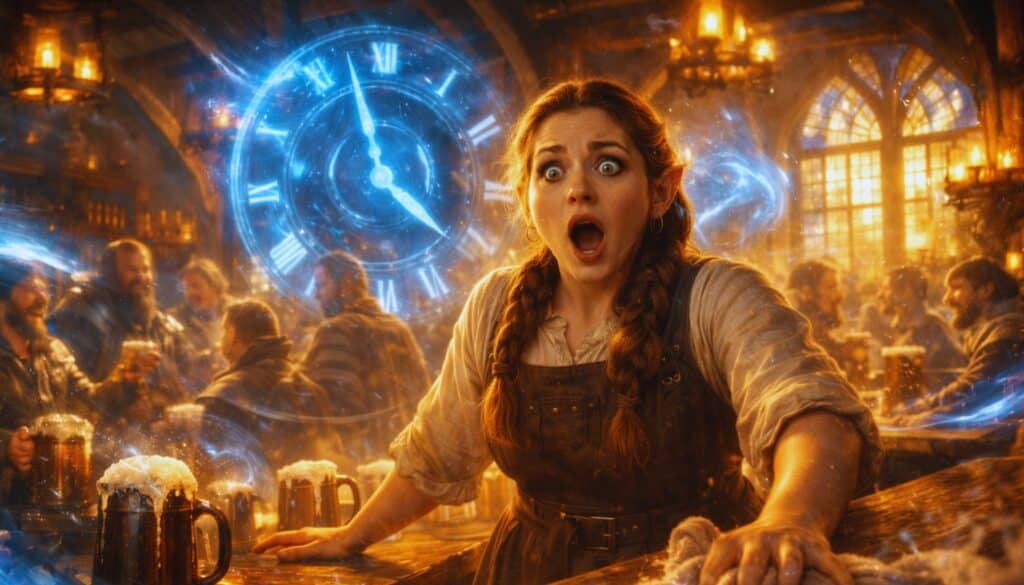
The resolution of a time loop inn that resets every morning should never be as simple as “kill the boss.” That is too linear for such a complex setup. The ending should be a choice, a trade, or a clever manipulation of the mechanics. It should feel earned.
Multiple Valid End States
You should prepare at least three distinct ways the party can conclude the adventure. This respects player agency and prevents the “pixel hunting” problem where they get stuck looking for the one correct key.
| Ending Type | What is Sacrificed | Who Benefits | Future Fallout |
|---|---|---|---|
| The Severance | The magical artifact is destroyed. | The timeline is restored. | Magic in the area is dead forever. |
| The Bargain | A PC takes the place of the anchor. | The NPCs are freed. | The PC must roll a new character. |
| The Loophole | The timeline is tricked/merged. | Everyone survives. | A paradox anomaly haunts the region. |
| The Escape | The party leaves, loop intact. | The party survives. | The inn is lost to time forever. |
| The Ascension | The loop is stabilized as a sanctuary. | The Innkeeper. | The inn becomes a timeless base. |
| The Collapse | The loop is violently shattered. | Chaos/Entropy. | The inn is destroyed; everyone dies. |
Allowing players to choose their ending gives the campaign a powerful sense of closure.
The Exit Is a Trade, Not a Victory
In the best fantasy inn time loop stories, the ending is bittersweet. To emphasize the weight of time, the exit should require leaving something behind. This prevents the victory from feeling cheap and adds emotional resonance to the finale.
- One player must lose all memories of the adventure.
- The gold earned during the loop turns to dust.
- The favorite NPC does not survive the transition to normal time.
- The players age one year for every day they spent in the loop.
- A magical item that defined the campaign breaks.
- The innkeeper forgets who the players are entirely.
- A prophecy that was held back by the loop finally triggers.
- The players gain a reputation they didn’t earn (or lose one they did).
- A secret learned in the loop must never be spoken.
- The sun rises, but it is a different color now.
These endings ensure that the players will talk about the adventure for years to come.
After the Loop: Turning the Tavern into a Campaign Engine
The best D&D tavern idea doesn’t stop being useful once the quest is over. When the loop breaks, the tavern can transform into the fallout center for your next campaign arc. The world outside has moved on, and the consequences of the time bubble ripple outward.
Fallout Hooks That Launch the Next Arc
Use the resolution of the loop to catapult the players into new adventures. The end of one story is the hook for the next.
- The loop lasted 100 years outside; the kingdom has fallen.
- An NPC who died in the loop is alive now but evil.
- A cult worshiping the “Time Walkers” (the PCs) has formed.
- The magical energy released attracts a temporal dragon.
- The players are technically declared dead and lost their property.
- A villain used the loop’s distraction to conquer a neighbor.
- The inn becomes a focal point for wild magic surges.
- The players have visions of a future that didn’t happen.
- An item brought out of the loop vibrates near other time rifts.
- The god of time demands a service to pay for the anomaly.
- A historical mystery the players solved is now common knowledge.
- The players are out of sync with the seasons (summer in winter).
This ensures that your time loop tavern leaves a lasting legacy on your world.

Scaling the Time Loop Inn
This concept is incredibly flexible. You can run a time loop inn DnD session as a quick evening of fun or expand it into a massive campaign hub. The key is to adjust the complexity of the rules and the number of moving parts.
Scope Control Table
Use this table to determine how much content you need based on your desired playtime.
| Scope | Loop Rules Count | NPC Complexity | Recommended Ending Style |
|---|---|---|---|
| One-Shot | 1 Simple Rule (e.g., Objects Reset). | 3 Major NPCs with 1 goal. | Explosive/Combat heavy. |
| Mini-Arc (3 Sessions) | 3 Rules (Object, Memory, Magic). | 5 NPCs with conflicting goals. | Mystery/Puzzle solution. |
| Full Arc (6+ Sessions) | 5+ Rules including Paradox. | 10+ NPCs, factions, side quests. | Political/Moral choice. |
| Recurring Hub | Background rules only. | Rotating cast of visitors. | Evolution over time. |
| Solo Adventure | strict resource rules. | 1 Companion NPC. | Survival/Escape focus. |
| High Level Play | Reality-bending rules. | Deities and Planar entities. | Cosmic restructuring. |
| Low Level Play | Grounded physical rules. | Local villagers and bandits. | Saving the town. |
| Horror Theme | Sanity/Madness rules. | Terrified/Hostile victims. | Tragic/Dark escape. |
| Comedy Theme | Slapstick physics rules. | Caricatures and tropes. | Absurd/Funny resolution. |
This scalability makes the idea a valuable tool in any DM’s kit.
Final Thoughts: Why a Time Loop Inn Works So Well in D&D
The time loop inn that resets every morning is more than just a gimmick; it is a fundamental shift in player agency. In a normal game, players are often afraid to fail because failure means death or a halted story. In a time loop, failure is just information. This liberates your players to try the wildest, most creative, and most heroic actions they can imagine. It turns the tavern into a sandbox of consequences where they are the masters of destiny.
By treating the inn as a dungeon of time, you provide a structure that is both rigid and infinitely flexible. The NPCs act as the walls, the schedule acts as the map, and the reset acts as the door. It allows you to run a complex mystery without constantly checking your notes because the world comes to you. You don’t have to herd the cats; you just have to wait for the bell to ring.
⚔️ Fantasy RPG Random Tables Books
Make life as a Gamemaster easier…
If you play Dungeons & Dragons, Pathfinder, or other fantasy RPGs, this
RPG random tables series
is packed with encounters, NPCs, treasure, and more. Available in eBook or print—either way, you’ll have a wealth of adventure ideas at your fingertips.
Remember that the success of this D&D tavern idea lies in the balance between repetition and progress. Give your players the tools to learn the loop, the scares to respect it, and the moral choices to eventually break it. Let them feel the frustration of the reset and the triumph of the perfect run.
