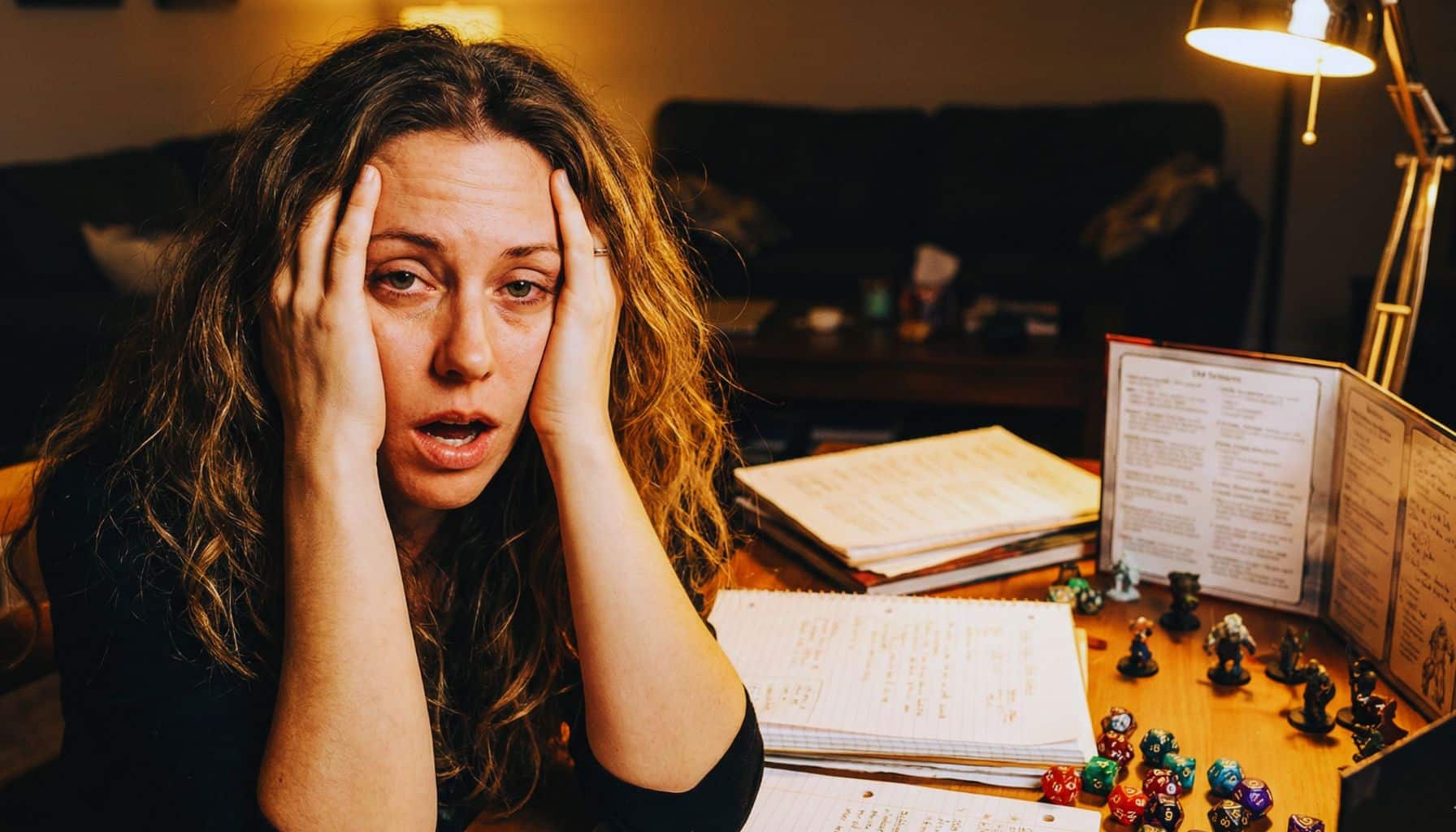
Dungeon Master burnout acts like a silent trap in the world of tabletop roleplaying games. We often treat it as a personal failure or a lack of dedication to the craft, but that perspective is fundamentally flawed. Burnout is rarely about a lack of passion for Dungeons & Dragons. It is usually a structural problem caused by sustained creative output without adequate recovery or support. When you shoulder the entire burden of scheduling, D&D world-building, rule adjudication, and emotional management, RPG burnout becomes a predictable mathematical outcome rather than a sudden surprise. The traditional advice to “just take a break” often fails because it asks DMs to step away from a hobby they love without fixing the underlying issues that caused the fatigue in the first place.
This blueprint aims to change how you approach the game by offering sustainable DM routine DnD strategies. We need to shift the conversation from “surviving” the campaign to actively designing a lifestyle that supports it. Campaign fatigue sets in when the workload exceeds the reward for too long, yet most DMs keep pushing because they fear letting their players down. By implementing specific systems, habits, and design choices, you can maintain your momentum for years. Preventing DM burnout is not about lowering your standards. It is about redesigning your process so that running the game feeds your energy instead of draining it when playing Dungeons & Dragons.
- Understanding DM Burnout as a Process (Not a Mood)
- Creative Input vs Output: The Hidden Burnout Equation
- Meta-GMing: Cross-Training Your Creative Brain
- Distributed Narrative Roles: Stop Carrying the World Alone
- Player Agency Frameworks That Lower Cognitive Load
- Frequency Modulation: Scheduling as a Living System
- Hybrid Prep Models: Matching Prep Style to Energy Levels
- Emotional Tracking: Making Burnout Measurable
- Creative Rituals & Psychological Conditioning
- Rotating Focus Campaign Design for Longevity
- Player Support as a Burnout Buffer
- Peer Support and DM Networks
- Warning Signs You Should Not Ignore
- A Sustainable DM Blueprint You Can Actually Follow
- Tactical Micro-Habits: Plugging the Hidden Energy Leaks
- Final Thoughts: Burnout Is a Design Problem, Not a Personal One
Understanding DM Burnout as a Process (Not a Mood)
Many Game Masters believe that burnout is a sudden cliff they fall off one day, but it is actually a progressive psychological lifecycle. It functions much like an repetitive strain injury for your imagination. It begins quietly with small moments of friction or procrastination that seem manageable at first. Over time, these small stressors compound into Dungeon Master fatigue solutions cannot fix overnight. Recognizing DM burnout as a sequence of stages allows you to intervene before you reach the point of total collapse. If you wait until you hate the idea of setting up the battle map, you have waited too long.
The key to avoiding burnout DM style is identifying the transition from “fun challenge” to “heavy obligation.” In the early stages, you might just feel a little tired after a session. In the middle stages, you might start resenting players for cancelling or not engaging enough with your lore. By the final stages, you are actively looking for excuses to cancel the session yourself. Understanding this progression changes the game. It means you can apply DM self care DnD tactics when you are merely annoyed rather than waiting until you are completely exhausted. Intervention is always easier at the start of the curve.
The DM Burnout Lifecycle
The following table breaks down the progression of DnD burnout so you can spot where you currently sit. Each stage manifests differently at the table, often showing up as irritability or a lack of patience with rules lawyers. By matching your current feelings to a stage, you can apply immediate dungeon master burnout recovery tips.
| Burnout Stage | Common DM Thoughts & Behaviors | Early Corrective Action |
|---|---|---|
| 1. High Enthusiasm | “I can run two campaigns at once! I’ll build a whole continent!” | Set strict boundaries on prep time now. |
| 2. Slight Strain | “I’ll just wing it this week. I don’t feel like drawing the map.” | Switch to a low-prep module or run a “shopping” session. |
| 3. Routine Fatigue | “Is it Tuesday already? I wish we could skip this week.” | Implement a bi-weekly schedule immediately. |
| 4. Hidden Dread | “I hope a player cancels so I don’t have to do this.” | Call for a board game night instead of D&D. |
| 5. Active Resentment | “They don’t appreciate the work I put into this NPC.” | Have a serious Session Zero revisit about workload. |
| 6. Disengagement | “I don’t care what they do. Just roll the dice.” | Take a formal hiatus of at least 4 weeks. |
| 7. Avoidance | Ghosting the group chat or feeling sick thinking about D&D. | Step down as DM. Ask someone else to run a one-shot. |
Remember that breaking DM burnout cycle patterns is entirely possible at any stage, but it requires honesty. Diagnosing yourself isn’t admitting defeat. It is the first step toward reclaiming the joy of the hobby.
Creative Input vs Output: The Hidden Burnout Equation
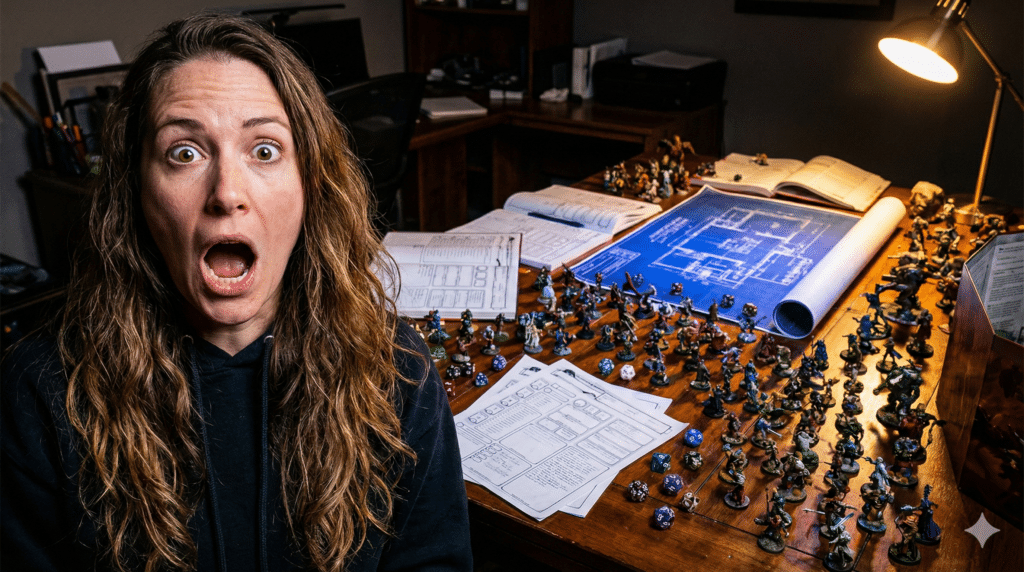
Dungeon Mastering is an incredibly output-heavy role that demands constant generation of ideas, dialogue, and mechanics. A primary cause of DM burnout is what we call “creative starvation.” You cannot constantly exhale without inhaling. When you spend all your free time prepping, writing, and facilitating, you deplete your internal reservoir of inspiration. RPG creative block DM issues often stem not from a lack of talent, but from a lack of fuel. You need to consume stories, art, and systems without the pressure to turn them into game content immediately.
Try my AI Tabletop RPG generators...and an extensive library of content!
To fix this, you must treat “creative input” as a mandatory part of your game prep time management. This does not mean reading more D&D sourcebooks. It means engaging with media that sparks joy solely for you. When you watch a movie or read a book just to enjoy it, your subconscious works in the background to refill your creative tanks. If you ignore this need, your brain will eventually refuse to produce new ideas. It is a protective mechanism. You must prioritize input just as highly as you prioritize drawing maps or stating blocks for monsters.
Designing a “Creative Diet” for DMs
You plan your encounters and your loot drops, so you should also plan your inspiration intake. A balanced creative diet includes low-effort snacking and high-effort meals. Here is a list of creative recharge tips across different categories to keep your imagination fed:
- Low Effort (Passive Input):
- Synthwave or Lo-Fi playlists (great for mood without lyrics).
- Pinterest boards of fantasy landscapes or sci-fi cities.
- Video game concept art books.
- Short story anthologies (read one in 10 minutes).
- Cinematic video game trailers.
- Medium Effort (Active Engagement):
- Actual Play podcasts (listen to how others handle pacing).
- Graphic novels or manga (visual storytelling buffers).
- Episodic TV shows (analyze the “monster of the week” structure).
- Audiobooks during your commute.
- Cross-Genre (The Palate Cleanser):
- Historical non-fiction (steal politics and conflicts).
- Science fiction movies (even if you run fantasy).
- Biographies of strange historical figures.
- Architecture magazines or blogs.
- Nature documentaries (animal behaviors make great monster tactics).
Consuming media is not “cheating” on your prep time. It is the fuel that makes prep time efficient. By broadening your inputs, you ensure you never stare at a blank page wondering what causes DM burnout for you personally.
⚔️ Fantasy RPG Random Tables Books
Make life as a Gamemaster easier…
If you play Dungeons & Dragons, Pathfinder, or other fantasy RPGs, this
RPG random tables series
is packed with encounters, NPCs, treasure, and more. Available in eBook or print—either way, you’ll have a wealth of adventure ideas at your fingertips.





Meta-GMing: Cross-Training Your Creative Brain
Sometimes the best way to cure DnD burnout advice for DMs suggests is to stop playing D&D entirely for a short while. This doesn’t mean quitting RPGs, but rather engaging in “Meta-GMing.” This involves running radically different systems that force you to use different creative muscles. D&D 5e is heavy on resource management and combat rules. Switching to a narrative-focused game or a rules-light system acts as cross-training. It reminds you that the game can be played differently and breaks you out of the rigid “combat-exploration-social” loop that causes fatigue.
When you run a different system, you gain perspective that relieves DM anxiety. A game with zero prep requirements teaches you to trust your improvisation skills. A game with high lethality teaches you to let go of precious storylines. This variety is essential for avoiding burnout DM strategies because it turns gaming back into exploration rather than a chore. You return to your main campaign with fresh eyes and new tools, realizing that you don’t have to run every session exactly by the book to have fun.
What Meta-GMing Actually Restores
Stepping away from the d20 system exercises specific DM muscles that may have atrophied. The table below outlines how alternate systems can help with dungeon master burnout recovery tips.
| System Type | What It Exercises | What It Restores for D&D |
|---|---|---|
| Powered by the Apocalypse (PbtA) | Failing forward and mixed successes. | The ability to improvise consequences without looking up tables. |
| Old School Renaissance (OSR) | Ruling over rules and high lethality. | Comfort with player death and letting go of “balanced” encounters. |
| GM-Less Games (e.g., Fiasco) | Collaborative storytelling and scene framing. | Realizing players can and should drive the plot forward. |
| One-Page RPGs (e.g., Lasers & Feelings) | Speed and tone management. | The confidence to run a session with zero prep time. |
| Horror Systems (e.g., Call of Cthulhu) | Atmosphere and tension building. | Learning to use silence and description over dice rolls. |
| Sci-Fi / Cyberpunk | Technical narration and modern stakes. | A fresh vocabulary that breaks you out of “fantasy speak.” |
Taking a detour into these systems is not a distraction. It is a vital part of keeping enjoying DnD as a DM. It reminds you that the rules serve you, not the other way around.

Distributed Narrative Roles: Stop Carrying the World Alone
A major structural flaw in many groups is the centralization of all labor onto the Dungeon Master. This is a fast track to managing prep stress as DM becoming impossible. To fix this, we look at distributed narrative roles. This approach involves assigning specific creative domains to players so they co-own the fiction. When players are responsible for tracking NPCs or describing finishing blows, they become more invested. Simultaneously, the DM is relieved of the mental load of remembering every single detail.
This goes beyond simple “help.” It is about formalizing roles so that the game functions as a collective engine. If you are the only one who knows the lore, the schedule, the loot, and the rules, Dungeon Master burnout is inevitable. By delegating, you transform the table dynamic. Players stop being passive consumers of content and become active co-authors. This shift is crucial for sustainable DM routine DnD practices because it ensures the game can proceed even if the DM’s energy is lower than usual.
Formal Role Distribution That Reduces DM Load
Assigning these roles during Session Zero or mid-campaign can drastically lower DM prep workload. Here are specific roles you can give to your players:
- The Chronicler: Writes the session recap so the DM doesn’t have to remember what happened two weeks ago.
- The Cartographer: Draws the dungeon map as you describe it, keeping the DM’s secret map hidden and clean.
- The Loot Master: Tracks all party treasury, items, and identification needs so the DM stops auditing character sheets.
- The Scheduler: Manages the group chat and finds the next game date (this is the biggest stress reliever).
- The NPC Steward: Keeps a list of NPC names and quirks the party has met.
- The DJ: Manages the music bot or playlist based on the DM’s mood request (e.g., “Play battle music”).
- The Rule Keeper: Looks up specific spell wording while the DM keeps the narrative flowing.
- The Rumor Monger: Is allowed to invent one “rumor” about a town that the DM then makes true.
- The Initiative Tracker: Manages the turn order visibly for the table.
- The Quartermaster: Tracks rations, torches, and ammunition so the DM doesn’t have to nag.
Sharing these responsibilities increases engagement and directly combats DM self-care strategies being ignored.
Player Agency Frameworks That Lower Cognitive Load
Decision fatigue is a massive contributor to DM burnout. When you have to decide what the weather is, what the tavern looks like, and what the goblin’s name is all in ten seconds, your brain gets tired. Player agency frameworks allow you to offload these creative micro-decisions to the players. This isn’t just about letting them choose left or right. It is about asking them to define the reality of the game world. When you ask a player, “What does the elf district look like?” you are saving your own creative energy for the plot twists that matter.
Using these frameworks changes the flow of the game. It reduces the emotional toll of DMing because you are no longer performing a one-person show. You are facilitating a conversation. This technique reduces performance anxiety because the “right” answer becomes whatever the table agrees upon. It makes the world feel richer to the players because they helped build it, and it keeps you surprised and engaged as a DM.
Mechanics That Let Players Carry Story Weight
Integrating these mechanics helps in reducing DM prep workload while boosting fun:
- “I Know a Guy”: Allow players to invent an NPC contact in a new city once per adventure.
- Montage Travel: Ask each player to describe one obstacle they overcame during travel, rather than rolling for random encounters.
- Define the Kill: Let players narrate exactly how they defeat a boss monster.
- World Facts: When entering a tavern, ask a player to describe the strangest patron inside.
- Flashbacks: Allow players to spend a resource to “flashback” and have prepared an item, Blades in the Dark style.
- Visible Clocks: Put a countdown die on the table for threats to increase tension without you needing to narrate it constantly.
- Campfire Tales: Award Inspiration when players discuss their feelings in character during a long rest.
- Scene Framing: Ask players, “Where do we find your character right now?” at the start of a session.
These frameworks ensure Dungeon Master session pacing is a shared responsibility, not just yours.
Frequency Modulation: Scheduling as a Living System
The gold standard of “weekly sessions at the same time” is often a trap. Life is not consistent, so your D&D schedule shouldn’t be rigid either. DnD schedule balance tips often suggest sticking to a routine, but frequency modulation is a better approach for long-term health. This means treating the schedule as a living system that adapts to your work stress, family life, and creative energy. It is better to play an amazing session once a month than four mediocre sessions that lead to DM burnout.
We need to normalize changing the cadence of the game based on the DM’s life context. If you are entering a busy season at work, shifting to bi-weekly or monthly play is a proactive move. This prevents the “cancellation spiral” where sessions get dropped last minute due to exhaustion. Group scheduling stress disappears when you communicate capacity honestly. Quality always trumps quantity when it comes to keeping a campaign alive for years.
The Frequency Modulation Model
Use this model to determine your ideal frequency based on your current life state. This helps in breaking DM burnout cycle triggers before they happen.
⚔️ Fantasy RPG Random Tables Books
Make life as a Gamemaster easier…
If you play Dungeons & Dragons, Pathfinder, or other fantasy RPGs, this
RPG random tables series
is packed with encounters, NPCs, treasure, and more. Available in eBook or print—either way, you’ll have a wealth of adventure ideas at your fingertips.
| Life Context | Recommended Frequency | Format Adjustment | DM Self-Check Question |
|---|---|---|---|
| High Energy / Free Time | Weekly | Sandbox / Heavy RP | “Am I excited to prep for next week?” |
| Normal Routine | Bi-Weekly | Standard Campaign | “Do I have one night free for prep?” |
| Busy Work Season | Monthly | Episodic / One-Shots | “Can I run this with zero prep?” |
| High Life Stress | On Hiatus | Board Games / Movie Night | “Is D&D adding to my stress?” |
| Creative Block | Irregular | Guest GM / Player Roles | “Would I rather play than run?” |
| Burnout Recovery | None (Rest) | Consumption Only | “Do I miss the game yet?” |
Consistency comes from flexibility. By adjusting the frequency, you protect the game from campaign fatigue.

Hybrid Prep Models: Matching Prep Style to Energy Levels
Many DMs feel guilty if they don’t prep the same way for every session. However, adopting hybrid prep models is essential for avoiding burnout DM guilt. Some weeks you might have the energy to write three pages of lore. Other weeks, you might only have the energy for three bullet points on a napkin. Both are valid. The goal is to match your prep style to your current energy level. Managing prep stress as DM means realizing that your players likely won’t notice the difference between a high-prep session and a low-prep one.
A hybrid approach means you have a toolkit of prep styles. You can slide between being a “architect DM” and an “improv DM” depending on your week. This flexibility prevents the feeling of being behind on homework. It allows you to prioritize DM self-care strategies without cancelling the game. You simply run a different kind of session.
The Hybrid Prep Spectrum
This table helps you choose the right prep mode for your current energy, mitigating Dungeon Master fatigue solutions.
| Prep Mode | When to Use It | Burnout Risk It Mitigates |
|---|---|---|
| The Deep Dive | You are inspired and have free time. | Prevents boredom; feeds creative joy. |
| The Lazy DM | Standard weeks; focus on 3-4 scenes. | Prevents overwork; focuses on table value. |
| The Module Run | Low creative energy; run pre-written content. | Reduces “blank page” anxiety. |
| The Random Tables | No prep time; roll for plot during play. | Removes prep time constraint entirely. |
| The Dungeon Crawl | You want tactical play, not narrative. | Lowers social/acting emotional labor. |
| The Beach Episode | Heavy roleplay; players talk to each other. | Near-zero prep; relies on player energy. |
| The Boss Rush | You just want to roll combat dice. | Focuses on mechanics over story continuity. |
| The Cliffhanger | End session early when stuck. | Buys time to think without pressure. |
Your prep style is a tool, not an identity. Switch it up to stay fresh.
Emotional Tracking: Making Burnout Measurable
We often ignore signs of DM burnout because feelings are vague and easy to dismiss. Emotional tracking turns those vague feelings into data. If you track your enjoyment level after every session, you can see trend lines. A sudden dip in enjoyment three sessions in a row is a hard data point that demands action. This practice takes the guesswork out of DM self care DnD. It creates an early warning system that tells you when to pivot before you crash.
You don’t need a complex journal. A simple score or a few words recorded after the game is enough. This objectifies your experience. It helps you separate “I had a bad day” from “I am starting to hate this campaign.” When you see the data, you give yourself permission to make changes to the schedule or the game style.
Simple Emotional Tracking Tools for DMs
Here are lightweight ways to monitor your state and how to keep enjoying DnD as a DM:
- The 1-5 Scale: Rate your fun level from 1 to 5 immediately after the session.
- The Energy Audit: Ask, “Did this session give me energy or take it away?”
- The Dread Check: On game day morning, rate your dread level from 1-10.
- Post-Session Keyword: Write one word that describes your mood (e.g., “Exhausted,” “Exhilarated,” “Annoyed”).
- The Prep Timer: Track how long prep takes versus how much of it was used.
- The “One Good Thing” Note: Force yourself to write down one cool thing that happened.
- Player Feedback Audit: Note if players seemed engaged or distracted (often mirrors DM energy).
- The Morning After: How do you feel the next day? A “hangover” feeling indicates high cognitive cost.
Measurement creates permission to adjust. Use the data to protect your hobby.
Creative Rituals & Psychological Conditioning
Your brain is a creature of habit. You can use creative rituals to condition yourself to enter “DM Mode” without the stress. If you usually prep while stressed or late at night, your brain associates D&D with anxiety. By building a positive ritual, you can flip this script. This is about Pavlovian conditioning. If you always listen to the same epic soundtrack and drink the same tea when you prep, eventually, the tea and music alone will trigger a creative state.
These rituals lower the activation energy required to start working. They reduce the friction of sitting down to write. Over time, this reduces DM anxiety because your body knows what to do even if your mind is tired. It creates a safe container for your creativity, separating “work life” from “game life.”
Building a DM Creative Ritual
Combine these elements to build a ritual that signals fun, not work:
- Specific Lighting: Turn on a specific lamp or colored LED strip that is only on for D&D.
- The Soundtrack: A specific playlist that plays only during prep (Video game OSTs work best).
- The Beverage: A specific coffee, tea, or soda reserved for game time.
- Physical Setup: Clearing the desk completely before opening the notebook.
- Dice Sorting: Organizing dice by color to settle the hands.
- Scent: Lighting a candle or incense (smell is a strong memory trigger).
- Reviewing Art: Looking at one piece of inspiring character art for 2 minutes.
- The Recap Read: Reading the last session’s recap out loud.
- Silence: 2 minutes of silence before the players arrive.
- Outfit Change: Putting on a “DM hat” or comfortable hoodie.
These small actions build a wall against the chaos of daily life.
Rotating Focus Campaign Design for Longevity
Endless escalation is a recipe for disaster. If every session has to be bigger, badder, and more epic than the last, campaign fatigue is guaranteed. Rotating focus campaign design solves this by structuring the game into distinct arcs with built-in downtime. Think of your campaign like a TV show with seasons, rather than a never-ending movie. It is vital to have periods of high tension followed by periods of low stakes.
This structure allows the DM to rest. During “downtime” arcs, the stakes are personal and local, requiring less world-building. This modulation of intensity keeps the story grounded and prevents the DM from burning out on “saving the world” narratives. It also gives players a chance to breathe and develop their characters, which provides you with new plot hooks for free.
Campaigns as Seasons, Not Marathons
Use this structure to plan rest points into your narrative to ensure Dungeon Master burnout recovery tips are baked into the story.
| Campaign Phase | Focus Type | DM Workload Level | Recovery Benefit |
|---|---|---|---|
| The Setup | Local threats, meeting NPCs. | Moderate (Front-loaded) | Establish foundations; high excitement. |
| Rising Action | Questing, combat, travel. | High (Tactical) | Traditional D&D flow; high engagement. |
| The Climax | Boss fights, major plot points. | Very High (Narrative) | High payoff; emotionally draining. |
| The Cooldown | Shopping, celebrating, talking. | Low (Improv) | Critical Rest Period. Let players talk. |
| Downtime / Time Jump | Narrating months/years passing. | Very Low (Descriptive) | Allows DM to reset the world state. |
Pacing protects creativity. Don’t sprint the marathon.
Player Support as a Burnout Buffer
Your players are your greatest resource for avoiding burnout DM problems. However, they can only help if they know what you need. Player-help for DM burnout starts with clear communication. If you hide your stress, they will assume you are fine and keep demanding more. You must cultivate a culture where the DM is also a player who deserves to have fun.
This begins with managing expectations. If players expect professional voice acting and 3D terrain every week, they will be disappointed, and you will be exhausted. Aligning on a “beer and pretzels” vibe or a “collaborative storytelling” vibe takes the pressure off. Session zero expectations are the contract that protects your sanity.
Session Zero for Burnout Prevention
Use these prompts to set sustainable boundaries right from the start:
- “How often can we realistically play without stressing our schedules?”
- “Who is willing to host or organize the food?”
- “If I (the DM) am tired, are we okay with a board game night?”
- “Who wants to take notes for the group?”
- “What happens if one player is missing? Do we play anyway?”
- “Are we okay with ‘theater of the mind’ combat to save prep time?”
- “How will we handle scheduling disputes?”
- “Is everyone okay with me taking a month off once a year?”
- “What are the hard boundaries for content (safety tools)?”
- “Who is willing to run a one-shot if I need a break?”
Alignment prevents resentment. Get these answers early.

Peer Support and DM Networks
DM burnout thrives in isolation. When you feel like the only person struggling to prep, it feels like a personal failing. Connecting with community support for GMs normalizes the struggle. Hearing another DM say, “Yeah, I totally phoned it in last week,” is incredibly validating. It reminds you that perfection is a myth.
You need a space to vent, brainstorm, and laugh about the absurdity of the hobby. Whether it is an online forum or a local group, finding a “guild” of fellow GMs provides a safety net. They can offer DnD burnout advice for DMs that players simply cannot understand. They know the pain of a wasted map or a derailed plot.
Try my AI Tabletop RPG generators...and an extensive library of content!
Building or Joining a DM Support Loop
Here are ways to create that support network without adding more work to your plate:
- The DM Group Chat: A text thread with 2-3 other DMs just for venting.
- Co-Working Prep: Hop on a voice call with another DM and prep silently together.
- The “Post-Mortem” Call: Call a friend for 10 minutes after a game to debrief.
- Subreddits & Discords: Join r/DMAcademy or specific system Discords for advice.
- Rotating One-Shot Nights: A group where everyone is a DM, taking turns playing.
- Local Game Store Nights: Hang out at a shop just to talk shop.
- Podcast Communities: Engage with listener groups of DM-focused podcasts.
- Creative Exchange: Swap NPCs or maps with another DM to save time.
Burnout thrives in silence. Break the silence to break the cycle.
Warning Signs You Should Not Ignore
The most dangerous thing a DM can do is “push through” the warning signs. Signs of DM burnout are your brain’s way of screaming for a break. If you ignore them, you risk ruining the hobby for yourself permanently. It is crucial to distinguish between “good tired” (satisfaction after a long session) and “bad tired” (dread and depletion).
You need to be vigilant. If you find yourself snapping at your friends or procrastinating on prep until 10 minutes before the session, stop immediately. These are red flags. “Pushing through” is not heroic; it is destructive. Recognizing these signs allows you to pivot to board games or a hiatus before bridges are burned.
Red Flags vs Normal Fatigue
Watch for these specific indicators across emotional, cognitive, and social categories:
- Emotional: Feeling relief when a player cancels.
- Emotional: feeling irritable when players ask questions.
- Emotional: No longer feeling joy when a cool story moment happens.
- Emotional: Feeling “used” or underappreciated by the group.
- Cognitive: Staring at a blank page for hours with no ideas.
- Cognitive: Forgetting rules you used to know by heart.
- Cognitive: Inability to visualize scenes or voices.
- Cognitive: “Phoning it in” and using generic tropes constantly.
- Social: Ignoring the group chat notifications.
- Social: Fantasizing about the campaign ending abruptly.
- Social: Feeling anxiety spikes on game day morning.
- Social: resentment toward players having fun without doing work.
Stopping early is success, not failure. It protects the future of your game.

A Sustainable DM Blueprint You Can Actually Follow
Avoiding burnout is an ongoing practice, not a one-time fix. It requires a philosophy shift: Dungeon Master burnout prevention is part of your job description. By redesigning your workload, redistributing creativity, modulating frequency, tracking your emotions, and planning for recovery, you build a fortress around your joy. This blueprint transforms DMing from a burden into a sustainable, life-giving hobby.
You have the tools now. It is about implementation. Revisit your systems regularly. Check in with yourself. The goal is to be a Dungeon Master for decades, not just for this one campaign. Tips to prevent Dungeon Master burnout are useless if you don’t apply them. Make the game work for you.
The 5-Pillar Burnout Prevention Checklist
Revisit this checklist quarterly to ensure your sustainable DM routine DnD remains intact.
| Pillar | Concrete Action to Maintain It |
|---|---|
| 1. Creative Input | Schedule 2 hours/week for “non-D&D” media consumption. |
| 2. Scheduling | confirm the next month’s dates in advance; cancel if stressed. |
| 3. Prep Style | Use a “Lazy DM” checklist for at least 1 session per month. |
| 4. Player Support | Assign one new logistical task to a player this month. |
| 5. Emotional Check | Log your post-game mood; if “Low” 2x in a row, take a break. |
| 6. Meta-GMing | Read one rulebook from a non-d20 system. |
| 7. Boundaries | Say “No” to one player request that feels like homework. |
| 8. Environment | Clean your play space/desk before prep begins. |
| 9. Social | Vent to a DM friend about a frustration. |
| 10. Recovery | Plan a “Beach Episode” or downtime session for the next arc. |
Sustainability is a skill you can learn. Master it, and you master the game.

Tactical Micro-Habits: Plugging the Hidden Energy Leaks
We often focus on the big structural issues like scheduling or campaign arcs, but DM burnout frequently accumulates through tiny, invisible drains on your battery. These are the micro-moments where you expend unnecessary mental energy without realizing it. Think of these as the background apps running on your phone that kill the battery even when you aren’t using it. By addressing these hidden leaks with specific tactical adjustments, you can reclaim a surprising amount of vitality. These tips focus on the physical and immediate environment of the game, ensuring that avoiding burnout DM strategies extend to the very moment you are sitting behind the screen.
The “Hard Out” Protocol
One of the fastest ways to sour your relationship with the game is the session that drags on too long. We have all been there. It is late, you are exhausted, but the players are on the verge of opening the big door. You push through for another hour. That extra hour costs you double the recovery time the next day. You must implement a “Hard Out” protocol. This means setting an alarm for 15 minutes before the scheduled end time to wrap up the scene. When the clock hits the limit, you stop. Even if it is mid-combat. Even if the villain is monologuing.
Stopping abruptly actually improves the game. It creates a natural cliffhanger that keeps players excited for the next session. More importantly, it protects your sleep schedule and prevents the “D&D Hangover” the next morning. You leave the table feeling like you could have played more, rather than feeling like you escaped a hostage situation. This discipline is a cornerstone of DM self care DnD because it respects your biological limits.
The Content Junkyard: Never Waste a Good Idea
A major source of managing prep stress as DM is the heartbreak of wasted content. You spent three hours designing a swamp dungeon, and the players decided to take a boat to the city instead. In the moment, this feels like wasted work, which breeds resentment. You need to create a “Content Junkyard” document or folder. When players skip your content, you do not delete it. You strip it of its specific context and throw it in the junkyard.
That swamp dungeon is now just a “generic wet ruin.” Three months from now, when the players explore a sewer system, you pull that content out of the junkyard and reskin it. You have just saved yourself three hours of prep time. Knowing that no creative effort is ever truly wasted reduces the emotional toll of DMing. It allows you to relax when players go off-rails because you know you are just banking that content for a future withdrawal. This recycling method is the ultimate cheat code for reducing DM prep workload.
Sensory Stewardship and Cognitive De-Cluttering
Dungeon Masters often overload their own senses in an attempt to create immersion. You might have a Virtual Tabletop open, a Discord chat, a music bot, a PDF of the adventure, and your notes all screaming for attention. This cognitive load is exhausting. You are multitasking to a degree that creates rapid fatigue. You must practice sensory stewardship. This means deliberately simplifying your immediate environment to lower the processing power your brain needs just to function.
Try using the “One Screen” rule where only the immediate map is visible, and your notes are physical. Turn the background music down for yourself even if it is loud for the players. Wear comfortable shoes if you stand, or get a lumbar cushion if you sit. These physical and digital ergonomics matter. If your body is uncomfortable or your eyes are strained from screen glare, your patience for rule disputes drops to zero. Sustainable DM routine DnD requires you to treat your body like an athlete’s tool. You cannot perform if the cockpit is cluttered and uncomfortable.
⚔️ Fantasy RPG Random Tables Books
Make life as a Gamemaster easier…
If you play Dungeons & Dragons, Pathfinder, or other fantasy RPGs, this
RPG random tables series
is packed with encounters, NPCs, treasure, and more. Available in eBook or print—either way, you’ll have a wealth of adventure ideas at your fingertips.
The Post-Game “Cool Down” Routine
Runners do not sprint a marathon and then immediately sit on the couch. They cool down. DMs often finish a high-energy session and try to go straight to sleep, only to lie there for hours with their brains buzzing. You need a transition ritual to tell your brain the job is done. This is distinct from the dungeon master burnout recovery tips mentioned earlier, as it focuses on the immediate ten minutes after the call ends.
Do not check social media. Do not start cleaning up the battle map immediately. Instead, do something physical and unrelated to fantasy. Wash the dishes. Walk the dog. Take a hot shower. This physical reset helps flush the adrenaline out of your system. It signals to your nervous system that the performance is over and it is safe to rest. This small habit prevents the accumulation of DM anxiety and ensures you get the restorative sleep you need to be ready for the next adventure.
Final Thoughts: Burnout Is a Design Problem, Not a Personal One
We often look at the “Forever DMs” we admire and assume they have limitless energy. The truth is, they have simply designed better systems. DM burnout is the result of outdated assumptions about responsibility, performance, and preparation. It comes from the belief that you must be the writer, director, referee, and server for your group. That model is broken. The strategies outlined here—take breaks from DMing, distribute roles, and track your energy—are not signs of weakness. They are the hallmarks of a veteran Game Master.
Great DMs last not because they push harder, but because they design games—and lives—that support their creativity. They know that taking breaks from DMing is part of the rhythm of play. They know that asking for help is a strength. They know that DnD burnout advice for DMs is worth listening to before the crash happens.
Treat burnout prevention as part of your campaign design, not an afterthought. Build your rest into the world. Build your support into the table culture. Build your joy into the schedule. The goal is not just to survive the campaign or to reach level 20. The goal is to keep loving the game, session after session, year after year. Protect your magic.