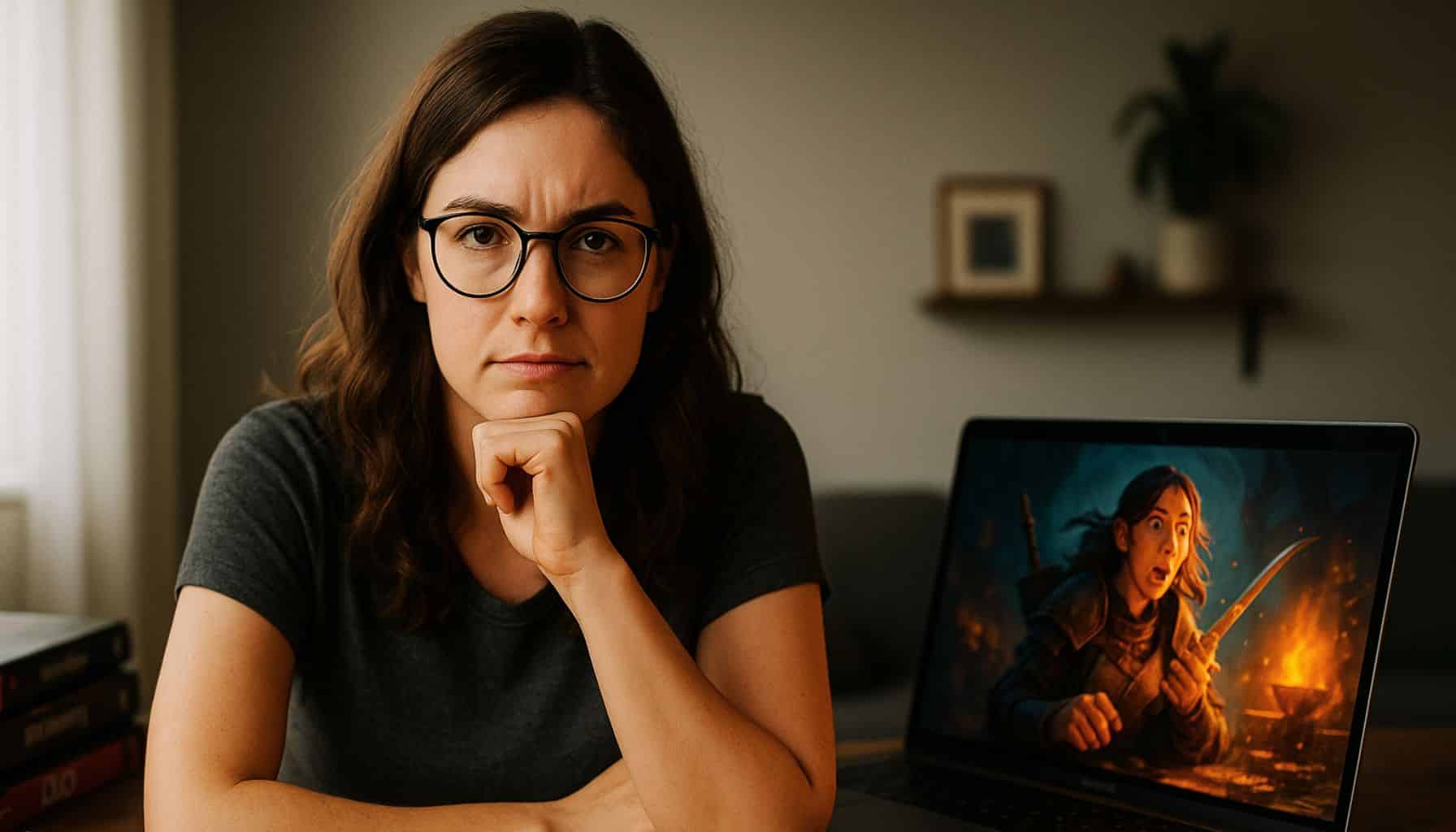
The question of whether AI art and RPG tools are ethical for Dungeons & Dragons is perhaps the single most volatile topic in the tabletop community right now, sitting right alongside the OGL controversy in terms of sheer heat. As a Dungeon Master, I have watched this debate tear through subreddits, Discord servers, and Twitter threads, leaving a trail of blocked accounts and hurt feelings in its wake. It is not a simple binary choice between “supporting artists” and “being a tech bro,” but rather a messy, evolving conversation about accessibility, ownership, and the soul of our hobby. For many DMs, the arrival of tools like Midjourney and DALL-E felt like a miracle that suddenly solved the visualization problem, only for that miracle to immediately curdle into a moral dilemma. This article is not an attempt to issue a final verdict from on high, but rather to explore the murky gray areas where most of us actually play.
We need to frame AI art ethics as a live, evolving issue inside the D&D community rather than a settled moral verdict that you either pass or fail. The technology is moving faster than our social norms can keep up with, and what felt acceptable six months ago might feel predatory today, or vice versa. For the average Dungeon Master running a home game on Friday nights, the stakes are significantly different than they are for a publisher like Wizards of the Coast or a third-party creator selling books on Kickstarter. We have to separate the ethics of consumption from the ethics of production, and the ethics of the private table from the ethics of the marketplace. If we treat every use of AI art as equally damning, we lose the nuance required to make practical decisions for our own campaigns.
This article is not trying to “win” the AI art debate or convince you to join a specific ideological camp. Instead, my goal is to give DMs a practical, honest framework for deciding how or if to use AI-generated art in their own campaigns. We are going to look at the tension between accessibility (the ability for anyone to have cool visuals) and creativity (the human spark that drives D&D), as well as the friction between community norms and individual artist impact. There is a valid argument that AI tools democratize imagination, and there is an equally valid argument that they are built on the uncompensated labor of the very people who built the visual language of fantasy. Holding both of those truths in your head at the same time is uncomfortable, but it is necessary for navigating this landscape honestly.
Crucially, clarify that the focus here is tabletop play—the private, non-commercial home game—not commercial publishing, where ethical expectations differ wildly. If you are selling a product, you have a professional responsibility to labor practices that a DM running a game for four friends in a basement does not necessarily share. However, even in private games, our choices ripple out into the wider culture of the hobby. By examining why this issue hurts, where the red lines are, and how to use these tools responsibly, we can find a way to visualize our worlds without selling out our values. Let’s dig into the mess.
- Why AI Art in D&D Became an Ethical Flashpoint
- What People Mean When They Say “AI Art Is Unethical”
- The Practical Reality at the Table: Why DMs Use AI Art
- My Line as a DM: Where AI Art Feels Acceptable (and Where It Doesn’t)
- AI Art as Placeholder, Prototype, or Assistive Tool
- Consent-Based and Artist-Opt-In AI Models
- Co-Creation Tools and Human-in-the-Loop AI Art
- Canon, Homebrew, and Contextual Ethics
- Cultural and Aesthetic Theft Beyond Copyright
- The Economic Stratification Problem
- What I Tell My Players About AI Art
- Common Bad-Faith Arguments in the AI Art Debate
- The Moral Balance Sheet: Weighing the Trade-Offs
- Navigating the Gray Area
- So… Is AI Art Ethical for D&D?
- Final Thoughts: Ethics Are a Practice, Not a Verdict
Why AI Art in D&D Became an Ethical Flashpoint
The collision between AI art ethics and tabletop gaming culture was violent and immediate because D&D has always been a hobby sustained by a visual feedback loop between fans and creators. Unlike video games where the visuals are provided for you, TTRPGs rely on a collective imagination that has been literally illustrated by generations of freelance artists. From the oil paintings of the 1980s boxes to the digital character commissions of the Critical Role era, artists have been the architects of our shared dreams. When AI generators arrived, capable of churning out “fantasy elf warrior in the style of Greg Rutkowski” in seconds, it didn’t just feel like a new tool; it felt like a betrayal of the people who helped us visualize our games in the first place.
D&D relies heavily on fan art, commissions, and community creativity in a way that few other hobbies do. The “character commission” is a rite of passage for many players, a way of investing money back into the community to honor a beloved character. This ecosystem created a symbiotic relationship: players got unique art, and artists got a living wage doing what they loved. AI-generated fantasy art disrupted this ecosystem by offering a “good enough” alternative for free, bypassing the human connection entirely. This is why the AI art controversy in D&D feels so much more personal and invasive here than in, say, corporate graphic design; it strikes at the heart of a community economy built on mutual support.
Try my AI Tabletop RPG generators...and an extensive library of content!
Furthermore, the D&D community art scene is intimately tied to identity and representation. Players often commission art because they want to see characters that don’t exist in official books—specific combinations of race, class, gender, and disability that reflect their own lived experiences. When AI-generated art debate focuses on the “soullessness” of the images, it is often addressing the fact that AI operates on averages and stereotypes found in its training data. For a community that prides itself on inclusivity and infinite possibility, a tool that recycles the “average” of fantasy art can feel regressive. The flashpoint isn’t just about money; it’s about who gets to define what fantasy looks like.
The Role of Artists in the Dungeons & Dragons Ecosystem
Artists have historically shaped D&D’s identity more than perhaps any single game designer or writer. The specific aesthetic of the Monster Manual, the sweep of a landscape on a DM screen, and the gritty texture of a dungeon map are what pull players into the immersion of the game. Even players who have never hired an artist have had their imaginations trained by the work of legends like Larry Elmore, Todd Lockwood, and newer stars like Magali Villeneuve. This visual language is the interface through which we access the mechanics; without it, D&D is just math.
Because of this deep history, many players feel a fierce sense of loyalty to human artists that goes beyond simple consumer preferences. In the D&D space, artists are not faceless service providers; they are party members, community leaders, and friends. The backlash against AI isn’t an abstract economic theory for most DMs; it is a defense of people they actually know and interact with on social media. When a company uses AI art, it is interpreted as a signal that they do not value the labor that built the aesthetic value of their product.
This brings us to the uncomfortable reality that ethics in D&D are inseparable from community norms. What is “legal” regarding AI art (which is currently a grey area) matters far less to the D&D community than what is “right” by the standards of the table. If using AI art makes your players feel icky or makes you feel like you are crossing a picket line, then it is a problem for your game regardless of copyright law. We play D&D to connect with humans, and replacing a vital part of that human chain with an algorithm inevitably creates friction.
⚔️ Fantasy RPG Random Tables Books
Make life as a Gamemaster easier…
If you play Dungeons & Dragons, Pathfinder, or other fantasy RPGs, this
RPG random tables series
is packed with encounters, NPCs, treasure, and more. Available in eBook or print—either way, you’ll have a wealth of adventure ideas at your fingertips.




What People Mean When They Say “AI Art Is Unethical”
When people argue that “AI art is unethical,” they are often using the word “unethical” as a shorthand for a bundle of distinct, overlapping grievances. It is important to clarify that “unethical” is doing a lot of heavy lifting in these conversations, covering everything from copyright infringement to environmental concerns. For some, the issue is purely legal: the models were trained on data they didn’t have the rights to. For others, it is metaphysical: a machine cannot create “art” because it lacks intent. Separating these strands allows us to see which parts of the AI art vs human artists debate actually apply to our home games.
The most prominent ethical objection revolves around economic harm and the devaluation of labor. The argument is that by flooding the market with free or cheap images, AI devalues the skill and time required to learn illustration. This creates a “race to the bottom” where human artists cannot compete with the speed and cost of a generator, effectively forcing them out of the industry. In this view, using AI art is unethical because it participates in the destruction of a viable career path for creatives, contributing to a future where only the wealthy can afford to make art for a living.
There is also the argument of emotional harm and “identity theft.” For an artist who has spent decades developing a unique style, seeing an algorithm mimic that style perfectly—and often be used to generate pornography or hateful content using that aesthetic—is a profound violation. This is different from a human student learning from a master; it is an automated, industrial-scale strip-mining of a person’s visual identity. When critics say AI art is unethical, they are often referring to this specific lack of consent and the feeling of having one’s life work weaponized against them.
Finally, there is the broader societal concern about the degradation of truth and shared reality. While less relevant to a picture of a goblin, the normalization of deepfakes and generated imagery creates a culture where “seeing is believing” no longer applies. Some DMs avoid AI art not because they hate the goblin picture, but because they do not want to support the infrastructure that makes non-consensual deepfakes possible. They view the technology itself as poisonous fruit, regardless of the specific use case at the table.
Training Data, Consent, and Intellectual Property
The core ethical rot, according to most critics, lies in the training data. AI models like Stable Diffusion and Midjourney were trained on billions of images scraped from the internet without the consent, credit, or compensation of the original creators. This includes everything from public domain masterpieces to watermarked private commissions and medical records. The argument is that these models are essentially “laundering” copyright infringement through complex mathematics, creating a commercial product built entirely on stolen raw materials.
This is fundamentally an issue of consent. If an artist puts their work online to find clients, they did not consent to that work being used to train a machine designed to replace them. Critics argue that the “fair use” defense used by AI companies is a legal loophole that violates the spirit of intellectual property. Even if it is eventually ruled legal (which is currently being litigated), many in the creative community view it as morally bankrupt to use a tool built on non-consensual data scraping. This is the “poisoned tree” theory: if the dataset is unethical, everything the model produces is unethical.
This connects deeply to AI art concerns relevant to fantasy art because fantasy is a genre built on shared tropes but distinct styles. When a model creates an image, it is not “imagining” a dragon; it is blending the mathematical probability of thousands of dragon paintings done by specific humans. Without those humans, the model generates nothing. Therefore, using the output without acknowledging the input is seen as a form of erasure.
Why This Hits Fantasy Artists Especially Hard
Fantasy illustration is uniquely vulnerable to AI disruption because it relies heavily on specific, recognizable aesthetics and “style mimicry.” Unlike abstract art or photography, fantasy art often revolves around rendering techniques—how light hits armor, how magic glows, how scales are textured. These are the exact patterns AI models are excellent at identifying and replicating. When a user prompts for “fantasy oil painting,” the AI is often pulling heavily from the work of living artists who define that look, effectively commodifying their specific brushstrokes.
Furthermore, fantasy art serves a niche market that is passionate but not wealthy. Many fantasy artists survive on small commissions from RPG players and indie authors. AI generators target this exact demographic, offering a “good enough” alternative for free. This means the artists being hit hardest aren’t the high-end gallery painters, but the working-class illustrators who sustain the TTRPG hobby. The technology is essentially eating the bottom rung of the ladder, making it impossible for new artists to enter the field and develop their skills.
Consent remains the ethical core for many critics. If AI models had been trained only on public domain works or images from artists who opted in, the backlash would likely be a fraction of what it is today. The anger stems not from the technology itself, but from the perceived theft required to build it. Until the data provenance issue is solved, the cloud of “unethical” usage will likely hang over every AI-generated image.
The Practical Reality at the Table: Why DMs Use AI Art
Despite the ethical firestorm, the reality is that thousands of Dungeon Masters use AI art every single day. We have to acknowledge why AI art in D&D is so appealing: it solves the “visualization gap” that has plagued home games for decades. Most DMs are not artists, and most DMs are not wealthy enough to commission art for every NPC, location, and item in their campaign. Before AI, the alternative was Google Images, Pinterest, or “theater of the mind.” AI offers a fourth option: custom, specific visuals that match the DM’s vision exactly, available instantly and for free.
⚔️ Fantasy RPG Random Tables Books
Make life as a Gamemaster easier…
If you play Dungeons & Dragons, Pathfinder, or other fantasy RPGs, this
RPG random tables series
is packed with encounters, NPCs, treasure, and more. Available in eBook or print—either way, you’ll have a wealth of adventure ideas at your fingertips.
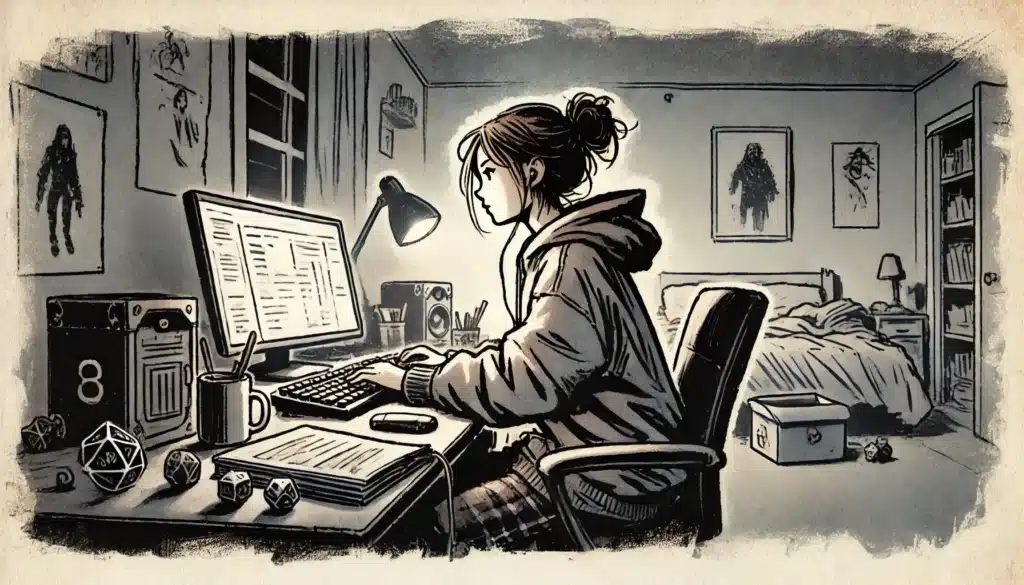
For many DMs, the constraints are time and budget. Prep time is a finite resource. Spending three hours searching Pinterest for “female half-orc paladin with a scar and green armor” might yield zero results. Typing that prompt into Midjourney yields four options in sixty seconds. In a hobby where “DM burnout” is a constant threat, tools that save time and reduce cognitive load are incredibly seductive. Using AI art in campaigns allows DMs to create a level of visual polish that was previously reserved for professional actual-play shows like Critical Role, which helps keep players engaged and immersed.
There is also the factor of “vision fidelity.” When a DM uses Google Images, they are often settling for “close enough.” The NPC has a sword instead of an axe, or blonde hair instead of red. With AI character portraits for D&D, the DM can iterate until the image matches the picture in their head. This creative control is empowering. It feels less like stealing and more like creating. For a DM who creates purely for the joy of their friends, the ethical abstractions of the art market often feel distant compared to the immediate joy of showing their players a cool picture of the villain.
Accessibility, Cost, and Time as Ethical Pressures
It is crucial to understand that for the vast majority of DMs, they are not choosing between AI art and commissioning an artist—they are choosing between AI art and nothing. The “lost sale” argument often assumes that if AI didn’t exist, the DM would have paid $100 for a portrait. In reality, that DM has $0 budget for art. The AI is replacing a blank index card or a stolen image from Pinterest, not a paid commission. Frame this as an access issue: AI allows people with no budget to participate in the visual aspect of the hobby.
This does not absolve the ethical issues of the training data, but it contextualizes the harm of the user. A broke college student running a game for their roommates using AI art is not impacting the art market in the same way a corporation using AI to avoid hiring illustrators is. The scale of power matters. Accessibility is an ethical good in itself; allowing more people to express their creativity is a positive outcome, even if the tool used to achieve it has a problematic origin.
Common DM Use Cases for AI Art:
- NPC Portraits: Generating faces for shopkeepers, quest givers, and villains.
- Location Mockups: Visualizing a specific alien landscape or weird fantasy city.
- Mood-Setting Images: Abstract art to put on a VTT landing page to establish tone.
- Enemy Visuals: Creating custom monsters that don’t exist in the Monster Manual.
- Item Cards: Icons for potions, magic swords, or quest artifacts.
- VTT Tokens: Creating top-down tokens for grid combat.
- Character Inspiration: Players generating images to help them figure out their look.
- Handouts: Wanted posters, letters, or puzzle clues.
- Spell Effects: Visualizing what a specific custom spell looks like.
- Deity/Patron Art: Massive, cosmic entities that are hard to describe.
- Regional Maps: Generating rough terrain ideas (though AI is still bad at logical maps).
- Placeholder Art: Using AI to hold a spot until a commission can be afforded.
Ultimately, intent and context matter. A DM using AI to enhance a private story for friends is operating in a different ethical universe than someone using it to generate assets for a product they intend to sell. Recognizing this distinction is the first step toward a sane conversation about usage.

My Line as a DM: Where AI Art Feels Acceptable (and Where It Doesn’t)
So, where do I stand? As a DM who loves this hobby and respects artists, I have had to draw my own lines in the sand. My stance is built on transparency, scope, and non-commercial use. I believe that ethical consumption under capitalism is difficult, but we can still make choices that minimize harm. For me, the red line is money. If money is changing hands—if I am selling a module, a stream, or a Patreon subscription—I do not use AI art. Period. If I am profiting, I have a responsibility to pay the people whose work makes my product possible.
However, in my private home games, I am more flexible. I view my home game as a private creative space, similar to a sketchbook or a private conversation. In this space, I use ethical use of AI tools to facilitate play, provided I am not claiming ownership or displacing a human artist I would have otherwise hired. I treat AI art in tabletop games as a utility, not a replacement for the human soul of the hobby. It is a tool for the “boring” stuff or the “impossible” stuff, not the centerpiece.
Try my AI Tabletop RPG generators...and an extensive library of content!
This is a judgment call, not a universal rule. Every DM has to find the point where they can sleep at night. For some, any use of AI is complicity in theft. For others, it’s all fair game. My position is a compromise: I want to use the cool technology to make my game better, but I don’t want to contribute to the erosion of the artist community I rely on.
AI Art as a Private Table Tool
The distinction of the “private table” is critical. A home D&D game is essentially fan fiction. We use copyrighted music for ambience, we rip images from Pinterest for tokens, and we steal plotlines from our favorite books. We have always played in a legal and ethical gray zone of “fair use” because we are not distributing or selling the result. AI art fits into this tradition. When I generate an image of a tavern for my four friends, the impact on the global art market is statistically zero.
In this context, the expectations of scale and impact are low. My players know I didn’t paint the tavern. They know I didn’t pay $200 for it. They understand it is a visual aid to help us pretend to be wizards. The harm is mitigated by the containment of the activity. It stays at the table. It is ephemeral.
Where I Personally Draw the Line
Even in private, I have boundaries. I treat the AI as a dangerous tool that needs safety rails.
My Personal AI Boundaries:
- No Selling: I never monetize AI content.
- No Replacing Commissions: If I have the budget and the need for a “hero” piece, I hire a human.
- No “In the Style of”: I do not use prompts that name specific living artists (e.g., “in the style of Greg Rutkowski”).
- No Credit Stripping: If I post a recap online, I label AI art clearly. I never claim I drew it.
- No Misrepresentation: I don’t let players believe I commissioned art when I didn’t.
- No Contest Entries: I don’t submit AI art to contests or community showcases.
- No Deepfakes: I never generate images of real people (celebrities or friends) without consent.
- No Hateful Content: I adhere to strict content safety guidelines.
- Opt-Out Respect: If a player expresses discomfort with AI art, I stop using it for that campaign.
- Artist Support: I continue to support human artists via Patreon and commissions for major milestones.
Ethical comfort zones vary, and yours might be stricter or looser than mine. The important thing is that you have a line, rather than just passively consuming whatever the tech companies serve up.

AI Art as Placeholder, Prototype, or Assistive Tool
There is a compelling middle-ground position that treats AI art as temporary, exploratory, or collaborative rather than final. In this framework, AI serves as a “sketchpad” or a communication tool. Instead of the final product, it is the prototype. This aligns with best practices for ethical AI art use in games, where the AI helps bridge the gap between a vague idea and a concrete creative brief for a human artist.
Many DMs and indie creators struggle to articulate what they want visually. They might have a “vibe” but lack the vocabulary to describe lighting, composition, or architectural style. AI allows them to generate fifty variations of a concept, pick the one that matches their vision, and say, “That’s it!” This doesn’t replace the artist; it actually makes the artist’s job easier when the time comes to commission the final piece.
Prototyping Without Replacing Artists
Imagine you want to commission a cover for your homebrew campaign guide. You could send the artist a wall of text describing the mood, or you could send them a “mood board” of AI-generated images that capture the lighting, color palette, and composition you are looking for. You then tell the artist, “I want the lighting of image A, the armor style of image B, and the pose of image C, but drawn in your unique style.”
This approach respects the human artist as the final executor of the vision while using AI to handle the messy “brainstorming” phase. It creates a clearer contract and reduces the number of revisions needed. The AI is not the artwork; the AI is the reference material.
Why This Matters for Indie and Small Creators
For indie creators operating on shoestring budgets, this prototyping phase is essential for sustainability. It allows them to “fail fast” visually without spending money they don’t have. They can test concepts, see what works, and then invest their limited art budget into the most important pieces.
This framing positions AI as scaffolding. Scaffolding is necessary to build the house, but you take it down when the house is finished. If we treat AI as the scaffolding for human creativity, we can leverage its speed without sacrificing the human touch in the final product.

Consent-Based and Artist-Opt-In AI Models
The ethical landscape is not static. We are seeing the rise of consent-based datasets and artist-opt-in models that aim to solve the “theft” problem. Companies like Adobe (with Firefly) are training models on stocks they own or public domain images. While not perfect, these open-source AI art tools and ethical AI art models attempt to build a generative engine without the “poisoned tree” of scraped data.
Using these models changes the moral calculus significantly. If the artists in the training set were compensated or gave consent, the primary argument against AI—theft of labor—evaporates. DMs who want to use AI ethically should actively seek out and support these models over the “scrape everything” models. It requires more effort, and the results might not be as “good” initially, but it aligns the technology with community values.
Why Model Provenance Will Matter More Over Time
In the future, “Model Provenance”—knowing where the training data came from—will likely become the ethical baseline for AI usage. Just as we care about “Fair Trade” coffee or “Cruelty-Free” cosmetics, we will likely see a movement toward “Ethically Sourced” AI. DMs can lead this charge by demanding transparency from the tools they use.
If you know a model was trained ethically, you can use it with a clear conscience. This shifts the responsibility from the end-user to the developer. As consumers, we vote with our attention. By favoring transparent models, we signal that ethics is a feature we are willing to “pay” for (either in money or slightly lower quality). Ethics are time-sensitive; what is unethical today might be solved by a better business model tomorrow.
Co-Creation Tools and Human-in-the-Loop AI Art
Another way to reclaim agency is to move from “prompt and pray” (typing words and accepting the output) to “Human-in-the-Loop” creation. This reframes AI art as collaboration rather than automation. Tools that allow for “img2img” (starting with a sketch), “inpainting” (editing specific parts of an image), and “control nets” (dictating pose and composition) put the human back in the driver’s seat.
When a DM sketches a rough map and uses AI to render it, or paints a crude color block and uses AI to texturize it, they are engaging in co-creation. The AI is acting as a super-powered paintbrush, not a replacement artist. This distinction is vital because it preserves the creative intent of the user. You are not just consuming content; you are making it.
⚔️ Fantasy RPG Random Tables Books
Make life as a Gamemaster easier…
If you play Dungeons & Dragons, Pathfinder, or other fantasy RPGs, this
RPG random tables series
is packed with encounters, NPCs, treasure, and more. Available in eBook or print—either way, you’ll have a wealth of adventure ideas at your fingertips.
When AI Feels Like a Creative Extension
Features that emphasize collaboration:
- Image-to-Image: Using your own sketch as the base.
- Inpainting: Fixing hands or changing a background element manually.
- Outpainting: Expanding the canvas of an existing image.
- ControlNet: Using a pose reference to dictate character stance.
- Regional Prompting: Telling the AI exactly where to put the dragon.
- Texture Overlays: Using AI to generate textures for 3D models you built.
- Style Training (LoRA) on Own Art: Training a model on your own drawings to speed up your workflow.
- Photobashing: Combining multiple AI images in Photoshop to create a new composition.
- Color Grading: Using AI to adjust the mood of a photo you took.
- Iterative Refining: Going back and forth between manual editing and AI generation.
Process matters ethically. If you are sweating over the image, making decisions, and guiding the output, the resulting art feels more like “yours.” It bridges the gap between the soulless algorithm and the human artist.

Canon, Homebrew, and Contextual Ethics
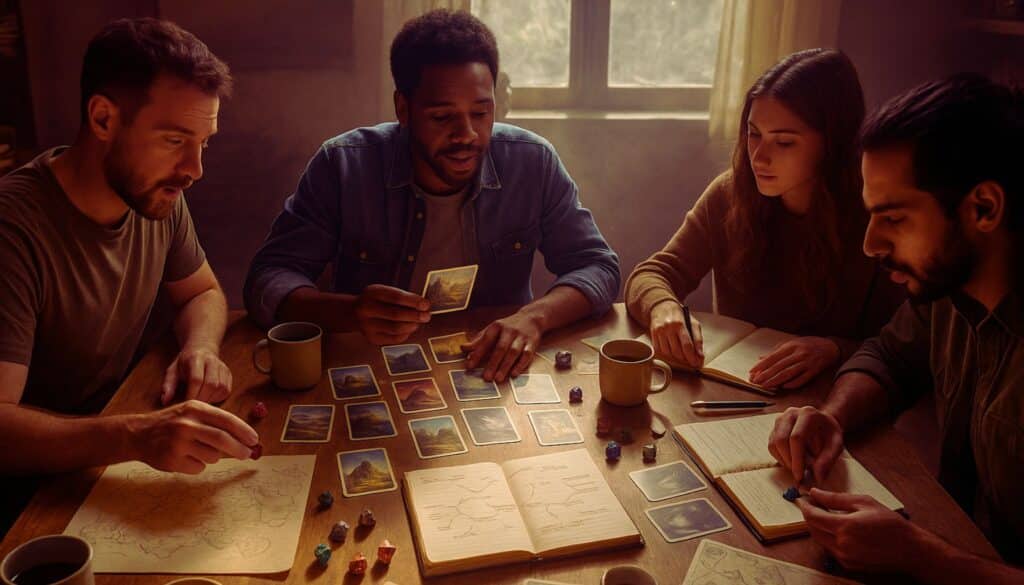
We must acknowledge that ethical standards shift based on context. What is acceptable in a messy, private homebrew setting is different from what is acceptable in a polished, published setting. Contextual ethics allow us to apply different rules to different scales of activity.
Why Homebrew Gets More Ethical Leeway
Homebrew is the “punk rock” of D&D. It is DIY, scrappy, and non-commercial. The harm radius of a homebrew game is essentially zero. Because no money is involved and the audience is limited to a handful of friends, the ethical strictures are looser. We accept that homebrew often borrows assets, music, and ideas from copyrighted sources. AI fits naturally into this chaotic collage of creativity.
In a homebrew context, the goal is fun, not product. If AI helps you have more fun, it is serving its purpose. The expectation of originality is low. We are there to kill goblins, not critique the provenance of the goblin token.
Why Publishing Changes the Moral Math
The moment you put a price tag on your content—whether it’s a $5 PDF on DMsGuild or a Kickstarter campaign—the moral math changes. You are now a business. You are competing with other businesses that hire human artists. Using AI in this context undercuts the labor market and creates an unfair advantage.
Furthermore, a product has a wider audience. You are responsible for what you put into the world. If you sell a book with AI art that mimics a specific artist without their consent, you are profiting from their identity. The community rightly holds publishers to a higher standard because they have the power and resources to do better.
Cultural and Aesthetic Theft Beyond Copyright
There is an ethical layer that goes beyond legality: cultural aesthetic theft. AI models are often biased toward Western fantasy tropes, but they can also strip-mine the aesthetics of specific cultures without understanding their meaning. Generating “tribal tattoos” or “eastern temples” can result in a mash-up of sacred symbols that is disrespectful and reductive.
This is where “It’s just a style” stops being a neutral argument. Styles are tied to people, histories, and communities. When we use AI to mimic the “look” of an Indigenous art style or a specific cultural heritage, we are often engaging in a form of digital colonialism—extracting the aesthetic value while discarding the people who created it.
Why “It’s Just a Style” Isn’t Neutral
Styles are developed over lifetimes. They are the visual signature of an artist or a culture. While you cannot copyright a style, copying it industrially feels wrong to many people because it separates the visual from the human experience that created it. DMs should be cautious about using AI to replicate the specific “vibe” of marginalized creators or cultures, as this can perpetuate stereotypes and erase the need for authentic representation.
The Economic Stratification Problem
We must also talk about class. The argument “Just hire an artist” is inherently classist. It assumes the DM has disposable income. For a DM living paycheck to paycheck, commissioning a $100 character portrait is a fantasy. Banning AI outright can unintentionally gatekeep creativity, making high-quality visuals the exclusive domain of the wealthy.
Ethics vs Access: An Uncomfortable Tradeoff
This is a real tension, not a strawman. We want to support artists, but we also want a hobby that is accessible to everyone regardless of income. If we demonize all AI use, we punish the poor DM who just wants a cool picture for their game.
We need empathy on both sides. Artists are fighting for their livelihoods; DMs are fighting for their creative expression. Recognizing that both needs are valid—even if they are currently in conflict—is essential for a healthy community. We can advocate for better artist pay and better free tools simultaneously.
What I Tell My Players About AI Art
The best policy is radical transparency. Don’t hide your AI use. Talk to your players about it.
How to Talk to Players:
- Session Zero: “I use AI for NPC portraits to save money. Is everyone okay with that?”
- Labeling: “This image is AI-generated.”
- Credit: “This concept was generated by Midjourney, but the character idea is mine.”
- Consent Check: “If anyone hates looking at AI art, let me know and I’ll stick to theater of the mind.”
- The “Why”: Explain why you use it (budget/time).
- Boundaries: “I promise never to use it for your PC art unless you want me to.”
- Feedback: “If an image looks weird or uncanny, tell me and I’ll trash it.”
- Collaboration: “Feel free to use it for your own inspiration, or ignore it.”
Trust over perfection. If your players know you are being honest, they will usually forgive the use of the tool.

Common Bad-Faith Arguments in the AI Art Debate
We need to stop screaming at each other. The debate is plagued by bad-faith arguments that shut down nuance.
Arguments That Shut Down Real Discussion
- “It’s just a tool like a camera.” (Ignores the training data issue).
- “Real artists are obsolete/Luddites.” (Insulting and untrue; human intent matters).
- “All art is theft/derivative anyway.” (False equivalence; human learning != machine scraping).
- “It’s illegal!” (Not yet decided by courts).
- “It creates soul.” (It generates pixels; the soul comes from the user/viewer).
- “If you use AI, you hate artists.” (Binary thinking; ignores economic reality).
- “You’re gatekeeping D&D.” (Valid concern, but often used to dismiss artist concerns).
- “It looks like trash anyway.” (Subjective and increasingly untrue).
- “Prompting is hard work.” (It’s effort, but it’s not the same work as painting).
- “Adapt or die.” (Social Darwinism is not a helpful ethical framework).
We need better conversations that acknowledge the pain and the potential on both sides.
The Moral Balance Sheet: Weighing the Trade-Offs
Ethics are rarely black and white; they are a series of trade-offs we make based on our values and resources. To help you make your own decision, I have broken down the AI art debate into its component parts. This isn’t just a list of “good vs. bad”; it is a balance sheet of what you gain as a DM versus what the community pays as a cost.
When you look at this table, pay attention to which rows matter most to you. If your primary constraint is money, the “Accessibility” row might outweigh the “Labor” row. If your primary value is community solidarity, the “Social Contract” row might be your dealbreaker. There is no algorithm for a clear conscience, but seeing the math laid out can help you find your own equilibrium.
The DM’s Ethical Calculus Matrix
| Dimension | The DM Benefit (The “Pro” Argument) | The Community Cost (The “Anti” Argument) | The Nuanced Reality / Compromise |
| Financial Accessibility | Democratization: Allows DMs with $0 budget (students, low-income) to have high-quality visuals previously reserved for the wealthy. Levels the playing field. | Devaluation: Creates an expectation that art should be free. Erodes the market for beginner artists who used to take $20 commissions. “Exposure” doesn’t pay rent. | Reality: Most DMs using AI were never going to buy art anyway. Compromise: Use AI for free home games; commit to buying human art if/when you ever monetize. |
| Prep Time & Speed | Velocity: Generates a specific visual in 30 seconds mid-session. Keeps the game flow moving without stopping to Google for 20 minutes. | Impatience: Encourages a culture of “instant gratification.” We lose the appreciation for the time and craft required to make something truly unique. | Reality: Improv is the heart of D&D. Compromise: Use AI for “throwaway” moments (random shopkeeper); save human art for “anchor” moments (PC portraits, BBEG). |
| Vision Fidelity | Control: You get exactly what you imagined (e.g., “blue tiefling with a scar on left eye”), not just “close enough” from Pinterest. Validates niche character concepts. | Homogenization: AI models revert to the “mean.” Everything starts to look like the same glossy, generic fantasy oil painting. We lose unique, weird, or “ugly” art styles. | Reality: AI is great for stereotypes, bad for specifics. Compromise: Use tools like ControlNet to force your own composition, or learn to photobash to break the “AI Look.” |
| Copyright & Data | Fair Use: For a private home game, this arguably falls under fair use (like playing a Spotify soundtrack). You aren’t distributing or selling it. | Laundering: The model itself was likely built on stolen data. Using it validates the theft, even if your specific use case is benign. It’s “fruit of the poisonous tree.” | Reality: The legal system is slow; the moral system is fast. Compromise: Seek out “Ethical” models (like Adobe Firefly) trained on licensed stock, even if they are currently less powerful. |
| Inspiration & Creativity | Unblocking: Cures “Blank Page Syndrome.” A weird AI glitch might inspire a whole new monster stat block. It acts as a visual brainstorming partner. | Atrophy: Over-reliance on the machine can weaken your own imaginative muscles. You stop trying to describe things with words because you have a picture. | Reality: Visuals are just one tool. Compromise: Write your description first. Use the image to support your words, not replace them. |
| Style Mimicry | Consistency: You can generate a whole world in a consistent art style, making the campaign feel cohesive and professional. | Identity Theft: Generating art “In the style of [Living Artist]” is a moral violation of that person’s brand and identity. It commodifies their soul. | Reality: Style isn’t copyrightable, but it is personal. Compromise: Never prompt with a living artist’s name. Prompt for genres (“1980s VHS cover,” “Baroque Oil”) instead. |
| Environmental Impact | Physical Waste: Zero paper, canvas, or shipping materials used. No physical waste product is created. | Energy Burn: Generative AI data centers consume massive amounts of water and electricity. A single image can cost as much energy as charging a smartphone. | Reality: All digital activity has a carbon cost. Compromise: Limit generation. Don’t “doom scroll” through 500 images to get one; learn to prompt efficiently to minimize server load. |
| Representation & Bias | Customization: You can force diversity into your world by specifically prompting for varied ethnicities, body types, and abilities. | Stereotyping: Default AI models are trained on biased data. Without specific prompting, they default to “White, Male, Athletic” heroes and sexualized women. | Reality: The machine is a mirror of our biases. Compromise: actively “fight” the algorithm. Prompt specifically for underrepresented traits and reject biased outputs. |
| Player Reaction | Immersion: High-quality visuals suck players in immediately. It sets a tone of seriousness and effort for the campaign. | The “Ick” Factor: Some players feel a visceral revulsion to AI art (uncanny valley, ethical stance). It can break immersion if they are focusing on the weird hands. | Reality: Know your table. Compromise: Ask your players in Session Zero. If even one player hates it, default to Theater of the Mind. |
| The “Soul” of D&D | Empowerment: D&D is about making things. AI lets more people “make” things they couldn’t before. It expands the circle of creators. | Hollow Center: D&D is about human connection. Removing the human artist removes a link in the chain. We risk playing a game by machines, for machines. | Reality: The DM and Players provide the soul. The art is just the window dressing. Compromise: Ensure the story remains 100% human-generated. |
| Economic Impact | Efficiency: Frees up DM budget to spend on other things (minis, books, VTT subscriptions, snacks). | Precarity: Contributes to the collapse of the freelance economy. If illustrators quit, we have no new art to train the next AI on. | Reality: We are in a transition period. Compromise: Support artists in other ways—Patreon, buying prints, or tipping—if you are saving money on commissions. |
Navigating the Gray Area
Ultimately, using AI art in D&D requires DMs to develop a sense of “Ethical Literacy.” We are used to thinking of tools as neutral—a hammer is just a hammer—but AI is not a neutral tool. It is a tool made of other people’s work. Using it responsibly means acknowledging that debt. It means refusing to let the convenience of the tool make you lazy or callous toward the people it displaces. It means using the time you save on art to double down on the human elements of your game: the storytelling, the emotional beats, and the personal attention you give your players.
Try my AI Tabletop RPG generators...and an extensive library of content!
There is also the concept of “Ethical Debt.” If you are a broke student using AI art to run your first campaign, you are borrowing from the collective creative capital of the art community. That is okay; we all start somewhere. But consider how you might pay that debt forward later. Maybe when you have a job, you commit to commissioning a human artist for the campaign finale. Maybe you subscribe to a few artist Patreons for $5 a month. The goal is to ensure that as you extract value from the ecosystem, you find ways to put value back in.
Finally, remember that the “Cool Factor” is not the only metric of success. A rough stick-figure drawing you made yourself has a charm and vulnerability that a slick, soulless AI render can never match. Your players are at the table for you, not for a gallery show. If you choose to use AI, use it because it serves the fun of the group, not because you feel pressured to compete with the production value of a multi-million dollar actual play show. Your imagination is the only graphics card you actually need; everything else is just optional DLC.
So… Is AI Art Ethical for D&D?
The answer is: It depends on how you use it.
If you are using AI to generate private visual aids for a home game because you have no budget, and you are transparent about it, and you aren’t monetizing it? Yes, I believe that is ethical enough. It falls under the umbrella of private creativity and fair use.
If you are using AI to generate assets for a commercial Kickstarter product to avoid paying an artist, while mimicking the style of living creators who did not consent to their work being used? No, I believe that is unethical. It exploits the community for profit.
“Ethical enough for my table” is a valid standard. We are all navigating a flawed system. As long as you are thoughtful, transparent, and respectful of the humans in the ecosystem, you are doing your best.

Final Thoughts: Ethics Are a Practice, Not a Verdict
Ethics aren’t a test you pass once; they are a daily practice. As AI tools evolve, your stance might change. Maybe next year, a fully “clean” model comes out, and the debate ends. Maybe the laws change. Until then, we have to muddle through with empathy.
⚔️ Fantasy RPG Random Tables Books
Make life as a Gamemaster easier…
If you play Dungeons & Dragons, Pathfinder, or other fantasy RPGs, this
RPG random tables series
is packed with encounters, NPCs, treasure, and more. Available in eBook or print—either way, you’ll have a wealth of adventure ideas at your fingertips.
Be intentional. Don’t use AI just because it’s there; use it because it solves a problem you can’t solve another way. Listen to artists when they say they are hurting. Support them when you can. And remember that the heart of D&D is shared creativity between humans. Any tool that threatens that connection should be handled carefully, not casually. Use the machine, but don’t let the machine use you.