
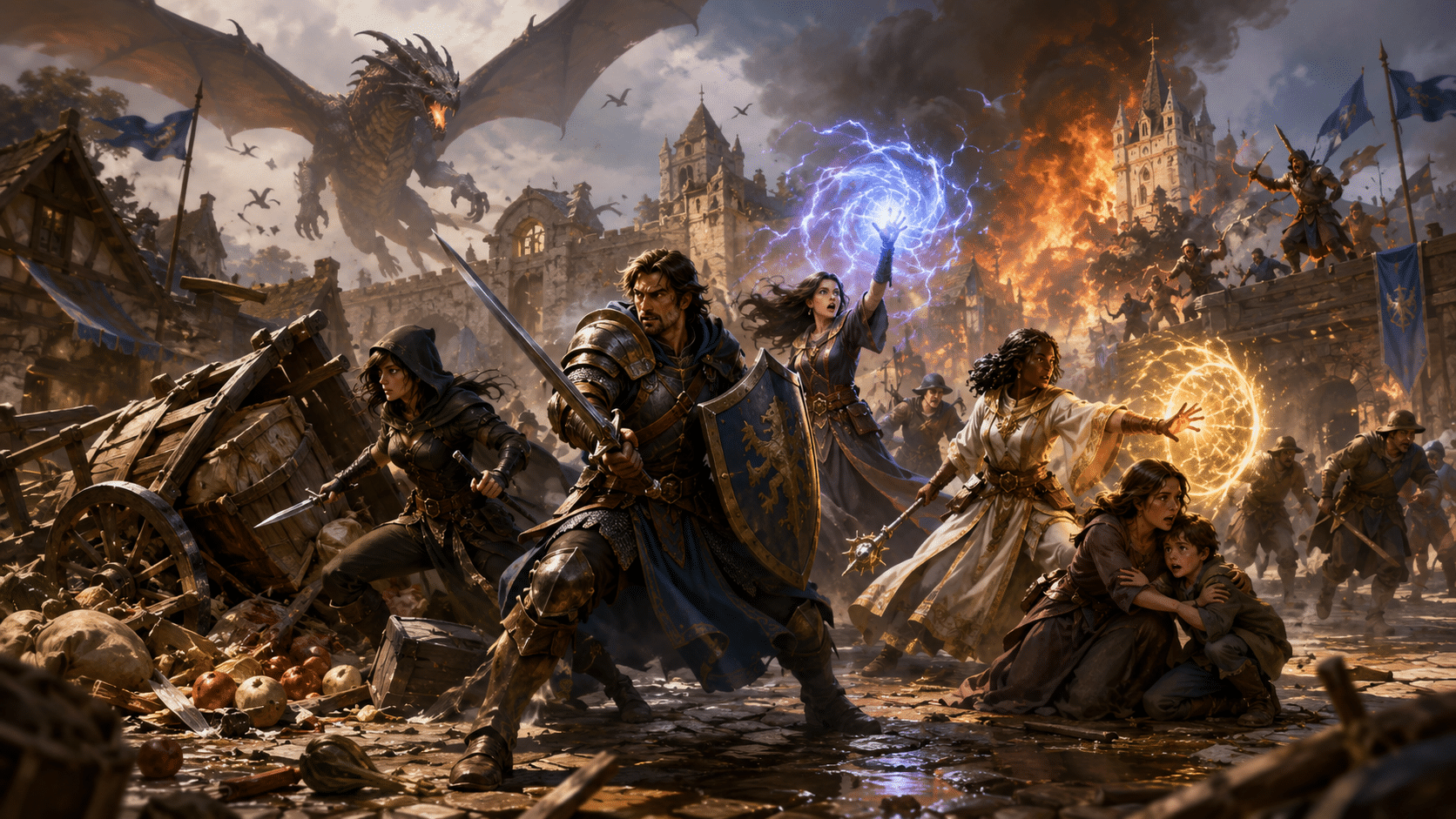
The traditional D&D campaign begins in a tavern, because apparently every fantasy nation has zoning laws requiring at least one shadowy stranger per alehouse. The characters sit around, pretend not to notice each other, and wait for someone in a hood to offer gold, doom, or both. It works. It is classic. It is also one suspiciously polished doorknob away from the players interrogating the furniture.
Starting with immediate trouble kicks the door open before anyone can ask whether the tavern has a menu. The airship is falling. The king is dead. The wedding cake is screaming in Abyssal. Suddenly, the party does not need to debate why they are together, because the answer is “because the ceiling is on fire and we are all beneath it.”
These openings create urgency, which is campaign fuel with a tiny goblin pilot light. Players have something obvious to react to: run, fight, rescue, lie, investigate, panic, or attempt to seduce the earthquake. The chaos gives every character a first impression. The paladin protects civilians, the rogue checks pockets during the evacuation, and the wizard says, “I have a spell for this,” which is how everyone learns the wizard does not, in fact, have a spell for this.
The best immediate-trouble campaign ideas are exciting, flexible, and funny when appropriate. They begin with instant disaster but grow into long-term stories full of villains, factions, mysteries, consequences, and at least one NPC who says, “Ah, yes, this was foretold,” while standing next to a crater they definitely helped make.
- Why Starting in Trouble Works So Well
- Designing the Opening Disaster
- Campaign Starts Involving Arrests, Accusations, and Legal Nonsense
- Monster Attacks Before Breakfast
- Natural Disasters, Magical Catastrophes, and Other Weather With Opinions
- The Party Wakes Up Somewhere Terrible
- Social Events That Go Horribly Wrong
- War Zones, Sieges, and Battlefield Openings
- Heists Already Gone Wrong
- Immediate Trouble for Different Campaign Genres
- Turning the Opening Crisis Into a Full Campaign
- Keeping Players From Freezing During Instant Chaos
- Final Thoughts on DND Campaigns That Begin With Trouble
Why Starting in Trouble Works So Well
Beginning a campaign with danger, confusion, or dramatic inconvenience gives the table instant momentum. Instead of waiting for the plot to buy them a drink, the characters are handed a crisis with teeth, smoke, and possibly a municipal permit violation. The players can immediately make choices, roll dice, and learn who their characters are under pressure.
Immediate trouble also creates instant stakes. If the party starts during a prison break, monster attack, royal assassination attempt, or magical blackout, there is no need to explain why action matters. Something bad is happening now. Someone needs help now. Someone is blaming the party now, which is rude but efficient.
Try my AI Tabletop RPG generators...and an extensive library of content!
Most importantly, trouble gives every character a reason to participate. Even the brooding loner with “trust issues” written in three languages has to react when the bridge collapses beneath them. The cleric heals. The fighter holds the line. The bard distracts the guards with legal arguments set to lute. Nobody is waiting awkwardly for the adventure to invite them in.
Trouble-based openings reveal character personalities incredibly fast. A calm negotiation scene may show what a character believes, but a surprise arrest shows what they do when shackled to a stranger and accused of goat treason. Panic is a truth serum, except instead of truth it produces improvised weapons and terrible plans.
Danger, mistaken identity, exploding temples, escaped monsters, cursed celebrations, and surprise warrants are all excellent personality tests. You learn quickly whether the barbarian solves problems with compassion, intimidation, or “throw the wizard.” You learn whether the wizard objects to being thrown before or after calculating trajectory.
Designing the Opening Disaster
A strong immediate-trouble opening needs a clear crisis. The players should understand the first problem quickly: the ship is sinking, the crowd is stampeding, the guards are arresting them, the dead are rising, the banquet guests are transforming into peacocks. The details can be mysterious, but the immediate danger should be obvious.
⚔️ Fantasy RPG Random Tables Books
Make life as a Gamemaster easier…
If you play Dungeons & Dragons, Pathfinder, or other fantasy RPGs, this
RPG random tables series
is packed with encounters, NPCs, treasure, and more. Available in eBook or print—either way, you’ll have a wealth of adventure ideas at your fingertips.



Next, give the party a reason to be involved. They might be witnesses, victims, suspects, employees, prisoners, guards, guests, smugglers, accidental heroes, or people who simply picked the wrong street for lunch. The reason does not need to be complicated, but it should give them permission to act without asking, “Why do we care?”
Finally, include short-term goals and long-term hints. The short-term goal might be escape the burning theater, save the mayor, stop the ritual, or survive the monster stampede. The long-term hint might be a strange symbol, a recurring name, a stolen relic, a prophecy, or a suspicious merchant brushing ash off his sleeves for the third time this week.
Opening disaster types you can drop directly onto your campaign like a meteor with narrative purpose:
- A public execution goes wrong when the condemned sprouts wings and screams the party’s names.
- An airship crashes into a noble district during a diplomatic parade.
- A cursed wedding turns half the guests into frogs and the other half into lawyers.
- A prison break begins before the party knows who arranged it.
- A monster stampede tears through a harvest festival.
- A magical blackout shuts down every spell in a city except necromancy.
- A royal assassination attempt happens while the party is standing much too close to the crossbow.
- A temple explodes during morning prayers, revealing a buried dungeon underneath.
- A portal opens in a bakery and starts dispensing demons and suspiciously good croissants.
- A plague of animated statues begins enforcing ancient parking laws.
- A dragon lands in the town square demanding restaurant recommendations and tribute.
- A noble auction is interrupted by thieves, ghosts, and one very upset mimic.
- A mining town collapses into a buried ruin full of awakened machinery.
- A festival parade float becomes possessed by a forgotten war god.
- A ship is attacked by sea monsters during the captain’s retirement speech.
- A magical academy accidentally summons everyone’s worst fear into the cafeteria.
- A coronation crown bites the new ruler and declares itself emperor.
- A traveling circus cage opens, releasing monsters that are unionized and furious.
The key is to make the opening chaotic but understandable. Players should feel like they are in the middle of a wild scene, not like they accidentally skipped three chapters and the glossary. Mystery is good. Total confusion is just fog wearing a fake mustache.
Give them clear sensory details, visible dangers, and obvious options. “The tower is collapsing, three children are trapped near the stairs, and a masked mage is escaping through the smoke” gives players plenty to do. “Reality is weird and maybe purple” gives them a headache and possibly a grudge.
Campaign Starts Involving Arrests, Accusations, and Legal Nonsense
Few things unite adventurers faster than being accused of a crime they did not commit, mostly did not commit, or technically committed but for heroic reasons. The party begins in chains, before a corrupt magistrate, inside a dungeon, or standing over a dead duke while holding the knife because someone said, “Could you hold this?” and the rogue failed a wisdom check in real life.
Legal trouble creates instant unity because everyone shares the same immediate problem: mutually inconvenient paperwork. Even characters with no reason to trust each other can agree that being executed by dawn is suboptimal. The party has a shared goal, a shared enemy, and usually a shared cell with one bard who definitely did it.
This type of opening works beautifully for intrigue, mystery, urban fantasy, and morally flexible campaigns. The law can be terrifying, absurd, corrupt, magically literal, or administered by a judge who is also a gelatinous cube in a powdered wig. The important thing is that the accusation points toward something larger than “the guards are having a bad day.”
| Legal-Trouble Opening | False Accusation or Complication | Larger Campaign Mystery |
|---|---|---|
| The party is dragged before a magistrate at dawn | Accused of stealing the city’s sacred bell, which is still ringing somewhere underground | A cult is using sound magic to awaken a buried titan |
| The king is murdered during a public feast | The party’s fingerprints appear on the royal dagger despite no one touching it | A shapeshifter network has infiltrated the court |
| The party wakes in a dungeon with a smug bard | The bard claims they all helped rob a dragon bank | The missing treasure funds a rebellion against an immortal tyrant |
| A village trial is held in the town square | Accused of witchcraft because their shadows point the wrong way | The village is trapped in a curse that reverses truth and lies |
| A corrupt tax collector arrests the party | Charged with “unlicensed heroism” and unpaid monster-slaying fees | The kingdom taxes adventurers to suppress independent monster hunters |
| The party is accused of poisoning a noble | The victim is alive but insists they were murdered “emotionally” | The noble is possessed by a ghost seeking legal revenge |
| City guards frame the characters for arson | Their names appear burned into the walls of three warehouses | A fire elemental is forging contracts through destruction |
| A divine tribunal summons the party | Accused of violating a prophecy they have never heard of | The gods are editing fate and blaming mortals for the revisions |
| The party is arrested at a border crossing | Their travel papers claim they are all dead | Someone is using their identities in the Shadowfell |
| A goblin clerk refuses to release them | The paperwork says they are suspects in a crime scheduled for next week | Time magic is being used to prosecute future rebels |
Make the law absurd, terrifying, or both. A fantasy legal system can include trial by combat, trial by riddle, trial by goose, or trial by “the judge casts zone of truth but only on people he dislikes.” This is fertile ground for comedy, intrigue, and desperate escape plans involving spoons.
Do not underestimate the goblin clerk who knows too much. Give them spectacles, a stamp pad, and access to every sealed record in the kingdom. The party may fear dragons eventually, but first they must fear Form 12-B: Unauthorized Survival During Official Crisis.
Monster Attacks Before Breakfast
Nothing says “welcome to the campaign” like the town square erupting with ankhegs before anyone has finished their porridge. Monster attacks are direct, energetic, and easy for players to understand. Something horrible has arrived. It has too many legs. It is ruining breakfast.
A combat-focused opening teaches mechanics naturally. New players learn initiative, movement, attacks, spellcasting, cover, saving throws, and the sacred D&D tradition of missing a goblin from five feet away. Veteran players get immediate toys to play with, and DMs can introduce stakes without a lecture.
⚔️ Fantasy RPG Random Tables Books
Make life as a Gamemaster easier…
If you play Dungeons & Dragons, Pathfinder, or other fantasy RPGs, this
RPG random tables series
is packed with encounters, NPCs, treasure, and more. Available in eBook or print—either way, you’ll have a wealth of adventure ideas at your fingertips.
Monster attacks also establish danger fast. A dragon mistaking the party for food critics is funny until it asks why its kobold tartare received only two stars. Undead rising during a festival pie-eating contest is absurd until Grandma Marnie stands up from her grave demanding vengeance and blueberry filling.
Best of all, monsters can introduce recurring villains through their minions. The creatures may bear branded armor, strange mutations, enchanted collars, cult symbols, or orders written in terrible handwriting. The fight becomes not just “survive the teeth,” but “who released the teeth, and why are they wearing the mayor’s signet ring?”
Monster-attack campaign starters:
- Ankhegs burst through a crowded market, swallowing merchant stalls whole.
- Ghouls rise during a temple blessing ceremony.
- Giant spiders descend into a mine, carrying miners wrapped like delivery snacks.
- Sahuagin attack a merchant ship during a storm.
- Animated textbooks rampage through a magical academy.
- Hellhounds crash a royal court session and sit politely before attacking.
- Owlbears tear through a caravan route, fleeing something worse behind them.
- A suspiciously flammable barn releases fire beetles, mephits, and one screaming farmer.
- Skeletons attack a funeral and appear offended by the quality of the eulogy.
- A troll emerges from a city sewer wearing an official guard helmet.
- Harpies assault a cliffside monastery during morning chants.
- A basilisk escapes a noble’s private zoo at a garden party.
- Mimics infest an auction house, including the auctioneer’s podium.
- Kobolds riding giant weasels raid a harvest festival.
- A wyvern attacks a bridge while refugees are crossing.
- Stirges flood a theater during opening night.
- A hydra rises from a sacred lake after a priest throws in the wrong offering.
- Shadow creatures invade a lantern festival as every light goes out.
Balance combat with story clues. Monsters should not merely be random bags of hit points with teeth, although D&D has a proud tradition of bags of hit points with teeth. Give them purpose, symbols, mutations, strange behavior, or evidence that someone sent them.
The attack should point toward a deeper threat: a curse, faction, ritual, villain, collapsed ecosystem, ancient tomb, planar leak, or extremely poor civic planning. If the ankhegs keep attacking only tax offices, that is either a mystery or a public service.
Natural Disasters, Magical Catastrophes, and Other Weather With Opinions
Natural disasters make excellent campaign openings because they force movement immediately. An earthquake does not wait for the rogue to finish casing the jewelry shop. A flood does not care that the wizard prepared comprehend languages instead of something useful for breathing.
Magical catastrophes are even better because they can be dramatic, beautiful, and deeply unreasonable. Falling stars, wild magic storms, volcanic eruptions, moon-related incidents, reality fractures, and sentient fog banks all create instant survival challenges. The party must escape, rescue, choose, improvise, and maybe apologize to a cloud.
Disasters also create moral choices from the first scene. Do the characters save trapped civilians or chase the masked figure fleeing the blast? Do they secure food for survivors or investigate the glowing crater? Do they rescue the noble who can pay them or the orphanage full of children and one emotionally fragile goat?
Try my AI Tabletop RPG generators...and an extensive library of content!
| Disaster Type | Immediate Danger for the Party | Long-Term Campaign Consequence |
|---|---|---|
| Earthquake | Streets split open and buildings collapse | Ancient ruins rise beneath the city |
| Flood | Streets become rivers filled with debris and monsters | A drowned temple reawakens |
| Falling star | Impact blast and strange radiant sickness | The “meteor” is an egg or prison |
| Wild magic storm | Random spell effects warp the battlefield | Magic across the region becomes unstable |
| Volcanic eruption | Lava, ash, choking air, mass evacuation | A fire primordial is stirring below |
| Moon fracture | Tidal chaos and falling lunar stones | Lunar cults race to collect divine fragments |
| Arcane winter | Instant blizzards freeze a summer kingdom | A stolen season must be recovered |
| Living hurricane | Winds pursue specific bloodlines | The storm is a cursed elemental noble |
| Reality rift | Gravity reverses in patches | Planar borders are weakening |
| Plague fog | Visibility vanishes and hallucinations spread | A dream entity is harvesting fear |
| Sinkhole collapse | The town drops into an underground cavern | A buried empire demands tribute |
| Sun eclipse that does not end | Crops fail and shadows animate | A god has been imprisoned |
Make the environment active and dramatic. Collapsing bridges, panicking crowds, unstable magic, falling towers, cracking ice, and runaway livestock all provide choices beyond “hit the problem with sword.” The battlefield itself becomes a character, albeit one with terrible manners.
Use NPCs who need rescuing but are somehow still complaining about taxes. “Help, my leg is trapped under this cart, and also the duke’s road maintenance policies are a disgrace!” is both realistic and motivating. Players love saving people, especially if those people are mildly annoying enough to feel alive.
Remember that disasters should evolve. The first danger is the quake, flood, or storm. The second danger is what it reveals. The third danger is the person who knew it was coming and decided not to mention it because “the paperwork was complicated.”
The Party Wakes Up Somewhere Terrible
Waking up somewhere awful is a classic for a reason. The characters open their eyes in a crypt, on a pirate ship, inside a giant creature, in an enemy fortress, or at a banquet where everyone else is dead and the soup is still warm. The first question is not “what is our quest?” but “why am I wearing ceremonial antlers?”
Amnesia, imprisonment, teleportation accidents, cursed sleep, magical kidnappings, and failed rituals create instant mystery. The party has missing information, but they also have immediate problems: locked doors, distant chanting, suspicious stains, hostile guards, or the unsettling sensation that the walls are breathing.
This opening works especially well when every character has a different clue. One remembers a masked figure. One has a strange coin. One has a bloodstained invitation. One has someone else’s boots. Together, the party begins assembling the puzzle while also trying not to be eaten by the puzzle.
“Wake up somewhere terrible” scenarios:
- The party wakes in a crypt as mourners shovel dirt onto the coffin above them.
- They awaken chained aboard a pirate ship during a mutiny.
- They are inside the stomach of a colossal world-serpent, among half-digested ruins.
- They wake in an enemy fortress wearing stolen uniforms.
- They regain consciousness at a banquet where every other guest is dead.
- They wake inside a wizard’s pocket dimension that is being repossessed.
- They awaken in a faerie court accused of being the evening’s entertainment.
- They wake on a battlefield after the battle, mistaken for ghosts.
- They awaken in a giant bird’s nest with other shiny stolen objects.
- They wake in a town where everyone insists they have lived there for years.
- They awaken inside a mimic mansion that politely asks for rent.
- They wake floating in the Astral Plane tied together with silver thread.
- They awaken in a prison cell next to a dragon who claims to be innocent.
- They wake in a museum display labeled “Extinct Adventurers.”
- They awaken during their own trial, unable to remember the crime.
- They wake inside a dream version of their hometown where the mayor is a spider.
- They awaken in a luxury spa run by devils, with signed contracts nearby.
Be careful not to remove too much player agency. Missing information is exciting; total helplessness is frustrating. If the characters wake without gear, give them tools nearby. If they are imprisoned, provide exits, allies, risks, and options beyond waiting for the DM’s favorite NPC to rescue them.
Use the mystery as a hook, not a cage. The players should be able to make meaningful choices immediately: sneak, fight, bargain, investigate, escape, rescue others, or pretend they absolutely belong here and demand breakfast.
Social Events That Go Horribly Wrong
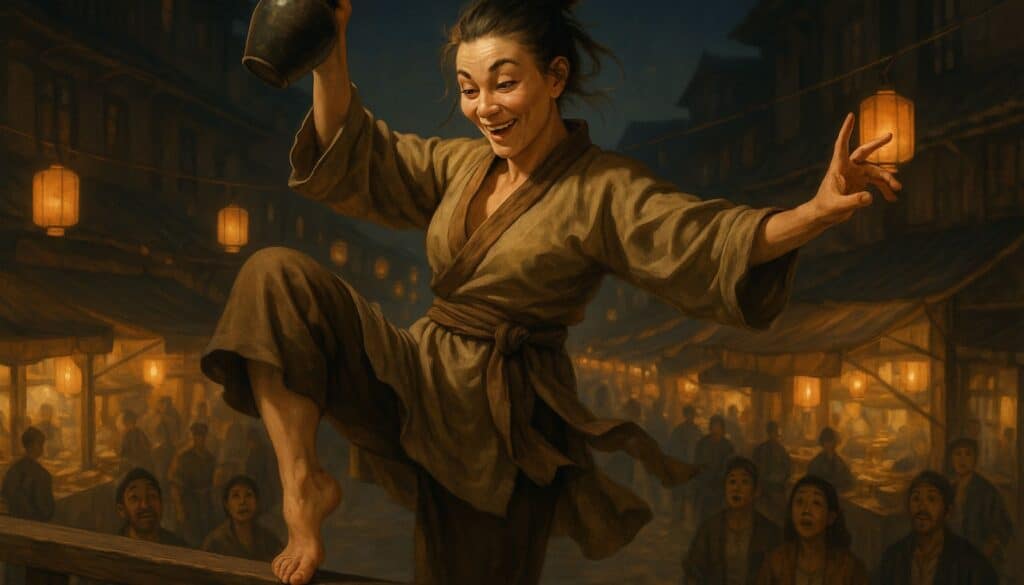
Social events are wonderful campaign starters because everyone arrives with expectations. Weddings should have vows, cake, dancing, and only minimal demonic interference. Coronations should feature crowns, cheering, and ideally no assassination attempts by possessed chandeliers. Funerals should involve one corpse, not an ambitious sequel.
These openings combine roleplay, investigation, combat, and comedy in a tidy ceremonial package. The party may be guests, guards, entertainers, staff, nobles, spies, or extremely confused plus-ones. When disaster strikes, everyone has a reason to be present and a reason to care, even if that reason is “my good shoes are now full of ectoplasm.”
Social disasters are also great for introducing factions. A diplomatic dinner includes rival ambassadors. An auction includes criminal collectors. A masquerade includes secret identities. An academic award ceremony includes wizards with grudges, which is like regular grudges but with more frogs.
The cursed object is optional but recommended. Someone has absolutely brought one. It might be a ring, crown, painting, ancestral sword, wedding bouquet, funeral urn, dessert spoon, or ceremonial cheese knife containing the soul of a dead emperor who has opinions about seating arrangements.
| Social Event Opening | Immediate Catastrophe | Campaign Arc It Can Lead Into |
|---|---|---|
| Noble wedding | The vows summon an ancient contract demon | Breaking infernal bloodline pacts |
| Coronation | The crown possesses the new monarch | Recovering lost royal relics |
| Funeral | The deceased rises and accuses the guests | Solving a murder tied to necromancy |
| Diplomatic dinner | Ambassadors transform into monsters | Preventing planar war |
| Festival | The parade float becomes a rampaging idol | Stopping a cult hidden in civic traditions |
| Auction | A stolen artifact opens a portal | Tracking relic smugglers across kingdoms |
| Masquerade | Masks fuse to guests’ faces | Unmasking a fae conspiracy |
| Academic awards | The winning thesis becomes sentient and hostile | Investigating forbidden magical research |
| Noble birthday | The cake explodes into prophetic fire | Decoding a prophecy someone tried to bake |
| Art gallery gala | Paintings release imprisoned spirits | Confronting an immortal art-lich |
Fancy clothes make disasters funnier. A fighter in polished formalwear wrestling a ghoul under a banquet table is art. A paladin trying to maintain dignity while covered in soup is literature. A rogue stealing cufflinks during a hostage crisis is, unfortunately, character consistency.
Contrast elegance with chaos. Poisoned cake, dueling nobles, shrieking chandeliers, enchanted champagne, cursed bouquets, and musicians who keep playing because they were paid in advance all create memorable scenes. The more refined the setting, the better it looks when an owlbear enters through the dessert cart.
War Zones, Sieges, and Battlefield Openings
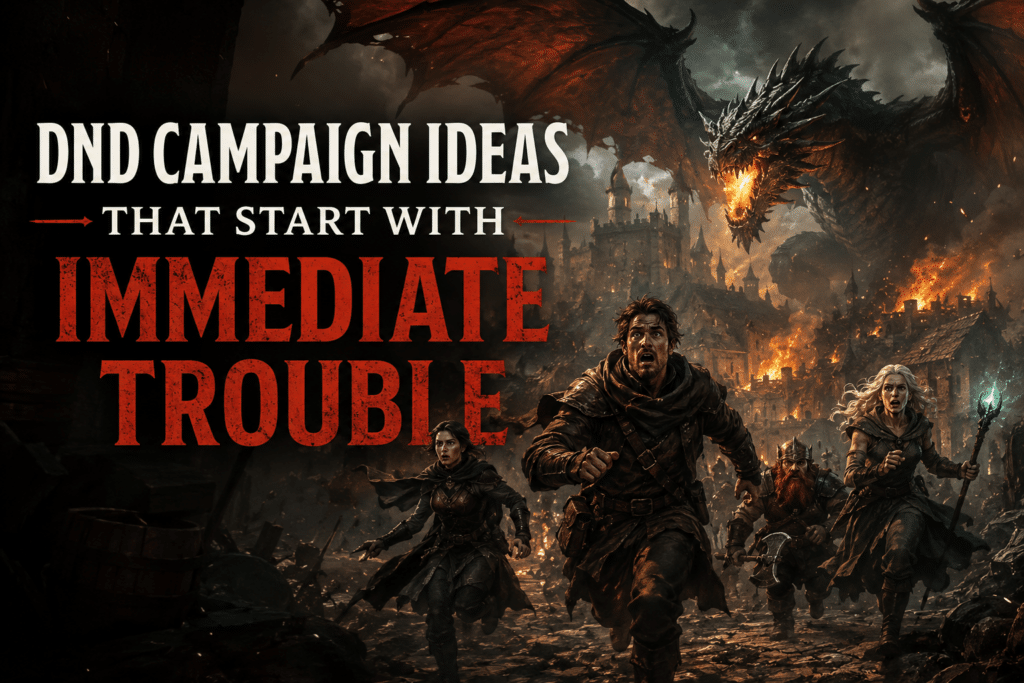
War-based campaign starts bring immediate stakes and moral pressure. The party begins during a siege, ambush, border skirmish, invasion, evacuation, or desperate last stand. The world is already in motion, and the characters must decide whether they are heroes, survivors, patriots, deserters, mercenaries, spies, or opportunistic disaster gremlins with crossbows.
These openings work well because they force decisions. Do the characters hold the gate or flee with refugees? Deliver orders or protect the wounded? Rescue an enemy soldier or leave them? War reveals values quickly, especially when every choice has consequences and someone is always shouting orders from atop a horse they clearly rented for dramatic purposes.
⚔️ Fantasy RPG Random Tables Books
Make life as a Gamemaster easier…
If you play Dungeons & Dragons, Pathfinder, or other fantasy RPGs, this
RPG random tables series
is packed with encounters, NPCs, treasure, and more. Available in eBook or print—either way, you’ll have a wealth of adventure ideas at your fingertips.
War also creates natural campaign scale. The first session might involve surviving an ambush, but the larger story can expand into politics, espionage, ancient grudges, war crimes, divine intervention, or the horrifying discovery that both sides are being manipulated by the same cheerful arms dealer.
To use battlefield chaos without overwhelming players, give clear objectives. “The city is under siege” is atmosphere. “Get the children to the west gate before the wall falls” is playable. The players need something they can attempt right now, not a full military simulation with supply-chain spreadsheets.
Good objectives include escaping, saving civilians, delivering a message, holding a bridge, recovering a banner, destroying a siege engine, or surviving long enough to ask who started this nonsense. Keep the battlefield huge in description but focused in mechanics.
Battlefield starting objectives for level 1 to mid-level parties:
- Escort refugees through a collapsing city gate.
- Hold a barricade for ten rounds until reinforcements arrive.
- Deliver a sealed message across a battlefield.
- Rescue trapped civilians from a burning district.
- Disable a siege engine before it breaches the wall.
- Protect a healer treating wounded soldiers.
- Capture an enemy scout carrying strange orders.
- Escape a prisoner-of-war wagon during an ambush.
- Recover a fallen commander’s banner to rally troops.
- Sneak through enemy lines to open a gate.
- Defend a bridge while sappers set explosives.
- Evacuate a temple before it is bombarded.
- Find the missing prince amid battlefield confusion.
- Stop looters from attacking survivors.
- Survive a cavalry charge by reaching cover.
- Discover why undead are rising from both armies.
- Escort a dragon egg away from a war camp.
- Prevent a magical war machine from overheating and detonating.
Heists Already Gone Wrong
A failed heist opening begins with beautiful momentum because everything is already on fire, and nobody agrees whose fault it is. The party is halfway through a smuggling job, museum robbery, vault break-in, casino scam, or “perfect plan” that lasted exactly seven seconds before the alarm screamed in Celestial.
This setup creates comedy and urgency at once. The rogue is dangling from a rope. The fighter is wearing a guard uniform two sizes too small. The bard is distracting a duke with interpretive dance. The wizard has accidentally awakened the security gargoyles and is calling it “field research.”
Failed-heist starts also encourage immediate teamwork. Whether the characters are criminals, contractors, infiltrators, or unlucky caterers, they must coordinate fast. Escape routes, distractions, improvised disguises, and panicked lies bring the party together beautifully, especially when the loot starts whispering.
| Heist Target | What Goes Wrong | Bigger Campaign Secret |
|---|---|---|
| Royal vault | The treasure is gone before the party arrives | The crown is bankrupt and hiding it |
| Magical museum | The artifact wakes every exhibit | The museum is a prison for ancient beings |
| Dragon bank | The vault recognizes the party as previous thieves | Future versions of them already robbed it |
| Noble masquerade | The stolen necklace turns into an eye | It is a scrying focus for an elder entity |
| Wizard tower | Gravity fails floor by floor | The tower is launching into another plane |
| Casino riverboat | The mark is murdered mid-scam | A luck cult is rigging fate |
| Temple reliquary | The relic refuses to leave without confession | The church has falsified its miracles |
| Smuggler tunnel | The tunnel opens into a buried city | An empire beneath the city is awakening |
| Pirate treasury | The map tattooed on the captain moves | The treasure is alive and migrating |
| Arcane auction | Every bidder claims the party works for them | Multiple factions seek a world-ending key |
| Clockwork palace | The security system predicts their moves | A machine oracle is manipulating crimes |
Let players decide what role they had in the heist. They might be hired thieves, innocent bystanders, double-crossed contractors, undercover agents, cursed servants, guards framed for betrayal, or extremely unlucky caterers carrying trays of shrimp while a lich’s gem levitates past.
The failed heist should open the world, not trap the story in one building forever. The escape reveals factions. The loot reveals secrets. The employer vanishes. The guards are too prepared. The artifact knows someone’s childhood nickname. Suddenly, the botched robbery is the first thread in a very expensive sweater of conspiracy.
Immediate Trouble for Different Campaign Genres
Immediate trouble works in almost every campaign genre, but the flavor changes. Gothic horror wants dread, isolation, and consequences. Pirate adventure wants motion, danger, and someone shouting nautical vocabulary incorrectly. Political intrigue wants accusations, secrets, and poisoned wine that everyone insists is “probably fine.”
Heroic fantasy can start with a village under attack and a clear chance to save the day. Grimdark survival can start with the same village under attack, except the food stores burn, the mayor lies, and the cow is a spy. Planar chaos can begin with reality folding itself into a hat and demanding rent.
The tone determines the acceptable level of nonsense. A comedic dungeonpunk campaign can absolutely begin with a goblin pie riot. A tragic vampire epic probably should not—unless the vampire is very committed to pastry-based symbolism, in which case please continue and send notes.
| Campaign Genre | Immediate-Trouble Opening | Mood or Pacing to Emphasize |
|---|---|---|
| Gothic horror | The party wakes in a manor where portraits bleed | Slow dread, suspicion, claustrophobia |
| Pirate adventure | The ship is attacked by krakens and tax collectors | Fast action, swagger, survival |
| Political intrigue | The party is framed during a royal assassination | Tension, secrets, social maneuvering |
| Heroic fantasy | Monsters attack a village festival | Courage, rescue, clear stakes |
| Grimdark survival | A fortress falls to plague and betrayal | Harsh choices, scarcity, consequence |
| Planar chaos | A portal storm drops pieces of cities into each other | Weirdness, speed, improvisation |
| Magical school drama | Exams are interrupted by escaped spell experiments | Comedy, rivalry, escalating danger |
| Western fantasy | A train robbery unleashes a bound demon | Grit, standoffs, frontier mystery |
| Comedic dungeonpunk | A sewer guild strike releases civilized oozes | Absurdity, momentum, playful chaos |
| Mythic epic | A god dies publicly and falls onto the capital | Awe, prophecy, sweeping stakes |
| Urban fantasy | The city’s statues accuse the party of murder | Mystery, chase scenes, civic weirdness |
| Exploration sandbox | The expedition camp is swallowed by jungle ruins | Discovery, survival, wonder |
Match the opening disaster to the campaign’s promise. If you want players ready for court politics, start with a trial, assassination, diplomatic scandal, or dinner where every spoon is a spy. If you want dungeon exploration, begin with a collapse into ruins or a rescue mission beneath the city.
A silly opening can still become serious, but the transition needs care. Goblin pastry warfare may lead to a famine conspiracy, stolen grain, corrupt nobles, and a bread-based revolution. The pie is merely the first flaky omen.
Likewise, a dark opening can include humor without breaking tone. Terrified people say absurd things. Villains have petty habits. The tax office can still demand payment during the apocalypse. Comedy works best when it highlights the chaos rather than cancels it.
Turning the Opening Crisis Into a Full Campaign
The opening disaster should not be a firework that goes off once and leaves only smoke. It should be the first explosion in a suspicious pattern of explosions. Once the party survives the immediate trouble, they should have questions, clues, enemies, and consequences.
Connect the event to factions. The monster attack may involve a druid circle, mining guild, royal alchemist, and cult that all blame each other. The arrest may reveal corrupt judges, revolutionary pamphlets, and a noble house quietly purchasing prisons. The airship crash may lead to engineers, saboteurs, sky pirates, and insurance adjusters with knives.
Villains can emerge from the opening even if they are not physically present. Their symbol appears on summoned monsters. Their agent escapes during the chaos. Their voice speaks through the cursed crown. Their suspicious merchant franchise keeps surviving explosions while offering “discount healing potions, lightly pre-owned.”
Tie the crisis to ancient prophecies, political schemes, divine interference, cursed artifacts, personal backstories, or consequences the players create. If they save the mayor, the mayor becomes an ally. If they abandon the mayor, the mayor’s ghost becomes a problem. If they accidentally elect the owlbear mayor, congratulations, that is government now.
Try my AI Tabletop RPG generators...and an extensive library of content!
Ways to transform an opening disaster into a campaign arc:
- Reveal the attack was a test by a recurring villain.
- Show the same symbol appearing at later disasters.
- Let survivors become allies, rivals, or dependents.
- Connect the crisis to a character’s missing family member.
- Have factions blame the party for what happened.
- Introduce a cursed artifact recovered from the wreckage.
- Make the disaster one of several escalating events.
- Reveal a conspiracy hiding evidence from the scene.
- Let the party’s choices affect local politics.
- Create moral fallout from who was saved and who was not.
- Have monsters display mutations linked to forbidden magic.
- Let an enemy agent escape and return later.
- Tie the event to an ancient prophecy being misinterpreted.
- Make the legal system pursue the party for collateral damage.
- Introduce rival adventurers investigating the same crisis.
- Reveal divine forces are interfering through disasters.
- Connect the disaster to a resource war or trade conflict.
- Let a rescued NPC know one dangerous secret.
- Make the party inherit responsibility for the ruined location.
- Turn the opening villain into a minion of something worse.
A great opening trouble answers one question while raising three more. The party learns why the tavern is on fire, but now they must ask who hired the fire elemental, why the cellar contains royal bones, and why the flames spell out the cleric’s childhood nickname.
Build a breadcrumb trail from “why is the tavern on fire?” to “why is the sun also on fire?” The path can twist through dungeons, courts, battlefields, haunted bakeries, and inconvenient prophecy, but the players should always feel that the first disaster mattered.
Keeping Players From Freezing During Instant Chaos
Immediate danger is exciting, but too many options can cause decision paralysis. Players may stare at the flaming city, collapsing bridge, screaming mayor, charging ogres, and suspicious glowing cat and think, “I would like to perceive the concept of responsibility.” Help them by presenting clear choices.
⚔️ Fantasy RPG Random Tables Books
Make life as a Gamemaster easier…
If you play Dungeons & Dragons, Pathfinder, or other fantasy RPGs, this
RPG random tables series
is packed with encounters, NPCs, treasure, and more. Available in eBook or print—either way, you’ll have a wealth of adventure ideas at your fingertips.
Use visible threats, obvious exits, urgent NPC pleas, and concrete consequences. “The east door is blocked by rubble, the west alley is filling with smoke, and a child is trapped beneath a cart” is actionable. The players can prioritize, argue, act, and later blame each other in character like professionals.
Consequences should be dramatic but not unfair. If players ignore a burning building, people may die. If they try to save everyone, they may face danger. But do not punish them for failing to guess hidden information. Immediate chaos should feel like a wild playground, not a courtroom where the judge is your notes.
For pacing, decide when the scene needs initiative and when it needs a broader structure. Use initiative when moment-to-moment action matters: combat, chase, collapsing room, ritual countdown. Use skill challenges when the group is navigating a wider disaster: escaping a flood, calming a crowd, crossing a battlefield, surviving a magical storm.
Summarize chaos cinematically when details are atmospheric, then zoom in when choices matter. Let the rogue ask whether the chandelier is load-bearing if it is funny, relevant, or likely to become a lawsuit. If the question stalls the table, answer quickly and drop something heavy nearby for encouragement.
DM techniques for keeping chaotic openings fast, funny, and playable:
- State the immediate danger in one clear sentence.
- Give the players two or three obvious options right away.
- Put vulnerable NPCs in visible danger.
- Use countdowns: collapsing ceilings, ritual rounds, rising water.
- Call for initiative when seconds matter.
- Use skill challenges for broader escape or rescue scenes.
- Summarize background chaos instead of rolling for every NPC.
- Let players improvise with the environment.
- Reward bold action, even if the plan is deeply stupid.
- Make consequences clear before irreversible choices.
- Repeat key information if the scene is loud or complex.
- Use named NPCs to anchor emotional stakes.
- Include at least one obvious exit and one risky opportunity.
- Keep enemy goals simple in the opening scene.
- Use humor to release tension, not erase danger.
- Avoid hiding the only solution behind one skill check.
- Let failed rolls change the situation instead of stopping it.
- End the first crisis with a clue, twist, or accusation.
Final Thoughts on DND Campaigns That Begin With Trouble
Immediate-trouble campaign starts are powerful because they skip hesitation. They throw players directly into action, choices, consequences, and the sacred tabletop experience of yelling, “I have a plan!” when everyone knows this is technically false. The campaign begins with motion, and motion creates story.
The best openings are chaotic but purposeful. The disaster should be loud, dangerous, and memorable, but it should also point somewhere. A monster attack hints at a villain. A false arrest reveals corruption. A magical storm exposes a broken cosmic law. A ruined wedding proves that Aunt Merelda should never have been trusted with the seating chart.
They can be funny without becoming meaningless. Comedy thrives in panic: fancy clothes ruined by slime, nobles dueling over soup, goblin clerks demanding signatures during jailbreaks. But beneath the joke, the stakes should matter. Someone needs saving. Something has changed. The world has teeth, and today it is smiling.
They should also be dangerous without being cruel. The goal is not to crush level-one characters under a meteor because “realism.” The goal is to give them problems they can affect, choices that matter, and enough room to become heroes, scoundrels, legends, or heavily armed public nuisances.
So start bold. Crash the airship. Arrest the party. Unleash the owlbears. Ruin the wedding. Set the courthouse on fire during sentencing. Let the moon explode just a little, as a treat.
A campaign does not need to begin calmly to become unforgettable. In fact, sometimes the best adventures start with everyone shouting, rolling initiative, dodging soup, and asking the most important question in fantasy storytelling: “Wait, are we the suspects?”
