
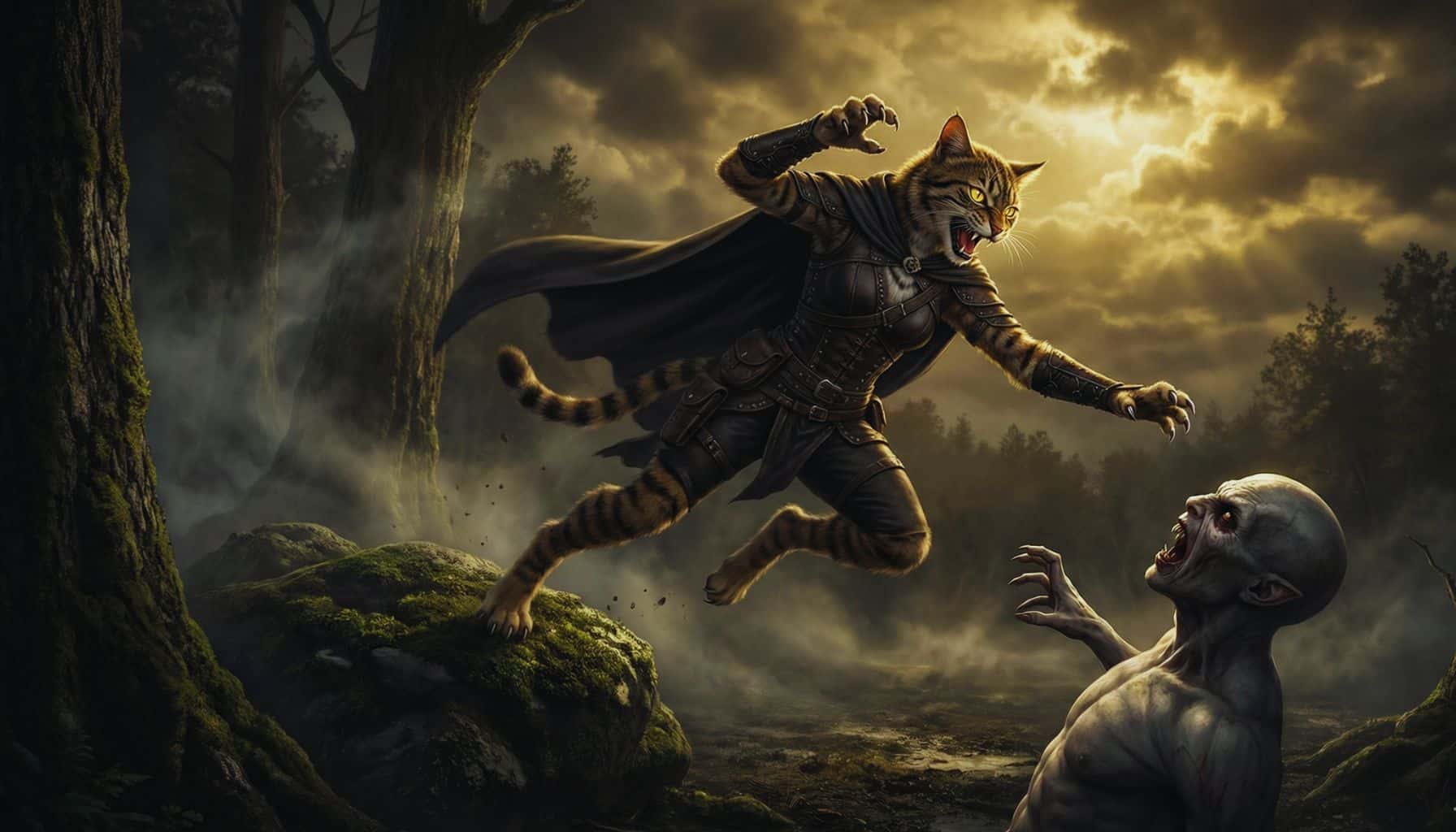
The Gloomstalker Ranger has sat comfortably near the top of optimization tier lists for years, yet it remains one of the most debated subclasses in the game. In the current landscape of 2025 D&D, players often ask if the gloomstalker ranger 5e is still good or if power creep has finally caught up to the shadowy stalker. The answer is a resounding yes because this subclass offers something raw numbers cannot replicate: absolute dominance over night combat encounters and ambush scenarios. We aren’t just looking at a damage calculator here; we are diving deep into the mechanics of encounter control, initiative pressure, and how to exploit darkness rules to their absolute limit.
While newer subclasses might offer flashy spells or complicated resource management, the gloomstalker subclass relies on a core set of features that fundamentally break the action economy. It continues to dominate scouting roles because it turns the exploration pillar of the game directly into combat advantages. The recurring controversy usually stems from tables that run distinct styles of play; if you run dungeon crawls or gritty realism, this ranger is a god, but in a brightly lit superhero game, it feels mortal. This article explores why the Gloomstalker works based on role mastery and table assumptions rather than just how to build it for white-room damage.
D&D is a game of action economy and information, and the Gloomstalker excels at manipulating both before the enemy even takes a turn. By understanding the nuances of vision and initiative, you can turn a standard character into a battlefield nightmare. We are going to break down the specific mechanics that keep this ranger relevant and why it continues to define the meta for night combat encounters.
- The Real Reason the Gloomstalker Ranger “Owns the Night”
- Nova Engineering: Why the First Round Feels Unfair
- Accuracy Without Advantage: Quiet Gloomstalker Optimization
- Gloomstalker Build Paths That Actually Change Playstyle
- Veteran Gloomstalker Tactics That Win Encounters
- Counterplay and the Honest Reality Check
- The Complete Gloomstalker Practical Handbook: From Level 1 to 20
- The Skeleton: Level-by-Level Progression Priorities
- Feat Wars: Sharpshooter vs. Crossbow Expert vs. Alert
- The Gloomstalker Spellbook: Selecting for Ambush and Control
- Multiclass Theory: When to Leave Ranger
- Gear and Itemization: Feeding the Shadow
- Tactical Playbook: Managing the Nova
- Counterplay: When Umbral Sight Fails
- Final Build Template: The “Standard Issue” Gloomstalker
- Creating the Predator: A Gloomstalker Background Generator
- Final Thoughts: Why the DND 5e Gloomstalker Ranger Still Dominates Its Niche
The Real Reason the Gloomstalker Ranger “Owns the Night”
Most people think the gloomstalker subclass is strong because of the extra attack on turn one, but the real power lies in how it fundamentally breaks the rules of engagement. When you play a gloomstalker ranger 5e, you aren’t playing the same game as the Fighter or the Paladin; you are playing a game of information warfare where you can see the enemy, but they cannot see you. This asymmetry forces the Dungeon Master to run encounters differently because a standard monster stat block often lacks the tools to deal with invisible threats in the dark. It shifts the meta of the table from “run in and hit stuff” to a tactical exercise in lighting and vision lines.
The ability to remain effectively invisible to creatures relying on darkvision means you are constantly generating advantage for yourself and disadvantage for your enemies. This creates a defensive layer that is mathematically superior to high AC in many night combat encounters. While other classes are burning spell slots for Blur or Greater Invisibility, the Gloomstalker gets a better version of these effects passively just by standing in the shadows. This is why the subclass feels so oppressive in the Underdark or dungeon settings; it turns the environment itself into your primary weapon.
Umbral Sight Is Vision Denial, Not Just Stealth
Umbral Sight is arguably the strongest level 3 feature in the entire game because it grants pseudo-invisibility without requiring concentration or spell slots. Against the vast majority of night combat encounters, enemies rely entirely on darkvision to target players, meaning you are effectively invisible to them even while standing in the open. This triggers the Unseen Attacker rules, granting you advantage on your attacks while imposing disadvantage on any incoming attacks directed at you. It completely changes the math of a fight because the enemy AI has to guess your location or switch to less effective area-of-effect tactics to even touch you.
Try my AI Tabletop RPG generators...and an extensive library of content!
Furthermore, being invisible to darkvision allows you to scout ahead without ever making a stealth check if you stay out of their logic-based perception range. A creature cannot see you to trigger an initiative roll, allowing you to position perfectly for the coming fight. This vision denial forces enemies to bring light sources if they want to engage you, which in turn reveals their position to the rest of your party. You are dictating the terms of the battle simply by existing.
Denying the enemy the ability to perceive you is almost always more valuable than a simple +2 to damage or a small AC bump.
“Owning the Night” Is an Encounter Filter
The gloomstalker ranger reaches its full potential when the DM runs the game with a strict respect for lighting rules and vision mechanics. If every cave is brightly lit by glowing crystals or if monsters have inexplicable truesight at level 3, the subclass loses its primary edge. You need to ensure that the table culture supports the idea of night combat encounters where torches matter and shadows are dangerous.
- Strict Light Radius: The DM enforces exactly where bright light ends and dim light begins.
- Darkvision Reliance: Enemies are run according to their stat blocks, relying on darkvision rather than “DM fiat” sight.
- Stealth Viability: The table allows for stealth approaches rather than forcing combat to start at 30 feet.
- Meaningful Surprise: The DM uses the actual surprise rules (enemies miss their first turn) rather than just giving a free round.
- Cover Mechanics: The map includes objects and corners that create shadow, rather than empty square rooms.
- Long Rests: Adventures include travel or dungeon delving where night fighting is inevitable.
- Monster Intelligence: Beasts and low-INT monsters struggle to target unseen attackers effectively.
- Party Buy-In: The rest of the party is willing to douse torches and rely on darkvision to support your features.
The Gloomstalker’s strength is about choosing when and where to fight, ensuring you only engage when the odds are stacked in your favor.

Nova Engineering: Why the First Round Feels Unfair
The gloomstalker nova round is legendary for a reason: it ends fights before the boss even gets to take a legendary action. This capability comes from the dread ambusher feature, which allows for an extra attack with bonus damage right when initiative is rolled. This design philosophy makes the gloomstalker ranger a tempo-setter rather than a sustained damage dealer like a fighter. You are looking to front-load your impact to reduce the number of enemies acting in the round, creating a snowball effect that carries the party to victory.
This burst damage window is critical because D&D 5e combat rarely lasts longer than three or four rounds. Being able to dump 30% or 40% of a monster’s health in the first six seconds creates panic in the DM’s strategy and forces them to play defensively. It isn’t just about high numbers; it is about applying those numbers before the enemy defenses are set. The gloomstalker ranger is designed to capitalize on the chaos of the opening moment, striking hard while everyone else is still drawing their weapons.
⚔️ Fantasy RPG Random Tables Books
Make life as a Gamemaster easier…
If you play Dungeons & Dragons, Pathfinder, or other fantasy RPGs, this
RPG random tables series
is packed with encounters, NPCs, treasure, and more. Available in eBook or print—either way, you’ll have a wealth of adventure ideas at your fingertips.





Initiative Is a Damage Multiplier
Wisdom added to initiative is not just a nice bonus; it is a critical defensive tool that functions as damage prevention. When you act before the enemy, you have the chance to apply the “Dead” condition, which is the best status effect in D&D 5e. By removing an enemy from the board before they take a turn, you are effectively granting your party “extra turns” relative to the opposition over the course of a campaign. If you kill a goblin before it shoots, you have prevented 1d6+2 damage to your wizard, which is mathematically the same as healing them.
This initiative bonus stacks with the Alert feat or other buffs, allowing a gloomstalker ranger 5e to have a +10 or higher to initiative relatively early in the game. This almost guarantees you go first in the order, letting you position yourself in the dark or eliminate the glass cannon caster immediately. Controlling the flow of time in combat is a subtle but potent way to ensure your party takes less damage overall.
Tempo wins fights before DPR math even begins to matter.
Dread Ambusher Rewards Front-Loaded Planning
To make the most of dread ambusher, you have to approach combat like a puzzle that needs solving in the first six seconds. Gloomstalker optimization isn’t just about feats; it is about knowing exactly where to stand and who to shoot the moment the DM says “roll initiative.”
- Pre-Combat Positioning: Stay 60 feet back to utilize range and force enemies to dash toward you.
- Bonus Action Economy: Decide if Hunter’s Mark is worth the slot or if you need Zephyr Strike for movement.
- Target Selection: Identify the enemy with the lowest AC to ensure your Dread Ambusher attack connects.
- Movement Angles: Move to break line of sight with enemy casters immediately after shooting.
- Concentration Setup: Cast long-duration buffs like Pass Without Trace before the door opens.
- Ally Synergy: Coordinate with the Battle Master to use Commander’s Strike on your turn if possible.
- Lighting Check: Verify which tiles are dim light or darkness to maintain Umbral Sight.
- Ammo Types: Use magical ammunition on the Dread Ambusher attack for maximum value.
- Escape Route: Plan where you will end your turn so you aren’t caught in melee.
- Nova Commitment: Decide instantly if you are burning resources (Action Surge) or saving them.
Gloomstalker success is decided before initiative is rolled, not during the attack rolls.

Accuracy Without Advantage: Quiet Gloomstalker Optimization
A common trap for new players is assuming they will always have advantage from Umbral Sight, leading to builds that crumble in bright light. Real accuracy optimization 5e involves building a gloomstalker sharpshooter who can hit targets reliably even without the stealth benefits. You need to stack modifiers that don’t rely on darkness so that your damage floor remains high during daytime encounters. The best Gloomstalkers are those who treat Umbral Sight as a bonus, not a requirement for basic competency.
This means you cannot neglect your Dexterity stat just because you took the Sharpshooter feat. It also means you need to look for external sources of accuracy, such as the Bless spell from a Cleric or the Emboldening Bond from a Peace Domain dip. A gloomstalker ranger that misses their dread ambusher attack feels terrible, so ensuring those hits land is the most important part of your build theory. Consistency is the key to enjoying this class across a long campaign.
Building Reliability Instead of Begging for Advantage
The Archery Fighting Style is the bread and butter of this build because a flat +2 to hit is statistically massive in a bounded accuracy system. You combine this with smart tactical choices, such as targeting low-AC enemies like enemy mages or archers instead of trying to brute force through a plate-wearing knight.
- Archery Fighting Style: The mathematical foundation of all ranged ranger builds.
- Bless Synergy: Staying within 30 feet of your Paladin or Cleric for that d4 bonus.
- Low-DEX Targets: Focusing fire on ogres, giants, or casters who usually have terrible AC.
- Distance Control: Staying at maximum range to avoid disadvantage from melee threat ranges.
- Cover Usage: Ignoring enemy half-cover and three-quarters cover via the Sharpshooter feat.
- Elven Accuracy: Using racial feats to turn occasional advantage into guaranteed crits.
- Magic Weapons: Prioritizing +1 or +2 weapons over fancy effect weapons to offset the -5 penalty.
- Prone Enemies: Knowing when not to shoot a prone enemy (disadvantage) and switching targets.
Consistent hits will always beat theoretical DPR that relies on perfect conditions.
Gloomstalker Build Paths That Actually Change Playstyle
One reason the gloomstalker ranger remains so popular is its flexibility in multiclassing to achieve specific power fantasies. A pure ranger gloomstalker is perfectly viable, but mixing in other classes can radically alter how you approach a fight. Understanding the difference between a gloomstalker build focused on critical hits and one focused on volume of fire is key to gloomstalker optimization. Each path demands a different mindset regarding risk management and party cohesion.
Gloomstalker Assassin: Power With a Playstyle Cost
The gloomstalker assassin multiclass is the poster child for “white room” damage calculations that sometimes fail in actual play. This build relies heavily on surprise rules 5e to trigger automatic critical hits, which requires a party willing to play slowly and stealthily. If your Paladin kicks down every door or your Barbarian screams a battle cry, you will never see the true potential of the Assassinate feature. This build is incredible in a solo game or a dedicated stealth group, but it can be frustrating in a standard “kick down the door” dungeon crawl.
However, when it works, it deletes high-health enemies instantly. The synergy between high initiative, invisible scouting, and auto-crits creates a sniper fantasy that few other builds can match. Just remember that you are trading consistency for higher peaks; if you don’t get surprise, you are essentially playing a ranger with fewer spell slots.
Without explicit table support for stealth, this combo often underperforms expectations.
Fighter Dip: Consistency, Defense, and Safer Novas
Taking a gloomstalker fighter dip is often the more practical choice for diverse campaigns because Action Surge is reliable in every single fight. This combination improves your action economy 5e by letting you double down on that explosive first turn without needing surprise. Because Dread Ambusher triggers on the Attack action, Action Surge lets you take the Attack action twice, resulting in two Dread Ambusher attacks in one turn.
This path also offers defensive fighting styles and armor proficiencies that keep you alive when the lights turn on. The Battle Master subclass adds maneuvers like Precision Attack, which fixes the accuracy issues associated with Sharpshooter. This makes the gloomstalker fighter dip the gold standard for players who want to be useful in every round, not just the first one.
⚔️ Fantasy RPG Random Tables Books
Make life as a Gamemaster easier…
If you play Dungeons & Dragons, Pathfinder, or other fantasy RPGs, this
RPG random tables series
is packed with encounters, NPCs, treasure, and more. Available in eBook or print—either way, you’ll have a wealth of adventure ideas at your fingertips.
Surviving to act is part of optimization, and the Fighter levels help you stay on your feet.
Melee Gloomstalker Isn’t About Standing and Trading
While most people grab a bow, the melee gloomstalker is a terrifying force that uses speed to dismantle backlines. You aren’t a tank; you are a striker who uses movement to get in, eliminate a target, and get out before the retaliation comes. This playstyle relies on the Mobile feat or Zephyr Strike to avoid opportunity attacks while capitalizing on the extra movement speed from Dread Ambusher.
- Corner Fighting: Ending your turn around a corner so ranged enemies can’t target you.
- Choke Points: Fighting in doorways where only one enemy can engage you at a time.
- Reach Weapons: Using a glaive or halberd to strike from outside enemy reach.
- Hit-and-Fade: Attacking and then retreating into total darkness to trigger Umbral Sight.
- Verticality: Climbing walls or trees to stay out of melee range of brutes.
- Disengage Options: Using Cunning Action (if rogue dipped) or spells to escape bad spots.
- Target Isolation: engaging enemies that are separated from their pack.
- Darkness Usage: moving through magical darkness that you can see through (via Blind Fighting style).
Melee gloomstalker play is purely positional, relying on geometry rather than brute-force durability.

Veteran Gloomstalker Tactics That Win Encounters
Once your sheet is built, the difference between a good ranger and a great one comes down to ambush tactics 5e. Adopting a skirmisher playstyle means understanding that your job is to create unfair advantages for your team. You need to read the battlefield and apply your damage where it disrupts the DM’s plans the most. A veteran player knows that a dead wizard is worth three dead goblins.
The First Target Doctrine
Your high initiative is wasted if you dump all your damage into a meat-shield monster with hundreds of hit points. The “First Target Doctrine” dictates that you must identify and delete the enemy that has the highest potential to disrupt your party’s turn. Deleting the right enemy matters more than maximizing your total DPR on a spreadsheet.
- Controllers: Enemy spellcasters holding concentration on Hypnotic Pattern or Hold Person.
- Alarm Raisers: Minions running toward a gong or horn to call reinforcements.
- Blindsight Scouts: Monsters that can see you and point you out to others.
- Enemy Snipers: Ranged attackers targeting your squishy allies.
- Healers: Acolytes or priests who can undo your party’s damage.
- Glass Cannons: High damage, low AC enemies like rogues or mages.
- Lieutenants: Officers granting buffs to nearby minions.
- Summoners: Enemies bringing more combatants into the fight.
- Grapplers: Monsters trying to restrain your party mobility.
- Interaction Objects: Levers, ropes, or crystals that control the room mechanics.
Threat removal is always superior to simple damage optimization.
Exploration Wins Fights Before They Start
The exploration pillar ranger is often mocked, but for a Gloomstalker, finding the enemy first is the win condition. Tracking and scouting allow you to dictate the terms of engagement, setting up the darkness and lines of sight that make your class features work. If you know where the enemy camp is, you can wait until nightfall to attack, turning a hard fight into a trivial one.
Using spells like Pass Without Trace allows you to move your entire heavy-armor party into ambush positions. This transforms the Gloomstalker from a solo operative into a force multiplier for the whole group. By controlling information through tracking, you prevent the party from walking into traps and ensure that you are the ones rolling initiative with advantage.
The Gloomstalker is one of the few subclasses that turns exploration skill directly into combat dominance.
Counterplay and the Honest Reality Check
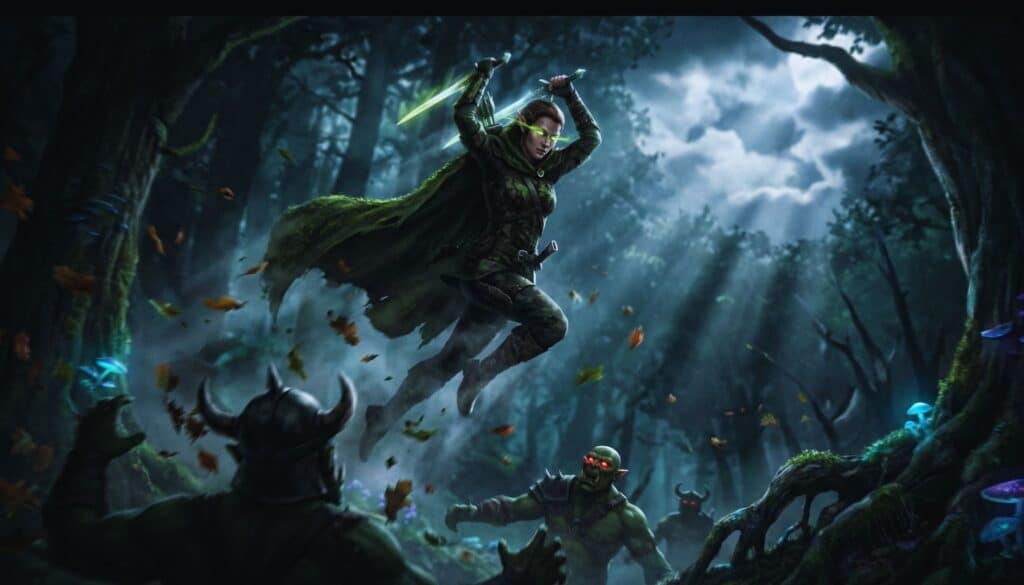
No class is perfect, and you need to be honest about the counters to umbral sight that will eventually appear in high-tier play. Dragons with blindsight truesight or enemies with tremor sense effectively turn off your super-power. Smart DMs will also use bright light environments to challenge you, forcing you to rely on your base ranger mechanics rather than your subclass features.
Additionally, area-of-effect spells like Fireball or Spirit Guardians do not care if you are invisible. If you group up with your party, you will take damage regardless of your stealth rolls. The Gloomstalker is also notoriously resource-light on defense; once you are pinned down, you lack the Shield spell or heavy armor to tank sustained hits. Recognizing these weaknesses allows you to play around them rather than getting frustrated when your invisibility fails.
Try my AI Tabletop RPG generators...and an extensive library of content!
Planning for Sense-Based Counters
When the lights are on or the enemy can see you through magical means, you have to pivot from a spectral assassin to a reliable damage dealer. You need strategies that don’t rely on being unseen to contribute to the fight.
- Fog Cloud: Block line of sight manually if darkness isn’t available.
- Range: Stay 120+ feet away, outranging most blindsight and truesight.
- Cover: Use physical objects to break line of sight entirely.
- Baiting: Let the Barbarian engage first to draw the creature’s attention.
- Spread Out: Don’t stand near allies to avoid AoE overlap.
- Switch Roles: Focus on casting control spells like Spike Growth if attacks aren’t viable.
- Retreat: Pull enemies back into corridors where you control the lighting.
- Flashbangs: Use items like smoke bombs if your DM allows them.
Resilience and adaptability are more valuable than frustration when the environment turns against you.

The Complete Gloomstalker Practical Handbook: From Level 1 to 20
You understand why the gloomstalker ranger 5e is a monster in the dark, but understanding the theory is different from actually piloting one through a year-long campaign. Many players stumble because they blindly pick feats or multiclass at the wrong time, ruining their power curve. This section is the definitive manual for gloomstalker optimization, breaking down every decision point from character creation to the endgame. We are going to cover the math, the magic, and the specific build paths that turn a standard ranger gloomstalker into a legendary dread ambusher.
This guide assumes you want to be the most effective member of your party during the exploration and combat pillars. We are focusing on practical gloomstalker build advice that works at real tables, not just in spreadsheets. Whether you are building a gloomstalker sharpshooter, a gloomstalker dual wield skirmisher, or the infamous gloomstalker assassin nova cannon, the road map starts here.
The Skeleton: Level-by-Level Progression Priorities
The biggest mistake players make is multiclassing too early. You need to secure your core gloomstalker ranger features before you start dipping into Fighter or Rogue. The power spike at level 5 (Extra Attack) is non-negotiable. Delaying it for a gloomstalker rogue dip feels terrible in actual play because you spend levels 4 through 6 doing half the damage of your barbarian friend.
| Level Range | Primary Goal | Key Decisions & Mechanics |
|---|---|---|
| Level 1–2 | Survival & Style | Pick Archery Fighting Style immediately. It is the mathematical foundation of your damage. For spells, grab Zephyr Strike (mobility) and Absorb Elements (defense). Do not take Hunter’s Mark if you plan on using your bonus action for Crossbow Expert later; the economy clashes. |
| Level 3 | The Subclass Spike | You unlock Umbral Sight, Dread Ambusher, and Darkvision. You now effectively have an extra attack on round one. Start tracking your initiative bonuses manually. Ask your DM about lighting in every room. |
| Level 4 | Feat Tax | Take Crossbow Expert (CBE) or Sharpshooter (SS). If you are a V-Human/Custom Lineage and already have one, take the other. If playing a race without a free feat, prioritize Sharpshooter for the damage ceiling unless you are in a heavy melee campaign. |
| Level 5 | The Power Peak | Extra Attack arrives. You now make 3 attacks on turn one (2 regular + 1 Dread Ambusher). With CBE, that is 4 attacks. You also get Pass Without Trace, which is the best stealth support spell in the game. Use it constantly. |
| Level 6–8 | Save Protection | You gain Iron Mind (Wisdom Save proficiency) at level 7. This is crucial for resisting fear/charm effects that shut down strikers. At level 8, round out your DEX to 20 or grab Alert if you want to win every initiative roll. |
| Level 9–11 | Third Tier Magic | You get Conjure Animals (if your DM allows it) or Revivify. Level 11 brings Stalker’s Flurry, which turns a miss into another attack. This drastically increases your gloomstalker damage per round reliability, especially when using Sharpshooter. |
| Level 12+ | The Multiclass Pivot | After Level 11 or 12, Ranger features diminish in combat power compared to other classes. This is the optimal time to pivot into Battle Master Fighter (for Action Surge/Maneuvers) or Assassin Rogue (for Crit fishing). |
Feat Wars: Sharpshooter vs. Crossbow Expert vs. Alert
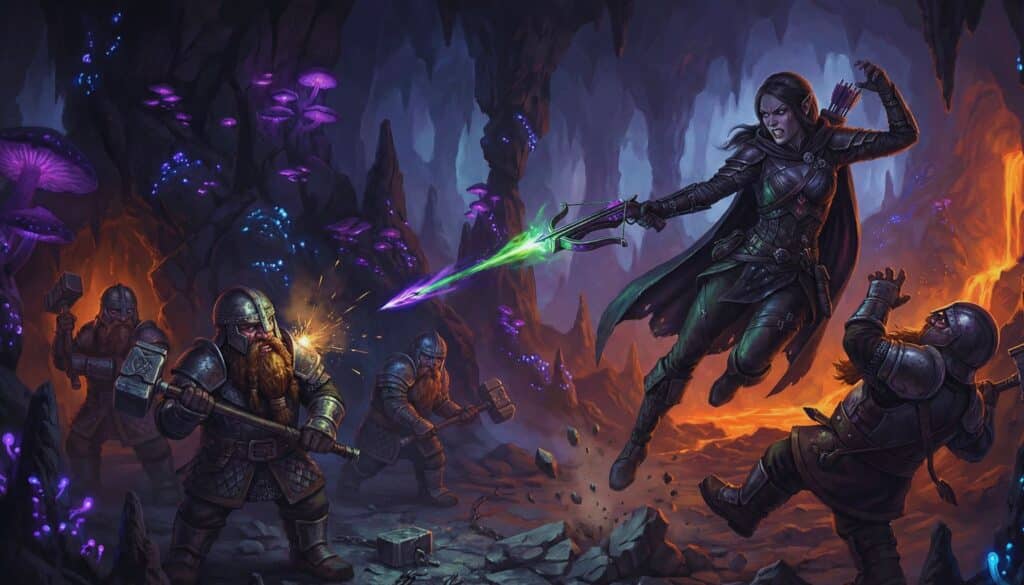
Feats are the engine of gloomstalker optimization. Because Rangers are MAD (Multiple Ability Score Dependent) needing Dexterity, Wisdom, and Constitution, you have very few ASIs to waste. You must choose feats that provide tangible gloomstalker damage per round increases or essential utility.
Sharpshooter (The Non-Negotiable)
If you are playing a ranged build, you take this. Period. The -5/+10 mechanic is the only way a martial character keeps up with caster damage in Tier 2 and Tier 3.
- Synergy: Umbral Sight grants advantage in darkness, canceling out the -5 penalty. Archery Fighting Style adds +2, effectively reducing the penalty to -3.
- Cover: Ignoring half and three-quarters cover is the sleeper OP feature here. It lets you snipe wizards hiding behind their fighter minions.
Crossbow Expert (The Machine Gun)
This allows you to fire a Hand Crossbow as a bonus action.
- The Conflict: It competes with your bonus action spells like Hunter’s Mark or Zephyr Strike.
- The Verdict: In a gloomstalker build, the first round is everything. Being able to fire a bonus action shot on Round 1 (when you might have advantage) is often worth more than casting a spell. However, if your table runs very long adventuring days where ammo or range is an issue, a Longbow build without CBE is safer.
Alert (The Initiative King)
Gloomstalker initiative bonus (Wisdom mod) plus Alert (+5) guarantees you go first.
- Why it matters: Going first means you can kill a caster before they cast Wall of Force. It also means you can position yourself in darkness before enemies move to light torches.
- Priority: Take this after you have maxed your damage stats or if you are playing a “controller” style Ranger who focuses on eliminating high-value targets.
Fey Touched (The Magical patch)
A half-feat that boosts Wisdom and gives you Misty Step and Silvery Barbs (or Gift of Alacrity).
- Utility: Rangers lack teleportation until high levels. Misty Step is a “get out of jail free” card when you get grappled.
- Optimization: If you have an odd Wisdom score, this is the best way to fix it while gaining spells that strictly upgrade your gloomstalker subclass kit.
The Gloomstalker Spellbook: Selecting for Ambush and Control
Rangers are half-casters, but gloomstalker spells should not be used for damage—your bow does that. Your spell slots are for utility, defense, and pre-combat buffing. Do not waste slots on Cure Wounds (that is for the Cleric); use your magic to ensure you never get hit in the first place.
Tier S: The Must-Haves
- Absorb Elements (Lvl 1): You will fail a DEX save against a dragon eventually. This keeps you alive.
- Zephyr Strike (Lvl 1): The ultimate gloomstalker skirmisher spell. Disengage as a bonus action, move fast, and get advantage on one attack. This is usually better than Hunter’s Mark for short fights.
- Pass Without Trace (Lvl 2): A flat +10 to Stealth for the whole party. This effectively breaks the surprise rules 5e math, allowing your Paladin in plate armor to sneak up on guards. It creates the “Ambush” condition.
- Spike Growth (Lvl 2): No concentration required to maintain the difficult terrain after casting? No wait, it is concentration. But it shreds melee enemies. If you win initiative, drop this on the enemy melee group and shoot them while they bleed trying to reach you.
- Rope Trick (Lvl 2): (Gloomstalker specific spell). The ultimate safe rest. Pop into an extradimensional space to Short Rest invisibly. It also creates a sniper nest; poke your head out, shoot, pull your head back in. Full cover.
Tier A: Situational Powerhouses
- Goodberry (Lvl 1): Efficient out-of-combat healing. Distribute them to allies so they can wake you up if you go down.
- Disguise Self (Lvl 1): (Gloomstalker specific). Essential for gloomstalker rogue multiclass builds focused on infiltration.
- Conjure Animals (Lvl 3): If your table allows it, summoning 8 wolves (or velociraptors) generates advantage for you via Pack Tactics and clogs the battlefield. It is the highest DPR spell you have, but it slows down combat significantly.
⚔️ Fantasy RPG Random Tables Books
Make life as a Gamemaster easier…
If you play Dungeons & Dragons, Pathfinder, or other fantasy RPGs, this
RPG random tables series
is packed with encounters, NPCs, treasure, and more. Available in eBook or print—either way, you’ll have a wealth of adventure ideas at your fingertips.
Multiclass Theory: When to Leave Ranger
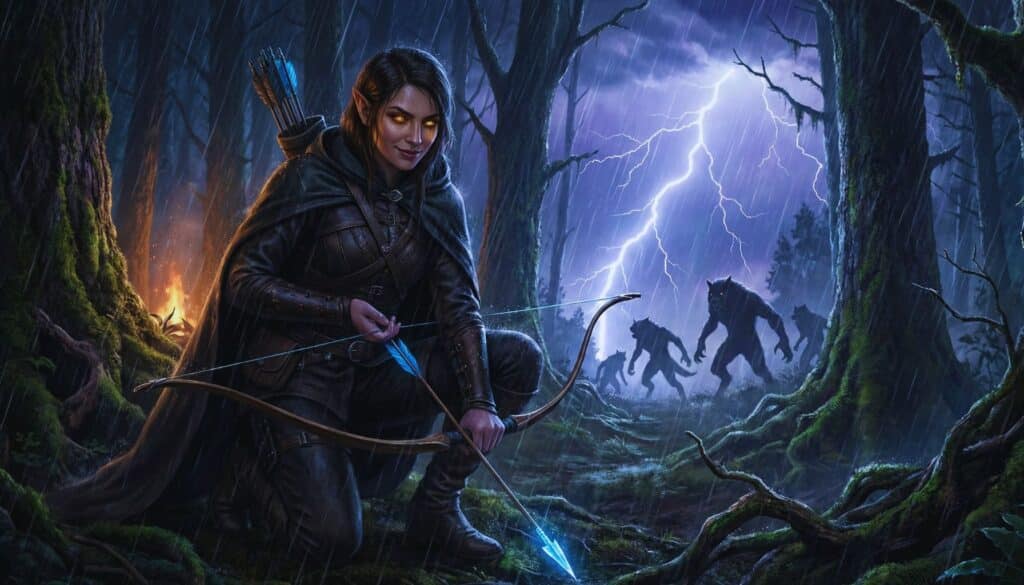
Pure Ranger is fine, but gloomstalker multiclass builds are usually stronger after level 5 or 11. The core Ranger features scale poorly compared to the front-loaded benefits of Fighter or Rogue. Here is the definitive guide on the “Big Three” dips.
The Fighter Dip (2, 3, or 4 Levels)
This is the most popular gloomstalker optimization for a reason.
- Level 2 (Action Surge): Dread Ambusher applies to each “Attack Action” you take. Action Surge gives you a second Attack Action. This means on Turn 1, you attack: (Normal + Normal + Dread) + Action Surge + (Normal + Normal + Dread). That is 6 attacks at level 5. With Sharpshooter, this is a gloomstalker nova round that deletes bosses.
- Level 3 (Battle Master): Precision Attack allows you to turn a Sharpshooter miss into a hit. Menacing Attack frightens enemies, keeping them away from you. This subclass fixes the accuracy issues of the gloomstalker sharpshooter build.
- Level 4 (ASI): Grab the feat you missed.
The Rogue Dip (3 Levels)
- Assassin: The “Crit Fisher.” If you surprise an enemy, every hit is a crit. Combined with the 6-attack Action Surge nova, this is the highest damage ceiling in the game. However, it requires surprise rules 5e to trigger, which is DM dependent.
- Scout: Expertise in Nature/Survival plus a reaction to move away when enemies get close. Great for a non-magical kiting build.
- Thief: Climb speed and Fast Hands. Good for dungeon delvers using items like caltrops or oil flasks as bonus actions.
The Cleric Dip (1 Level)
- Twilight Domain: Gives you 300ft Darkvision (shareable) and advantage on Initiative. This ensures you always act first and can see snipers who are shooting you from outside standard darkvision range.
- Life Domain: If you are the party healer, combining this with Goodberry (Lifeberry) heals 40 HP for a level 1 slot. Broken, but effective.
Gear and Itemization: Feeding the Shadow
A gloomstalker ranger needs specific gear to function. You are not looking for AC; you are looking for vision, stealth, and accuracy.
Magic Item Wishlist
- Goggles of Night: Even if you have darkvision, this adds +60ft. Range superiority is key in gloomstalker vs hunter ranger debates; seeing them before they see you is the win condition.
- Bracers of Archery: +2 damage per hit. With 6 attacks in a nova round, that is +12 free damage.
- Cloak of Elvenkind: Disadvantage on perception checks to see you. Stacks with Umbral Sight to make you a ghost.
- Weapon of Warning: Advantage on Initiative and you cannot be surprised. Essential for ensuring your Dread Ambusher turn happens.
- Nature’s Mantle: Allows you to Hide as a bonus action even when lightly obscured. Great if you didn’t take a Rogue dip.
Mundane Gear
- Bullseye Lantern (Hooded): Carry one but keep it shuttered. Use it to signal or to blind light-sensitive enemies.
- Caltrops/Ball Bearings: Cheap area control. Drop them in a doorway behind you to prevent flankers.
- Manacles: For the bounty hunter vibe.
- Signal Whistle: To coordinate the ambush with your party without shouting.
Tactical Playbook: Managing the Nova
You have built the character. Now, how do you pilot it? Gloomstalker tactics revolve entirely around the first round of combat.
Phase 1: The Approach (Exploration)
- Light Discipline: Ask the DM constantly: “Is it bright light or dim light here?” Force the party to douse torches if you have darkvision.
- Scouting: Move 60ft ahead of the party using Pass Without Trace.
- The Signal: Establish a silent signal with your team. When you shoot, they charge.
Phase 2: The Nova (Round 1)
- Target Priority: Do not shoot the tank. Shoot the high-damage, low-HP target (Wizard, Archer).
- The Sequence:
- Bonus Action: Zephyr Strike (for advantage) OR Hunter’s Mark (only if target has massive HP).
- Move: Get line of sight, but stay in darkness if possible.
- Attack Action: Fire regular shots. Fire Dread Ambusher shot.
- Action Surge (if Fighter dip): Repeat.
- Move Again: Use remaining movement to break Line of Sight. Gloomstalkers should not end their turn where they started.
Phase 3: The Grind (Round 2+)
- Conserve: You blew your load. Now you are just a regular Ranger with Extra Attack.
- Transition: Switch to control. Cast Spike Growth or help peel enemies off your Wizard.
- Hide: If you have Rogue levels, Bonus Action Hide every turn. If not, use your range to stay safe.
Counterplay: When Umbral Sight Fails
The biggest weakness of the gloomstalker subclass is reliance on darkness. A smart DM will eventually put you in a sunlit field or a brightly lit throne room.
- Fog Cloud: Use this spell to create your own “vision denial” area. Even if you can’t see out, they can’t see in, neutralizing advantage/disadvantage states.
- Skulker Feat: If your campaign is very light-heavy, this feat lets you hide when only lightly obscured, loosening the requirements for stealth.
- Acceptance: Sometimes you are just an archer with a bow. That is okay. Your baseline damage with Sharpshooter is still higher than most classes. Rely on your gloomstalker archery fighting style fundamentals.
Final Build Template: The “Standard Issue” Gloomstalker
If you don’t want to think too hard, follow this 1-10 roadmap for a high-power, balanced character.
- Race: Custom Lineage (+2 DEX). Feat: Sharpshooter. Darkvision: 60ft.
- Stats: DEX 17, CON 14, WIS 15.
- Lvl 1-5: Ranger (Gloomstalker). Take Archery Style. Feat at 4: Crossbow Expert.
- Lvl 6-8: Fighter (Battle Master). Maneuvers: Precision, Menacing, Ambush.
- Lvl 9: Fighter (ASI). Take Piercer (+1 DEX) or boost DEX to 18.
- Lvl 10: Ranger 6 (for Roving movement speed).
This build gives you the gloomstalker nova round, the Battle Master consistency, and the sheer volume of fire to handle any night combat encounters the DM throws at you. You are the ultimate ambush predator.
Creating the Predator: A Gloomstalker Background Generator
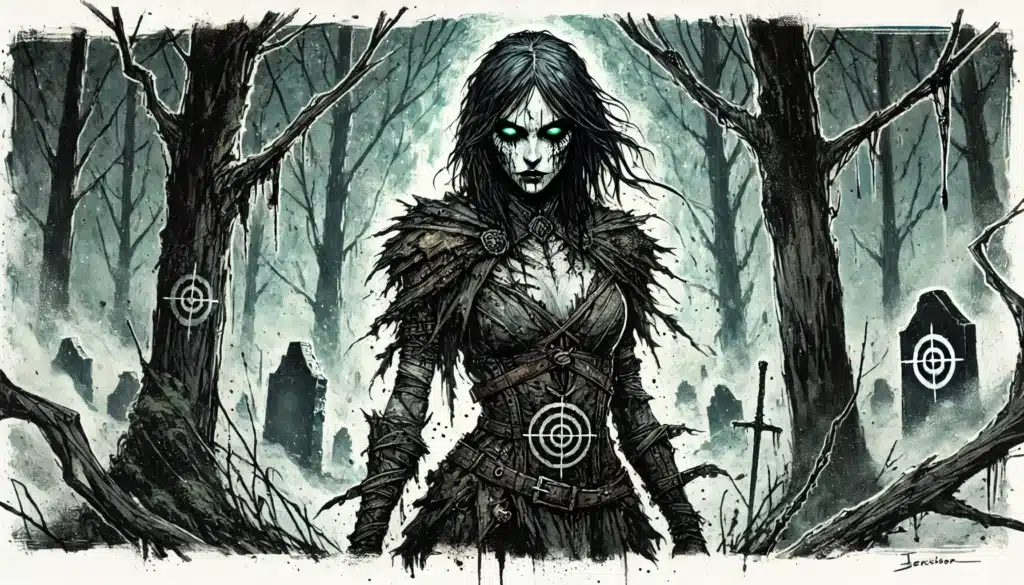
A gloomstalker ranger is rarely born in a sunny village with a happy childhood. To become one with the dark, you usually have to lose something in it first. Unlike other rangers who study nature to protect civilization, the Gloomstalker studies the places where civilization fears to tread. Your character needs a reason why they are comfortable standing in pitch blackness while the Paladin is shaking in their plate armor. These tables are designed to help you generate a gritty, thematic history that explains your gloomstalker subclass abilities—specifically why you can vanish from sight and strike before anyone else can blink.
The Origin of the Sight
Umbral Sight isn’t just a skill; it’s a supernatural alteration of your senses. How did your eyes change to see what others cannot?
| d20 | How You Gained Umbral Sight |
|---|---|
| 1 | You were born during a total solar eclipse in a cursed city. |
| 2 | You survived a Drow poison that blinded you for a year; when sight returned, it was different. |
| 3 | You traded your color vision to a hag in exchange for escaping a labyrinth. |
| 4 | You fell into a Shadowfell rift and stared into the void until it blinked. |
| 5 | An illithid experiment replaced your eyes with those of a deep-dwelling predator. |
| 6 | You were buried alive for three days and learned to see the heat of the earth. |
| 7 | A deity of darkness blessed you for sparing a nocturnal beast. |
| 8 | You drank water from a subterranean lake tainted by aboleth blood. |
| 9 | You wore a cursed mask that fused to your face before shattering, leaving only the eyes. |
| 10 | You spent a decade living in a city that exists inside a giant’s skull. |
| 11 | You are partially phased into the Ethereal Plane, seeing ghosts and shadows alike. |
| 12 | A vampire spawn bit you near the eye, infecting you with a hunger for the dark. |
| 13 | You were raised by giant spiders who taught you to feel vibrations in the light. |
| 14 | You stole a lantern from a Reaper and the light burned your retinas into shadows. |
| 15 | You are possessed by a benevolent shadow spirit that guides your aim. |
| 16 | You stared at a Medusa through a mirror and the reflection warped your vision. |
| 17 | Your ancestors were guards of the Deep Roads, and the trait is a recessive gene. |
| 18 | You technically died for a minute and brought the grave-sight back with you. |
| 19 | You ate the heart of a Displacer Beast as part of a desperate survival meal. |
| 20 | You don’t have eyes anymore; you perceive the world through magical echolocation. |
Once you have established how you see, you need to define the moment you realized you were a killer. Dread Ambusher implies a level of speed and violence that isn’t learned on a target range. It is learned in blood.

The Awakening of the Ambusher
What was the first “Dread Ambusher” moment where you moved faster than thought?
| d20 | The First Ambush |
|---|---|
| 1 | You woke up to an assassin in your room and killed them before they drew their dagger. |
| 2 | You waited three days in a swamp, perfectly still, to snipe a escaping warlord. |
| 3 | You defended a bridge alone at night against a goblin raiding party. |
| 4 | You hunted a werewolf through a dense forest during a new moon. |
| 5 | You broke out of a prison cell by killing the guard the moment the torch went out. |
| 6 | You saved a noble from a kidnapping by shooting the driver from 600 feet away. |
| 7 | You killed a rival hunter in a duel by extinguishing the lights first. |
| 8 | You tracked a thief into the sewers and struck from the ceiling. |
| 9 | You held your breath underwater for minutes to ambush a sahugin scout. |
| 10 | You infiltrated a cult ritual and killed the leader before the sacrifice hit the altar. |
| 11 | You were the only survivor of a patrol wiped out by drow, escaping by becoming the night. |
| 12 | You hunted your own corrupt mentor through the trap-filled guildhall. |
| 13 | You defended a sleeping orphanage from a pack of ghouls. |
| 14 | You executed a perfect ambush on a merchant caravan, a crime you now regret. |
| 15 | You killed a Mind Flayer by waiting for it to feed on someone else first. |
| 16 | You won a gladiatorial match in a pitch-black arena. |
| 17 | You tracked a ghost to its grave and banished it before it could manifest. |
| 18 | You survived being hunted for sport by nobles, turning the tables one by one. |
| 19 | You mistakenly killed an ally who spooked you in the dark. |
| 20 | You don’t remember the kill; you just remember the red haze and the silence after. |
The darkness leaves a mark. A gloomstalker ranger is never quite normal after spending so much time away from the sun. These quirks add roleplay flavor to your mechanical advantages, explaining why your party might find you a bit unsettling around the campfire.

Shadow Quirks and Habits
How has the gloom affected your personality or physical presence?
| d20 | The Shadow Quirk |
|---|---|
| 1 | Your shadow sometimes moves independently or lags a second behind you. |
| 2 | You instinctively extinguish candles when you enter a room. |
| 3 | You sleep with your eyes open, staring blankly at the ceiling. |
| 4 | Your skin is cold to the touch, like stone in a cellar. |
| 5 | You speak in a whisper, even when shouting would be appropriate. |
| 6 | Animals (dogs, horses) are nervous around you unless you blindfold them. |
| 7 | You never sit with your back to a door or a window. |
| 8 | Your eyes reflect light like a cat’s eyes do. |
| 9 | You collect trophies from things that hunt in the dark (teeth, claws). |
| 10 | You suffer from migraines in bright sunlight and wear heavy hoods. |
| 11 | You have a habit of standing perfectly still for awkwardly long times. |
| 12 | You smell faintly of ozone and damp earth. |
| 13 | You refer to the darkness as “Her” or “Him” as if it were a person. |
| 14 | You sharpen your weapons compulsively when you are anxious. |
| 15 | You refuse to eat food that hasn’t been cooked over a fire you built. |
| 16 | You count your arrows/bolts out loud when you are bored. |
| 17 | You have a phobia of being in open, treeless plains. |
| 18 | You prefer to sleep during the day and keep watch at night. |
| 19 | You leave no footprints, even in mud, unless you choose to. |
| 20 | When you are angry, lights in the room tend to flicker and dim. |
Finally, every great ranger needs a quarry that got away—or something that is hunting them back. This provides your DM with a built-in plot hook to challenge your gloomstalker subclass abilities later in the campaign.
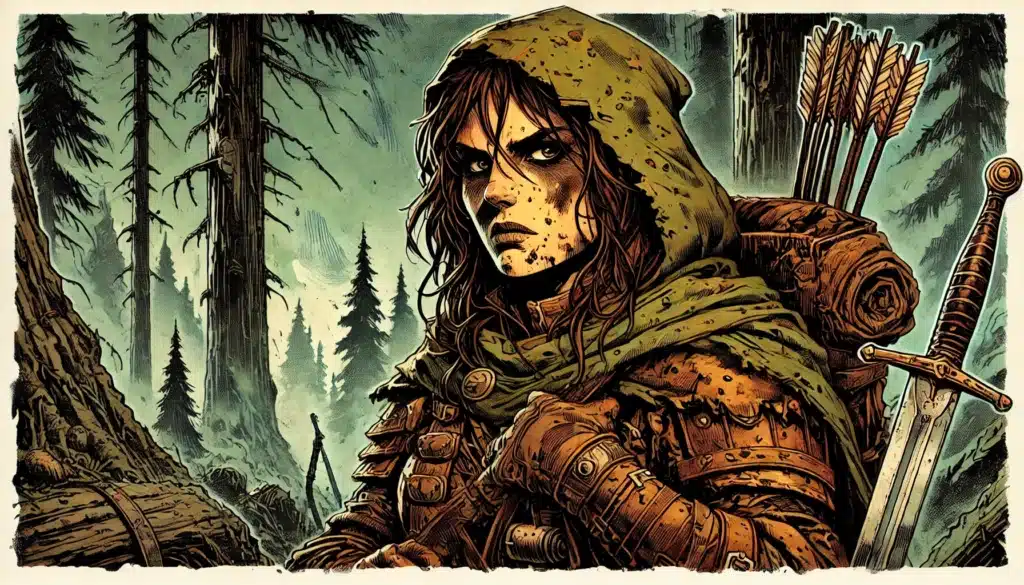
The Nemesis in the Dark
Who—or what—is waiting for you to slip up?
| d20 | The Nemesis |
|---|---|
| 1 | A Shadow Dragon that you stole a single scale from. |
| 2 | The surviving brother of the first person you assassinated. |
| 3 | A Vampire Lord who wants to turn you into a special servant. |
| 4 | Your former Ranger conclave, who exiled you for using forbidden magic. |
| 5 | A Night Hag who haunts your dreams to feed on your ambush memories. |
| 6 | An Invisible Stalker that has been following you for months. |
| 7 | A Drow House that has a bounty on your eyes. |
| 8 | A Druid who believes you are an abomination against nature. |
| 9 | The spirit of the forest you failed to protect. |
| 10 | A mirror version of yourself from the Shadowfell. |
| 11 | A Beholder that is paranoid you are the only thing it can’t see. |
| 12 | A guild of assassins who view your skills as copyright infringement. |
| 13 | A powerful fey entity that thinks you are playing a game of tag. |
| 14 | The town guard of a major city where you are wanted for “murder.” |
| 15 | A cursed intelligent weapon that wants you to wield it. |
| 16 | A Lich who needs your body for a specific ritual. |
| 17 | A pack of Winter Wolves that track your scent across continents. |
| 18 | A corrupted Treant that blights the land wherever you walk. |
| 19 | The literal manifestation of your own fear, given form by wild magic. |
| 20 | You don’t know, but you see their symbol carved into trees everywhere you go. |
Using these tables transforms your character from a generic “I shoot bows” archer into a haunted survivor with a distinct place in the world. Use these results to inform how you describe your Dread Ambusher attacks or how you interact with NPCs during night combat encounters.
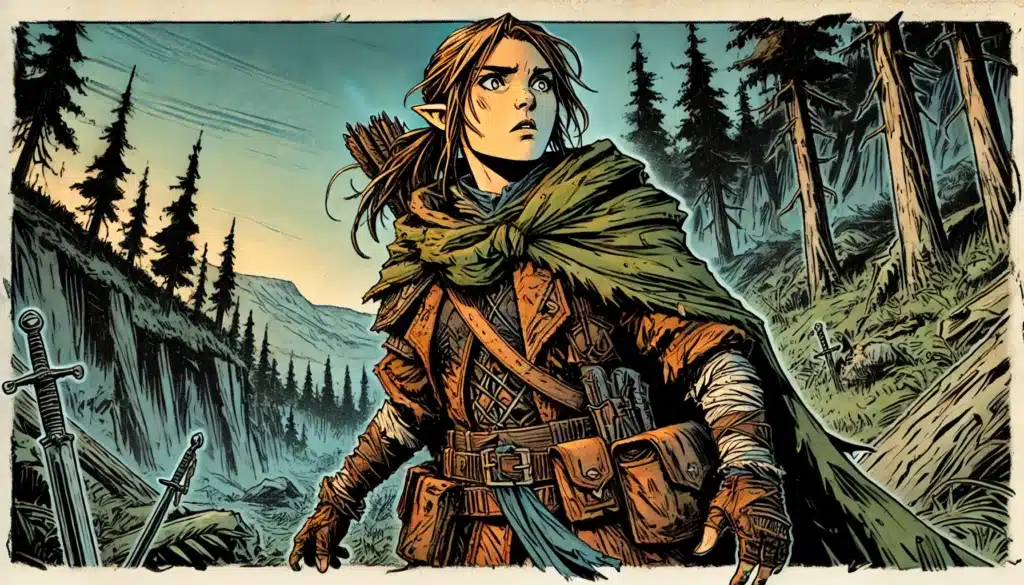
Final Thoughts: Why the DND 5e Gloomstalker Ranger Still Dominates Its Niche
The Gloomstalker Ranger remains one of the best-designed striker/scout hybrids in D&D 5e because it respects the fantasy of the ambush predator. It doesn’t just give you bigger numbers; it gives you the tools to control the environment, the initiative order, and the flow of information. While other classes fight the monster, the Gloomstalker fights the encounter itself, dismantling the DM’s setup before the first sword is swung.
Its power comes from encounter control, initiative pressure, and environmental mastery—not just numbers. In a game where action economy is king, the ability to act first and act unseen is the ultimate advantage. Whether you are delving into the Underdark or hunting vampires in a gothic city, this ranger ensures that the dark is an ally rather than an obstacle.
When darkness, exploration, and surprise matter, the Gloomstalker still owns the night. It remains a top-tier choice not because it is broken, but because it rewards tactical thinking and table awareness more than any single feat choice. If you want to play a character that rewards smart planning and decisive action, the Gloomstalker is still the king of the shadows in 2025.
