

Too many Dungeon Masters fall into the trap of treating treasure as a simple math equation where the players kill a monster and receive gold or a generic +1 sword. This approach leads to item bloat, bored players, and a “vending machine” mentality that strips the magic out of your world. By utilizing an AI loot generator like ChatGPT or Claude, you can fundamentally shift how you design rewards by focusing on narrative weight rather than just mechanical bonuses. AI-generated D&D loot shouldn’t just be a stat block; it should be a physical manifestation of the setting’s history that drags the players deeper into the plot. The goal is to create TTRPG rewards that create quests naturally, so the act of looting a body isn’t the end of an encounter but the beginning of a new arc.
The problem with standard treasure is that it often lacks context or consequence. In D&D 5e specifically, reward inflation is a real issue where players end up with a “golf bag” of magic items they forget to use because the items have no story connection. A ChatGPT loot generator can solve this if you prompt it correctly to focus on story-driven loot. Instead of asking for a sword that deals fire damage, you ask for a blade that is the only key to a sealed dwarven vault or a weapon that a local guild is desperately hunting for. This transforms the item from a collection of stats into a plot device that requires player agency to manage.
To fix your campaign’s economy, you need a system where rewards come with built-in obligations, provenance, active stakeholders, clocks, and clear exit strategies. This methodology ensures that every major reward creates future sessions without you having to railroad the party into a specific path. We call this narrative-first reward design. It controls power creep by using attunement pressure, consumable items with high stakes, and non-combat rewards that offer leverage rather than damage. You are not just giving them stuff; you are giving them problems that feel like prizes.
In this guide, you will get a complete system for generating D&D loot with story using AI tools. We will cover specific output formats that prevent “lore bloat” and instead give you playable hooks, detailed tables for generating rumors and consequences, and a workflow that makes your loot session-ready in minutes. You will learn how to prompt for magic items with plot hooks that integrate seamlessly into your world. This isn’t about random tables; it is about building a treasure hoard that tells a story.
- Reward Design Shift: D&D Loot With Story Beats Stats Every Time
- Loot as a Quest Engine: The Obligation Model
- Provenance-First Design: Who Owned It Last + Who Wants It Now
- AI-Specific Output Formats That Produce Playable Quests (Not Lore Blobs)
- Balance Without Killing Story: Power Creep Control Tools
- Consequences That Write Your Next Session
- Loot as Character Arc Fuel
- Low-Prep Weekly System: Loot Clocks and Exit Strategies
- ChatGPT Loot Generator Workflow for D&D 5e
- Common Mistakes With AI-Generated Loot
- Reasonable Loot Tables That Generate Story (Not Power Creep)
- Final Thoughts: The Best Loot Is a Door You Haven’t Opened Yet
Reward Design Shift: D&D Loot With Story Beats Stats Every Time
Narrative loot in D&D creates gameplay options while mechanical loot merely speeds up combat math. When you give a player a +2 shield, they get hit 10% less often, which is mechanically strong but narratively invisible after two sessions. However, if you give them a shield bearing the crest of a fallen noble house that grants them safe passage through enemy lands but draws the ire of the current king, you have given them reward design that powers the campaign. This approach ensures loot balance with narrative because the power comes from social access and leverage rather than raw numbers that break the bounded accuracy of 5e.
If a reward does not change the choices players make, it will not be remembered a month from now. Campaign payoff comes from items that act as keys to new content or narrative permissions that allow the party to attempt things they couldn’t do before. A sword that glows when traitors are nearby changes how players handle social encounters; a sword that does +1 damage just makes the fight end six seconds faster. Prioritizing story utility ensures that your treasure remains relevant from level 1 to level 20 because the narrative context evolves even if the mechanics stay the same.
Try my AI Tabletop RPG generators...and an extensive library of content!
Narrative Power > Mechanical Power
Narrative power is defined by access, leverage, information, and obligations rather than raw bonuses to dice rolls. It allows players to bypass obstacles, influence NPCs, uncover secrets, or claim authority in specific regions. By shifting the focus to these elements, you avoid the power creep spiral while giving players rewards that feel significantly more impactful and “legendary” than a simple stat boost.
Table: Narrative Rewards vs. Mechanical Creep
| Reward Type | What It Changes in Play | How It Creates a Quest Hook | How It Avoids Power Creep |
|---|---|---|---|
| Faction Insignia | Social access to restricted areas | Rivals challenge the PC’s rank | No combat stats added |
| Ancient Key | Unlocks a specific dungeon/vault | Players must find the lock | Utility is situational |
| Deed to Ruin | Provides a base of operations | Needs repair and defense | Gold sink, not gold source |
| Incriminating Letter | Leverage over a noble NPC | Noble sends assassins to recover it | Consumable leverage |
| Broken Relic | Useless until repaired | Quest to find the forge/crafter | Zero power until earned |
| Translator Monocle | Reads dead languages | Reveals “dangerous truths” | Information, not combat |
| Royal Pardon | Clears a past crime | The victims seek revenge | One-time social reset |
| Map to a Node | Shows ley line convergence | Other wizards want the location | Exploration focus |
| Ghostly Whistle | Summons a spirit for Q&A | Spirit demands a favor each use | limited charges/uses |
| Merchant License | Legally sell loot in the city | Guild taxes and smugglers | Economic tool only |
| Encoded Journal | reveals BBEG’s weakness | Requires a code-breaker NPC | Plot progression item |
| Teleport Anchor | One-way trip to a safe house | Safe house is currently occupied | Logistics utility |
| Exotic Mount | Travel speed/terrain ignore | Hard to feed/stabling issues | Movement utility |
| Signet Ring | False identity capabilities | The real owner returns | Social deception tool |
Meaningful rewards should feel dangerous or heavy in the hands of the heroes. When you design with “less power, more consequence” in mind, the players treat the item with respect and caution. It transforms the inventory screen from a shopping list into a dossier of active plot lines that they are carrying around on their backs.

Loot as a Quest Engine: The Obligation Model
The core mechanic of this system is simple: every notable reward serves as a future obligation rather than a free gift. Loot as adventure hooks works best when the item demands something from the user, whether that is maintenance, protection, delivery, or secrecy. This is loot with strings attached in the most literal sense. When players pick up a legendary hammer, they should also be picking up the duty to return it to the Dwarven King or the oath to use it to slay a specific giant. This creates a dynamic where the treasure is the quest giver.
By embedding obligations into the loot, you generate player-facing decisions without forcing a plotline. They can choose to ignore the obligation, but that choice has consequences which drive the story forward just as much as fulfilling the duty would. Treasure that drives plot implies that the item is active in the world; it is not just sitting in a bag waiting to be swung. The obligation creates narrative momentum because the players know that keeping the item requires work, and that work is where the adventure happens.
⚔️ Fantasy RPG Random Tables Books
Make life as a Gamemaster easier…
If you play Dungeons & Dragons, Pathfinder, or other fantasy RPGs, this
RPG random tables series
is packed with encounters, NPCs, treasure, and more. Available in eBook or print—either way, you’ll have a wealth of adventure ideas at your fingertips.



Loot as a Future Obligation
Obligations come in many forms, such as oaths, debts, custody, stewardship, witness duty, legal claims, or forced faction membership. These aren’t necessarily punishments; they are calls to action that validate the item’s importance. If an item has no obligations attached to it, it likely isn’t important enough to be the centerpiece of a hoard.
- The Oath: Must slay a specific monster type or lose attunement.
- The Debt: The item was stolen; the PC must pay the “rental fee” to the owner.
- The Custody: The item is a prison for an entity; do not let it break.
- The Stewardship: You are holding this for the rightful heir until they come of age.
- The Witness: The item records crimes; you must bring it to a judge.
- The Courier: You must deliver this to a specific location within 30 days.
- The Beacon: The item broadcasts its location to enemies; keep moving.
- The Battery: The item drains gold or magic to function; keep it fed.
- The Key: This item locks a great evil away; you must never lose it.
- The Legacy: You must perform a specific ritual annually to keep it empowered.
- The Vendetta: The item wants to kill a specific NPC; it pulls you toward them.
- The Secret: Owning this is illegal; hide it from the authorities.
- The Proxy: You are now the voting member of a secret society.
- The Anchor: You cannot leave a specific region while attuned.
- The Symbiote: The item slowly changes your appearance; find a cure.
- The Magnet: Other magical items are drawn to it (random encounters).
The best obligations tempt players with significant benefits while promising clear complications. You want the players to look at the item and say, “This is going to be a headache, but it is absolutely worth it.” That tension is the sweet spot of narrative gaming.

Provenance-First Design: Who Owned It Last + Who Wants It Now
Provenance is the single fastest quest generator available to a DM. Relics with provenance have a history that dictates their future. When using a magic item backstory generator, you must answer three critical questions: Who was the previous owner, how was it lost, and who is the current claimant? If players find a +2 sword in a dragon’s hoard, it is boring. If they find Sir Galahad’s +2 sword which was lost during the Betrayal of the Roses and is currently sought by the Order of the Silver Chalice, you have a campaign arc. Stolen treasure consequences immediately apply because the players are technically fencing stolen goods.
This approach ensures that every item connects the party to the world’s factions. The item becomes a node in the social network of the campaign. Provenance produces rivals who want to steal it, heirs who want to reclaim it, collectors who want to buy it, and factions that fear it. This naturally leads to roleplay encounters where the bard has to talk their way out of a confrontation with a knight who recognizes the shield on the fighter’s back. It creates a living world where history matters.
The Three Parties Care Rule
To maximize drama, apply the triangle of interest: the Rightful Owner (who has a legal/moral claim), the Current Beneficiary (the party), and the Hidden Manipulator (who wants the item for a dark purpose). This ensures that no matter what the players choose to do with the loot, someone will be upset, and someone else will be watching.
Table: The Provenance Triangle
| Item Concept | Rightful Owner | Current Claimant (Rival) | Hidden Manipulator | What Each Wants |
|---|---|---|---|---|
| Sun Blade | Temple of Light | Vampire Hunter Guild | Shadow Demon Cult | Return it / Use it / Destroy it |
| Royal Signet | The Crown Prince | Rebel Leader | Foreign Spy | Legitimacy / Blackmail / Chaos |
| Guild Ledger | Merchant Lord | Thieves Guild | Tax Collector | Hide crimes / Expose crimes / Audit |
| Golem Core | Dwarven Artificer | War Wizard | Rogue AI/Spirit | Repair guardian / Weaponize / Freedom |
| Druid Staff | Circle of Spores | Logging Company | Blight Entity | Restore balance / Burn it / Corrupt it |
| Dragon Egg | Ancient Red Dragon | Poacher Syndicate | Draconic Sorcerer | Its child / Money / Power source |
| Cursed Idol | Lost Civilization | Museum Curator | Warlock Patron | Worship / Display / Summoning |
| Void Key | Planar Warden | Githyanki Raiders | Mind Flayer Hive | Lock the door / Invade / Escape |
| Paladin Shield | Order of the Rose | Disgraced Knight | Necromancer | Honor / Redemption / Raise corpse |
| Bardic Lyre | Elven Court | Famous Minstrel | Fey Court Jester | Cultural heritage / Fame / Pranks |
| Spyglass | Pirate King | Naval Admiral | Deep Sea Kraken | Navigation / Capture pirates / Tribute |
| Alchemy Jug | Potion Guild | Black Market Alchemist | Poisoner Assassin | Monopoly / Profit / Mass murder |
Triangles prevent one-note hooks because the players can play factions against each other. They might ally with the Hidden Manipulator to fool the Rightful Owner, or sell the item to the Rival to pay off a debt. The loot drives the politics.

AI-Specific Output Formats That Produce Playable Quests (Not Lore Blobs)
Most AI-generated loot fails because the AI outputs paragraphs of “flavor text” that are hard to parse at the table. You don’t need a 500-word history of the smith who forged the blade; you need GM prep automation that gives you actionable triggers. To fix this, you must demand structured outputs from your AI loot generator. Ask for specific components like “Mini-Mystery Evidence,” “Pacing Seeds,” and “Rumors” rather than just a description.
Structure is the difference between a “cool item” and a “session generator.” By forcing the AI to format the output into distinct, usable categories, you strip away the fluff and leave only the gameable content. This makes the loot story-driven by design, as the very description of the item contains the clues needed to unlock its full potential or history.
Loot as a Mini-Mystery With Evidence
Treat every major item as a crime scene. The evidence-first format requires the AI to generate 3 physical clues on the item, 2 false interpretations of those clues, 1 truth, and the method to reveal that truth. This empowers player agency because they have to investigate the item rather than just casting Identify and knowing everything instantly.
Table: Evidence and Investigation
| Evidence Type | Appearance on Item | Implication (False/True) | How Players Test It |
|---|---|---|---|
| Inscription | Scratched-out runes | False: It’s cursed / True: Name of owner | Rubbing with charcoal |
| Stain | Dark discoloration | False: Rust / True: Dried demon blood | Chemical reaction / Alchemy |
| Material | Unnaturally cold metal | False: Ice magic / True: From Shadowfell | Temperature test / Detect Magic |
| Damage | Bent flange/crack | False: Battle damage / True: Broken ritual | Mending spell (reveals shape) |
| Aura | Faint humming sound | False: Power source / True: Warning signal | Proximity to enemies |
| Symbol | Hidden maker’s mark | False: Dwarven / True: Ancient Giant | History check / Library research |
| Resonance | Vibrates near water | False: Water breathing / True: Map key | Submerge in water |
| Weight | Heavier than it looks | False: Density / True: Hollow core | Scale / Breaking it open |
| Reaction | Glows in moonlight | False: Lycanthropy / True: Moon door key | Expose to moon phases |
| Smell | Scent of sulfur | False: Fire damage / True: Hell portal key | Burning samples of it |
Investigation makes the loot feel earned. When players figure out the history of the item through gameplay, they become invested in its story. It transforms the item from a reward into a puzzle.
Three Quest Seeds per Item (Pick 1, Save 2)
Modular seeds help DMs control pacing. Ask your ChatGPT loot generator for a short, medium, and long arc hook for the same item. This allows you to drop the item into your game and decide later which hook to activate based on how the campaign is going.
⚔️ Fantasy RPG Random Tables Books
Make life as a Gamemaster easier…
If you play Dungeons & Dragons, Pathfinder, or other fantasy RPGs, this
RPG random tables series
is packed with encounters, NPCs, treasure, and more. Available in eBook or print—either way, you’ll have a wealth of adventure ideas at your fingertips.
Table: Modular Quest Seeds
| Item Concept | Short Seed (1 Session) | Medium Seed (3-5 Sessions) | Long Seed (Campaign Arc) |
|---|---|---|---|
| Demon Mask | It whispers a secret code. | A cult hunts the wearer. | It opens a gate to the Abyss. |
| Clockwork Owl | It needs a rare gear. | It leads to a lost workshop. | It is the key to a time machine. |
| Crystal Sword | It cracks; needs mending. | Finding the crystal mine. | Shattering it kills a god. |
| Haunted Ring | Ghost asks for burial. | Solving the ghost’s murder. | Restoring the ghost’s kingdom. |
| Verdant Staff | Plants grow too fast. | A blight spreads from it. | Prevents an ecological collapse. |
| Shadow Cloak | User’s shadow detaches. | Shadow acts as a spy/thief. | Shadow tries to replace user. |
| Runed Shield | Deflects a specific spell. | Hunted by mage slayer guild. | Protects against a meteor swarm. |
| Golden Chalice | Turns water to wine. | Wine is addictive/cursed. | Chalice grants eternal youth. |
| Storm Hammer | Shocks the wielder. | Must be charged in a storm. | Calls the Tempest Lord. |
Banking seeds is how AI loot becomes future prep. You generate the options now, but you don’t have to commit to the narrative load until the players bite on the hook.
Reverse Foreshadowing: Rumors That Point at Loot
Use rumor tables to foreshadow the loot before the players ever see it. Rumor-based rewards build anticipation. If the players hear about the “Cursed Blade of Valdor” three sessions before they find it, the discovery is a huge moment.
- The Exaggeration: “I heard it can cut through castle walls like butter.” (False; it cuts stone slowly).
- The Curse: “Everyone who touches it dies within a week.” (Distorted; it drains HP on use).
- The Location: “It was lost in the swamp.” (True; but in a specific ruin).
- The Guardian: “A dragon guards it.” (False; a kobold sorcerer pretending to be a dragon).
- The Origin: “Forged by gods.” (False; forged by a lich).
- The Key: “Only a royal can wield it.” (True; requires royal blood to attune).
- The Witness: “My cousin saw it glow blue.” (True; proximity warning).
- The Price: “The owner sold his soul for it.” (Metaphor; he went bankrupt buying it).
- The Rival: ” The Red Hand mercenaries are looking for it.” (True; instant conflict).
- The Fake: “The Mayor has it on his wall.” (True; the Mayor has a replica).
- The Sound: “You can hear it screaming at night.” (True; sentient item).
- The Map: “The map to it is tattooed on a sailor’s back.” (Plot hook).
Rumor-first loot makes discovery feel like exploration. The players aren’t just stumbling upon things; they are verifying legends.
Balance Without Killing Story: Power Creep Control Tools
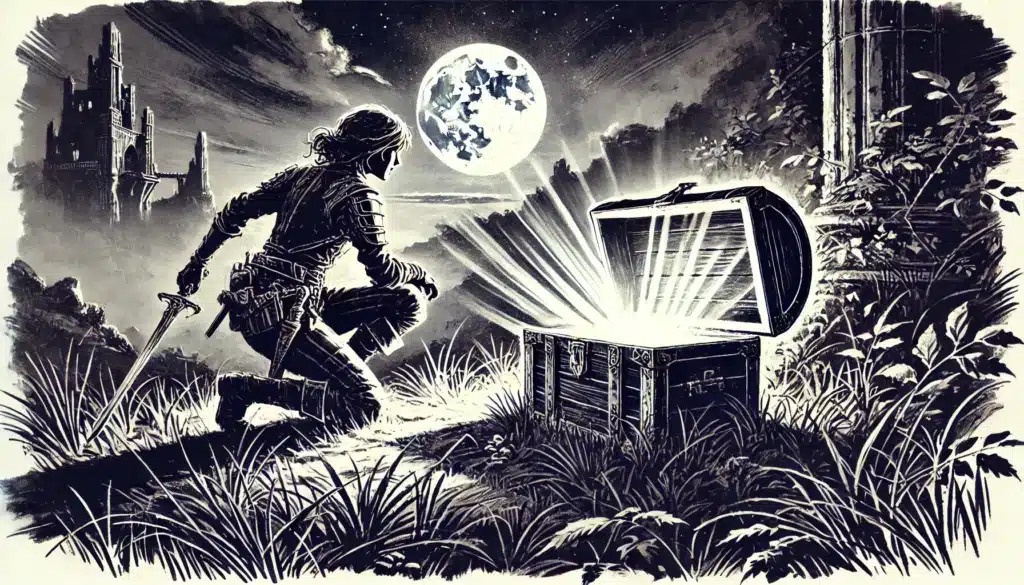
You can keep AI rewards exciting without breaking 5e treasure balance by using attunement pressure and consumable items. Power creep control is essential; if you just give out +2 weapons, the math of the game falls apart. Instead, redirect power into narrative leverage. Give them items that solve plot problems, not combat problems. Or, make the combat power come with a social or physical cost that makes using it a hard choice.
Balance is easiest when rewards create stories instead of stats. A “Dagger of King Slaying” might be a +3 weapon, but only against royalty. In 99% of fights, it’s just a dagger. But when the plot calls for it, it is the most important item in the world. This is reward pacing 5e done right.
Attunement Pressure as Plot Pressure
Attunement shouldn’t just be a limit of 3 items; it should be a narrative choice. Attuning to an item might link your mind to a hive, mark you as an enemy of the state, or physically change you. Attunement pressure creates drama.
Table: Attunement Consequences
| Attunement Trigger | Mechanical Benefit | Story Cost (Complication) | Quest It Spawns |
|---|---|---|---|
| Blood Oath | +2 AC vs Demons | Cannot heal by magic | Find a cure for the blood curse |
| Soul Link | Cast Scrying 1/day | BBEG can see you too | Block the two-way connection |
| Guild Mark | Advantage on Cha checks | Marked as Thieves Guild | Assassin retaliation / bounty |
| Fey Pact | Teleport 30ft as bonus | Owes a favor to Fey Lord | The Fey Lord calls in the debt |
| Beast Bond | Speak with Animals | Slowly turn into a beast | Reverse the transformation |
| Lich’s Touch | Resistance to Necrotic | Food tastes like ash | Find the Lich’s phylactery |
| Royal Right | Command Authority | Hunted by Usurper | Restore the true king |
| Dragon Greed | Detect Gold/Gems | Must sleep on hoard | Defend the hoard from thieves |
| Shadow Step | Invisible in dim light | Shadow spawns are drawn | Close the shadow rift |
| Truth Seeker | Detect Lie at will | Cannot tell a lie | Navigate high-stakes politics |
| Elementalist | Resistance to Fire | Vulnerability to Cold | Survive the tundra / ice journey |
| Time Locker | Reroll 1 attack/day | Age 1 year per use | Find the Fountain of Youth |
“Should we attune?” becomes a session question. The players have to weigh the tactical advantage against the narrative nightmare.
Consumables That Escalate
Consumables are safe power spikes. They allow players to do something amazing once without permanently breaking the game. However, to make them narrative rewards, the usage should trigger an escalation.
- The Summoning Horn: Calls a spectral army once; alerts the real army to your location.
- The Void Dust: Disintegrates a wall; weakens the barrier between planes nearby.
- The Truth Serum: Forces an NPC to talk; the NPC remembers and hates you.
- The Royal Writ: Commands any guard unit once; is consumed and flagged as “used” in the capital.
- The Skeleton Key: Opens any door; breaks the lock permanently, leaving evidence.
- The Miracle Potion: Heals all HP; user becomes addicted or owes the alchemist.
- The Weather Orb: Changes weather for battle; causes famine in the local region.
- The Teleport Scroll: Escapes danger; drops you in a random dangerous location.
- The Fate Coin: Guarantees a crit; next roll is a guaranteed crit fail (karma).
- The Banshee Wail: Stuns all enemies; deafens the party for 1 hour.
- The Beast Lure: Attracts a specific monster; attracts too many monsters.
- The Divine Favor: One divine intervention; alerts a rival god.
- The Memory Vial: View a past event; you lose one of your own memories.
- The Shadow Ink: Writes invisible messages; the ink is sentient and alters the text.
Escalating consumables ensure that using the “big gun” always moves the story forward, often into more trouble.
Consequences That Write Your Next Session
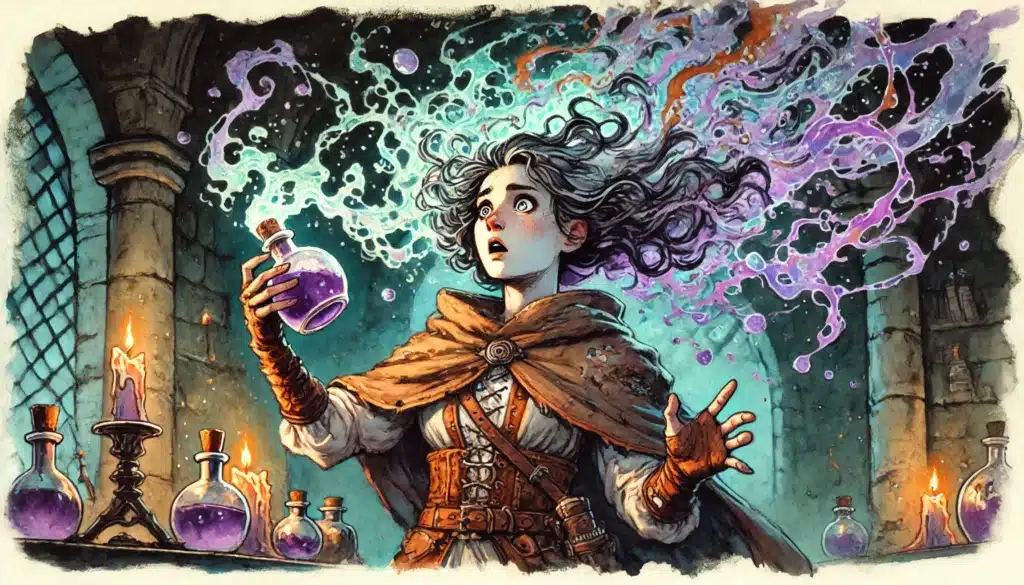
Possession of powerful items is a gameplay mechanic in itself. It draws attention, generates heat, triggers audits, and invites theft. Consequence-driven storytelling means the world reacts to the loot the players carry. If they walk into town with the legendary Sword of Kas, people should notice. Emergent quests happen when the players have to deal with the fallout of their own rewards.
This is where faction reactions shine. The loot acts as a flag that signals the party’s allegiance or threat level. If you hold the enemy’s banner, you are a target. If you hold the savior’s relic, you are a celebrity. Both are problems that need to be managed.
Stolen Treasure Heat (Wanted Level for Items)
Assign a “Heat” score to major items. This acts like a “Wanted Level” in video games. The more they flash the item around, the higher the Heat goes.
Table: Item Heat Levels
| Heat Tier | Who Shows Up | What They Do | How to Reduce Heat |
|---|---|---|---|
| 1: Rumor | Local Bards / Drunks | Ask annoying questions | Deny / Intimidate / Hide it |
| 2: Notice | Local Guards / Spies | Follow the party / Report | Bribe / Leave town |
| 3: Interest | Bounty Hunters | Try to steal it (stealth) | Set a trap / Counter-intel |
| 4: Demand | Faction Envoys | Demand surrender (social) | Negotiate / Fake hand-over |
| 5: Hunt | Elite Mercenaries | Ambush the party (combat) | Kill the hunters / Flee region |
| 6: Crusade | Paladins / Zealots | Publicly denounce party | Public trial / Religious atonement |
| 7: War | Armies / Archmages | Siege the party’s base | Major battle / Political deal |
| 8: Divine | Angels / Devils | Planar intervention | Divine quest / Ritual cleansing |
| 9: Reality | Inevitables (Constructs) | Try to delete the item | Destroy the item |
| 10: End | The Tarrasque / Gods | Total destruction | Sacrifice the item to save world |
Heat makes “carry it or stash it” a strategic decision. Players might choose to bury a powerful item because the Heat is too high to handle right now.
The Misuse Clause: When the Item Judges You
Conditional triggers create roleplay boundaries. If an item has a “personality” or a set of rules, breaking them triggers the misuse clause.
- Greed: If used to steal, the item turns to lead (heavy/useless) for 24 hours.
- Lies: If the wielder lies, the item glows red, revealing the deception.
- Bloodshed: If used to kill an innocent, the item drains 1d4 max HP from wielder.
- Cowardice: If wielder flees combat, the item drops to the ground and cannot be moved.
- Silence: If wielder speaks while attuned, the item deafens them.
- Darkness: If exposed to sunlight, the item loses all magic until the next new moon.
- Cruelty: If used to torture, the item summons a hostile spirit.
- Mercy: If used to kill a surrendering foe, the item breaks (repair quest).
- Loyalty: If wielder betrays a friend, the item unattunes immediately.
- Honor: If used in a sneak attack, the item screams, alerting everyone.
- Gluttony: If wielder eats rich food, they become sick (must fast to use item).
- Sloth: If wielder rests too long (downtime), the item slowly loses charges.
These clauses force players to act in specific ways to maintain their power, creating roleplay without moral lectures from the DM.
Loot That Changes the Map
Treasure can be non-combat rewards that unlock the world. Keys, licenses, passes, and charts act as “metroidvania” upgrades for a TTRPG campaign.
- Skeleton Key: Opens the City of Brass gates.
- Royal Writ: Grants access to the King’s Road (safe travel).
- Deep Earth Compass: Allows navigation in the Underdark.
- Planar Tuning Fork: Unlocks a portal to the Feywild.
- Guild Charter: Allows the party to buy property in the capital.
- Salvage License: Legal right to explore a specific shipwreck coast.
- Diplomatic Seal: Grants immunity to local laws in a specific nation.
- Airship Throttle: Unlocks the ability to fly an ancient ship.
- Secret Knock: Grants entry to the Thieves’ Guild safehouses.
- Library Pass: Access to the Restricted Section (lore research).
- Crypt Key: Unlocks the ancestors’ tomb (speak with dead).
- Sewer Map: Shows secret routes under the city (stealth travel).
- Mountain Gear: Allows the party to cross the “Pass of Doom” without checks.
- Water Lung: Allows the party to explore the sunken city.
Unlocking play space is a reward that never power-creeps. It just gives you more game to play.
Loot as Character Arc Fuel
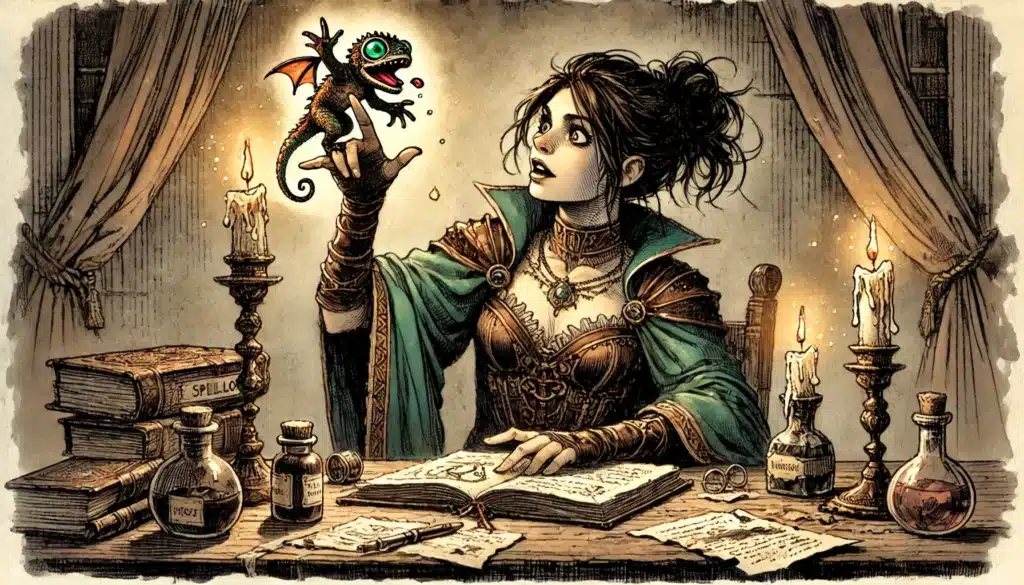
Heirloom items D&D and sentient magic items hooks tie the loot directly to the player characters. This is “character backstory tie-ins” weaponized. Instead of adding new NPCs to force a character arc, use the loot to reflect the PC’s internal struggle. A paladin struggling with their oath finds a shield that once belonged to a fallen hero who failed in the same way. The item becomes a mirror.
Players bond to loot that feels like it was made for them, not mechanically, but thematically. This emotional connection makes the item irreplaceable. They won’t trade it for a +1 better sword because this sword is part of who they are.
Heirloom Loot That Mirrors a PC
Identity hooks link the item’s history to the PC’s future.
Table: Heirloom Reflection
| PC Theme | Item Concept | Complication | Future Quest |
|---|---|---|---|
| Redemption | Sword of a Fallen Paladin | It whispers doubts | Cleanse the sword at a holy spring |
| Exile | Crown of the Lost Kingdom | Assassins recognize it | Reclaim the throne or destroy it |
| Lineage | Ring of the Ancestors | Spirits judge the PC | Prove worthiness in ancestral trial |
| Vengeance | Dagger that killed PC’s family | It thirsts for blood | Find the original owner/killer |
| Ambition | Coin of Endless Greed | It curses friends | Learn to give it away freely |
| Knowledge | Tome of Forbidden Lore | Madness creeps in | Decipher the final chapter |
| Protect | Shield of the Martyr | User takes ally’s damage | Survive the “final stand” ritual |
| Freedom | Shackles of the Slave King | Can’t remove them easily | Find the key in the slaver’s fort |
| Nature | Staff of the Withered Tree | Plants die near it | Heal the corrupted grove |
| Trickery | Mask of Many Faces | Sometimes gets stuck on | Find the true face of the god |
| War | Helm of the General | Visions of past defeats | Win a battle without violence |
| Love | Locket of the Lost | Shows user’s greatest fear | Rescue the soul trapped inside |
This is “backstory integration” with built-in momentum. The item forces the PC to confront their issues.
Sentient Items as Negotiation Partners
Sentient items are contract engines. They shouldn’t just be a voice in the head; they should be an NPC with leverage.
- “Feed Me Magic”: I need to consume one scroll per week, or I turn off.
- “Kill My Rival”: Slay the dragon that ate my former master, and I will unlock a new power.
- “Bring Me Home”: Take me to the mountain top, and I will cast a spell for you.
- “Convert Them”: Spread the word of my deity, and I will heal you.
- “See the World”: Take me to a new city every month.
- “Blood Price”: Sacrifice 5 HP to activate my fire damage.
- “Silence”: Do not speak for a day, and I will give you telepathy.
- “Gold Eater”: I consume 10% of all gold you pick up.
- “Justice”: You must intervene in every crime we witness.
- “Chaos”: You must play a prank on a noble.
- “Knowledge”: Let me read that wizard’s spellbook (destroying it).
- “Legacy”: Find my previous wielder’s heir and give them gold.
Negotiation scenes with items are recurring content that doesn’t require new assets or NPCs. It’s portable drama.
Low-Prep Weekly System: Loot Clocks and Exit Strategies
Sustainability is key. If every item starts a quest, your campaign will get bogged down. You need clocks / fronts to manage the background simulation and item exit strategies to clear the board. Inventory bloat control is narrative hygiene.
Planned endings are what make story loot sustainable. You need to know how the item leaves the story so you can make room for the next cool thing.
The Loot Clock: Items Advance Fronts
Every notable item advances a clock. This is a “Front” (from PbtA games) attached to an object.
Table: Loot Clocks
| Loot Clock Type | Tick Symptoms | What Advances It | How PCs Can Intervene |
|---|---|---|---|
| The Awakening | Item gets warmer/louder | Use in combat | Ritual to bind/calm it |
| The Hunt | Spies spot the party | Time (passive) | Kill the spies / Go into hiding |
| The Corruption | Wielder looks paler | Failed saves | Quest for a cure |
| The Decay | Item cracks/rusts | Use of charges | Find a smith to repair |
| The Signal | Enemies ambush more | Travel | Shield it with lead/magic |
| The Hunger | Item demands more gold | Long Rests | Starve it (risky) or feed it |
| The Countdown | Glyphs count down | Dawn each day | Find out what happens at zero |
| The Influence | Wielder changes personality | Social interactions | Exorcism / Separation |
| The Fusion | Item grafts to skin | Critical hits | Surgical removal quest |
| The Leak | Magic wild surges | Casting spells near it | Containment vessel |
| The Rumor | Prices/Bounties rise | Entering towns | Disinformation campaign |
| The Rivalry | Another item vibrates | Proximity to rival item | Destroy one to save other |
Loot clocks keep momentum between sessions. The players can see the trouble coming and have to act.
Item Exit Strategy: How the Loot Leaves Play With Payoff
Every major item should have an end condition. This prevents the “golf bag” syndrome.
Table: Exit Strategies
| Exit Type | Cost to Player | Payoff (Reward) | New Hook Left Behind |
|---|---|---|---|
| Return | Lose the item | Huge Gold / Faction Favor | The owner owes a life debt |
| Sacrifice | Destroy the item | Stop a ritual / Save a life | The item’s spirit blesses PC |
| Consume | Use it up | Massive temporary power | The residue is a map/key |
| Transform | Item changes form | Becomes utility/social item | Why did it change? |
| Stolen | Lose the item | Motivation for revenge | Track the thief (new arc) |
| Gift | Give to NPC | Alliance / Marriage / Peace | The NPC becomes a powerful ally |
| Plant | Hide it in world | Removes Heat / Curse | It grows into a magical tree/zone |
| Trade | Swap for info | Critical plot clue | The trader is now dangerous |
| Break | Item shatters | Raw magical dust (crafting) | The smith needs the dust |
| Ascend | Item vanishes | PC gains a Feat/Boon | The gods are watching |
Endings prevent item bloat and create closure. It feels good to finish an item’s story.

ChatGPT Loot Generator Workflow for D&D 5e
Here is a practical workflow to use ChatGPT to create loot that becomes future quests. Don’t ask the AI to decide the story; ask it to generate options. Input your campaign context, choose a loot format, generate multiple options, pick one, and bank the rest.
Try my AI Tabletop RPG generators...and an extensive library of content!
The best AI use is generating options. You are the editor. You choose what becomes canon.
The Prompt Pack Structure (Stealable)
Copy this structure into your AI tool to get consistent, balanced, story-driven loot.
Table: The Prompt Template
| Prompt Section | What to Fill In |
|---|---|
| Role | “Act as an expert D&D 5e DM and narrative designer.” |
| Campaign Tone | “Dark Fantasy / High Magic / Gritty Realism” |
| Party Level | “Level 5 Party (Tier 2 Play)” |
| Item Type | “Weapon / Wondrous Item / Key / Document” |
| Power Band | “Uncommon (Utility focus, low combat buff)” |
| The Obligation | “Must create a debt or duty for the player.” |
| The Triangle | “Include 3 interested factions (Owner, Rival, Hidden).” |
| Investigation | “Include 3 physical clues on the item.” |
| Seeds | “Provide Short, Medium, and Long term quest hooks.” |
| Heat | “Assign a Heat level and consequences.” |
| Misuse | “Define a misuse clause with narrative cost.” |
| Exit | “Define how the item creates a satisfying exit/sacrifice.” |
| Format | “Use Markdown tables and bullet points. No flavor text blocks.” |
| Constraint | “Do not increase combat damage by more than +1.” |
| Theme | “Theme: Betrayal / Ocean / Fire / Secrets” |
| Goal | “Generate 3 distinct options based on this prompt.” |
Templates reduce prep time and increase consistency. You get playable content every time.
Example Output Format: One Item, Fully Campaign-Ready
When you run the prompt, ensure the output looks like this checklist. If it doesn’t, tell the AI to “format strictly.”
- Name & Type: (e.g., The Whispering Compass, Wondrous Item, Attunement required)
- Visual Description: 2 sentences max.
- Mechanical Summary: (e.g., Cast Find Path 1/day. +2 to Survival.)
- The Obligation: (e.g., Custody: Must keep it away from the Sea Hag Coven.)
- Provenance Triangle:
- Rightful Owner: The Ghost Captain.
- Rival: The Pirate Lord (wants to find the Ghost Ship).
- Hidden: A Kraken Priest (wants to lead the ship to a trap).
- Investigation Clues:
- Clue 1: Salt water drips from it (True: Connected to the sea).
- Clue 2: Inscription in Aquan (True: A map coordinate).
- Clue 3: Needle points wrong way (False: Broken / True: Points to what you desire).
- Quest Seeds:
- Short: The compass points to a hidden cove nearby.
- Medium: The Pirate Lord sends assassins to take it.
- Long: It opens the gate to the Elemental Plane of Water.
- Heat & Exit:
- Heat: Tier 2 (Pirates are watching).
- Exit: Sacrifice it to seal the Planar Gate.
Structure is what makes it usable at the table. You can scan this in 10 seconds and run it.
Common Mistakes With AI-Generated Loot
Avoid these failure modes to ensure loot balance with narrative.
- Lore Blobs: AI loves writing 4 paragraphs of history. Fix: Ask for bullet points only.
- Overpowered Math: AI will give a level 3 party a +3 sword. Fix: Set hard constraints (e.g., “Max +1”).
- Railroad Hooks: “The item forces you to go to the castle.” Fix: Use obligations/consequences, not mind control.
- Generic Hooks: “A wizard wants it.” Fix: Ask for specific named factions from your notes.
- Too Many Mechanics: Complex trigger systems slow combat. Fix: One passive, one active, one narrative effect.
- Forgotten Curses: Curses that just do -1 to rolls are boring. Fix: Use narrative curses (e.g., “You smell like fish”).
- Infinite Resources: Items with “at will” powerful spells. Fix: Use charges or consumable components.
- Solo Spotlights: Items that only one player cares about. Fix: Make the obligation require the group.
- No Exit: Items that stay forever. Fix: Always ask for an “End Condition.”
- Vague Provenance: “Ancient empire.” Fix: “The Empire of Arkhosia, specifically the 3rd Dynasty.”
- Ignoring Tone: Silly items in a horror game. Fix: Specify “Gritty/Horror Tone” in prompt.
- Clutter: Too many items. Fix: Use the “Consume/Exit” strategies aggressively.
Clarity beats complexity in reward design. A simple item with a clear story hook is better than a complex artifact with no plot.
Reasonable Loot Tables That Generate Story (Not Power Creep)
Most traditional loot tables in 5e and other systems fail narrative-first campaigns because they optimize for the wrong things. They prioritize gold value tables and rarity brackets, which trains players to look at a reward and immediately calculate its sale price or combat math. This creates a loop of “kill, loot, upgrade stats, repeat” that ignores the wider world you have built. To fix this, you need to reframe loot tables as decision generators. Instead of rolling for a gem worth 500gp, you roll for an item that creates obligations, generates rumors, applies faction pressure, or expands the map. These rewards are valuable because they change what the players can do, not just what they can buy.
Reasonable loot in this context means rewards that feel substantial because they open doors, grant leverage, or provide information, all while staying mechanically modest. This approach completely sidesteps the issue of power creep. You can hand out these rewards every single session without worrying that you are breaking the bounded accuracy of D&D 5e. By shifting the focus to narrative utility, you ensure that the treasure hoard contributes to the story rather than trivializing your encounter design. A key to a forgotten gate is infinitely more interesting than a Potion of Healing, yet it creates zero combat imbalance.
These tables are designed to be plug-and-play for D&D 5e and act as excellent companions to the AI-generated loot workflows we discussed earlier. You can use a tool like ChatGPT to generate the flavor or the “why” of an item, and then use these tables to assign the specific mechanical and narrative output. This keeps your game low-prep while ensuring that even random drops feel like they were hand-placed to drive the plot forward.
Tiered Narrative Loot Tables (Low Power, High Consequence)
These tables are designed to replace or supplement standard treasure rolls, especially for minor dungeons, side quests, and downtime rewards. They are “tiered” not by power level, but by the complexity of the trouble they cause. Each result ensures that the act of looting leads to one of three outcomes: introducing a new stakeholder who cares about the item, advancing a loot clock that ticks toward a crisis, or unlocking a new option on the world map. The goal is low mechanical impact but high story consequence.
| Loot Result | Mechanical Impact (Modest) | Story Consequence Triggered | Future Quest or Complication Created |
| Sealed Letter of Marque | Advantage on one social check with officials | Faction Audit: The issuing government notices the document is active | An investigation or trial arc regarding piracy or smuggling charges |
| Partial Map Fragment | Reveals one hidden route or secret door | Rival Interest: A cartographer guild demands the missing piece | A race-to-location quest against a rival adventuring party |
| Relic Token (Powerless) | Counts as “proof of claim” for a title | Claim Dispute: Three factions immediately assert ownership | A negotiation session or a heist to keep it from the wrong hands |
| Favor Writ from a Guild | One-time free service (crafting/info) | The String: The guild demands a reciprocal favor later | A downtime mission or an escort quest to repay the debt |
| Cursed Coin Purse | Holds infinite copper (low value) | Heat Risng: The gold jingles loudly, alerting thieves | Constant harassment by pickpockets or bounty hunters |
| Architect’s Blueprint | Advantage on Investigation in one city | Security Breach: The city guard realizes plans were stolen | The party is branded as potential spies or saboteurs |
| Noble’s Blackmail Diary | Advantage on Intimidation vs. that Noble | Retaliation: The Noble hires assassins to recover it | Survive the hit squad and decide whether to expose the Noble |
| Rare Beast Egg | None (until hatched) | The Mother: The parent beast begins hunting the party | Defend the egg or return it to the nest before the parent arrives |
| Shattered Key (Part 1) | Unlocks nothing yet | The Collection: The other key holders sense its location | Hunt down the other 3 key holders before they unite against you |
| Merchant’s Signet Ring | False identity (Advantage Deception) | Imposter Syndrome: The real merchant (or their heir) returns | A social intrigue arc where the PC must maintain the lie or flee |
| Encoded Spellbook | One free ritual cast (consumable) | The Author: The wizard who wrote it detects the casting | The wizard demands the book back or a service in exchange for knowledge |
| Prisoner’s Locket | None (sentimental value only) | The Ghost: The prisoner’s spirit haunts the carrier | Solve the prisoner’s cold case murder to put the spirit to rest |
The key metric for a good loot table entry is asking yourself if this item changes player behavior in the next session. If the players look at the Letter of Marque and immediately start planning a sea voyage or worrying about the navy, the loot is working. If they look at a +1 sword and just update a number on their sheet, the story has stalled. These items demand action, making them the ultimate tools for narrative-first DMs.
Consumable & Non-Magic Reward Tables That Escalate Play
Consumables and non-magic rewards are the secret weapons of reasonable loot pacing. They feel generous because players love getting “stuff,” but they do not permanently inflate the party’s power level. More importantly, they are perfect vehicles for escalation on use. The item provides a massive benefit to solve an immediate problem, but using it triggers a complication that drives the next adventure. This ensures that the reward is safe until the players choose to pull the trigger, at which point the campaign gains momentum.
| Consumable / Boon | Immediate Benefit | Escalation on Use | Resulting Adventure Hook |
| Signal Flare | Summons helpful allies (1 round) | Double Edge: It also alerts all enemies in the region | An ambush scenario or a “hold the line” rescue mission |
| Sanctuary Writ | Grants one safe Long Rest anywhere | Burnt Bridge: The safehouse location is compromised | A siege defense quest or the safehouse owner demands reparations |
| Festival Invitation | Grants high-tier social access (VIP) | The Cost: Attendance implies political allegiance | An intrigue arc where the party is caught between rival houses |
| Divine Blessing (1 Use) | Auto-success on one Saving Throw | The Mark: A visible sigil appears on the user’s forehead | A cult or church takes aggressive interest in the “chosen one” |
| Teleport Token | Instant escape for the party | Fixed Point: Destination is fixed and unknown to players | Exploration of a dangerous, unfamiliar region where they land |
| Vial of Truth Serum | Forces one NPC to speak truth | Bad Blood: The NPC remembers and vows revenge | A recurring social antagonist who uses law/politics to hurt the party |
| Demolition Charge | Breaches any one wall/door | Collapse: Causes structural instability in the dungeon | A “run for your life” escape sequence or a cave-in rescue |
| Master Forgery Kit | Creates one perfect fake document | The Trail: The ink used is unique and traceable | An investigation by a relentless inspector tracking the forgery |
| Monster Pheromones | Lures a specific beast to you | Swarm: It attracts too many of them | A survival horror session holding off a pack of beasts |
| Ancient Scroll | Cast a high-level spell once | Mind Burn: The user loses a memory or takes exhaustion | A quest to restore the lost memory or cure the magical fatigue |
The beauty of escalation on use is that it puts the narrative pacing in the players’ hands. They can hoard the Teleport Token for ten sessions, but when they finally use it to escape a TPK, they know they are trading one problem for a new, mystery problem. This keeps the game exciting and prevents the “boring victory” syndrome where items solve problems too cleanly.
When (and How) to Roll on These Tables
To get the most out of narrative loot tables, use them for 60 to 80 percent of your rewards. Save the traditional, mechanically dense magic items for milestone moments where you have fully prepared the provenance and exit strategies. For everything else—goblin pockets, chest fillers, and side quest rewards—roll on these tables. You can roll openly to invite player speculation (“Oh no, we got a cursed coin purse, how are we going to hide that?”), or roll privately to seed rumors before they even find the item.
⚔️ Fantasy RPG Random Tables Books
Make life as a Gamemaster easier…
If you play Dungeons & Dragons, Pathfinder, or other fantasy RPGs, this
RPG random tables series
is packed with encounters, NPCs, treasure, and more. Available in eBook or print—either way, you’ll have a wealth of adventure ideas at your fingertips.
These tables work exceptionally well as an AI post-processing step. You might use ChatGPT to generate a cool concept for a reward, like “a crystal that hums in the dark.” That is great flavor, but it lacks mechanics. You then look at your Tiered Narrative Loot Table, pick the “Partial Map Fragment” row, and combine them. Now, the humming crystal is actually a map projection device that reveals a hidden route, but rival cartographers are hunting for it. You have used AI for the creative spark and the table for the game design grounding.
Reasonable loot tables should make players argue, plan, worry, and speculate. If the table makes the treasure feel like the start of something instead of the end of a fight, it is doing its job. When players ask “what does this mean for us?” instead of “what is the attack bonus?”, you know you have successfully implemented story-driven loot into your campaign.
Final Thoughts: The Best Loot Is a Door You Haven’t Opened Yet
The philosophy here is simple: loot should create future choices, not just bigger numbers. When you hand a player a treasure, you are handing them a key to a door they haven’t opened yet. Whether that door leads to a dragon’s lair, a political intrigue, or a moral dilemma, the reward is the opportunity to play more D&D.
AI loot generators are strongest when they produce structured consequences—obligations, provenance triangles, clocks, and exits—so the reward writes your next session for you. You stop being the “content dispenser” and start being the “consequence manager.” This shifts the load off your shoulders and puts the agency back in the players’ hands.
Use narrative loot to control power creep while increasing excitement. A +1 sword is forgotten; a sword that requires you to duel the Summer Knight every solstice to keep its power is a campaign staple. You can give out “powerful” things if the power is narrative leverage, because leverage creates drama, while math just deletes drama.
Ultimately, if the party spends twenty minutes arguing (in character) about what to do with the treasure, who to sell it to, or whether they should keep it despite the curse… you have already succeeded. That argument is the game. The loot was just the spark.
