
LitRPG is full of heroes who see a problem, scream loudly, and solve it by turning their strength stat into modern art. Fun, sure. Subtle, not exactly. But every so often, a protagonist shows up who looks at a dungeon, a boss mechanic, or a broken class system and thinks, “What if I did not run face first into that axe?” Those are the heroes worth celebrating.
This is for the readers who enjoy traps, loopholes, weird multiclass ideas, social engineering, careful prep, and the beautiful moment when a supposedly impossible encounter gets beaten by someone weaponizing common sense. These protagonists do not just grind harder. They think harder. They read tooltips. They test systems. They abuse mechanics with the energy of someone who definitely would have become a tax attorney in another life.
So here are five LitRPG protagonists who actually use their brains instead of pure brute force. Not that they never fight. They absolutely do. They just prefer to fight like gremlins with spreadsheets.
- Meet the LitRPG Heroes Who Outsmart the Grind
- Clever Builds, Sharp Plans, Zero Mindless Charging
- Strategy First: When Brains Beat Raw Damage
- These Protagonists Win with Wit and Weird Tactics
- No Berserker Energy, Just Big Genius Moves
- From Skill Trees to Schemes: Smart Play Shines
- They Read the Quest Log and Actually Think Ahead
- LitRPG Legends Who Prove IQ Can Carry Hard
Meet the LitRPG Heroes Who Outsmart the Grind
Some LitRPG protagonists are built like battering rams with emotional issues. The five here are something else entirely. They treat the game world like a puzzle box. They experiment, adapt, and occasionally commit acts of strategic nonsense so effective that enemies are left wondering if intelligence itself should be banned.
What makes them stand out is not just that they are “smart” in a vague main character way. It is that their decisions actually reflect planning. They scout before charging. They build around synergy. They use game systems as systems, not just as decorative stat windows. In a genre where “I hit it harder” can become a lifestyle, that feels refreshingly dangerous.
Here are the contenders:
- Jason Asano from He Who Fights with Monsters
- Carl from Dungeon Crawler Carl
- Zac Atwood from Defiance of the Fall
- Ned from Ripple System
- Ryan Romano from The Perfect Run
Not all of them are bookish masterminds. Some are chaos tacticians. Some are exploit hunters. Some simply understand that survival improves dramatically when you stop volunteering to be the first person punched by a dragon. Different styles, same core principle. The brain is a stat too.
Clever Builds, Sharp Plans, Zero Mindless Charging
Jason Asano is the kind of protagonist who can turn an ability list into a personal insult aimed at everyone trying to kill him. In He Who Fights with Monsters, his whole approach revolves around afflictions, control, mobility, and social manipulation. He is dangerous, but not in the “I lift castle walls for cardio” sense. He is dangerous because ten seconds into a fight, half the battlefield is debuffed, poisoned, confused, and deeply regretting the decision to engage.
Try my AI Tabletop RPG generators...and an extensive library of content!
His build rewards setup and sequencing. Jason often wins because he understands interaction chains. He stacks effects, baits reactions, and creates ugly situations where stronger opponents slowly realize that raw power is not helping them. It is a thinking person’s combat kit, which is perfect because he never shuts up long enough to forget what the plan is.
Then there is Ned from Ripple System, a protagonist who treats MMO logic like a playground for elegant nonsense. He is not trying to become the most obvious damage dealer in the room. He is trying to become the most annoying problem the system has ever generated. His choices are often rooted in economic pressure, unusual itemization, and the kind of strategic stubbornness that makes everyone else look underprepared.
| Protagonist | Series | Smart Play Style | Why It Works |
|---|---|---|---|
| Jason Asano | He Who Fights with Monsters | Debuffs, control, layered ability combos | He turns fights into attrition puzzles |
| Ned | Ripple System | Off-meta build planning, economic and system manipulation | He weaponizes game knowledge and creativity |
Both of them understand the same beautiful truth. You do not need to be the strongest if you can become the least convenient target in the universe.
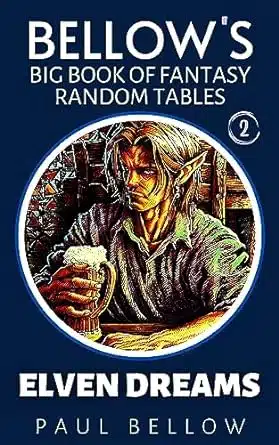
⚔️ Fantasy RPG Random Tables Books
Make life as a Gamemaster easier…
If you play Dungeons & Dragons, Pathfinder, or other fantasy RPGs, this
RPG random tables series
is packed with encounters, NPCs, treasure, and more. Available in eBook or print—either way, you’ll have a wealth of adventure ideas at your fingertips.



Strategy First: When Brains Beat Raw Damage
Carl from Dungeon Crawler Carl is what happens when an ordinary guy gets shoved into absolute nightmare conditions and responds by becoming alarmingly competent. He is not surviving because he has the biggest sword, the rarest bloodline, or a stat page blessed by fate. He survives because he pays attention. In a deathtrap environment full of absurd rules, hidden angles, and entertainment-driven cruelty, attention is basically a superpower.
Carl’s intelligence is practical. He reads rooms, judges incentives, and understands that every challenge is happening inside a larger system built by malicious weirdos who want a good show. So he learns to play to the audience, manipulate expectations, and exploit loopholes. It is not enough to beat the monster. He wants to beat the format.
A lot of his best moments come from combining preparation with improvisation:
- He studies the environment instead of treating it like wallpaper
- He works with allies instead of trying to solo every disaster
- He leverages enemy arrogance, which is a resource and should be farmed
- He remembers that rules, however cruel, can still be used against the people enforcing them
That is why Carl feels so satisfying. He wins with nerve, creativity, and the stubborn refusal to become dungeon content. He is not anti-combat. He is anti-stupid.
These Protagonists Win with Wit and Weird Tactics
Ryan Romano from The Perfect Run exists slightly outside strict LitRPG boundaries, but his whole vibe fits this conversation so perfectly that leaving him out would feel illegal. The man has a time-loop ability, and instead of using it as an excuse to become a muscle wizard, he turns it into the ultimate planning tool. He gathers information, tests outcomes, maps personalities, and eventually assembles solutions that look impossible until you realize he has basically been speedrunning probability.
What makes Ryan fascinating is that brute force is often the least efficient route for him. Why punch through a wall when you can learn who built it, why they built it, where the weak point is, and which emotionally unstable superhuman can be convinced to knock it down for you? He is part strategist, part comedian, part disaster therapist.
His methods are gloriously strange. He does not just optimize combat. He optimizes scenarios. Relationships. Timing. Narrative momentum, if necessary. If a normal LitRPG hero is trying to max out damage per second, Ryan is trying to max out useful knowledge per loop, which is objectively much nerdier and therefore much cooler.
Also, there is something deeply funny about a protagonist whose greatest weapon is basically, “I have already watched all of you mess this up several times.”
No Berserker Energy, Just Big Genius Moves
Zac Atwood from Defiance of the Fall might seem like an odd inclusion because he can, in fact, hit things very hard. Extremely hard. Possibly through geological layers. But reducing him to brute force misses a huge part of what makes him work. Zac’s success is tied to adaptation, pathing, cultivation choices, and long-term strategic thinking about power growth. He is not just swinging. He is investing.
A lot of LitRPG and progression fantasy protagonists get stronger in a straight line. Zac does not. His journey often involves evaluating opportunities, balancing risks, deciding between advancement paths, and understanding how today’s choice warps tomorrow’s ceiling. That is intelligence of a different kind. Not quippy trap-setting brilliance, but careful strategic development.
He is the sort of character who asks questions that matter:
- Which resource is actually rare here?
- What bottleneck will wreck me later if I ignore it now?
- Is this immediate win worth the long-term cost?
- Can I survive being clever and strong at the same time? Bold dream
That last question is especially relatable. Still, Zac earns his place because his growth is guided by thought, not just instinct. He is a planner wearing the armor of a wrecking ball.
From Skill Trees to Schemes: Smart Play Shines
One of the best things about intelligent LitRPG protagonists is that they make the genre’s mechanics feel meaningful. Stats, classes, skills, loot, and faction systems become more than flavor text. When a smart protagonist is in charge, every menu is a potential crime scene. Every quest reward has hidden value. Every terrible class option might secretly be busted if combined with the right nonsense.
⚔️ Fantasy RPG Random Tables Books
Make life as a Gamemaster easier…
If you play Dungeons & Dragons, Pathfinder, or other fantasy RPGs, this
RPG random tables series
is packed with encounters, NPCs, treasure, and more. Available in eBook or print—either way, you’ll have a wealth of adventure ideas at your fingertips.
Jason and Ned are especially good examples of this effect. Jason approaches powers like a deranged chess player with poison damage. Ned approaches systems like he is politely asking the game to explain why it should not be broken in half. Carl does it too, but under much more explosive circumstances and with dramatically less free time to breathe.
Smart protagonists also create better tension. If the hero’s answer to every obstacle is to become larger and angrier, there is only so much surprise available. But if the hero has to analyze, experiment, or gamble on a weird tactic, scenes gain unpredictability. Readers start asking interesting questions. Not “Can he hit harder?” but “What is he missing?” and “What is he planning?” and occasionally “Should this plan be allowed by law?”
That mental layer is what keeps these stories sticky. You remember the trick. The bait. The fake-out. The ridiculous workaround that should not have worked but absolutely did because someone finally bothered to read the skill description past the first sentence.
They Read the Quest Log and Actually Think Ahead
A shocking number of fictional heroes treat quest text like terms and conditions. Scroll, accept, run toward danger, hope for the best. The protagonists on this list are different because they actually process information. They notice implications. They ask why the reward is phrased that way. They wonder whether the obvious objective is a trap. Imagine the power.
Thinking ahead in LitRPG often means understanding that the system itself is part of the battlefield. The clever protagonist is not just fighting goblins. They are fighting incentive structures, item scarcity, reputation effects, hidden mechanics, scaling problems, and the consequences of public visibility. They know a bad build can be as deadly as a good monster.
Here is where each of these protagonists really shines:
- Jason Asano thinks in combinations and social leverage
- Carl thinks in survival logic, spectacle, and loopholes
- Ned thinks in build identity, market pressure, and system exploitation
- Zac Atwood thinks in progression architecture and future scaling
- Ryan Romano thinks in information loops, contingency chains, and perfect timing
That variety matters. Intelligence in these stories is not one thing. It can be tactical, strategic, social, economic, or experimental. Sometimes it is all five at once, which is exactly when everyone around the protagonist starts having a very bad day.

LitRPG Legends Who Prove IQ Can Carry Hard
The real charm of these heroes is that they make victory feel earned in a different way. Not because they were secretly chosen by destiny, not because they unlocked Ultra Murder Mode at chapter twelve, but because they observed, learned, and adapted. Their wins have texture. Their fights tell stories. Their builds reveal personality. Their plans often look mildly absurd right up until the moment they work.
Smart protagonists also remind us that LitRPG is at its best when it embraces system play. A game-like world should reward experimentation. It should contain loopholes, synergies, exploits, and hidden angles. And when a protagonist actually uses those things, the genre lights up. Suddenly, every encounter becomes more than a brawl. It becomes a problem to solve.
So if you are tired of heroes whose only strategy is cardio plus violence, these five are a great place to look. They prove that brains can carry hard, weird tactics can beat clean damage, and reading the quest log is not a sign of weakness. It is, in fact, an advanced combat technique.
LitRPG does not need fewer fights. It needs more protagonists who enter those fights with a plan nastier than a boss second phase. The best smart heroes understand that systems are meant to be used, abused, and occasionally folded into origami swans of strategic nonsense. Whether they are stacking debuffs, gaming economies, surviving lethal game shows, optimizing time loops, or building for the long haul, these characters win because they think first and swing second.
And honestly, that is inspiring. Not because most of us will ever outwit a demon raid boss, but because it is nice to imagine that somewhere out there, reading the tooltip really can save your life.