
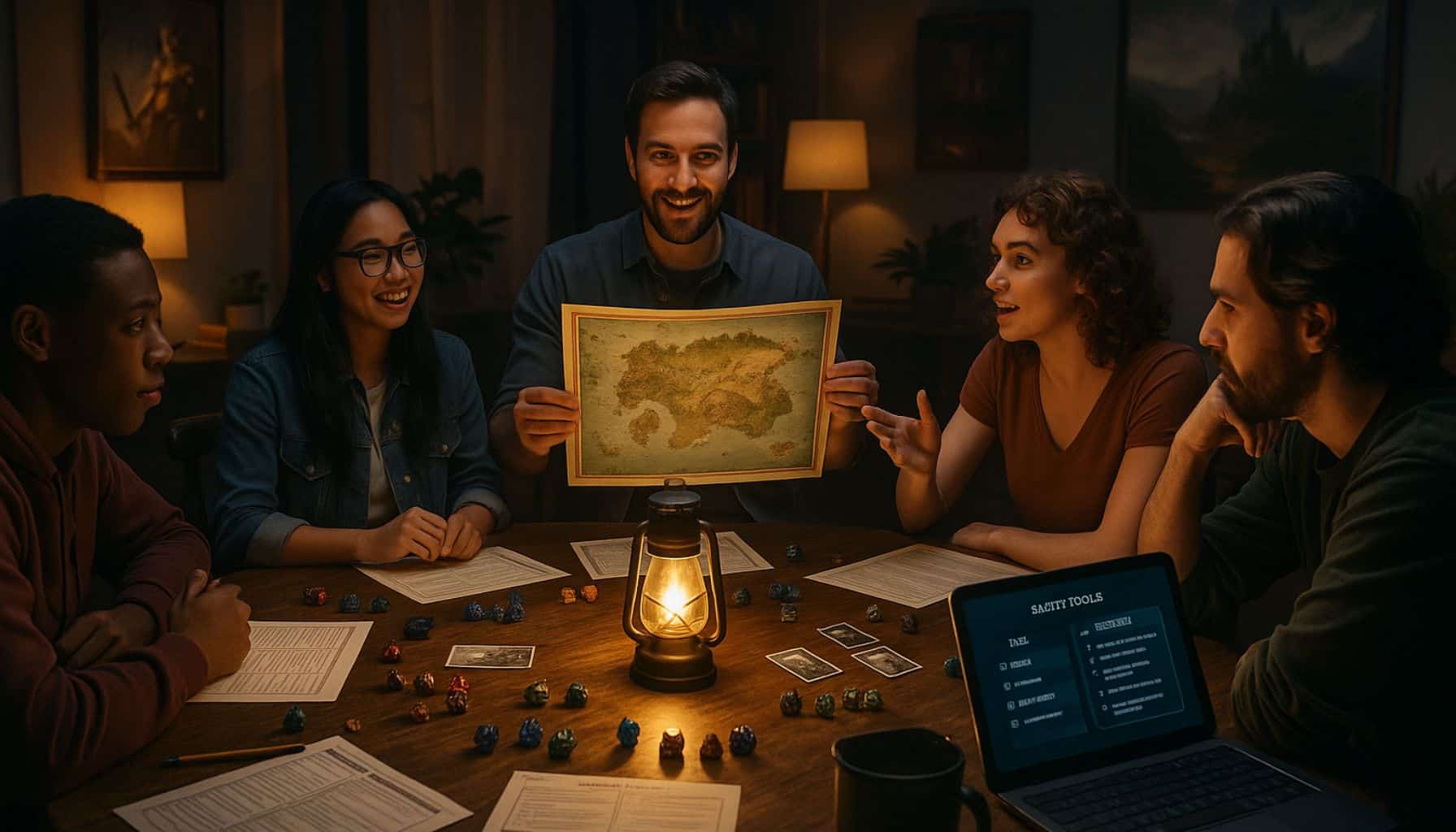
The debate surrounding Session Zero has intensified significantly as Dungeons & Dragons continues to mature into a global entertainment pillar in 2025. In its classic definition, a Session Zero is a dedicated pre-campaign meeting used to establish expectations, discuss safety tools, and align the group on the game’s tone. For years, this was considered a “best practice” among conscientious Dungeon Masters, but it was rarely viewed as an absolute requirement for play. However, as the community has expanded and diversified, the definition of what constitutes a “proper” game launch has shifted dramatically. The informal “grab dice and go” mentality of earlier decades is increasingly clashing with a modern culture that prioritizes consent, curated experiences, and emotional safety.
Traditionalists often argue that Session Zero is becoming bloated, viewing it as a bureaucratic hurdle that delays the actual fun of killing monsters and looting dungeons. They point out that for decades, friends managed to play D&D successfully by simply agreeing on a time and place, dealing with conflicts as they arose naturally. To this demographic, the heavy formalization of social contracts feels performative or unnecessary, especially among close-knit groups with years of shared history. They fear that over-analyzing the game before it starts removes the spontaneity and mystery that defines tabletop roleplaying. This perspective suggests that while communication is good, dedicating an entire evening to paperwork is an overcorrection.
Conversely, newer players, particularly those introduced to the hobby through online communities or actual-play streams, often treat Session Zero as the bedrock of the entire campaign. For digital natives playing on Virtual Tabletop (VTT) platforms with strangers, skipping this step is seen as a massive red flag regarding DM competence and player safety. In the ecosystem of 2025, where “looking for group” postings are vetted with the scrutiny of job applications, Session Zero serves as the interview and the orientation combined. It is the mechanism by which boundaries are set, ensuring that a horror campaign doesn’t accidentally traumatize a player or that a silly character doesn’t ruin a serious political drama.
The influence of Wizards of the Coast and third-party publishers cannot be understated in this shift toward mandatory status. The 2024 core rulebooks and subsequent 2025 supplements have codified safety tools and expectation-setting into the official rules, moving them from optional variants to core procedures. Streaming culture has further reinforced this, as popular shows broadcast their “Episode 0” worldbuilding sessions, framing them as high-entertainment content rather than administrative chores. This visibility has created a standard where players expect a bespoke, tailored introduction to the world before they ever roll for initiative. Consequently, the pressure on DMs to run a “perfect” Session Zero has never been higher.
This brings us to the central question facing tables today: is the elaborate, formalized Session Zero actually required for a good game, or has it become an overhyped ritual? While no one argues against the value of communication, the methodology is under scrutiny. Are we solving problems, or are we just adding homework to a hobby that is supposed to be an escape? By examining the functions, evolutions, and failures of this practice, we can determine if Session Zero is truly a mandatory element of 2025 D&D, or if it is time to relax the rules of engagement.
Why Session Zero Became “Mandatory” for DND in 2025
The rise of Session Zero from a helpful tip to a near-standard practice is largely due to the widespread integration of safety tools into the hobby’s DNA. Over the last few years, concepts like “Lines and Veils,” the X-Card, and the Luxton Technique have migrated from indie RPG circles into the mainstream 5th Edition consciousness. By 2025, the majority of public play spaces and community discords require these tools as a baseline for participation. This cultural shift necessitates a dedicated time to explain and implement these mechanics before the narrative begins. As a result, skipping Session Zero is often interpreted as a refusal to engage with player safety, making the session feel mandatory by default.
Try my AI Tabletop RPG generators...and an extensive library of content!
Furthermore, the mechanics of modern D&D have increasingly emphasized consent and collaborative storytelling, moving away from the adversarial “DM vs. Player” dynamic of the past. The revised Dungeon Master’s Guides released in the mid-2020s explicitly outline the importance of aligning genre expectations to prevent table disputes. This official endorsement signaled to the community that “winging it” was no longer the intended way to play the game. When the rulebooks themselves treat pre-campaign alignment as a phase of play equal to combat or exploration, the community inevitably follows suit. It has created an environment where a lack of Session Zero is seen as “playing it wrong” or ignoring the rules as written.
The explosion of online play via platforms like Foundry VTT, Roll20, and newer 3D immersive tabletops has also necessitated a structured onboarding process. Unlike a home game where players might trickle in and chat, digital games require distinct technical setup, account linking, and asset management. These platforms often include “Session Zero” modules or templates that guide DMs through character creation and house rule distribution. The technology itself encourages a preliminary session to troubleshoot audio, video, and connection issues before the drama starts. In this context, Session Zero became mandatory simply because the tech stack required a “calibration phase” to function smoothly.
We must also look at the massive impact of “Actual Play” shows on player expectations. Shows like Critical Role, Dimension 20, and their 2025 contemporaries often air their character creation and worldbuilding discussions as standalone episodes. These broadcasts portray Session Zero not as a meeting, but as a deeply emotional and creative prologue where relationships are forged. Audiences watching these shows come to their own home games desiring that same level of narrative cohesion and inter-character depth. They view Session Zero as the place where the “magic” begins, making it a non-negotiable part of the entertainment experience.
Ultimately, these cultural and technological shifts have created a feedback loop where Session Zero is assumed to be the only responsible way to start a campaign. The fear of “RPG horror stories”—tales of creepy players, uncomfortable themes, and toxic arguments—drives DMs to use Session Zero as a prophylactic measure. In a world where players have infinite choices of online games, they are likely to choose the table that offers the security of a structured introduction. This market force has effectively made the session mandatory for anyone recruiting outside of their immediate circle of close friends. It is a safety net that few in 2025 are willing to play without.
⚔️ Fantasy RPG Random Tables Books
Make life as a Gamemaster easier…
If you play Dungeons & Dragons, Pathfinder, or other fantasy RPGs, this
RPG random tables series
is packed with encounters, NPCs, treasure, and more. Available in eBook or print—either way, you’ll have a wealth of adventure ideas at your fingertips.




The Traditional Functions of Session Zero
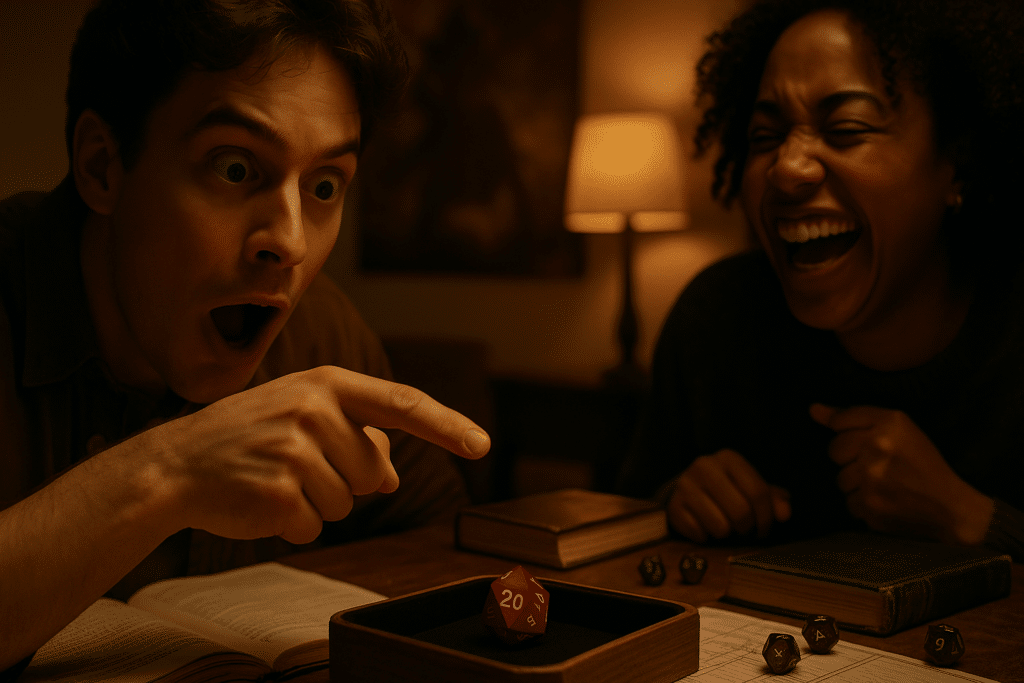
The classic Session Zero is built on the pillar of expectation alignment, ensuring that everyone at the table is trying to play the same game. This involves a frank discussion about the genre, lethality, and central themes of the upcoming campaign. If the DM is planning a gritty, high-lethality dungeon crawl and the players are building goofy characters for a lighthearted romp, the campaign is doomed before it starts. By explicitly stating the “thesis” of the game, the group avoids the friction of mismatched desires. This function remains the most practical and enduring argument for holding the meeting.
Another critical function is the integration of characters into the world and with each other. Traditional Session Zeros prevent the awkward “you all meet in a tavern and trust each other for no reason” trope by establishing prior bonds. DMs use this time to explain the setting’s specific lore, such as the rarity of magic or the political status of certain races. Players can then weave their backstories into that framework, creating hooks that the DM can pull later. This collaborative weaving ensures that the characters feel like they belong in the setting rather than being dropped in from a vacuum.
Logistics and house rules form the administrative backbone of the traditional Session Zero. This is the time to agree on scheduling, session length, and attendance policies, which are often the true killers of campaigns. It is also the designated moment for the DM to clarify mechanical rulings, such as how potions work or whether flanking provides advantage. Addressing these dry topics upfront prevents gameplay from grinding to a halt later due to rules arguments. It sets a precedent for how disputes will be handled, establishing the DM’s authority and the table’s social contract.
Finally, the traditional session establishes the baseline for safety and comfort at the table. This involves discussing “soft” limits like phobias (e.g., spiders, drowning) and “hard” limits on content like romance or torture. Even without complex mechanics, simply asking “what do you not want to see in this game?” has saved countless friendships. This function transforms the table from a random gathering into a respectful community. It acknowledges that the players are real people with real boundaries that supersede the fiction of the game.
- Discussion of Party Roles: Determining who is playing the healer, tank, or face to ensure a balanced mechanical composition.
- Tone Calibration: Agreeing on whether the game is serious, comedic, grimdark, or high fantasy.
- House Rules List: Reviewing specific mechanical deviations from the core rulebooks.
- Homebrew Agreements: Approving or denying third-party classes, races, or items.
- World Overview: The DM providing a “one-sheet” summary of the setting’s history and geography.
- Safety Tools Explanation: Teaching the group how to use X-Cards, Lines/Veils, or other safety signals.
- Scheduling Norms: Deciding on a fixed day, time, and frequency for sessions.
- Attendance Policy: Establishing what happens when a player is absent (e.g., does the character fade into the background?).
- PvP Rules: Explicitly stating whether Player vs. Player combat or theft is allowed.
- Lethality Expectations: Clarifying if character death is a real and frequent possibility.
- Character Tie-Ins: Creating existing relationships between player characters before the start.
- Tech Check: Ensuring everyone’s microphones, cameras, and VTT accounts are working.
- Table Etiquette: Discussing rules regarding phone usage, snacks, and alcohol at the table.
- Backstory Review: Players sharing non-secret elements of their history with the DM and group.
- Campaign Length: Agreeing on whether this is a short arc (3-5 sessions) or a multi-year epic.
These traditional functions remain relevant because they address the fundamental human elements of organizing a group activity. Even as styles change, the need to agree on time, place, and behavior never truly disappears. A DM who masters these fundamentals can navigate any group dynamic, regardless of the specific tools they use.
However, knowing these functions allows DMs to be selective about which ones they actually need for a specific group. A veteran group might skip the safety talk because they know each other’s limits, but they might desperately need the scheduling talk. Understanding the “why” behind Session Zero empowers the DM to customize the “how.” It prevents the session from becoming a mindless checklist and keeps it focused on utility.
The Evolving Forms of Session Zero in 2025
Session Zero in 2025 has evolved beyond a simple conversation into innovative, often gamified formats that enhance engagement. One major trend is the “Procedural Session Zero,” where the group plays a lightweight worldbuilding game (like The Quiet Year or Microscope) to create the campaign setting together. This approach solves the problem of players not reading lore documents by forcing them to help write the history. It creates immediate investment in the world and ensures that every player understands the political and geographical landscape. This format turns administrative prep into active play, reducing the boredom often associated with onboarding.
AI-assisted onboarding has also become a standard tool for modern DMs looking to streamline the process. DMs now use Large Language Models (LLMs) to generate personalized “Tone Packets” based on player questionnaires, identifying potential conflicts in playstyle instantly. Some VTTs integrate AI that can read character backstories and suggest connections between party members automatically. This technology reduces the cognitive load on the DM, allowing them to focus on the human elements of the meeting. It democratizes high-quality prep, making thorough Session Zeros accessible to DMs with limited time.
Gamified consent systems represent another leap forward, moving safety tools into the digital interface of the game. Instead of an awkward verbal discussion, players might use a “Dynamic Consent Deck” within the VTT, where they anonymously flag topics as green, yellow, or red. These systems can update in real-time, allowing players to adjust their boundaries as the campaign evolves without stopping the flow of play. This digital integration makes safety feel like a part of the UI rather than an interruption. It normalizes boundary setting by making it as mechanical as rolling an attack.
Finally, the “Micro Session Zero” has emerged as a solution for busy adults and casual groups. This format breaks the traditional long meeting into a series of asynchronous Discord prompts or 15-minute voice chats over the week leading up to the game. It allows players to digest information at their own pace and respond when they have the mental bandwidth. This approach respects the players’ time while still covering the necessary ground. It acknowledges that not every group can sacrifice an entire evening just to talk about playing.
- Randomized World Prompts: Using decks of cards to generate starting town problems together.
- AI-Generated Tone Packets: Automated summaries of the group’s collective genre preferences.
- Dynamic Consent Decks: VTT modules that allow anonymous, real-time boundary setting.
- Digital Onboarding Files: Interactive PDFs that guide players through house rules step-by-step.
- Micro Session Zeros: Asynchronous text channels for handling logistics before the call.
- Collaborative Map Making: Players drawing the starting region map together on a shared whiteboard.
- Relationship Roulettes: Rolling dice to determine random past connections between characters.
- Flashback Vignettes: Playing out short, diceless scenes from characters’ pasts.
- Mock Combats: Running a low-stakes fight to test VTT mechanics and character builds.
- Streaming-Oriented Sessions: Designing characters specifically for audience appeal and camera chemistry.
- Genre Calibration Scales: Visual sliders where the group votes on “Goofy vs. Serious” or “Combat vs. RP.”
- Living Charters: A shared document of group norms that is edited and signed by all players.
These innovations are largely attempts to solve the problem of “Session Zero Fatigue” by injecting creativity into the process. They make the onboarding phase feel like part of the game rather than a barrier to entry. By offering variety, they allow DMs to match the format of the Session Zero to the specific creative energy of their players.
⚔️ Fantasy RPG Random Tables Books
Make life as a Gamemaster easier…
If you play Dungeons & Dragons, Pathfinder, or other fantasy RPGs, this
RPG random tables series
is packed with encounters, NPCs, treasure, and more. Available in eBook or print—either way, you’ll have a wealth of adventure ideas at your fingertips.
Ultimately, these evolving forms increase the accessibility of the hobby. They provide structure for new DMs who might not know how to lead a complex social discussion. By gamifying the boring parts and automating the difficult parts, 2025’s tools ensure that Session Zero creates excitement rather than dread.
Session Zero Fatigue: A Real Problem?
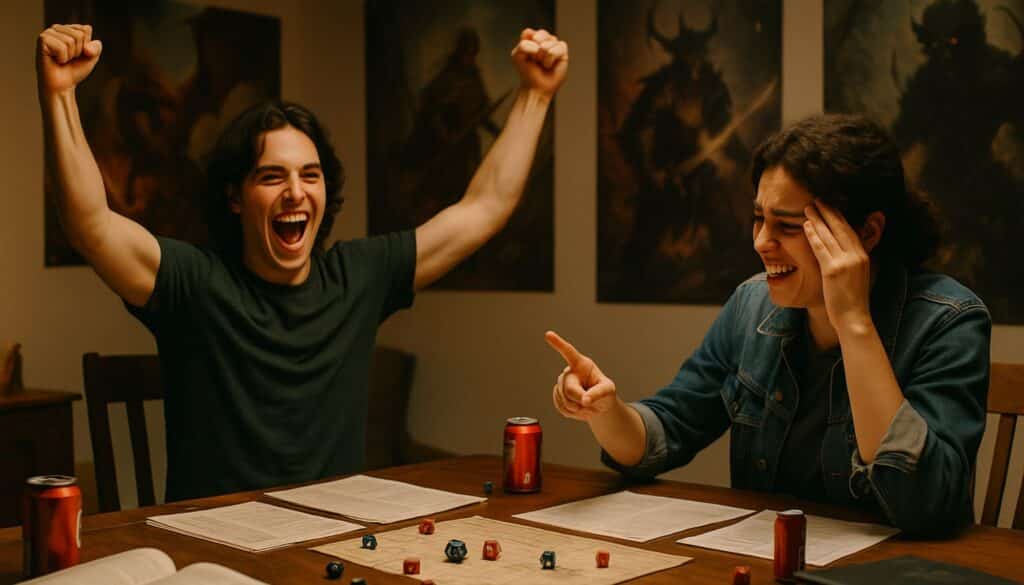
Despite the clear benefits, a growing segment of the community is experiencing significant “Session Zero Fatigue.” This phenomenon occurs when the onboarding process becomes so exhaustive and clinical that it drains the excitement for the actual campaign. Players often report feeling overanalyzed, subjected to hours of “HR-style” interviews and safety checklists before they are allowed to roll a single die. For players who simply want to relax and escape reality, this heavy cognitive load upfront can feel like work. The insistence on a “perfect” start can paralyze the group, delaying the game indefinitely.
A primary cause of this fatigue is the over-prepping culture that suggests every possible scenario must be discussed in advance. DMs, afraid of conflict, might drag players through 50-page consent documents or hour-long lectures on the history of their homebrew world. This information overload often leads to players tuning out, rendering the session useless. When the ratio of “prep time” to “play time” becomes skewed, players naturally lose interest. This is particularly egregious for short campaigns where the Session Zero lasts longer than the adventure itself.
There is also a growing frustration with the repetitive nature of these sessions for players who are in multiple campaigns. If a player joins three different games in a month, they may have to sit through the exact same lecture on “Lines and Veils” and “Table Etiquette” three times. While the information is important, the delivery often lacks efficiency, treating veteran players like novices. This redundancy can breed resentment, leading players to check out or rush through the process just to get it over with. It creates a “boy who cried wolf” effect where players stop paying attention to important safety rules because they are buried in boilerplate text.
Finally, the expectation of “performance” during Session Zero contributes to burnout. In the era of streaming, players often feel pressure to reveal deep, traumatic, or highly dramatic backstories immediately to “win” the Session Zero. This demand for instant depth can be exhausting for players who prefer to discover their characters through play. It forces a level of vulnerability that some players are not ready for with a new group. This pressure turns a planning meeting into a high-stakes audition, adding anxiety to what should be a comfortable setup.
- Feeling Overanalyzed: Players feel like test subjects rather than participants in a game.
- Repetitive Boundary Discussions: Hearing the same safety lecture for the tenth time in a month.
- Rigid Templates: DMs refusing to deviate from a downloaded script that doesn’t fit the group.
- Lengthy Tone Lectures: DMs monologuing about their “vision” for hours without player input.
- Performance Pressure: Feeling forced to act out character voices before being comfortable.
- Administrative Bloat: Spending more time on scheduling apps than on character concepts.
- Spoiler Fatigue: Discussing the plot so much that there are no surprises left.
- Mismatched Effort: One player writing a novel while others write two sentences.
- Consent Form Overload: Checklists with hundreds of obscure triggers that induce anxiety.
- Lack of Dice Rolling: Going 4+ hours without engaging with the game mechanics.
- VTT Troubleshooting: Wasting the session fixing one player’s internet connection.
- Forced Vulnerability: Being pushed to share personal trauma to “deepen” the game.
- The “Homework” Feel: Being assigned reading materials before the session.
- Unnecessary Formalities: Treating a casual beer-and-pretzels game like a professional production.
DMs must learn to recognize these symptoms and tailor their Session Zeros accordingly. A one-shot adventure needs a 15-minute briefing, not a 4-hour summit. By right-sizing the session to the campaign’s scope, DMs can maintain enthusiasm.
Reducing unnecessary overhead is respectful of everyone’s time. The goal is to get to the fun part—the adventure—as smoothly as possible. A lean, efficient Session Zero is often more effective than a comprehensive, exhausting one.

Session Zero as Performance
The ubiquity of streamed D&D content has fundamentally transformed Session Zero from a private administrative meeting into a public-facing performance. For shows like Critical Role or Dimension 20, the character creation episode is content that must entertain an audience, retain subscribers, and sell merchandise. This reality forces the players and DM to make choices based on dramatic tension and viewability rather than just table cohesion. The “performance” aspect means that players are often “on” from the moment the camera starts, delivering witty banter and emotional monologues that set a high bar for home games.
This performance pressure can subtly distort the honest discussion of tone and safety. Players on a stream may feel pressure to agree to darker themes or more intense conflict because it makes for “good television,” suppressing their own comfort levels. Conversely, they might perform “safety” by loudly proclaiming boundaries to signal virtue to the audience, rather than focusing on what the specific group actually needs. The authenticity of the social contract is compromised when there is an invisible audience in the room. It turns a negotiation into a scene.
Try my AI Tabletop RPG generators...and an extensive library of content!
Worldbuilding choices in streamed Session Zeros are also heavily influenced by the medium. Characters are often built with hooks that are designed to pay off in specific, cinematic ways, or to create immediate friction with other characters for drama. While this works for a show with professional actors, copying this “main character energy” can be disastrous for a home game. It encourages players to view their character as a protagonist in a show rather than a member of a party. The collaborative aspect can suffer when players are focused on their individual “screen time.”
| Streamed Example | Change Due to Performance | Benefits for Audience | Risks for Player Candor |
|---|---|---|---|
| Critical Role (C3) | Highly secreted backstories kept from other players. | Creates massive “reveal” moments and suspense. | Players struggle to form bonds early; lack of trust. |
| Dimension 20 | Tightly curated, genre-specific character archetypes. | Ensures immediate comedic/dramatic chemistry. | Players may feel pigeonholed into specific tropes. |
| NADDPOD | Rapid-fire improv during character creation. | Keeps the energy high and engaging to listen to. | Quiet players might get bulldozed by loud improv. |
| High Rollers | extensive visual aids and art reveals during Zero. | Visually stunning; hypes the setting. | Sets unrealistic art budget expectations for home DMs. |
| Daggerheart | Mechanics taught live on air to the audience. | Doubles as a tutorial for viewers. | Slows down the social aspect; focuses on rules. |
| Candela Obscura | Heavy focus on tragedy and inevitable doom. | Establishes the horror tone effectively. | Players may feel they must play tragic characters. |
| LA by Night | Costume and lighting usage during Zero. | Immersion is immediate and cinematic. | Prioritizes aesthetics over mechanical party balance. |
| Legends of Avantris | Focus on chaotic bits and meme-generation. | Viral clips generated from the start. | Encourages disruptive “lol-random” behavior. |
| Adventure Zone | Loose rules discussion; focus on narrative concepts. | Very accessible story-first approach. | Mechanics disagreements arise later during play. |
| Exandria Unlimited | PvP tension established early for drama. | Creates spicy, tense inter-party dynamics. | Home groups copying this often implode due to toxicity. |
Public Session Zeros influence private tables by setting a “gold standard” that is often unattainable or unhealthy for regular groups. DMs and players watch these shows and unconsciously mimic the pacing and intensity, forgetting that they are not producing a product.
However, there is a positive side: these streams have normalized the concept of Session Zero. Millions of viewers now understand that talking about the game before playing it is cool and necessary. The key is to take the inspiration without the performance anxiety.
When Session Zero Becomes Overrated
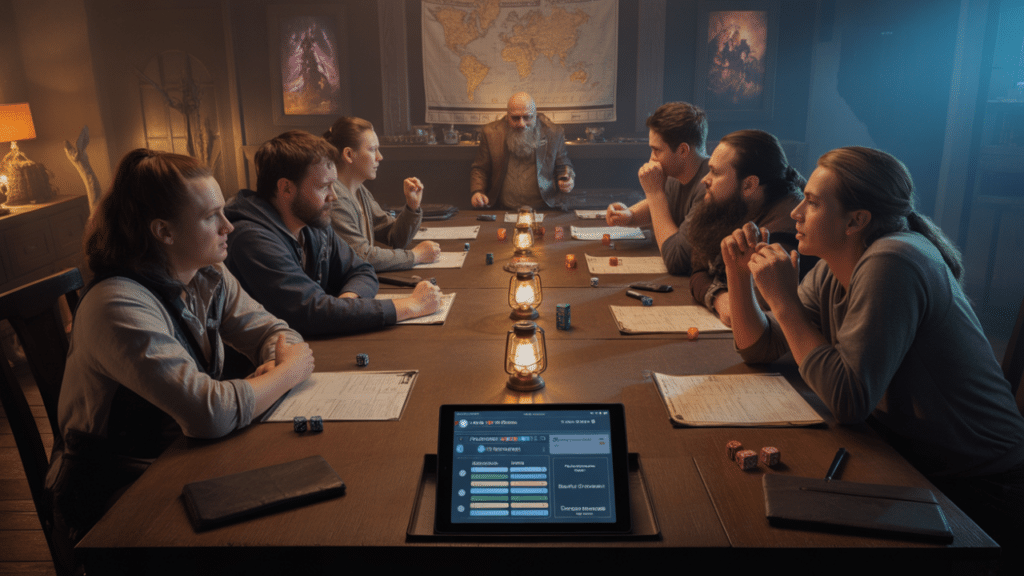
It is controversial but necessary to question the dogma that every game requires a full, formal Session Zero. There are contexts where the practice creates a barrier to entry that outweighs its benefits. For example, short campaigns or single-evening adventures often suffer from an extended onboarding process that takes longer than the gameplay itself. If a group gathers to play a 3-hour heist, spending 90 minutes on a safety and lore briefing kills the momentum. In these cases, the assumption that a comprehensive Session Zero is mandatory is indeed overrated and counterproductive.
Casual groups and “beer and pretzels” tables also frequently operate just fine without deep introspection. When the stakes are low and the goal is simply to kill some goblins and laugh, a deep dive into psychological boundaries and political themes can feel pretentious. Similarly, veteran tables that have played together for decades often have an implicit social contract. They know each other’s limits, they know the house rules, and they know the tone. Forcing them through a formalized checklist can feel patronizing and wasteful.
Overuse of Session Zero can also create a barrier to spontaneous play. The “pick-up game” was once a staple of the hobby—friends deciding on a whim to play D&D that night. The modern insistence on scheduling a separate planning session first makes spontaneity impossible. By adding a mandatory administrative step, we risk turning a fun hobby into a scheduled obligation. Sometimes, the best D&D happens when you just hand out pre-generated sheets and start rolling dice.
Signs Your Table Doesn’t Need a Full Session Zero
There are clear indicators that a DM can safely strip Session Zero down to its bare essentials. The most obvious is the “One-Shot” scenario, where time is the most precious resource. In these instances, a “Session 0.5″—a 15-minute chat at the start of the night—is usually sufficient to cover safety and basic rules. Convention play operates similarly; players sign up for a specific module with a posted description, effectively consenting to the premise by registering. The social contract is implied by the venue and the event listing.
Long-standing groups with stable membership rarely need a full reset between campaigns. If the players have navigated multiple adventures together, their interpersonal dynamics and safety boundaries are likely already established. They share a “genre literacy” regarding how the DM runs games. In this context, a simple email outlining the new setting and any rule changes is often enough. There is no need to re-adjudicate lines and veils that haven’t changed in five years.
Using pre-generated characters or returning to a familiar campaign world also reduces the need for a full session. If the mechanical choices are locked in and the lore is already known, the two biggest time-sinks of Session Zero are removed. This allows the group to jump straight into the action. If the stakes of the game are low—such as a combat arena or a simple dungeon crawl—the need for deep emotional alignment is minimal.
- Shared Genre Literacy: Everyone knows exactly what “Classic Dungeon Crawl” implies.
- Returning Campaign Worlds: The players already know the lore and tone.
- Pre-Existing Safety Agreements: The group has a standing document of Lines/Veils.
- Pre-Generated Characters: No need for collaborative character creation.
- Short Duration: The game will last 1-3 sessions max.
- Stable Roster: The same group has played together for years without incident.
- Low Emotional Stakes: The game is about mechanics/combat, not trauma/drama.
- Explicit Module Descriptions: The game listing covered all necessary warnings.
- Convention/League Play: Strict, standardized rules are already in place.
- The “Backup Game”: Playing a board game-style dungeon crawl because the main DM is sick.
- Drop-In/Drop-Out Style: West Marches games where the roster changes weekly.
- Simple Systems: Playing a rules-light version of D&D that requires less explanation.
DMs should focus on appropriateness rather than obligation. If the tool doesn’t fit the job, don’t use it. Trust your judgment about your specific friends and the specific game you are running.
While safety and clarity are never overrated, the ritual of Session Zero can be. You can achieve the same results with a text message or a 5-minute chat if the conditions are right.
When Skipping Session Zero Goes Wrong
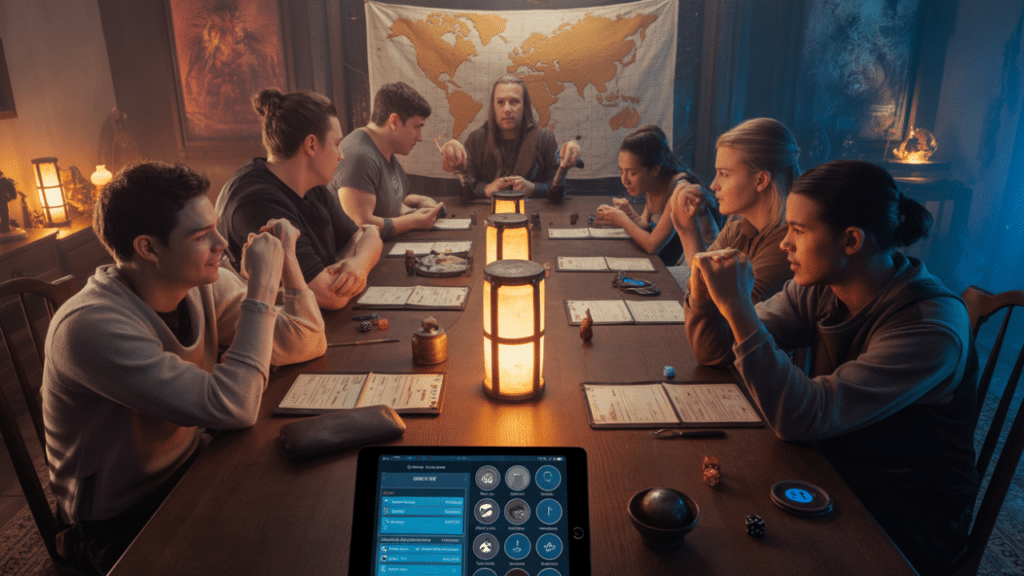
While skipping Session Zero is sometimes viable, it carries significant risks that can explode mid-campaign. The most common failure state is the outbreak of unwanted Player vs. Player (PvP) conflict. Without an explicit agreement on whether theft or infighting is allowed, a rogue stealing from the party paladin can cause real-life arguments. This mismatch in expectations—one player thinking it’s “just what my character would do” and the other feeling bullied—destroys party cohesion instantly.
Tone clashes are another frequent casualty of skipping the discussion. If one player creates a silly, joke-named character for a Monty Python-style romp, while the DM attempts to run a serious, grimdark horror campaign, the immersion breaks for everyone. The silly character undermines the horror, and the horror feels punishing to the silly character. This dissonance creates a disjointed narrative where no one is having the experience they wanted. It turns the game into a tug-of-war for the tonal center.
Mismatched expectations around lethality and power levels can also ruin a game. If a player spends hours writing a backstory assuming they have plot armor, and the DM runs a “meat grinder” where death is permanent and frequent, that player will be devastated when they die in Session 1. Conversely, a power-gamer bringing a broken build to a narrative-focused table can trivialize encounters and annoy the other players. Without a Session Zero to calibrate these mechanical expectations, resentment builds silently until it boils over.
⚔️ Fantasy RPG Random Tables Books
Make life as a Gamemaster easier…
If you play Dungeons & Dragons, Pathfinder, or other fantasy RPGs, this
RPG random tables series
is packed with encounters, NPCs, treasure, and more. Available in eBook or print—either way, you’ll have a wealth of adventure ideas at your fingertips.
- PvP Conflicts: Players attacking or stealing from each other without consent.
- Mismatched Power Levels: One optimized god-tier character alongside three roleplay builds.
- Lethality Surprise: Players getting angry when their character dies permanently.
- Theme Discomfort: Encountering phobias or triggers (e.g., spiders, assault) unexpectedly.
- Spotlight Hogging: Players not understanding the social etiquette of sharing the scene.
- Rule Arguments: Halting the game to debate House Rules that weren’t clarified.
- scheduling Collapse: Realizing too late that their schedules don’t actually align.
- Genre Confusion: Bringing a sci-fi gun to a high-fantasy knife fight.
- “Main Character” Syndrome: A player assuming the plot revolves around them.
- DM Burnout: The DM getting frustrated because the party ignores all plot hooks.
Skipping Session Zero is a valid choice, but it is a choice with consequences. It requires a high degree of trust and adaptability from everyone at the table. If you skip it, you are betting that your group’s unspoken social contract is strong enough to hold the weight of the game.
If that bet fails, the campaign usually implodes. It is often better to spend an hour planning than a month repairing broken friendships.
The Middle Path: Right-Sizing Session Zero
The binary debate of “Mandatory vs. Overrated” misses the nuance that Session Zero is a tool, not a religious rite. The most effective approach for 2025 is to “right-size” the session to fit the specific needs of the group and the campaign. A three-year campaign deserves a full session (or two) of planning; a three-hour one-shot deserves a checklist. The goal is to provide enough structure to ensure safety and fun without drowning the players in administration.

Fantasy RPG AI Generators
Make life as a Game Master easier.... If you play Dungeon & Dragons, Pathfinder, or other fantasy tabletop role-playing games, check out my D&D character backstory generator and other fine AI tools at LitRPG Adventures Workshop today.
DMs should view Session Zero as a scalable spectrum. At the low end, it is a brief orientation; at the high end, it is a collaborative workshop. The skill lies in identifying where on that spectrum your current game falls. By adapting the intensity of the prep to the commitment level of the game, DMs can maintain the benefits of alignment while avoiding the fatigue of bureaucracy.
Tools for Scaling Session Zero
For a lightweight approach, the “One-Page Guide” is invaluable. This is a document sent to players before the game that covers tone, house rules, and character creation guidelines. Players read it on their own time, and the “Session Zero” becomes a quick 10-minute confirmation at the start of play. This is perfect for experienced groups or short adventures. It respects everyone’s time while establishing the necessary boundaries.
For a medium-weight approach, the “Micro-Zero” or “Rolling Zero” works well. The Micro-Zero involves handling logistics via Discord text channels throughout the week, leaving only the emotional/narrative work for a short voice call. The Rolling Zero spreads the work out, establishing norms over the first three sessions of play rather than front-loading everything. This allows the group to discover their dynamic organically while still having a safety net.
AI and digital assistants are powerful tools for the full-weight Session Zero. DMs can use LLMs to collate player preferences into a cohesive campaign pitch or use VTT modules to walk players through a step-by-step character creation wizard. These tools speed up the heavy lifting of a comprehensive session.
| Session Zero Scale | When to Use It | Components to Include |
|---|---|---|
| Lightweight (The Briefing) | One-Shots, Convention games, Pick-up games. | 1-Page Handout, Safety Signals (X-Card), 15-min preamble. |
| Medium (The Calibration) | Short arcs (3-5 sessions), Veteran groups. | Lines/Veils survey, House Rule summary, Group Patron creation. |
| Full (The Workshop) | Long-term campaigns, New groups, High-drama games. | Collaborative Worldbuilding, Deep Backstory integration, Tone discussion. |
| Asynchronous (The Discord) | Busy adults, Different time zones. | Polls for scheduling, Text channels for lore, Private DM chats. |
| Rolling (The Evolution) | Open tables, West Marches. | Brief checklist every session, evolving “Living Charter” document. |
| Digital (The VTT) | Online-only groups with strangers. | Consent modules, Tech setup, Avatar selection, Macro testing. |
| The Reboot | Reviving a dead campaign. | “What went wrong” autopsy, Re-aligning goals, Retcon discussion. |
| The Duo | 1-on-1 games (Duets). | Deep focus on limits/triggers, collaborative storytelling style. |
| The Module | Running a published book (e.g., Curse of Strahd). | Content warnings specific to the book, Spoiler boundaries. |
| The Experiment | Trying a new system or heavy homebrew. | Mechanics tutorial, Playtest expectations, Feedback loops. |
| The Reunion | Old friends playing after years apart. | “Life update” chat, Nostalgia calibration, Scheduling reality check. |
| The Stream | Public broadcasting. | Tech rehearsal, Character chemistry test, Audience boundary setting. |
Right-sizing ensures efficiency while maintaining player safety and cohesion. It stops the DM from burning out on prep and keeps the players excited.
It turns Session Zero from a hurdle into a launchpad.
Player Types and Session Zero Preferences
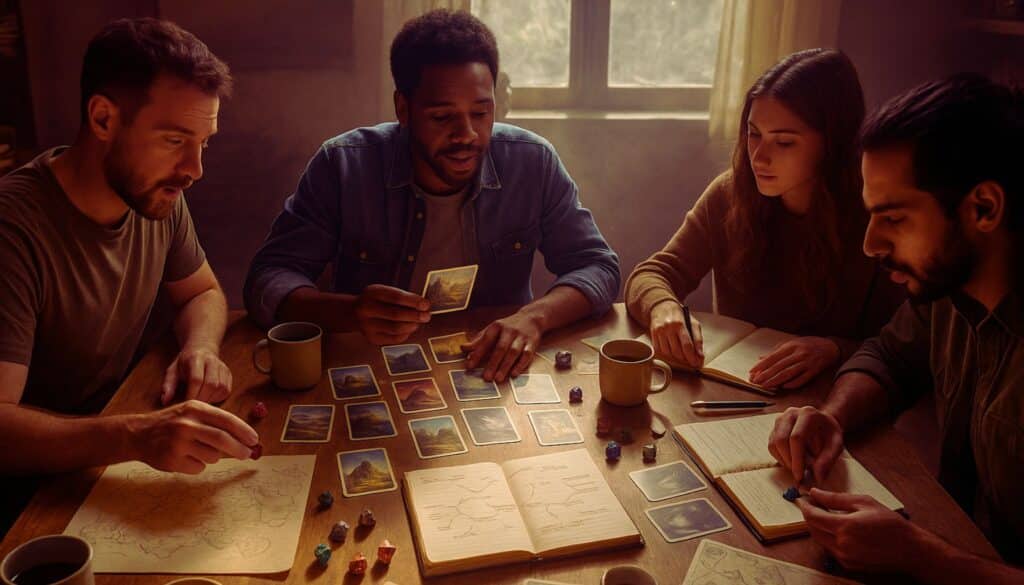
Understanding player psychology is key to designing the right session. The Tactician or “Rules Lawyer” craves clarity on mechanics. They want to know exactly how you run stealth, cover, and critical hits. For them, a good Session Zero involves a clear House Rules document. They will check out if the session is entirely about feelings and lore.
The Narrativist or “Actor” wants to know about the world. They want to discuss the political climate of the starting town and how their backstory weaves into the main plot. They thrive in a collaborative “Workshop” style session. They will feel unfulfilled if the Session Zero is just a tech check and a scheduling poll.
The Casual or “Audience” member often finds deep Session Zeros overwhelming. They just want to know what class to play and what time to show up. They prefer a lightweight approach that gets them to the action quickly. Overloading them with lore documents can actually scare them away.
The Instigator or “Butt-kicker” needs to know the boundaries of agency. They want to know if they can pickpocket the king or burn down the tavern. A Session Zero for them needs to clearly define the consequences and the tone of the world (e.g., “actions have realistic consequences”).
- The Tactician: Wants House Rules, build restrictions, and combat balance info.
- The Actor: Wants lore deep-dives, voice testing, and inter-party relationships.
- The Casual: Wants a simple schedule, snacks discussion, and a pre-gen character.
- The Instigator: Wants to know the “edges” of the sandbox and PvP rules.
- The Power Gamer: Wants to know if their multiclass build is banned.
- The Newbie: Wants a tutorial on dice and basic etiquette.
- The Veteran: Wants to skip the basics and discuss the unique campaign twist.
- The Shy Player: Wants safety tools and a clear way to participate without spotlight.
- The Leader: Wants to organize the party composition and group patron.
- The Edgelord: Needs firm boundaries on “lone wolf” behavior and dark themes.
- The Scheduler: Focuses entirely on the calendar and attendance policy.
- The Artist: Wants to describe their character’s look and find reference images.
- The Lorekeeper: Wants to take notes on the setting’s history and religion.
- The Streamer: Wants to ensure their character is “watchable” and entertaining.
- The DM’s Helper: Wants to know how they can assist with tracking initiative/loot.
Understanding these archetypes helps DMs design the most effective Session Zero. You don’t need to satisfy everyone perfectly, but you should touch on the pillars that matter to your specific players.
Constructing the Party, Not Just the Characters
The single most effective use of Session Zero in 2025 is shifting the focus from individual character creation to collaborative party construction. In the past, players would often create their characters in isolation, bringing a finished sheet to the table that acted as a walled garden of personal lore. This method frequently resulted in a disjointed group of five protagonists who had no logical reason to travel together, leading to the dreaded “herding cats” dynamic for the Dungeon Master. By moving the creation process into the shared space of Session Zero, the group builds a team rather than a collection of individuals.
This approach requires a fundamental change in mindset: the “Party” is treated as a character in itself, with its own goals, flaws, and reputation. During Session Zero, the players should decide on a collective identity before they ever roll ability scores or pick feats. Are they a mercenary company struggling to pay debts, a band of holy inquisitors, or a dysfunctional family of circus performers? Determining this group identity first creates a filter that guides individual choices, ensuring that every character built fits the established theme.
Building the party together also allows for immediate “niche protection,” preventing the frustration of two players accidentally building the exact same archetype. If two players want to play Rogues, Session Zero allows them to coordinate so that one becomes a swashbuckling face while the other becomes a trap-disarming dungeon delver. This negotiation ensures that everyone has a distinct mechanical role where they can shine. It transforms character creation from a competitive “who has the best build” contest into a cooperative puzzle of interlocking strengths.
The “Group Patron” and Shared Purpose
A major innovation in the 2024–2025 ruleset is the formalization of the “Group Patron,” a mechanic that gives the party a unifying boss, organization, or cause. Session Zero is the ideal time to select or design this patron, as it instantly answers the question, “Why are we working together?” Instead of relying on the flimsy trope of meeting in a tavern, the party starts with a clear mandate and a resource network. Discussing the patron establishes the economic and political tier of the campaign—working for a street gang feels very different than working for an ancient dragon.
The choice of patron also dictates the types of missions the group will undertake, allowing players to build characters suited for those tasks. If the patron is a Magical Academy, players know to prioritize Arcana skills and utility spells; if the patron is a Military General, they know to bring heavy armor and combat feats. This alignment prevents the “Fish out of Water” scenario where a Ranger focused on wilderness survival feels useless in a campaign entirely set within a wizard’s tower.
Furthermore, defining the patron allows the group to establish their collective reputation and starting resources. Do they have a headquarters, a ship, or a permit to carry weapons in the city? These assets are often negotiated during Session Zero as part of the group’s backstory. It gives the players something to lose and something to protect from the very first minute of gameplay.
Common Group Patron Archetypes:
- The Academy: A school or library sending students to recover artifacts.
- The Criminal Syndicate: A thieves’ guild providing fencing services and legal protection.
- The Sovereign: A king or queen granting the party legal authority to enforce laws.
- The Ancient Being: A dragon or lich using the party as mortal agents.
- The Religious Order: A temple requiring the party to hunt heretics or undead.
- The Adventuring Guild: A standard union offering insurance and quest boards.
- The Aristocrat: A wealthy financier seeking thrills or exotic items.
- The Military Unit: A strict hierarchy where the party is a special ops squad.
- The Planar Entity: A devil or fey lord holding the party’s debt.
- The Newspaper: An investigative outlet requiring the party to uncover scandals.
- The Rebellion: An underground cell fighting against a tyrannical regime.
- The Merchant House: A trade empire needing guards for caravans and ships.
- The Tribe/Clan: A familial bond where the “patron” is the survival of the kin.
- The Survivor Enclave: A group banded together solely to escape a disaster.
Establishing a Group Patron solves the motivation problem that plagues so many campaigns. The DM no longer has to dangle hooks and hope the players bite; the players have already agreed to the job description.

Mechanizing Bonds: The Relationship Web
The “Relationship Web” is a technique where players establish specific, pre-existing connections with the characters sitting to their left and right. Instead of generic bonds like “we are cousins,” Session Zero encourages active, dramatic links such as “I owe them money,” “We share a dark secret,” or “They saved my life in the war.” These connections provide immediate roleplay fuel for the first session, eliminating the awkward “getting to know you” phase that often drags down the pacing.
Try my AI Tabletop RPG generators...and an extensive library of content!
This web should be visual; drawing lines between names on a whiteboard or VTT canvas helps players see the complexity of the social group. It ensures that no character is an island; every PC should have a strong link to at least two others. This creates a safety net for party cohesion—if Character A gets into a fight, Character B has a narrative reason to jump in, and Character C has a reason to heal them.
DMs can facilitate this by providing “Bond Cards” or rolling on random tables during the session. These prompts can force creative improvisation, such as determining why a Paladin and a Warlock would be best friends. Often, the most interesting party dynamics come from justifying these randomly generated connections during the planning phase.
⚔️ Fantasy RPG Random Tables Books
Make life as a Gamemaster easier…
If you play Dungeons & Dragons, Pathfinder, or other fantasy RPGs, this
RPG random tables series
is packed with encounters, NPCs, treasure, and more. Available in eBook or print—either way, you’ll have a wealth of adventure ideas at your fingertips.
Relationship Web Prompts:
- The Debt: One character owes the other a life-changing sum of gold.
- The Secret: One character knows the true identity of the other.
- The Crime: The two characters committed a heist together years ago.
- The Rivalry: They are constantly competing to prove who is better at a skill.
- The Mentor: One character taught the other their trade (regardless of level).
- The Family: They are siblings, estranged or close.
- The Survivor: They are the only two survivors of a previous party wipe.
- The Object: They both possess half of a map or broken artifact.
- The Romance: They are ex-lovers, current lovers, or unrequited lovers.
- The Oath: One has sworn to protect the other until a specific deed is done.
- The Vision: They share the same recurring nightmare.
- The Rescue: One character broke the other out of prison.
By mechanizing bonds, the group becomes a resilient social unit. It transforms the party from a random assortment of strangers into a team with history, weight, and stakes.
Tactical Synergy and Team Composition
Beyond narrative, Session Zero is the crucial time to discuss mechanical synergy to ensure the party can actually survive the game. In 2025’s more tactical meta, “Team Composition” matters; a party of five Wizards will struggle differently than a balanced group of tanks, healers, and strikers. Players should discuss their intended combat roles to ensure all bases are covered.
This discussion prevents “toe-stepping,” where two players build characters that try to occupy the same mechanical niche. If one player wants to be the “Face” (social expert) and another builds a Bard, they can agree during Session Zero to split the duties—one handles Intimidation, the other Persuasion. This ensures that both players get their moment in the spotlight without competing for the same rolls.
DMs can also use this time to suggest “Combo Tactics” based on the chosen classes. For example, if one player picks a Rogue and another picks a Battle Master Fighter, they can plan to use the Commander’s Strike maneuver to trigger extra Sneak Attacks. These synergies make the players feel like elite professionals rather than disorganized brawlers.
| Party Role | Typical Classes | Key Responsibilities | Synergy Discussion Point |
|---|---|---|---|
| The Anchor (Tank) | Barbarian, Fighter, Paladin | Absorb damage, control positioning. | “Who is standing in the front line with me?” |
| The Hammer (Striker) | Rogue, Ranger, Monk, Warlock | Deal high single-target damage. | “How do we generate Advantage for my attacks?” |
| The Controller | Wizard, Druid, Sorcerer | Area denial, debuffs, battlefield shaping. | “Don’t run into my area-of-effect spells.” |
| The Support | Cleric, Bard, Artificer | Buffs, healing, utility. | “Who needs the most buffs to be effective?” |
| The Face | Bard, Sorcerer, Warlock, Paladin | Social interaction, negotiation. | “Who takes the lead when we talk to nobles vs. criminals?” |
| The Scout | Rogue, Ranger, Monk, Druid | Reconnaissance, trap finding. | “How far ahead do I go before calling for backup?” |
| The Scholar | Wizard, Artificer, Knowledge Cleric | lore checks, monster identification. | “Who identifies the loot and reads the runes?” |
| The Blaster | Sorcerer, Evocation Wizard | Area of effect damage. | “How do I avoid hitting the Tank with Fireball?” |
| The Skirmisher | Monk, Rogue, Ranger | Mobile harassment, backline access. | “Can I rely on the Tank to hold the line while I flank?” |
| The Utility Knife | Bard, Artificer, Druid | Solving non-combat puzzles. | “Do we have the right tools for exploration?” |
Addressing mechanical synergy early prevents the disappointment of playing a character that feels ineffective. It allows the players to design a “Kill Squad” that feels powerful and competent from the very first encounter.
This tactical planning also helps the DM design encounters that challenge the specific strengths of the group. If the party lacks a healer, the DM knows to provide more potions; if they lack ranged attacks, the DM knows to be careful with flying enemies.
Final Thoughts: Overrated or Mandatory?
Session Zero is neither universally overrated nor universally mandatory—it is context-dependent. To declare it “overrated” is to ignore the massive strides the hobby has made in safety, inclusion, and narrative coherence. To declare it “mandatory” for every single interaction is to ignore the reality that friends have been playing games together for decades without formalizing the process. The truth lies in the middle: Session Zero is a vital toolset, but one that must be wielded with judgment rather than dogma.
In the landscape of 2025, the cultural expectation has shifted towards “Mandatory,” and for good reason. The tools available now—from AI assistants to gamified consent decks—make running these sessions easier than ever. The baseline for a “good game” has risen; players expect a higher degree of personalization and safety than they did in the past. Ignoring these trends entirely puts a DM at risk of running a table that feels antiquated or unsafe for modern players.
However, DMs must resist the pressure to perform. You are not running a Kickstarter campaign or a Twitch stream; you are running a game for your friends. You do not need a 40-page lore bible or a three-hour emotional workshop if your group just wants to kill skeletons. Balance is the key. Prioritize the safety of your players and the logistical viability of the campaign, but feel free to cut the fluff that doesn’t serve your table.
Ultimately, the goal of D&D is player agency, and that extends to how you start the game. As a DM, you have the agency to design an onboarding process that fits your life and your group. Don’t let the internet dictate how you have fun. Use Session Zero to solve problems, not to create new ones.
The best Session Zero is not the one that checks every box on a template. It is the one that gets everyone excited, on the same page, and ready to play. Whether that takes five minutes or five hours, if it enhances the campaign, it was worth it. If it burdens the campaign, it wasn’t.
