

Goodberry occupies a strange place in the Dungeons & Dragons fifth edition ecosystem. On the surface, it appears to be a humble first level transmutation spell, available primarily to Druids and Rangers, designed to provide a small amount of healing and sustenance. Many players simply note its ability to restore one hit point per berry and move on, viewing it as a minor utility option. However, beneath this unassuming exterior lies a mechanic that fundamentally alters how the game handles survival, resource management, and wilderness exploration. Experienced Dungeon Masters often view Goodberry not as a helpful tool, but as a “rules grenade” capable of detonating entire campaign premises.
The spell’s core effects are straightforward yet potent: it creates ten berries, each restoring a single hit point and providing enough nourishment to sustain a creature for twenty four hours. At first glance, this seems reasonable, a magical alternative to carrying iron rations. But when scrutinized, the efficiency is staggering. A single first level spell slot can feed ten people for a day, completely bypassing the need for hunting, foraging, or carrying food supplies. In a game that includes detailed rules for starvation, exhaustion, and encumbrance, Goodberry acts as a skeleton key that unlocks and discards these challenges instantly.
This efficiency creates a distinct tension between the gritty fantasy of survival and the high magic reality of player characters. Many campaigns begin with the premise of a dangerous journey through unforgiving lands, where finding clean water and edible food is meant to be a primary source of drama. Goodberry short circuits this loop entirely. There is no need to roll Survival checks to find game, no need to calculate ration weight, and no risk of starvation exhaustion as long as the Druid has a single spell slot remaining at the end of the day.
The problem is compounded by class features and multiclassing synergies. Druids and Rangers gain access to this spell early, meaning the survival pillar of gameplay can be trivialized as soon as the campaign begins. Furthermore, the Life Domain Cleric’s “Disciple of Life” feature interacts with Goodberry in a way that dramatically boosts its healing potential. This transforms the spell from a utility convenience into one of the most efficient out of combat healing engines in the game, further distorting the resource economy at low levels.
Because of this, Goodberry has become a flashpoint for discussions about game balance and the “survival pillar” of D&D. Some argue that it is working as intended, reflecting the Druid’s connection to nature’s bounty. Others argue it is a design oversight that renders entire chapters of the Dungeon Master’s Guide irrelevant. The spell forces DMs to decide early on what kind of game they are running: one where survival is handwaved, or one where magic must be restricted to maintain tension.
This article will examine Goodberry from three distinct angles to understand its full impact. First, we will look at the raw mechanics and rules interactions that make the spell so powerful. Second, we will explore table culture and player expectations, analyzing why some groups love it while others ban it. Finally, we will delve into worldbuilding implications, questioning how such a spell would logically reshape economies, armies, and societies if it existed in a consistent world.
Try my AI Tabletop RPG generators...and an extensive library of content!
Ultimately, the goal is not to declare Goodberry “bad” or “broken” in a vacuum, but to provide DMs with a nuanced understanding of its power. Whether you choose to run it Rules as Written, modify it with house rules, or build your entire setting around its existence, understanding the “survival breaker” nature of the spell is the first step. By the end, you will have the tools to make Goodberry work for your table, rather than letting it dictate the terms of your campaign.
- What Is Goodberry in D&D 5e?
- How D&D 5e Survival Mechanics Work (Before Goodberry Breaks Them)
- The Goodberry Survival Exploit
- Fringe Consequences: Goodberry’s Hidden Impact on Your World
- Is Goodberry Overpowered, or Is the System Underbuilt?
- Fixing Goodberry: House Rules and Variants
- Making Survival Matter Again (Without Banning Goodberry)
- Player-Facing Advice: The Druid Survival Build
- Adventure and Worldbuilding Hooks From Goodberry
- Final Thoughts: Living With the Spell That Feeds the World
What Is Goodberry in D&D 5e?
Goodberry is a 1st level transmutation spell available to Druids and Rangers. It has a casting time of one action and requires verbal, somatic, and material components (a sprig of mistletoe). Upon casting, up to ten berries appear in the caster’s hand. These berries are infused with magic for the duration, which is instantaneous for their creation, but the berries themselves retain their potency for 24 hours after being cast. This 24 hour duration is a critical component of the spell’s utility, allowing players to carry the berries throughout a standard adventuring day.
Each individual berry provides two distinct benefits when consumed. First, eating a berry restores 1 hit point to the creature. Second, and more significantly for survival mechanics, a single berry provides enough nourishment to sustain a creature for an entire day. The rules state that a creature can use its action to eat one berry. This action economy is important during combat, as eating a berry competes with attacking or casting other spells, making it an inefficient combat heal but an excellent downtime resource.
The targeting and consumption rules are notably flexible. Any creature can eat a berry, meaning the caster can distribute them to party members, familiars, or NPCs. There is no limit on how many berries a creature can eat, though the nourishment benefit does not stack (you cannot be “double nourished”). Crucially, the healing does stack linearly; eating ten berries restores ten hit points, though it would take ten separate actions to do so during combat, or about a minute outside of combat.
⚔️ Fantasy RPG Random Tables Books
Make life as a Gamemaster easier…
If you play Dungeons & Dragons, Pathfinder, or other fantasy RPGs, this
RPG random tables series
is packed with encounters, NPCs, treasure, and more. Available in eBook or print—either way, you’ll have a wealth of adventure ideas at your fingertips.




Perhaps the most impactful mechanic is the spell’s scalability through preparation. A caster can use all their available 1st level (and higher) slots to create dozens of berries. Since the berries last for 24 hours, a Druid can cast the spell multiple times before a long rest ends if they have unspent slots from the previous day, effectively carrying over healing resources into the next day. This interaction allows a party to start their adventure with a significant buffer of healing and food, costing zero resources from the current day’s allotment.
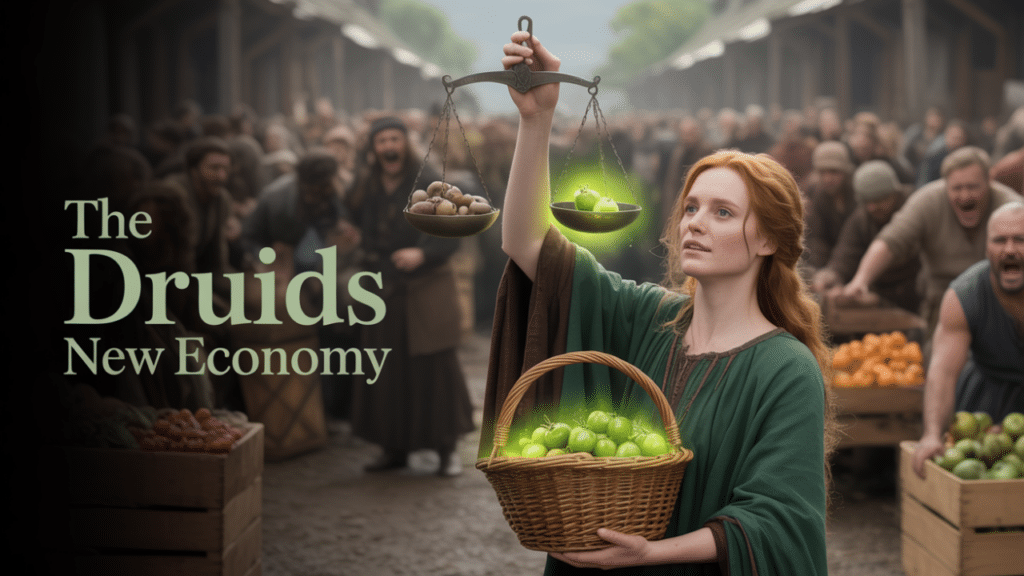
What Goodberry Is Supposed to Do
From a design perspective, Goodberry likely serves as a thematic ability for nature focused classes. It reinforces the fantasy of the Druid or Ranger as a master of the wild, capable of living off the land effortlessly. It acts as a safety net for low level parties, ensuring that bad dice rolls on a foraging check do not lead to an ignoble death by starvation. In this light, the spell is a “quality of life” feature intended to smooth out the rough edges of wilderness travel for casual play.
This design intent contrasts sharply with older editions of D&D or more hardcore fantasy tropes, where starvation and resource scarcity were central threats. In classic dungeon crawling, managing rations and water was a key part of the logistical puzzle. Goodberry seems to have been written for a modern playstyle that views inventory management as tedious bookkeeping rather than compelling gameplay. It allows groups to fast forward through the survival elements so they can get back to the action and roleplay that dominate 5th edition tables.
Most pickup groups and published adventures do not emphasize rigorous tracking of food and water, so in many games, Goodberry’s power goes unnoticed. If the DM was never going to enforce starvation rules anyway, Goodberry is simply flavor text. The friction only arises when a DM explicitly wants to run a campaign where the wilderness is an antagonist. In those specific scenarios, the spell stops being a convenience and starts being a hard counter to the DM’s intended challenges, revealing a disconnect between the spell’s power level and the exploration pillar of the game.
Practical Uses of Goodberry (Without Breaking the Game)
Despite its reputation for breaking survival mechanics, Goodberry has many practical uses that enhance the game without ruining immersion. One common use is “topping off” the party’s hit points after a skirmish. Since hit dice are a limited resource and potions cost gold, using a few berries to heal 5 or 6 damage is an efficient way to keep the party healthy without expending more valuable resources. This feels rewarding for the caster without trivializing significant damage.
Another non-abusive use is providing backup nourishment for long journeys or emergencies. Instead of replacing rations entirely, a party might carry Goodberries as an emergency kit for when rations spoil or get lost. It also serves as an excellent tool for supporting NPCs. A party escorting refugees or saving starving villagers can use Goodberry to perform acts of heroic charity. This reinforces the characters as heroes who can perform miracles for the common folk, aligning perfectly with the fantasy of high level adventurers.
Goodberry can also be a roleplay tool for kindness and connection. Offering a magical berry to a wary animal or a distrustful hermit can be a great way to bridge a social gap. It allows the Druid or Ranger to demonstrate their connection to nature in a tangible way. When used in these limited, thematic contexts, Goodberry shines as a spell that represents abundance and care, rather than just a mechanical exploit to bypass game systems.
Everyday Uses for Goodberry:
- Stabilizing Villagers: Feeding a starving family after bandits stole their grain.
- Refugee Support: Sustaining a group of civilians during a siege or forced march.
- Animal Friendship: Offering berries to gain the trust of a wild beast.
- Post-Combat Top-Off: Healing minor scrapes to save Hit Dice for short rests.
- Emergency Rations: Keeping a pouch for when the party gets separated from their gear.
- Prison Survival: Conjuring food when locked in a cell with no supplies.
- NPC Escort: Ensuring a fragile NPC doesn’t die from environmental exposure.
- Wake-Up Call: Administering a berry to bring a quirky unconscious ally to 1 HP.
- Mount Maintenance: Feeding horses or pack animals in barren terrain.
- Bribing Fey: Offering magical treats to minor fey creatures for information.
- Pest Control: Luring hungry monsters into a trap with magical food.
- Diplomatic Gift: presenting fresh fruit in the dead of winter to impress a local lord.
- Desert Crossing: Avoiding exhaustion from lack of food in extreme environments.
- Scouting Missions: Traveling light without a heavy pack of rations.
- Dungeon Delving: Having a quick pick-me-up during a short break in a mega dungeon.

How D&D 5e Survival Mechanics Work (Before Goodberry Breaks Them)
The fifth edition rules for survival are built around a system of daily requirements and escalating penalties. A character needs one pound of food and one gallon of water per day to function normally. If a character eats but not enough (half rations), they count as having gone without food for half a day. If they do not eat at all, they can survive for a number of days equal to 3 + their Constitution modifier before facing consequences. This creates a buffer that allows heroes to push through short periods of scarcity, but eventually catches up to them.
Water is much more critical than food in the 5e ruleset. A character who drinks only half their required water must succeed on a DC 15 Constitution saving throw or gain a level of exhaustion at the end of the day. A character who drinks less than half automatically gains a level of exhaustion. If the character is already exhausted, the water requirement doubles. This creates a death spiral where dehydration quickly leads to debilitation and death, often faster than starvation would.
Exhaustion is the primary mechanic for enforcing these survival needs. It is a condition with six levels, ranging from disadvantage on ability checks (Level 1) to speed halving (Level 2), all the way up to death (Level 6). Exhaustion is notoriously difficult to remove; a long rest only removes one level of exhaustion, and requires food and drink to be effective. This means that once a party falls into a survival deficit, digging themselves out takes time and resources, simulating the grueling nature of recovery.
The intended friction of these rules is to force players to make hard choices about their inventory. Carrying ten days of rations and water for a full party adds significant weight, potentially encumbering characters or forcing them to buy pack animals. This logistical layer adds realism and consequences to travel. It makes the choice between crossing a desert or going the long way around a meaningful strategic decision, rather than just flavor text in a travel montage.
⚔️ Fantasy RPG Random Tables Books
Make life as a Gamemaster easier…
If you play Dungeons & Dragons, Pathfinder, or other fantasy RPGs, this
RPG random tables series
is packed with encounters, NPCs, treasure, and more. Available in eBook or print—either way, you’ll have a wealth of adventure ideas at your fingertips.
| State | Mechanical State | In-World Symptoms | Example Encounter |
|---|---|---|---|
| Well-fed and hydrated | Consumed 1 lb food + 1 gal water. | High energy, clear focus. | Normal combat or travel. |
| Mild hunger | Half rations consumed. | Stomach growling, minor distraction. | Counting as 0.5 days without food toward limit. |
| Severe hunger | 3+ Days without food (varies by CON). | Weakness, lethargy, dizziness. | Gaining 1 Level of Exhaustion automatically. |
| Mild thirst | Half water consumed. | Dry mouth, headache, fatigue. | DC 15 CON save or gain 1 Level of Exhaustion. |
| Severe dehydration | Less than half water consumed. | Confusion, fainting, organ stress. | Automatically gain 1 Level of Exhaustion; 2 if already exhausted. |
| Starvation (Multiple Days) | Beyond CON limit days. | Emaciation, muscle atrophy. | Accumulating Exhaustion levels daily until death. |
| Total Collapse | Level 5 or 6 Exhaustion. | Speed 0, unconsciousness, death. | Character dies unless magically restored instantly. |
Travel, Foraging, and Resource Pressure
Exploration in D&D is designed to be a slow burning pressure cooker of resource management. The rules for travel pace dictate how far a party moves and whether they can forage or use stealth. A fast pace covers more ground but imposes a penalty to passive Perception, increasing ambush risks. A slow pace allows for stealth and careful navigation but consumes more supplies because the journey takes longer. The DM uses these levers to create tension: do you rush to save supplies but risk attack, or move cautiously and risk running out of food?
Foraging is the active counterplay to resource consumption. Characters can make Wisdom (Survival) checks to find food and water in the wild. The Difficulty Class (DC) of these checks depends on the terrain abundance—lush forests are easy (DC 10), while barren deserts are hard (DC 20). Successful foraging yields a variable amount of food and water, often enough for the forager and a few others. However, foraging typically slows down travel or requires splitting the party’s focus, introducing risk.
Weather and terrain act as multipliers on this pressure. Extreme heat doubles water requirements, making dehydration a rapid threat. Heavy rain or blizzards can obscure vision and force navigation checks, leading the party off course. Getting lost is disastrous in a survival scenario because it adds unplanned days to the trip, draining finite supplies. The interplay of navigation, weather, and supplies creates a dynamic puzzle where the environment itself fights the players.
Ideally, ration tracking forces players to adopt an explorer’s mindset. They must treat food and water as precious cargo. This mindset opens up narrative hooks that combat focused games miss. A party running low on water might be forced to negotiate with a hostile tribe for access to an oasis, or hunt a dangerous beast not for XP, but for meat. Survival mechanics turn the setting into a tangible place with needs and consequences, rather than a static backdrop for heroics.

Why Survival Rules Rarely Show Up in Casual Play
Despite the robust framework for survival, many tables ignore these rules entirely. The primary reason is bookkeeping fatigue. Tracking pounds of food, gallons of water, and arrows fired can feel like doing taxes rather than playing a fantasy game. For groups that meet for only three or four hours a week, spending thirty minutes discussing ration counts feels like a waste of precious gaming time. As a result, many DMs handwave it, assuming the characters are competent enough to feed themselves off screen.
Another factor is the lack of clear support in many published adventures. While modules like Tomb of Annihilation or Rime of the Frostmaiden explicitly feature survival mechanics, most campaigns assume the party is moving between well stocked towns and dungeons. The default assumption of 5e is heroic fantasy, where heroes are larger than life and above mundane concerns like hunger. The culture of the game has shifted towards narrative arcs and set piece battles, leaving logistical simulation behind as a relic of older, “crunchier” editions.
This vacuum of enforcement is precisely why Goodberry was printed without immediate backlash. In a game where nobody tracks rations, a spell that creates rations is harmless flavor. It is only when a DM decides to shift gears and run a “hard mode” wilderness campaign that the conflict becomes apparent. The spell exists in a system that rarely tests it, so its power to trivialize those tests went largely unnoticed until the community began experimenting with grittier playstyles.
Try my AI Tabletop RPG generators...and an extensive library of content!
The Goodberry Survival Exploit
The fundamental issue with Goodberry in a survival context is the math of its efficiency. A single 1st level spell slot creates ten berries. This means one spell slot feeds ten medium sized creatures for twenty four hours. A level 2 Druid has three 1st level spell slots, meaning they can feed thirty people a day. A level 5 Druid allows for even more scaling. In most standard adventuring parties of four to six characters, a single cast covers everyone’s daily needs with berries to spare.
This completely trivializes the economy of rations. In a standard game, feeding a party of five for a ten day journey requires fifty pounds of food (50 rations). This is a significant weight and gold investment. With Goodberry, that requirement becomes zero pounds and zero gold (assuming a spell focus is used). The party can travel indefinitely without ever stopping to hunt, forage, or buy supplies. The concept of “starvation” is mechanically deleted from the game as long as the Druid is conscious.
The exploit goes beyond just calories; it impacts encumbrance and planning. Survival challenges are often built around the trade off between combat gear and survival gear. Do you pack extra rope and pitons, or extra food? Goodberry removes this choice. Because the food is magical, weightless, and instantly summoned, the party can dedicate all their carry capacity to loot and weapons. The logistical puzzle of the expedition is solved by a single action at the start of the day.
This creates a scenario where the wilderness feels less like a dangerous frontier and more like a scenic walk. The tension of running out of supplies—a core trope of exploration literature—is impossible to replicate Rules as Written (RAW). The party effectively has a magical vending machine that dispenses perfect nutrition on command, stripping the environment of its ability to threaten them through attrition.

Stockpiling, Multiclassing, and Pre-Cast Goodberries
Advanced players optimize Goodberry further through “tech” involving duration and multiclassing. Because the berries last for 24 hours, players can cast the spell using all their remaining slots right before finishing a long rest. These berries will persist for almost the entire next day. This allows the caster to start the new day with full spell slots and a pocket full of healing and food. This “slot efficiency” strategy essentially gives the party free resources.
Another common strategy is stockpiling berries for large groups. While a single party doesn’t need 50 berries, an army or a caravan might. A mid level Druid can generate enough food to sustain a small village or a refugee column indefinitely. This breaks the logistics of sieges or famine scenarios. If a castle is under siege, a few low level Druids can prevent the defenders from ever starving out, fundamentally changing warfare strategy in a high fantasy setting.
The most notorious exploit involves the Life Domain Cleric multiclass. The “Disciple of Life” feature states that whenever you use a spell of 1st level or higher to restore hit points, the creature regains additional hit points equal to 2 + the spell’s level. By RAW, this applies to each Goodberry. A single berry now heals 4 HP (1 base + 2 Disciple + 1 spell level). A single 1st level slot now provides 40 HP of healing distributed across ten berries. This turns Goodberry into the most efficient healing spell in the game by a massive margin.
Common Goodberry Exploits:
- Lifeberry Build: Life Cleric 1 / Druid X to quadruple healing output per berry.
- Rest Casting: Burning all unused slots on Goodberry just before a Long Rest ends.
- The Berry Factory: Spending downtime days just generating berries for NPCs or sale.
- Potion Replacement: Using berries as 1 HP “potions” to revive unconscious allies cheaply.
- Familiar Delivery: Giving berries to a familiar to administer to downed allies.
- Siege Breaking: Feeding an entire garrison with a handful of low level casters.
- Desert Walk: ignoring water requirements (if DM rules nourishment covers water) in deserts.
- Bag of Holding Stash: Keeping hundreds of berries active (with multiple casters) for mass healing.
- Action Economy Cheese: Pre-distributing berries so everyone has a self-heal option.
- Metamagic Extension: Using Extended Spell (Sorcerer) to make berries last 48 hours.
- Undead Army Support: Feeding living thralls or hirelings effortlessly.
- Beast Master Buff: Keeping animal companions topped off between fights for free.
- Economy Crash: Flooding a local market with free food to drive down grain prices.
- Infinite Stall: Delaying a campaign timeline indefinitely because supplies never run out.
- Arcane Recovery: Wizards (via feat/multiclass) using short rest slot recovery to cast more berries.
Goodberry as a Healing Engine
When utilized as a healing engine, Goodberry completely outclasses other 1st level options in terms of raw efficiency. A standard Cure Wounds heals 1d8 + Wisdom modifier (average 7.5). A standard Goodberry provides 10 HP total, split into increments. While Cure Wounds delivers its healing in one burst (useful in combat), Goodberry provides more total health per slot. This makes it the superior choice for out of combat recovery.
The disparity widens with the Life Cleric synergy. A 1st level Cure Wounds with Disciple of Life might heal 1d8 + 3 + 3 (average 10.5). A Life-boosted Goodberry heals 40 HP total. That is nearly four times the healing efficiency from the same resource cost. While it takes longer to consume, the sheer volume of hit points restored makes it unbeatable for patching up a party after a fight.
This efficiency creates a dynamic where players feel foolish for using anything else. Why spend 50gp on a Potion of Healing (2d4+2, avg 7) when a 1st level spell slot gives you 40 HP? It devalues gold as a resource for survival and puts immense pressure on the DM to balance encounters around a party that enters every fight at full health.
| Spell/Item | Healing per Resource | Combat Action Economy | Out of Combat Efficiency | Pros/Cons |
|---|---|---|---|---|
| Goodberry (Base) | 10 HP (10 x 1) | Poor (1 Action = 1 HP) | High (Guaranteed 10 HP) | Pros: Splits among party; lasts 24h. Cons: Useless for burst healing. |
| Goodberry (Life Cleric) | 40 HP (10 x 4) | Poor (1 Action = 4 HP) | Broken (40 HP for Lvl 1 slot) | Pros: Insane math efficiency. Cons: Requires multiclassing. |
| Cure Wounds (Lvl 1) | ~7.5 HP (1d8+Mod) | Good (1 Action = Full amount) | Moderate | Pros: Instant impact. Cons: Touch range; variance. |
| Healing Word (Lvl 1) | ~5.5 HP (1d4+Mod) | Excellent (Bonus Action) | Low | Pros: Ranged; saves Action. Cons: Low healing output. |
| Potion of Healing | ~7 HP (2d4+2) | Good (Action/Bonus depending) | Low (Costs 50gp) | Pros: No spell slot needed. Cons: Expensive; finite supply. |
| Hit Dice (Short Rest) | Varies (1d6 to 1d12+Con) | N/A (Requires 1 hour) | High (Free resource) | Pros: Natural recovery. Cons: Takes time; limited daily pool. |

Does Goodberry Actually Break Survival Rules?
There is a valid argument that Goodberry does not “break” survival rules so much as it exposes their fragility. If an entire pillar of gameplay (survival) can be negated by a single, common, low level spell, perhaps the pillar was never structurally sound to begin with. Critics argue that 5e was designed for high fantasy heroics, not gritty realism, and Goodberry is simply a tool that facilitates that intended playstyle. From this view, trying to force a survival game in 5e is fighting against the system’s DNA.
However, for DMs who do want to run survival themes, the spell is undeniably disruptive. Published adventures like Out of the Abyss or Tomb of Annihilation invest pages of text into mechanics for foraging, dehydration, and navigation. Goodberry renders these pages useless. It removes the risk/reward decision making that defines the genre. If the DM wants players to fear the desert, Goodberry is a narrative killer.
Whether the spell is “broken” depends entirely on the table’s goals. In a high magic game where the heroes are demigods fighting dragons, skipping lunch is trivial. In a gritty, low magic game about surviving a cursed forest, Goodberry is a cheat code. The conflict arises when a DM tries to run the latter game using the rules of the former.
Fringe Consequences: Goodberry’s Hidden Impact on Your World
Many DMs find the standard weight based encumbrance (counting pounds) tedious, so they switch to “slot based” systems. In these systems, a character has a limited number of inventory slots (e.g., equal to their Strength score). A ration takes up one slot. A water skin takes up one slot. This makes inventory management a tangible puzzle: do you fill a slot with food or a scroll case?
Goodberry breaks this puzzle. A pouch of berries takes up zero slots or, at most, one negligible slot. Yet it provides the utility of ten ration slots. This creates a massive advantage for any party with a Druid. They essentially gain 10+ free inventory slots compared to a party relying on mundane food.
This interaction forces DMs using slot based encumbrance to either ban the spell or create house rules specifically for it. Otherwise, the encumbrance system fails to create the intended scarcity tension. Goodberry effectively gives the party a “Bag of Holding” specifically for food, right from level 1.
⚔️ Fantasy RPG Random Tables Books
Make life as a Gamemaster easier…
If you play Dungeons & Dragons, Pathfinder, or other fantasy RPGs, this
RPG random tables series
is packed with encounters, NPCs, treasure, and more. Available in eBook or print—either way, you’ll have a wealth of adventure ideas at your fingertips.
| Resource Type | Normal Encumbrance Impact | Impact With Goodberry | Possible Adjustments |
|---|---|---|---|
| Rations (1 Day) | 1 Slot or 2 lbs per day. High bulk. | 0 Slots (replaced by magic). | Require material component (mistletoe) to be consumed/rare. |
| Water (1 Day) | 1 Slot or 8 lbs (heavy). | 0 Slots (if berries hydrate). | Rule berries don’t provide water; track water separately. |
| Torches | 1 Slot per bundle. | Unchanged. | No direct impact, but frees up space to carry more. |
| Ammunition | 1 Slot per quiver. | Unchanged. | Frees up space for more ammo. |
| Camping Gear | Multiple Slots (Tent, Bedroll). | Unchanged. | Survival still requires warmth/shelter checks. |
| Potions | 1 Slot each. | Reduced need (berries heal). | Limit berry healing efficiency to prioritize potions. |
| Loot/Treasure | Variable Slots. | Increased capacity for loot. | Enforce strict component tracking for the spell. |
| Spell Components | Small Pouch (1 Slot). | Unchanged. | Make mistletoe decay or require fresh harvest. |
| Climbing Gear | 1-2 Slots. | Unchanged. | No direct impact. |
| Tools/Kits | 1 Slot each. | Unchanged. | No direct impact. |
Magical Nutritional Degeneration: A Long-Term Cost
One flavorful way to balance Goodberry without changing its mechanics is to introduce “Magical Nutritional Degeneration.” This homebrew concept posits that while Goodberry keeps you alive, it does not provide the complex nutrients or soul satisfaction of real food. A creature living solely on magic for weeks might begin to fade, feeling untethered from the material world.
This creates a soft limit. Players can use Goodberry for a few days without issue, but relying on it for a month brings consequences. Maybe they stop regaining Hit Dice naturally. Maybe they gain a level of “Arcane Exhaustion” that can only be removed by a real meal. This reintroduces the need for real food in the long term while keeping Goodberry useful for emergencies.
It also adds narrative depth. Druids might warn against “The Hollow Hunger.” Townsfolk might view adventurers who eat only magic as alien or unsettling. It turns the spell from a free lunch into a calculated risk.
Possible Degenerative Effects:
- The Hollow Feeling: Character feels constantly empty despite being full.
- Loss of Taste: Real food starts tasting like ash after prolonged berry use.
- Sleep Disruption: Strange, vivid arcane dreams prevent restful sleep.
- Natural Disconnect: Animals become uneasy around the character (-2 Animal Handling).
- Healing Resistance: Natural healing (Hit Dice) restores half HP.
- Fey Touched: Character’s appearance becomes slightly translucent or fey-like.
- Arcane Addiction: Character must make a Wis save to eat real food again.
- Social Stigma: NPCs view the character as “unclean” or “witch-touched.”
- Metabolic Slowdown: Advantage on starvation checks, but disadvantage on athleticism.
- Mana Burn: Character glows faintly, ruining stealth in dark areas.
- Spirit Rot: Max HP reduces by 1 for every week on only berries.
- Emotional Numbness: Disadvantage on Charisma (Persuasion) checks due to detachment.

Anti-Magic Wilderness and Goodberry-Suppressed Zones
Another way to challenge Goodberry users is to create zones where the spell fails or behaves differently. In a “Dead Magic Zone,” the spell simply doesn’t work, forcing the party to rely on their backup rations. This creates a terrifying moment when the safety net is suddenly yanked away deep in a dungeon.
More subtly, you can have “Corrupted Zones” where Goodberry produces tainted fruit. Maybe the berries deal poison damage instead of healing. Maybe they induce hallucinations. This forces the players to test the environment before trusting their magic. It reinforces that magic is drawn from the local weave, and if the land is sick, the magic is sick.
Divine edicts can also play a role. A god of the hunt might forbid the use of conjured food in their sacred forest, demanding that visitors hunt for their meals to show respect. Violating this might attract the wrath of powerful celestials or beasts.
Environment-Specific Restrictions:
- Dead Magic Desert: No spells work; rely on water skins and dried meat.
- Corrupted Forest: Berries invoke the Poisoned condition for 1 hour.
- Feywild Chaos: Berries have random side effects (change skin color, float).
- Shadowfell Gloom: Berries provide no nourishment, only healing.
- Divine Temple: Conjuration magic is blocked to ensure pilgrims fast.
- Blighted Swamp: Berries rot instantly upon casting.
- Arcane Storm: Casting the spell triggers a Wild Magic Surge.
- Frozen Tundra: Berries freeze solid; must be thawed (fire needed) to eat.
- Underdark Radiation: Berries glow and attract predators when eaten.
- Sacred Grove: Only Druids of a specific circle can cast it here.
Economies Inflated by Goodberry Abuse
If Goodberry were real, it would devastate a medieval economy. Agriculture is the foundation of civilization. If a few Druids can feed a town for free, grain prices collapse. Farmers go bankrupt. Merchants lose their trade routes. This would lead to massive social upheaval.
Local lords might ban the spell to protect the tax base (which is often paid in grain). The Merchants’ Guild might hire assassins to take out “rogue” Druids who are undercutting food prices. Temples might view it as a threat to their charity monopoly.
This creates rich roleplay hooks. The players enter a town and are arrested for casting Goodberry because it’s considered “economic terrorism.” Or they find a black market where people pay for “real” food because Goodberry has become the bland, enforced ration of the working class.
| Stakeholder | How Goodberry Helps Them | How Goodberry Hurts Them | Likely Reaction |
|---|---|---|---|
| Peasant Farmers | Survival during famine. | Destroys value of crops. | Rioting against Druids or abandoning farms. |
| Grain Merchants | None. | Completely undercuts profit. | Lobbying for laws banning conjured food. |
| Innkeepers | Lowers food costs for staff. | Guests don’t buy meals. | Charging “corkage fees” for outside magic. |
| Temple Charities | Feeds more poor people. | Reduces reliance on the church. | Declaring it “soulless food” or heresy. |
| Druids’ Circles | Influence and power. | Attracts political enemies. | Keeping the spell secret or restricted. |
| Ruling Nobility | Cheap army logistics. | Lower tax revenue (grain). | Nationalizing Druids as state assets. |
| Urban Poor | Ends starvation. | Dependency on casters. | Forming cults around generous casters. |
| Nomadic Tribes | Perfect mobility. | Erodes hunting traditions. | Traditionalists banning it; youth embracing it. |
Goodberry as a Philosophical and Religious Catalyst
Constant access to magical food would shape religion. Some sects might worship Goodberry as the “Manna from Heaven,” proof that the gods want humanity to live without toil. They might view farming as a punishment for sin and magic as the path to paradise.
Conversely, conservative factions might view it as “The Devil’s Fruit,” believing that suffering and labor are necessary for the soul. They might claim that Goodberry weakens the spirit and makes people dependent on arcane masters. This could lead to a reformation or a crusade against magic users.
Druids would be elevated to the status of living saints or prophets. “The Breadbringers” could be a powerful political faction that leverages their ability to feed the masses to overthrow kings. The players might find themselves in the middle of a theological war over the morality of lunch.
Factions Inspired by Goodberry:
- The Breadbringers: Druids who believe food should be free; enemies of the merchant class.
- The Starving Saints: Ascetics who eat only one berry a day to purify the flesh.
- The Tithing Guild: A criminal racket that demands payment to allow Goodberry casting.
- The Soil-Bound: Zealots who destroy Goodberry plants, believing only earth-grown food is holy.
- The Berry Eaters: A hedonistic cult that seeks the “Perfect Berry” rumored to grant immortality.
- The Iron Stomachs: Mercenaries who pride themselves on eating real meat, mocking berry-eaters.
- The Green Hands: A relief organization of Rangers engaging in humanitarian aid.
- The Synthetic Mages: Wizards trying to replicate the spell without nature magic (Arcane Berry).
- The Famine Breakers: Revolutionaries using the spell to sustain sieges against tyrants.
- The Rootless: Nomads who wander forever, having severed all ties to the land.
Goodberry in Espionage, Crime, and War
In a military context, Goodberry changes everything. An army with a corps of Druids has no supply lines. They cannot be starved out. They can move faster than any conventional force because they carry no wagons. This makes them the ultimate guerilla warriors.
In espionage, a spy can hide in a priest hole or an attic for months without needing a food drop. This makes “deep cover” agents incredibly hard to flush out. Assassins could use “False Goodberries” that look identical but inflict death after 24 hours, bypassing poison detectors that only check for liquids.
Try my AI Tabletop RPG generators...and an extensive library of content!
Smugglers could move high value contraband inside Goodberry pouches, or use the berries themselves as a dense, high value currency in famine zones. The players could be hired to break a siege by sneaking a Druid into a starving castle, or to uncover a plot where the king is being slowly poisoned by his own court mage’s conjured breakfast.
Covert Goodberry Scenarios:
- The Siege Breaker: Smuggling a single Druid into a castle to feed the defenders.
- The Poisoned Feast: An assassin replacing the king’s daily berries with toxic mimics.
- The Deep Cover Spy: An agent living in a wall crawlspace for weeks on berries.
- The Prison Riot: Prisoners stockpiling berries to survive a hunger strike.
- The Commando Unit: A strike team moving through the jungle with zero supply train.
- The False Famine: Merchants hoarding real food and suppressing Goodberry to hike prices.
- The Escape: Fugitives running across a desert where pursuers (needing water) cannot follow.
- The Trojan Horse: Hiding a Halfling inside a crate who survives on berries to open the gates later.
- The Blackmail: Threatening to stop casting the spell for a dependent village unless demands are met.
- The Smuggler’s Run: Using berry-sustained stamina to outrun border patrols.
- The Sleeper Cell: An army burying themselves alive with air tubes and berries to wait for the signal.
- The Resistance: Feeding a ghetto or slum under the nose of an oppressive regime.

Is Goodberry Overpowered, or Is the System Underbuilt?
A strict reading of the rules supports the “broken” interpretation: the spell says it provides nourishment, so it does. It says it creates ten berries, so it does. There are no caveats about “realism” or “economy” in the spell block. This creates a conflict between the text (which allows infinite food) and the narrative (which implies a world with hunger).
The likely intent was for Goodberry to be a minor convenience for a small group of adventurers, not a societal upheaval. The designers prioritized fast play and minimizing bookkeeping. They likely didn’t anticipate players turning it into an industrial food production line. Interpreting the spell through the lens of intent suggests DMs should feel free to limit its power if it starts to damage the verisimilitude of the world.
Player Expectations and Table Culture
Whether Goodberry is a problem depends on the table. In a “Gamist” group that loves optimizing, finding the Life Cleric/Goodberry combo is a fun victory. They feel smart for using the rules to win. Punishing them for this feels bad. In a “Simulationist” or “Narrative” group, the spell feels like a cheat code that ruins the story.
The key is alignment. If the DM wants a gritty survival game, they must communicate that Goodberry will be nerfed or banned before character creation. Springing a nerf on a Druid player in session 3 feels adversarial. Conversely, if the players want a heroic fantasy game, the DM should accept that they don’t want to track rations and let Goodberry do its job.
When “Survival” Is Just Window Dressing
If a campaign has no real risk of starvation—if the DM always provides a tavern or a convenient deer to hunt—then Goodberry changes nothing. It simply mechanizes what was already happening narratively. In these games, banning the spell is pointless; you are removing a convenience without adding any real challenge.
Goodberry only “breaks” the game if the game was actually trying to be about survival. If survival is just flavor text, let the Druid have their berries. It makes them feel useful and saves everyone five minutes of shopping roleplay.
⚔️ Fantasy RPG Random Tables Books
Make life as a Gamemaster easier…
If you play Dungeons & Dragons, Pathfinder, or other fantasy RPGs, this
RPG random tables series
is packed with encounters, NPCs, treasure, and more. Available in eBook or print—either way, you’ll have a wealth of adventure ideas at your fingertips.
Fixing Goodberry: House Rules and Variants
Soft fixes allow the spell to function as written but add narrative friction. Requiring a fresh sprig of mistletoe for every casting (consuming the component) forces the Druid to forage for the component, reintroducing a survival element. Making the spell loud or bright (attracting monsters) adds a risk to casting it in dangerous territory.
Limiting the spell to specific locations, like a druidic circle or a campsite, prevents “walking and casting.” Requiring the berries to be blessed by a local spirit adds a roleplay cost. These fixes keep the mechanics simple while integrating the spell into the world’s logic.
Soft Fix Ideas:
- Consumed Component: The mistletoe is consumed; must forage for more.
- Ritual Only: Takes 10 minutes to cast, preventing combat/hasty use.
- Freshness: Berries only last 8 hours (must be eaten same day).
- Location Bound: Can only be cast in a natural environment (not dungeons).
- Dietary Restriction: Does not provide water, only food.
- Seasonal: Only works in Spring/Summer; fails in Winter.
- Attraction: The smell of magic berries attracts hungry beasts (Random Encounter chance).
- Flavor Text: Berries taste terrible, lowering morale over time.
- Limit: Can only be cast once per long rest per caster.
- Divine Gift: Requires a short prayer/roleplay moment to succeed.
- Perishable: Berries rot instantly if taken into a city/unnatural place.
- Slow Digestion: Only one berry can be effective per day (no healing spam).
Hard Fixes That Change the Spell’s Mechanics
Hard fixes alter the rules text to balance the spell directly. The most common fix is removing the “nourishment” clause entirely, making it purely a healing spell. Another is changing it to consume the component, which costs gold (e.g., a 10gp gem).
Some DMs rule that the berries do not stack with Life Cleric features, capping the healing at 1 HP. Others reduce the number of berries to 1d4 instead of 10. These changes fundamentally nerf the spell, so they should be discussed in Session Zero.
| Variant Name | Rules Text Summary | Impact on Survival | Impact on Healing |
|---|---|---|---|
| Nourishment Only | Provides food/water but 0 HP. | Maintains survival bypass. | Removes healing abuse completely. |
| Healing Only | Restores 1 HP but provides no food. | Restores survival challenge. | Maintains healing utility. |
| Consumable Cost | Requires 10gp gem (consumed). | Survival costs gold now. | Healing costs gold (balanced). |
| One Creature Limit | Nourishes only 1 creature/day. | Requires multiple slots for party. | Reduces healing volume significantly. |
| Short Shelf Life | Berries rot in 1 hour. | Prevents stockpiling/rest casting. | Must use slots during the day. |
| Non-Stacking | Cannot eat more than 1 berry/day. | Survival intact (if nourishment kept). | Removes healing potion utility. |
| Level Scaling | Creates 2 berries/level of slot. | Nerfs Lvl 1 dip efficiency. | Incentivizes upcasting. |
| The “Snack” | Counts as 1/2 ration (need 2/day). | Doubles the slot cost for survival. | No change to healing. |
| No Life Disciple | Explicitly does not trigger Cleric buff. | No change. | Prevents the 40 HP exploit. |
| Survival Check | Casting requires DC 15 Survival check. | Reintroduces skill dependency. | Unreliable healing source. |
Campaign-Specific Tweaks for Survival-Heavy Games
In a Dark Sun style desert game, you might rule that Goodberry creates dry, desiccated fruit that provides food but actually increases thirst. In an Icewind Dale game, the berries might freeze and become inedible if not kept near a fire.
For a naval campaign, perhaps Goodberry causes scurvy if used exclusively because it lacks Vitamin C. Customizing the spell to the setting’s specific threat (heat, cold, disease) keeps the survival theme relevant without banning the spell entirely.
Biome-Specific Tweaks:
- Desert: Berries provide food but dehydrate the user (increase water need).
- Arctic: Berries freeze; eating them deals 1 cold damage.
- Swamp: Berries carry a risk of disease (Con save).
- Ocean: Berries are salty; induce thirst.
- Underdark: Berries are bioluminescent mushrooms; eater glows (disadv stealth).
- Planar: Berries shift the user’s alignment slightly toward the plane.
- Jungle: Berries rot in 10 minutes due to humidity.
- Wasteland: Magic is wild; casting triggers a surge.
- City: Urban pollution makes berries toxic.
- High Altitude: Berries provide nourishment but not oxygen adaptation.
Making Survival Matter Again (Without Banning Goodberry)
Survival is more than calories. If Goodberry solves hunger, focus on the other threats. Navigation checks to avoid getting lost in a blizzard. Constitution saves to resist extreme heat or cold. Wisdom (Survival) checks to track enemies or avoid territories of apex predators.
Morale is a huge factor. Even if they are fed, sleeping in the rain for a week causes exhaustion. Use the “Gritty Realism” rest variant (Short Rest = 8 hours, Long Rest = 1 week) to make resource management harder regardless of food.
Resource-Based Encumbrance as a Design Tool
Even with infinite food, players have limited inventory. Force them to carry water (which is heavy). Force them to carry firewood, tents, and winter clothes. If they fill their slots with loot, they might freeze to death. Goodberry frees up some space, but not all space.
Make specific survival tools necessary. You need a climbing kit to cross the mountains. You need an herbalism kit to cure the local plague. These items compete for space, keeping the inventory puzzle alive.
| Survival Item | Suggested Slot Cost | Why It Matters in Gritty Survival |
|---|---|---|
| Bedroll/Blanket | 1 Slot | Required to Long Rest without Con save. |
| Tent (2 Person) | 2 Slots | Protects from rain/wind exhaustion. |
| Firewood (Bundle) | 2 Slots | Required for warmth in non-forested areas. |
| Water Skin (Full) | 1 Slot | Goodberry might not provide water (DM ruling). |
| Climbing Kit | 1 Slot | Mandatory for vertical terrain. |
| Winter Clothes | 1 Slot (worn) | Essential for resisting cold weather checks. |
| Navigator’s Tools | 1 Slot | Required to avoid getting lost at sea/desert. |
| Healer’s Kit | 1 Slot | Stabilizing without spell slots. |
| Cooking Pot | 1 Slot | Boiling water to prevent disease. |
| Shovel | 1 Slot | Digging snow shelters or latrines. |
| Lantern + Oil | 1 Slot | Light source in caves (torches burn fast). |
| Rope (50ft) | 1 Slot | Universal utility; crossing rivers/gaps. |
Environmental and Social Pressures Goodberry Cannot Solve
Create obstacles that magic cannot eat. A border guard demands a passport, not a berry. A magical plague requires a rare flower found only on a specific mountain peak. A curse prevents the party from sleeping, causing exhaustion regardless of food.
Social pressure works too. If the party refuses to share their infinite food with starving beggars, their reputation plummets. They become pariahs. The moral weight of the spell can be heavier than the survival weight.
Non-Food Obstacles:
- The Border Toll: Guards demand 50gp or valid papers.
- The Plague: Magical disease requires rare herbal cure.
- The Curse: Nightmares prevent Long Rests (exhaustion stacks).
- The Storm: Destroys shelter and soaks gear (hypothermia risk).
- The Broken Bridge: Requires engineering or flight to cross.
- The Silence: Magic doesn’t work in this valley.
- The Hunt: A predator tracks them by the smell of magic.
- The Negotiator: A local tribe controls the only safe pass.
- The Time Limit: Must reach the city in 3 days; forced march checks.
- The Lost Map: Navigation checks become impossible without a guide.
- The Moral Choice: Feed the refugees and run out of slots, or let them starve?
- The Sabotage: Someone steals their shoes/weapons, not their food.
Player-Facing Advice: The Druid Survival Build
Building a Survival-Focused Druid Using Goodberry and More
For players who want to embrace the survivor archetype, Goodberry is just the start. Pick the Outlander background for the foraging feature (backup for when magic fails). Choose Circle of the Land (for recovery) or Circle of the Shepherd (for spirit totems).
Take spells like Create or Destroy Water, Purify Food and Drink, Locate Animals or Plants, and Protection from Energy. Feats like Chef (extra healing) or Healer make you the ultimate medic. High Wisdom and proficiency in Survival and Nature are mandatory.
Remember, optimization isn’t just about mechanics; it’s about fulfilling the fantasy. You are the guide. You are the one who ensures the party gets home.
Rations vs Goodberry: What’s Actually Better?
Rations cost gold and weight, but they are reliable. They don’t cost spell slots. They work in anti-magic fields. They don’t expire after 24 hours. For a low-level party, saving that 1st level slot for Entangle or Thunderwave might be worth carrying a few pounds of dried meat.
Goodberry is better for weight and cost, but it taxes your daily resources. In a dungeon heavy day, that missing slot could be the difference between life and death. It’s a trade off: logistical freedom vs combat readiness.
| Food Source | Daily Cost | Resource Type | Encumbrance | Best Use Case |
|---|---|---|---|---|
| Rations | 5sp | Gold | 2 lbs/day | Long journeys with no magic; backup. |
| Goodberry | 0gp | 1st Level Slot | Negligible | Daily sustenance; heavy combat avoidance. |
| Hunting/Foraging | Free | Time/Checks | Varies | When moving slow; saving slots/gold. |
| Create Food/Water | 0gp | 3rd Level Slot | None | Feeding large groups/armies. |
| Inn Meal | 3sp – 2gp | Gold | None | Urban downtime; social networking. |
| Heroes’ Feast | 1000gp | 6th Level Slot | None | High level buffing; not for basic survival. |
| Chef Feat Treats | Free | Hit Dice/Time | Negligible | Bonus healing/temp HP; supplemental. |
Goodberry Healing Tricks for Players
Use Goodberry to revive unconscious allies. It’s a guaranteed 1 HP stabilizer. Give berries to your familiar (if it has hands) to administer them, saving your action. Pass them out at the start of the day so everyone has their own emergency heal.
If you have a Life Cleric dip, you are the primary out of combat healer. Embrace it. But don’t be annoying about it. Don’t demand the party wait for you to cast it 10 times. Do it quickly and keep the game moving.
Creative Uses:
- The Revive Kit: Everyone holds 1 berry for emergencies.
- The Life-Berry: Cleric dip for massive downtime healing.
- The Familiar Medic: Owl/Monkey familiar feeds downed ally.
- The NPC Shield: Giving berries to squishy escorts for self-healing.
- The Bribe: Using delicious magic berries to calm animals/children.
- The Trail Mix: Mixing berries with nuts for a high-energy snack.
- The Poison Checker: If the berry rots, the area is necrotic.
- The Signal: Leaving a berry as a sign for tracking allies.
- The Bargain: Trading healing for information from wounded enemies.
- The Ritual: Eating a berry together as a party bonding moment.
- The Quick Fix: Healing between rooms in a dungeon without short resting.
- The Charity: Becoming the most popular person in the slums.
- The Mount Heal: Keeping horses healthy on long rides.
- The Trap Test: Rolling a berry down a hall to trigger pressure plates.
- The Fake Poison: Pretending a berry is toxic to intimidate a prisoner.
Adventure and Worldbuilding Hooks From Goodberry
Adventures Where Goodberry Is the Catalyst
- The Famine of the Reach: A blight destroys all crops. The party must escort a circle of Druids to the starving city, protecting them from bandits who want to capture the “food mages.”
- The Berry War: Two rival duchies go to war. One has Druid support (Goodberry); the other has Artificer support (preservation tech). The logistics define the conflict.
- The Poisoned Grove: A corrupted druid is distributing Goodberries that turn people into thralls. The party must track down the source of the tainted magic.
- The Siege of Fort Knell: The party is trapped in a castle surrounded by an undead army. They must keep the Goodberry casters alive and rested while repelling waves of ghouls.
- The Black Market: Goodberries are illegal in the city (to protect merchants). The party is hired to smuggle them to the slums, running afoul of the Thieves’ Guild.
- The Golden Berry: Legend speaks of a Goodberry that grants a Wish. The party races a rival team through a deadly jungle to find the ancient plant.
- The Druid’s Ransom: A prince is kidnapped and held in a dead magic zone. The party must find him before he starves, as his captors rely on magic food that fails there.
- The Hollow Hunger: People living on Goodberries are losing their souls. The party delves into the Feywild to find the cure for this magical malnutrition.
- The Merchant’s Plot: A guildmaster is assassinating Druids to keep grain prices high. The party must investigate the murders and expose the conspiracy.
- The Infinite Feast: A glitch in the weave causes Goodberries to multiply uncontrollably, burying a town. The party must stop the magical replication.
- The Beast’s Lure: Monsters are migrating unnaturally because someone is baiting them with massive piles of Goodberries.
- The Lost Expedition: Finding a lost explorer who survived for 50 years in a cave thanks to a magical ring that casts Goodberry.
⚔️ Fantasy RPG Random Tables Books
Make life as a Gamemaster easier…
If you play Dungeons & Dragons, Pathfinder, or other fantasy RPGs, this
RPG random tables series
is packed with encounters, NPCs, treasure, and more. Available in eBook or print—either way, you’ll have a wealth of adventure ideas at your fingertips.
Integrating Goodberry Into Cultures and Factions
- The Verdant Enclaves: Societies that live entirely in the canopy, eating only berries to avoid harming the forest floor.
- The Iron Cities: Industrial hellscapes where Goodberry is banned to force workers to buy company store rations.
- The Fleet of Mist: A navy that stays at sea for years, their ships essentially floating greenhouses for Druids.
- The Ascended Monks: A religious order that views eating solid food as “earthly tethering” and subsists only on magic.
| Culture/Faction | How They Use Goodberry | Cultural Traditions | Adventure Hook |
|---|---|---|---|
| Wood Elves | Staple diet for scouts. | “First Berry” ceremony at dawn. | Elves getting sick from corrupted berries. |
| Dwarven Miners | Emergency rations only. | Viewed as “soft surface food.” | Miners trapped; need berries to survive. |
| Nomadic Orcs | Logistics for raiding parties. | Shamans cast it for the weak/elderly. | Clan war over capturing a Shaman. |
| High City Nobles | Exotic delicacy (flavored). | Served at high-tea as a flex. | Berries stolen; party blamed. |
| Underdark Gnomes | Survival in barren caves. | Bioluminescent berries for light/food. | Gnomes enslaved for their magic. |
| Coastal Traders | Preventing scurvy/spoilage. | Sailors tithe berries to sea gods. | Pirates targeting Druid passengers. |
| Desert Bedouins | Critical water source. | Guest rite: sharing a berry. | Oasis dries up; reliance on magic spikes. |
| Mage Colleges | Study of conjuration. | “Synthetic Berry” experiments. | Experiment goes wrong; berries animate. |
| Thieves’ Guilds | Smuggling/sustenance. | Used to stay hidden during stakeouts. | Guild hoarding berries to squeeze city. |
| Royal Army | Elite commando rations. | Special Forces include a Ranger. | Extraction mission for a captured caster. |
Goodberry as a Moral and Political Question
Is it ethical for a Druid to hoard spell slots for combat when the village is starving? If a king conscripts all Druids to feed his army, is that slavery or civic duty? These questions turn a mechanic into a story. They force players to define their character’s morality.
Goodberry forces the world to confront the reality of post-scarcity magic in a scarcity-based feudal society. The friction between “what is possible” and “what is allowed” is the heart of great worldbuilding
Final Thoughts: Living With the Spell That Feeds the World
Goodberry is not inherently evil or broken. It is a piece of game design that prioritizes convenience and accessibility over gritty simulation. For many tables, this is exactly what they want. They want to be heroes, not accountants. For them, Goodberry is working perfectly.
However, its interaction with underdeveloped survival mechanics can hollow out whole styles of play. If you want a game about the desperate struggle against nature, Goodberry is an obstacle. But obstacles are opportunities. DMs have three broad options: ignore the problem in casual games, lean into it and let the spell reshape the world, or apply targeted fixes to restore tension.
There is no “correct” way to handle it. The only mistake is ignoring the impact it has on your specific campaign. Talk to your players. Ask them if they want to track rations. Ask them if they want a magical solution. Adjust the dials until the game feels right for you.
Ultimately, Goodberry is an invitation to think more deeply about your world. What does survival mean when magic exists? What does scarcity mean when a prayer can fill your belly? By answering these questions, you turn a “broken” spell into a cornerstone of your setting’s identity.
