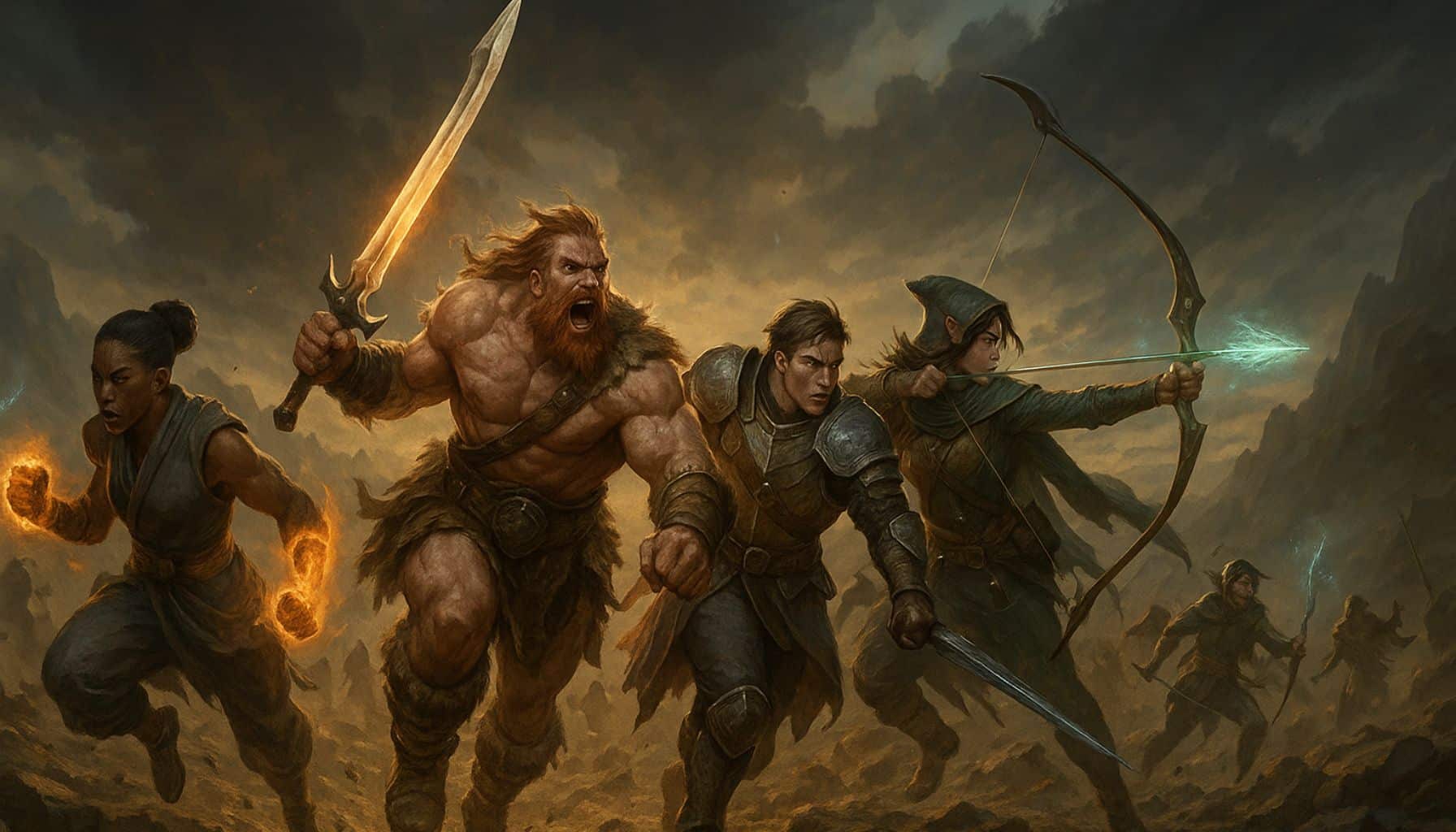
The disparity between martial classes and spellcasters, often termed the “linear fighter, quadratic wizard” problem, has plagued Dungeons & Dragons since its earliest editions. For decades, players have observed that while a Fighter or Barbarian swings a sword slightly harder at level 20 than at level 1, a Wizard reshapes reality, stops time, and traverses planes of existence. This mechanical and narrative gap created a friction point where martial players often felt like sidekicks in a story dictated by magic users. The conversation reached a fever pitch during the decade-long lifespan of the 2014 5th Edition rules, prompting Wizards of the Coast to address these concerns directly in the massive 2024/2025 rule revisions.
With the release of the updated core rulebooks, now standardizing D&D play in 2025, the community has turned a critical eye toward the new equilibrium. The update promised to elevate the “martial fantasy” by introducing dynamic combat options, smoothing out damage curves, and providing non-magical characters with more agency outside of combat. The expectation was not necessarily to make a Rogue cast spells, but to ensure that a Rogue’s mundane skills were as impactful to the game state as a spell slot.
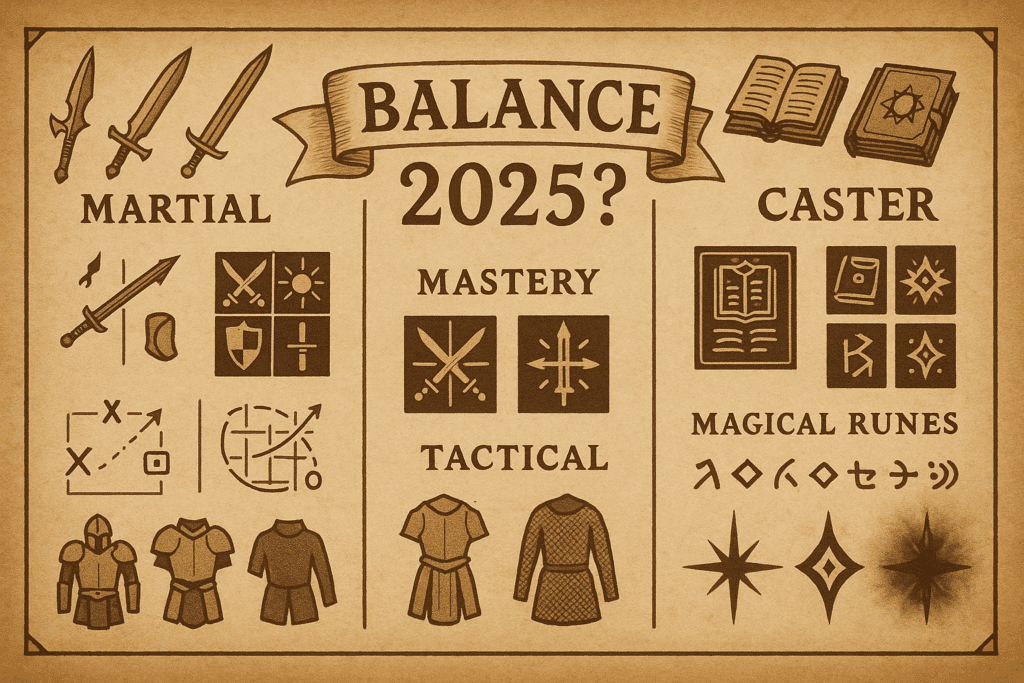
Defining “balance” in this context requires breaking the concept down into four distinct pillars: agency, damage output (DPR), utility, and survivability. Agency refers to the number of meaningful choices a player makes per turn; historically, casters had dozens of spell options while martials essentially had the “Attack” action. Damage output looks at the math of bringing enemies to zero hit points. Utility covers exploration and social interaction, areas where magic often trivializes mundane challenges. Survivability measures a character’s ability to stay in the fight.
In 2014 5th Edition, optimization data showed that a well-built Wizard or Cleric could match a Fighter’s damage while vastly outperforming them in the other three categories. The 2025 ruleset attempts to rectify this through systems like Weapon Mastery, revised feat progressions, and class-specific resource buffs. We must analyze whether these changes act as a band-aid over a severed limb or if they genuinely reconstruct the skeleton of the game.
This exploration takes a data-driven, design-aware look at the current meta. We are examining the raw numbers of the new Great Weapon Master feats, the crowd-control mathematics of the Monk’s new discipline points, and the actual play impact of the Fighter’s “Tactical Mind.” We are stepping away from white-room theorycrafting to look at how these classes function in actual 2025 campaign environments.
The central question remains: Do features like the Nick property or the Barbarian’s Primal Knowledge close the gap, or has the ceiling for casters simply risen alongside them? While the gap has undeniably narrowed regarding combat consistency, the narrative disparity—the ability to affect the world on a macro scale—remains a contentious design hurdle.
Try my AI Tabletop RPG generators...and an extensive library of content!
- The New Design Philosophy Behind Martial Balance
- Weapon Mastery and Its Real Impact
- Damage Output in 2025: Cooling the Arms Race
- Utility and Out-of-Combat Influence
- Survivability, Mitigation, and Battlefield Longevity
- Spellcaster Rebalancing: The Indirect Martial Buff
- The Martial Experience at the Table: Player Perspectives in 2025
- High-Level Play: The Final Battleground
- The Remaining Gaps: What Still Holds Martials Back?
- Proposed Future Fixes and Community Homebrew
- Class-by-Class Mini Breakdowns
- DM Influence: The Variable No Rule Can Fix
- Are Martials Finally Balanced? The Verdict
- Final Thoughts
The New Design Philosophy Behind Martial Balance
The stated design philosophy for the 2025 update was to increase the “floor” of martial competence while providing more “buttons to press” during combat. Developers openly acknowledged that the “I attack, I end my turn” loop was insufficient for modern game design. To combat this, they shifted focus toward “turn-by-turn impact,” ensuring that a martial character contributes control effects—knocking enemies prone, pushing them, or imposing disadvantage—without sacrificing their damage output to do so.
Another major pillar of this philosophy was reducing low-level fragility and high-level obsolescence. In previous iterations, a level 1 Wizard was made of glass, and a level 20 Fighter was a sturdy but linear beat-stick. The new rules aim to smooth this curve. Martials now receive critical class-defining features earlier, and features that once scaled poorly (like Indomitable or Rage uses) have been mathematically bolstered to remain relevant against high-CR threats.
Encounter expectations have also been recalibrated. The removal of “power attack” mechanics (the old -5 to hit / +10 damage trade-off) from feats like Great Weapon Master and Sharpshooter signals a shift away from high-variance “nova” damage. Instead, the design prioritizes consistent, reliable damage application. This benefits martials by making their turns less prone to “whiffing” entirely, theoretically increasing their actual applied DPS (Damage Per Second) over the course of a campaign, even if their theoretical maximum damage is lower.
Finally, the designers aimed to break the “Mother May I” dynamic of martial utility. Features were added to give martials concrete, rules-written permissions to influence social and exploration scenes. By codifying abilities that allow Fighters to add bonuses to skill checks or Barbarians to use Strength for stealth, the system attempts to reduce the martial player’s reliance on DM benevolence to be useful outside of combat.
⚔️ Fantasy RPG Random Tables Books
Make life as a Gamemaster easier…
If you play Dungeons & Dragons, Pathfinder, or other fantasy RPGs, this
RPG random tables series
is packed with encounters, NPCs, treasure, and more. Available in eBook or print—either way, you’ll have a wealth of adventure ideas at your fingertips.







- Weapon Mastery Integration: granting tactical options (Topple, Push, Slow) on every hit.
- Feat Rebalancing: Removing the -5/+10 mechanic to smooth damage curves and accuracy.
- Bonus Action Economy: freeing up bonus actions for Monks, Rangers, and Barbarians to increase fluidity.
- Resource Recovery: improving short-rest dependency and giving classes like Fighters more reliable resource loops.
- Skill Check Buffs: Features like Tactical Mind (Fighter) and Primal Knowledge (Barbarian) adding mechanical bonuses to non-combat rolls.
- Saving Throw Shore-up: Strengthening features like Indomitable to prevent high-level martials from being permanently crowd-controlled.
- Movement Options: Increasing mobility for classes like Barbarians and Rogues to prevent kiting by enemies.
- Subclass Standardization: Moving all subclass unlocks to level 3 to prevent “dip” abuse and balance early progression.
- Epic Boon Access: Standardizing level 19 feats to give martials access to supernatural durability or utility.
- Fighting Style Flexibility: Allowing styles to be swapped or gained via feats more easily.
- Healing Access: Giving classes like the Paladin and Ranger better action economy on healing (Bonus Action Lay on Hands).
- Stealth Improvements: allowing heavy hitters to participate in stealth missions via skill substitution.
- Anti-Caster Features: granting specific subclasses better tools to disrupt concentration or resist magic.
- Condition Application: Making it easier for martials to apply conditions like Prone or Grappled without sacrificing damage.
Based on early 2025 play reports, these goals have largely succeeded in the combat pillar. Players report feeling more engaged on a round-by-round basis. However, the goal of “reliable utility outside combat” has seen mixed results; while a Fighter is better at history checks than before, they still lack the problem-solving versatility of a single Detect Thoughts or Invisibility spell.

Weapon Mastery and Its Real Impact
Weapon Mastery is arguably the most significant systemic update for martials in the history of 5th Edition. It effectively attaches “cantrip-like” effects to mundane weapons, accessible only to martial classes. The intention was to make weapon choice matter—an axe and a sword now do fundamentally different things beyond damage die size. A maul with the Topple property forces a Constitution save or knocks the target prone, while a scimitar with the Nick property allows for an extra attack without consuming a Bonus Action.
For the Fighter, this system is a force multiplier. Because Fighters can swap masteries and hold multiple weapons, they become masters of battlefield control. A Fighter might attack with a maul to knock an enemy prone, then Action Surge and switch to a greatsword to unleash high-damage attacks with advantage. This introduces a “combo” system previously absent from the martial experience. Barbarians benefit immensely from Topple and Push, allowing them to act as true tanks that physically displace enemies away from squishy allies.
Rangers and Paladins also leverage these traits, though differently. The Vex property (granting advantage on the next attack) is mathematically potent for Paladins fishing for critical smites. Rangers utilizing the Slow property can kite enemies indefinitely, fulfilling their fantasy as skirmishers. This system forces players to look at their inventory as a golf bag of clubs, choosing the right tool for the specific enemy defense they are facing.
Critically, these effects do not require resources. They happen all the time. This shifts the martial identity from “resource manager” to “consistent controller.” While a Wizard runs out of spell slots to cast Web, a Fighter never runs out of the ability to Push an enemy 10 feet. This infinite sustainability is the martial class’s new primary edge in the 2025 meta.
- Topple (Maul/Lance): Forces Con save vs. Prone. Sets up advantage for melee allies.
- Push (Pike/Warhammer): Pushes target 10 feet away. Breaks grapples and creates space.
- Sap (Mace/Flail): imposes disadvantage on the target’s next attack roll. tanking tool.
- Slow (Longbow/Whip): Reduces speed by 10 feet. Prevents enemies from reaching allies.
- Vex (Hand Crossbow/Rapier): Grants advantage on next attack. Self-sustaining accuracy buff.
- Nick (Dagger/Scimitar): Moves the off-hand attack to the Attack action. Frees up Bonus Action.
- Cleave (Greataxe/Halberd): Allows an attack against a second adjacent creature. Minion clearing.
- Graze (Glaive/Greatsword): Deals damage equal to ability mod on a miss. Raises damage floor.
- Switching Weapons: Fighters (level 7) can swap mastery properties mid-fight.
- Dual Wielding Buff: The Nick property makes dual wielding mathematically viable vs. heavy weapons.
- Ranged Control: Push and Slow on ranged weapons allows “kiting” builds to dominate melee monsters.
- Save Scaling: Mastery save DCs scale with stats (8 + PB + Str/Dex), keeping them relevant at high levels.
Weapon Mastery narrows the flexibility gap by giving martials distinct control options. However, it does not erase the gap because these effects are strictly physical. You can push an orc, but you cannot push a Wall of Force. Mastery makes martials kings of physical combat, but it does not let them interact with magical problems.
Damage Output in 2025: Cooling the Arms Race
The 2014 meta was dominated by the -5/+10 feats (Great Weapon Master, Sharpshooter). If you didn’t take them, you were mathematically irrelevant. The 2025 update removed this mechanic, replacing it with features that add damage equal to your Proficiency Bonus or provide Ability Score Increases. This lowers the theoretical “nova” ceiling—a level 5 Fighter action surging in 2014 could deal significantly more damage in one turn than in 2025—but it drastically raises the “floor” and consistency.
With higher accuracy (due to no -5 penalty) and mechanics like Graze (damage on a miss) and Vex (advantage generation), martials hit far more often. The math has shifted from “high risk, high reward” to “relentless consistency.” For Paladins, the change to Divine Smite (now a Bonus Action, once per turn) reduced their ability to delete bosses in a single round, bringing their burst damage in line with other classes.
Conversely, casters saw nerfs to their highest damage options. Conjure Animals and Animate Objects, once capable of out-damaging martials by flooding the board, were reworked into spirit-based damage auras or single-entity summons. This means the “floor” for martial damage is now generally higher than the “floor” for caster cantrips and resource-light spells, re-establishing the martial class as the king of single-target sustained damage.
At level 5, a dual-wielding Fighter using Nick and the Two-Weapon Fighting style now makes three attacks as part of their action, leaving their bonus action free. This creates a damage output that is incredibly competitive with 2014 builds but with better action economy and utility.
| Class | Low Tier (1-4) Benchmark | Mid Tier (5-10) Benchmark | High Tier (11+) Benchmark | Strengths & Weaknesses |
|---|---|---|---|---|
| Fighter (2025) | 18-22 DPR (Dual Wield/Nick) | 30-40 DPR (Action Surge spikes) | 50-60+ DPR (3-4 attacks) | Strength: Highest consistency. Weakness: No massive burst outside Surge. |
| Barbarian (2025) | 16-20 DPR (Rage bonus) | 30-35 DPR (Brutal Strike) | 45-55 DPR (Crit scaling) | Strength: Durability + Damage. Weakness: Range is poor. |
| Paladin (2025) | 20-30 DPR (Smite spikes) | 35-45 DPR (Improved Smite) | 50-60 DPR (Radiant strikes) | Strength: Burst on demand. Weakness: Smite eats Bonus Action. |
| Ranger (2025) | 15-18 DPR (Hunter’s Mark) | 25-35 DPR (Subclass dependent) | 40-50 DPR (Conjure Barrage buffs) | Strength: Versatile range/melee. Weakness: Concentration reliance. |
| Rogue (2025) | 12-15 DPR (Sneak Attack) | 20-25 DPR (Scaling Sneak) | 35-45 DPR (Assassinate/Etc) | Strength: Zero resource cost. Weakness: Lowest ceiling; relies on allies. |
| Wizard/Sorc | 11-15 DPR (Cantrip/1st) | 25-60 DPR (Fireball/AOE) | Varied (Reality bending) | Strength: AOE dominance. Weakness: Single target DPR costs high slots. |
| Warlock | 15-18 DPR (Eldritch Blast) | 22-26 DPR (Agonizing Blast) | 35-42 DPR (3-4 beams) | Strength: Ranged consistency. Weakness: Boring rotation. |
| Monk (2025) | 16-20 DPR (Unarmed) | 30-40 DPR (Flurry buff) | 50-60 DPR (Scaling die) | Strength: High volume of attacks. Weakness: Stat dependent. |
Martials now maintain a more consistent DPR baseline that does not require feat taxes to achieve. While casters can still spike high with specific high-level spells, they can no longer accidentally out-damage the Fighter with a single badly designed summoning spell.
⚔️ Fantasy RPG Random Tables Books
Make life as a Gamemaster easier…
If you play Dungeons & Dragons, Pathfinder, or other fantasy RPGs, this
RPG random tables series
is packed with encounters, NPCs, treasure, and more. Available in eBook or print—either way, you’ll have a wealth of adventure ideas at your fingertips.
Utility and Out-of-Combat Influence
Historically, once initiative ended, the Barbarian and Fighter checked out of the game. The 2025 update attacks this by integrating skill utility directly into class features. The Fighter’s Tactical Mind allows them to spend a Second Wind use (which recovers on short rest) to add a d10 to a failed ability check. Since the resource is not spent if the check still fails, this mathematically makes the Fighter one of the most reliable scholars or diplomats in the game when it really counts.
The Barbarian’s Primal Knowledge allows them to use their Strength score for skills like Perception, Stealth, or Intimidation while Raging. This not only makes sense thematically (using physical might to intimidate or move silently with athletic grace) but also creates a mechanical reason to Rage out of combat. Rogues receiving Reliable Talent at level 7 instead of 11 is a massive shift, ensuring they become skill experts much earlier in the campaign.
Changes to the “Help” action and expanded tool proficiencies also give martials more ways to contribute. The crafting rules have been fleshed out (slightly), giving tool proficiencies actual mechanical weight. A Fighter with Smith’s Tools allows for gear maintenance or barricading doors more effectively than a Wizard with a spell.
However, the “gap” persists because spells solve problems instantly. A Rogue can climb a wall with a +12 Athletics check, but a Wizard can cast Fly or Spider Climb on the whole party. The martial utility is additive (making success likely), while caster utility is transformative (changing the nature of the challenge).
- Tactical Mind (Fighter): Add d10 to ability checks. Low cost, high reliability.
- Primal Knowledge (Barbarian): Rage to use Strength for mental skills (Stealth, Perception).
- Reliable Talent (Rogue): Moved to Level 7. Minimum roll of 10 on proficient skills.
- Cunning Strike (Rogue): Trade sneak attack damage for utility (disarm, poison, trip).
- Acolyte of Nature (Ranger): Better access to nature/survival expertise.
- Acromancy (Monk): Running up walls/across water is standard and earlier.
- Studied Attacks: Knowing enemy stats/resistances via Battle Master or similar features.
- Tool Expertise: Artificers and Rogues gain expertise in tools, relevant for crafting/traps.
- Language Access: More backgrounds/classes grant languages, reducing reliance on Tongues.
- Social Prowess: Fey Wanderer Ranger and Samurai Fighter add wisdom to charisma checks.
- Carry Capacity: Strict enforcement of encumbrance (optional) highlights high-STR utility.
- Jumping Rules: Clarified jump distances emphasize Strength-based movement.
- Investigation Buffs: Search action is a Bonus Action for Thieves/Rangers, aiding exploration.
- Trap Finding: Dungeon Delver and high perception remain martial domains.
- Fast Hands: Thief Rogue using objects as a Bonus Action allows distinct creative utility.
While martials gained useful tools to succeed on checks, casters still dominate when encounters hinge on niche solutions like teleportation, scrying, or dimensional travel. The gap is narrower, but the ceiling remains infinite for magic.
Survivability, Mitigation, and Battlefield Longevity
Martial durability was significantly buffed to reflect their role as frontliners. The most notable change is the resource economy. Fighters recovering Second Wind uses more frequently means they have a renewable pool of hit points. Barbarians can now maintain Rage for 10 minutes and regain a use on a short rest (at higher levels), mitigating the “15-minute workday” issue where a Barbarian was useless after two fights.
Mitigation has moved from passive AC to active reaction. The Monk’s Deflect Attacks now works on all damage types (melee and ranged), allowing them to reduce massive hits to zero and even reflect damage. This turns the Monk from a squishy skirmisher into a deceptive tank. Rogues using Uncanny Dodge and Evasion remains a gold standard for mitigation.
The revision to the Healer feat and potion rules (Bonus Action to drink) also aids martials, who often lack self-healing spells. Being able to quaff a potion as a Bonus Action allows a Fighter to heal without sacrificing their Attack action, significantly increasing their staying power in solo or desperate situations.
Try my AI Tabletop RPG generators...and an extensive library of content!
Temporary HP sources have proliferated. Subclasses like the Twilight Cleric (often played alongside martials) or the Battle Master’s maneuvers provide buffers that effectively extend the martial health pool by 20-30% over a day.
- Deflect Attacks (Monk): Reduces melee/ranged damage by d10 + Dex + Level. Massive mitigation.
- Rage Persistence: Rage lasts 10 minutes and doesn’t end if you don’t attack, preventing kiting drops.
- Second Wind Scaling: Scales better and has more uses, providing a robust HP buffer.
- Indomitable (Fighter): Adds Fighter level to the reroll, almost guaranteeing success on saving throws.
- Evasion (Rogue/Monk): Takes 0 damage on successful Dex saves.
- Uncanny Dodge (Rogue): Halves incoming damage as a reaction.
- Lay on Hands (Paladin): Is now a Bonus Action, allowing healing + attacking in one turn.
- Temporary HP Feats: Feats like Inspiring Leader or Tough were buffed or made more accessible.
- Heavy Armor Master: Damage reduction scales with proficiency bonus, making it viable past level 5.
- Defensive Duelist: Now adds PB to AC against all attacks for the round (or similar mechanics).
- Status Removal: Second Wind (Tactical Master) or Lay on Hands removes conditions.
- Sap Mastery: Imposing disadvantage on enemy attacks reduces incoming DPS.
These durability boosts mean martials can actually stay in the spotlight at higher tiers of play. In 2014, high-level monsters hit so hard that AC didn’t matter. In 2025, active mitigation tools like Deflect Attacks and Indomitable allow martials to survive the math of CR 20+ monsters.

Spellcaster Rebalancing: The Indirect Martial Buff
A crucial aspect of 2025 balance is not just that martials got better, but that casters got reined in. Several “encounter-ending” spells were adjusted. Forcecage now requires a costly material component and provides a saving throw in some instances (depending on interpretation/errata). Counterspell is no longer an automatic shutdown; it requires a Constitution saving throw, meaning powerful magical enemies (and players) can resist it.
Concentration remains the great equalizer. With martials dealing more consistent damage and having tools to Topple or Push, enemy casters—and player casters—are under more pressure. Summoning spells were overhauled to require the caster’s action or bonus action to command, preventing the “action economy flooding” that made the Shepherd Druid or Necromancer totally superior to a Fighter.
The “One Spell Per Turn” rule (often a house rule, now codified more clearly regarding Bonus Action spells) limits caster nova. A Sorcerer can’t Quicken Fireball and cast Fireball in the same turn. This keeps the caster’s damage output predictable, whereas a Fighter’s Action Surge remains the only true “double turn” in the game.
- Conjure Animals Rework: Now a spirit aura, not 8 wolves clogging the board.
- Polymorph Nerf: Reduced temporary HP buffer mechanics in some wild shape iterations.
- Counterspell Save: Requires a Con save, making it less reliable against bosses.
- Smite Bonus Action: Paladins can’t stack smites, reducing single-turn burst.
- Banishment Save: Targets get repeats on saving throws more frequently.
- Spiritual Weapon Concentration: In some playtests, this required concentration (though revised back and forth, creates opportunity cost).
- Component Costs: Stricter adherence to expensive components for high-level spells.
- Teleportation Limits: Some teleport spells have stricter sight/destination requirements.
- Hypnotic Pattern: Duration or save repetition adjusted to prevent total encounter shutdown.
- Stunned Condition: Revised to be less debilitating for players, but also harder for Monks to spam infinitely (stunning strike limit).
- Forcecage: Material component requirement makes it harder to spam.
- Guidance Spam: Reaction-based and limited to once per long rest per skill (or similar limits) prevents constant d4 addiction.
- Simulacrum: Clarifications prevent infinite simulacrum loops (Adventure League/RAW interpretations).
- Moon Druid: Wild Shape HP scaling adjusted to prevent them from having infinite health pools at level 20.
- Restoring Slots: Items like Pearl of Power are rarer or capped, enforcing resource management.
These indirect buffs matter significantly. By lowering the ceiling of caster dominance, the martial’s consistent contributions feel more valuable. The Fighter doesn’t feel useless because the Wizard didn’t just end the fight in Round 1 with Hypnotic Pattern.

The Martial Experience at the Table: Player Perspectives in 2025
Qualitative data from early adopters suggests a shift in “table feel.” Players running the new Monk report feeling like anime protagonists, deflecting arrows and running across water, engaging with the fantasy more deeply. Fighter players cite Tactical Mind as a game-changer, removing the “I sit in the corner” feeling during roleplay scenes.
However, a sentiment remains that casters still dictate the pace of the adventure. The Wizard decides when to Teleport to the next city; the Cleric decides when to Divination for the plot hook. Martials are enjoying the battles more, but they are still often passengers in the narrative vehicle driven by spellcasters.
| Class | Dungeon Crawl | Political Intrigue | Wilderness Survival | Boss Arcs |
|---|---|---|---|---|
| Fighter | S-Tier: Short rest resources shine. | B-Tier: Tactical Mind helps, but lacks charm spells. | B-Tier: Strong athletics, mediocre scouting. | A-Tier: Consistent DPS and durability. |
| Barbarian | A-Tier: Tanking is vital in tight corridors. | C-Tier: Primal Knowledge helps Intimidation, but limited. | A-Tier: Movement and survival skills are peak. | S-Tier: Massive HP pool absorbs boss hits. |
| Rogue | S-Tier: Traps, locks, scouting are essential. | A-Tier: Expertise, stealth, and eavesdropping. | A-Tier: Scouting ahead is their niche. | B-Tier: High single target damage, but fragile. |
| Monk | A-Tier: Mobility solves terrain puzzles. | B-Tier: Insight and stealth are useful. | A-Tier: Need no gear; traverse any terrain. | S-Tier: Deflect Attacks and stunned condition. |
| Paladin | A-Tier: Aura of Protection saves the party. | S-Tier: High Cha and zone of truth. | C-Tier: Heavy armor penalties, reliant on mount. | A-Tier: Burst damage and saving throw buffs. |
| Ranger | B-Tier: Good damage, varied utility. | B-Tier: Fey Wanderer is S-tier, others C-tier. | S-Tier: Exploration pillar king. | B-Tier: Good DPS, slightly squishy. |
| Wizard | A-Tier: Utility spells solve puzzles. | A-Tier: Enchantment/Divination dominance. | B-Tier: Tiny Hut solves survival (boring). | S-Tier: Control spells dictate the fight. |
| Bard | B-Tier: Squishy, but buffs help. | S-Tier: The ultimate social manipulator. | C-Tier: Lacks physical traversal skills. | A-Tier: Inspiration and crowd control. |
| Druid | B-Tier: Wild shape utility. | C-Tier: Lacks subtle social tools. | S-Tier: Goodberry/Travel spells trivialize it. | A-Tier: Summons and battlefield control. |
| Sorcerer | A-Tier: Blasting clears rooms. | A-Tier: Subtle spell makes them social ghosts. | C-Tier: Limited spells known hurts utility. | S-Tier: Metamagic breaks action economy. |
The trend is clear: Martials feel great in combat-heavy “dungeon” play styles. In high-magic or intrigue campaigns, they still struggle to match the narrative levers available to casters.

High-Level Play: The Final Battleground
Levels 11–20 have historically been where D&D falls apart. In 2025, martials scale better. The Fighter’s three and four attacks per turn, combined with mastery effects, turn them into blenders. The Barbarian’s Brutal Strike (trading advantage for damage and effects) keeps their damage relevant. Epic Boons at level 19 give martials supernatural abilities, like turning a miss into a hit once per turn or gaining resistance to all damage.
However, casters at this level act like gods. Wish, True Polymorph, and Gate are abilities that fundamentally change the campaign setting. No amount of weapon mastery allows a Fighter to create a clone of themselves or travel to the City of Brass instantly. High-level balance remains asymmetrical: Martials are the best at fighting gods, but Casters are the ones becoming gods.
- Martial Advantage: Consistent 50+ DPR without resource expenditure.
- Martial Advantage: Massive HP pools (200+) allowing them to survive meteor swarms.
- Martial Advantage: Saving throw rerolls (Indomitable) mitigate “save or suck” spells.
- Martial Advantage: Mobility allows crossing entire battlefields in a turn.
- Martial Advantage: Anti-magic subclasses (Mage Slayer feats) shut down liches.
- Martial Advantage: Reliable reactions (Deflect, Uncanny Dodge) prevent death spirals.
- Martial Advantage: Weapon Mastery save DCs become very hard to pass (DC 19+).
- Martial Advantage: Epic Boons grant immortality or flight.
- Martial Advantage: Cannot be “Counterspelled.”
- Martial Advantage: Works inside Antimagic Fields.
- Martial Advantage: Legendary magic weapons scale better than staves.
- Martial Advantage: Initiative bonuses ensure they act first to disable threats.
- Caster Advantage: Wish spell versatility.
- Caster Advantage: True Resurrection brings back the dead without bodies.
- Caster Advantage: Plane Shift allows strategic retreat to other dimensions.
- Caster Advantage: Foresight grants advantage on everything for 8 hours.
- Caster Advantage: Mass Heal resets the party’s health instantly.
- Caster Advantage: Clone ensures immortality.
- Caster Advantage: Teleport solves all travel challenges.
- Caster Advantage: Scrying solves all information challenges.
- Caster Advantage: Demiplane creates safe fortresses.
- Caster Advantage: Forcecage removes enemies without a save (mostly).
- Caster Advantage: Meteor Swarm clears entire armies.
- Caster Advantage: Reality rewriting narrative power.
High-level balance is improved mathematically, but narratively, the disparity is baked into the magic system itself. The inherent potency of spells creates a narrative framework where magic users can manipulate the flow of an adventure in ways that martials simply cannot match. While a Fighter may wield extraordinary combat prowess, a Wizard commands forces that can reshape the battlefield, alter perceptions, and even dictate terms through spells like Dominate Person or Circle of Death. This disparity exists because the foundational design of spellcasting in Dungeons & Dragons is built around versatility and high-impact moments, allowing for dramatic solutions to problems that martials can only address through brute force.
In essence, the richness of spells and their wide-ranging effects give casters an unparalleled narrative agency. Even with improved action economy and tactical depth for martials, they remain tethered to physical realities and circumstances. For instance, a Fighter can conquer a horde of enemies with nuanced control and strategic positioning, but they can’t teleport or bend time to ensure victory. This lack of meta-narrative influence means that, while martial classes excel in combat settings, they often feel like tools for implementing the grand visions spun by spellcasters.
The magic system’s very nature elevates casters, not just through raw power but in their ability to weave the fabric of the story itself, leaving martial players contending with the weighty shadows of their magical counterparts. Even as mechanics are aligned to provide martial classes with greater effectiveness, the lingering question remains: can they truly compete with the narrative flexibility woven into the very essence of spellcasting? As long as the spell lists remain rich with game-altering buffs and narrative shifts, the gulf in narrative impact will persist, reinforcing the idea that while martials can hold their own in combat, the grandeur of the adventure often still leans heavily on the shoulders of magic users.
The Remaining Gaps: What Still Holds Martials Back?
Despite the improvements, pain points persist. Martials are heavily dependent on magical gear to bypass resistances at high levels. A Monk needs no gear, but a Fighter without a magic sword is useless against a lich. Narrative influence is limited; a Fighter cannot talk to the dead or compel the truth from a prisoner without DM Fiat, whereas a Cleric simply prepares Zone of Truth.
⚔️ Fantasy RPG Random Tables Books
Make life as a Gamemaster easier…
If you play Dungeons & Dragons, Pathfinder, or other fantasy RPGs, this
RPG random tables series
is packed with encounters, NPCs, treasure, and more. Available in eBook or print—either way, you’ll have a wealth of adventure ideas at your fingertips.
There is also the “scaling problem” of mundane actions. A high-level Fighter can jump further than a low-level one, but they can’t jump over a mountain. A Wizard can fly over it. This limitation of “physical realism” in a fantasy world acts as a hard ceiling on martial coolness.
- Narrative Agency: Lack of world-altering abilities.
- AOE Damage: Martials still struggle to clear hordes compared to Fireball.
- Gear Dependence: Requiring magic items to damage certain foes.
- Mental Saves: While Indomitable helps, low Int/Cha/Wis saves are still a weakness.
- Travel Utility: Cannot teleport or fly (usually) without items.
- Information Gathering: Lacks divination or magical scouting.
- Healing: Self-healing is better, but party healing is non-existent for pure martials.
- Social Mechanics: Relies on skill checks, not mind control.
- Crafting Time: Mundane crafting takes weeks; Fabricate takes minutes.
- Resurrection: Cannot bring back allies.
- Condition Removal: Cannot remove curses or diseases easily.
- Stealth vs Invisibility: Stealth checks can fail; Invisibility is absolute (mostly).
- Verticality: Flying enemies are a pain for melee martials.
- Force Damage: Casters deal reliable force damage; martials deal resisted physical damage.
- Economy: Casters can break the economy (Fabricate, etc.); martials have to earn gold.
These gaps are likely unsolvable without redefining D&D’s magic-versus-mundane design principles. To fix them completely would require making martials “anime superheroes” who cut dimensions, which alienates the “gritty realism” player base.
Proposed Future Fixes and Community Homebrew
The community has not stopped tweaking. Popular homebrew fixes include stamina systems (like LaserLlama’s alternate classes) or porting 4th Edition maneuvers to 5e. WotC could implement more complex crafting or stronghold rules in future supplements to give martials a domain-level impact.
| Proposed Fix | What Problem It Solves | Potential Risks | Implementation Examples |
|---|---|---|---|
| Stamina/Maneuver System | Gives all martials spells-like resources. | Increases complexity/slows combat. | LaserLlama Alternate Fighter, Battle Master base kit. |
| Scaling Weapon Props | Makes weapons feel legendary at high levels. | Math bloat; requires tracking more mods. | Level Up: A5E weapon rules; scaling dice size. |
| Supernatural Physiques | Allows martials to jump mountains/smash walls. | Breaks “gritty” tone; feels like anime. | Hercules-style feats; Mythic tiers. |
| Skill Powers | High-level skill checks grant magical effects. | Blurs line between skill and spell. | DC 30 Athletics check creates an earthquake. |
| Follower Systems | Martials gain armies/strongholds naturally. | Bogs down game with NPC management. | MCDM’s Strongholds & Followers. |
| Anti-Magic Baseline | All martials get magic resistance. | Invalidates caster enemies; balance swing. | Mage Slayer feat as a base class feature. |
| Called Shots | Target limbs for specific debuffs. | Slows combat; “I aim for the head” abuse. | 3.5e/Pathfinder called shot rules. |
| Equipment Slots | More attunement slots for martials (4 or 5). | Power creep; relies on item distribution. | Artificer-style attunement scaling for Fighters. |
| Aggro Mechanics | MMO-style “Taunt” mechanics. | Feels “gamey”; unrealistic AI behavior. | Ancestral Guardian Barbarian/Compelled Duel. |
| Resource Destruction | Attacks that drain spell slots/stats. | Not fun for the DM/Target; spiral death. | Monsters that eat magic; Witch Hunter classes. |
Homebrew remains a powerful equalizer. If the 2025 rules don’t go far enough for your table, the third-party market is richer than ever with solutions.
Class-by-Class Mini Breakdowns
The Fighter has solidified its role as the master of tactics. Tactical Master and Weapon Mastery allow for fluid, round-by-round adjustments that feel rewarding. No longer just a beat-stick, the Fighter is a controller. Indomitable becoming a near-guaranteed success fixes their Achilles heel (mind control). Verdict: The most improved in terms of sheer combat reliability.
The Barbarian finally has utility. Primal Knowledge keeps them relevant during stealth missions and negotiations. Rage persistence prevents the awkward “I punch myself to stay angry” meta. In combat, they are premier tanks with Push and Topple. Verdict: Much better to play, though still suffers from range issues.
The Paladin took a hit to nova damage (Smite nerf) but gained action economy (Lay on Hands bonus action) and sustained DPS (Weapon Mastery). They are healthier for the game but feel less “godlike” in round 1. They remain the strongest hybrid due to Aura of Protection. Verdict: Balanced downward, but still A-tier.
The Ranger is the most controversial. Leaning heavily into Hunter’s Mark as a core feature has mixed reception; it eats concentration, limiting other spell usage. However, their exploration utility and Weapon Mastery keep them mathematically competitive. Verdict: Mechanically sound, creatively stifling.
The Monk is the big winner of 2025. Deflect Attacks, Bonus Action discipline usage, and increased damage dice turned them from a joke into a powerhouse. They are incredibly durable and mobile. Verdict: Finally S-tier martial design.
The Rogue gained Cunning Strike, allowing them to trade damage for utility (trip, poison). This makes the Rogue a tactical debuffer. However, their raw damage still lags behind GWM Fighters. Verdict: The ultimate utility martial, but requires team synergy.
The Artificer (often grouped here) remains a solid hybrid. Their ability to stack AC and create magic items bridges the gap, but they rely heavily on DM allowance for crafting. Verdict: Stable, versatile, dependent on downtime.
Spellcaster Baseline: Casters are slightly less explosive due to spell nerfs but retain narrative dominance. They are forced to play smarter, not harder. Verdict: Still the narrative kings, but combat is fairer.
- Fighter: High floor, consistent, durable. Master of weapons.
- Barbarian: Hardest to kill, good skills now. Melee locked.
- Monk: Mobile, high defense, great control. Resource efficient.
- Rogue: Skill expert, tactical debuffer. Lower DPS ceiling.
- Paladin: Party anchor, bursty but tamed. Best saves.
- Ranger: Exploration king, concentration heavy. Good sustain.
- Wizard: Reality bender, fragile (less so with shield).
- Sorcerer: Action economy breaker (Metamagic). Limited list.
- Cleric: Spirit Guardians is still king. Best armor for a full caster.
- Druid: Wild shape utility + full casting = versatility.
- Warlock: Customizable, short-rest blaster.
- Bard: Skill monkey + full caster. The true “do it all.”
DM Influence: The Variable No Rule Can Fix
Ultimately, martial balance is 50% rules and 50% DM style. If a DM runs “5-minute adventuring days” (one fight then Long Rest), casters will always dominate because they can dump all their slots. If a DM runs 6-8 encounters with Short Rests, Fighters and Monks become MVPs.
Encounter design matters. Large, empty rooms favor ranged attackers and fireballs. Rooms with verticality, tight corridors, and anti-magic zones favor Monks and Barbarians. Magic item distribution is the final dial; giving the Fighter a Flametongue while the Wizard gets nothing creates balance.
- Short Rest Adherence: Running 2 short rests per long rest buffs martials significantly.
- Terrain Complexity: Providing cliffs for pushing and chandeliers for swinging aids martials.
- Anti-Magic Zones: Occasionally disabling magic lets martials shine.
- Magic Items: Generous weapon distribution closes the damage gap.
- Skill Checks: Allowing Strength/Dexterity to solve puzzles (breaking doors vs unlocking them).
- Enemy Types: Using Mage Slayer enemies to pressure casters.
- Gritty Realism: Using variant rest rules makes resource-light classes better.
- Verticality: Flying enemies punish melee; giving martials flight items fixes this.
- Exploration: Actually tracking encumbrance/rations makes Strength/Wisdom matter.
- Social: Allowing “Physical Intimidation” checks validates the Barbarian Face.
- Legendary Resistances: Burning them with Monk stuns helps the Wizard land the big spell later.
- Tactical Maps: Using grids validates movement speed and positioning features.
A good DM can make a 2014 Monk feel powerful. A bad DM can make a 2025 Wizard feel weak. The rules provide the tools, but the DM builds the house.
Are Martials Finally Balanced? The Verdict
In 2025, are martial classes balanced? In combat: Yes. The math is tighter than it has ever been. The removal of power-gaming feats and the introduction of Weapon Mastery means that a Fighter and a Wizard contribute comparable value to bringing an enemy’s HP to zero. The Monk is a revelation, and the Barbarian is no longer a liability in skill challenges. The “feel” of combat is dynamic, tactical, and satisfying.
However, in the narrative scope: No. Casters still retain the keys to the cosmos. As long as spells like Teleport, Clone, and Wish exist, martials will always be playing a grounded game in a magical world. But this gap is arguably a feature, not a bug, of D&D’s high-fantasy identity.
The gap has narrowed significantly. It is no longer a canyon; it is a stream. You can jump across it with the right build and DM support. For 90% of tables—those playing from levels 1 to 12—the game feels balanced. Everyone has cool things to do. The disparity only truly breaks the game in Tier 4 play, which few groups reach.
Ultimately, the 2025 update succeeds in making martials fun. They have agency. They have buttons to press. They are no longer passive participants in the combat loop. While they may not be able to rewrite reality, they are undeniably the masters of the battlefield.
Final Thoughts
The 2025/One D&D revision represents the healthiest state martial classes have enjoyed in decades. The shift from passive bonuses to active Weapon Masteries gives players the complexity they craved without alienating those who want a simpler experience.
We must remember that balance is not just a spreadsheet; it is a feeling. If the Fighter feels cool knocking a dragon out of the sky with a Topple mastery, the game is balanced in that moment.
⚔️ Fantasy RPG Random Tables Books
Make life as a Gamemaster easier…
If you play Dungeons & Dragons, Pathfinder, or other fantasy RPGs, this
RPG random tables series
is packed with encounters, NPCs, treasure, and more. Available in eBook or print—either way, you’ll have a wealth of adventure ideas at your fingertips.
While the caster supremacy in narrative agency persists, the floor for martial enjoyment has been raised to the ceiling. Whether you are a veteran wargamer or a narrative roleplayer, playing a martial in 2025 is finally a tactical, rewarding experience worthy of the title “Hero.”