In the vast ecosystem of Dungeons & Dragons, there exists a specialized subculture of theorycrafters who view the rules not as guidelines for cooperative storytelling, but as the source code for a physics engine waiting to be broken. The concept of a “theoretical maximum damage turn” is the holy grail of this community. It represents a scenario where every mechanical interaction aligns perfectly, every die rolls its maximum value, every saving throw is failed, and the Dungeon Master effectively steps out of the room. Using the 2024 Player’s Handbook and Dungeon Master’s Guide rules, which define the 2025 meta, this theoretical ceiling has been pushed into the realm of the absurd.
This is not a character you will ever see at a gaming table. It assumes a level 20 character operating under “white room” conditions: infinite preparation time, access to any magic item regardless of rarity, the assistance of a full party of high-level casters, and a target dummy (or four) that is infinitely durable yet vulnerable to all damage. The widely referenced benchmark for this specific build is staggering: approximately 1.238 billion total damage delivered in a single six-second combat round. This number is achieved not through a sword swing or a fireball, but by dragging enemies back and forth through a wall of magical energy at supersonic speeds.
The constraints for this exercise are strict. We assume D&D Rules-as-Written (RAW) interpretations only, meaning we follow the literal text of the abilities without inferring “common sense” limitations unless explicitly stated. The character has access to unlimited resources via Glyph of Warding, Simulacrum, Wish, and legendary magic items. We also assume that movement speed multipliers stack multiplicatively rather than additively—a contentious but textually defensible reading of certain features. Finally, we assume the targets fail every saving throw against the spell effects, which is statistically impossible but mathematically necessary to find the “ceiling.”
This article breaks down the anatomy of this theoretical monster. We will dissect the multiclass build that generates movement speeds surpassing Mach 600. We will examine the specific wording of the Prismatic Wall spell that allows for infinite damage loops. And we will explore the intricate web of buffs, vulnerabilities, and grapples required to make the math work. This is not a guide for your next campaign; it is an autopsy of the game system’s outer limits.
Ultimately, this exercise reveals fascinating quirks about the 2025-era D&D design philosophy. While the designers aimed to streamline combat and close loopholes, the interplay between high-level magic, movement mechanics, and forced movement remains a fertile ground for “infinite” exploits. By understanding how this build works, we gain insight into the fragility of game balance when pushed to its absolute extremes.
Core Concept: Ultra-Movement + Prismatic Wall Layer Abuse
The engine powering this billion-damage anomaly is a synergy between unbounded movement speed and a spell that punishes movement. Prismatic Wall creates a multi-layered barrier of energy, and critically, the spell description states that a creature suffers the effects of each layer it passes through. In the 2024 rules update, the damage of these layers was buffed to 12d6 per layer (up from 10d6). Unlike many other area-of-effect spells that trigger “when a creature enters the area for the first time on a turn,” Prismatic Wall triggers whenever a creature passes through it. If you can force a creature to pass through the wall 10 times, they take the damage 10 times. If you can force them through 430,000 times, they take the damage 430,000 times.
Try my AI Tabletop RPG generators...and an extensive library of content!
This is where the “Ultra-Movement” comes in. By stacking every speed-boosting spell, item, feat, and class feature available, we create a character capable of moving hundreds of thousands of feet in a single turn. However, moving fast isn’t enough; you need to bring your enemies with you. The Grappler feat and high Strength allow the character to grapple a target and drag them. Normally, dragging a creature halves your speed, but specific build choices (like the 2024 Grappler D&D feat or race features) negate this penalty. To maximize efficiency, we don’t just drag one target; we drag four Gargantuan creatures simultaneously, utilizing size-increasing magic to make our character large enough to tow them all.
The damage is further amplified by pre-applying Vulnerability to all damage types. Spells like Contagion (specifically the Flesh Rot option) or items like Armor of Vulnerability ensure that every point of damage taken is doubled. Since we are assuming ideal conditions, we calculate damage based on maximum die rolls. Every time a target is dragged through the 5-foot thick wall, they hit all 5 damaging layers (Red, Orange, Yellow, Green, Blue). That is 60d6 raw damage per pass, maximized to 360, and doubled by vulnerability to 720 damage per pass.
Mathematically, the formula is simple: (Movement Speed / 5 feet) * Damage Per Pass * Number of Targets. The variable that allows this number to reach into the billions is the movement speed. In D&D 5e mechanics, most bonuses are additive, but several specific items and spells (like Haste, Boots of Speed, and the Monk’s Step of the Wind) use the word “double.” When you double a number, then double it again, and again, you achieve exponential growth. A base speed of 120 feet can quickly spiral into hundreds of thousands of feet per round.
It is crucial to note that nothing in the default rules explicitly forbids this. There is no hard cap on movement speed. There is no rule stating a creature cannot take damage from the same spell effect more than once per turn (unless the spell itself says so). There is no rule preventing a character from grappling multiple creatures if they have the limbs and carrying capacity. The “billion damage turn” is a Frankenstein’s monster stitched together entirely from the raw text of the rulebooks, exploiting the absence of “common sense” clauses.
⚔️ Fantasy RPG Random Tables Books
Make life as a Gamemaster easier…
If you play Dungeons & Dragons, Pathfinder, or other fantasy RPGs, this
RPG random tables series
is packed with encounters, NPCs, treasure, and more. Available in eBook or print—either way, you’ll have a wealth of adventure ideas at your fingertips.


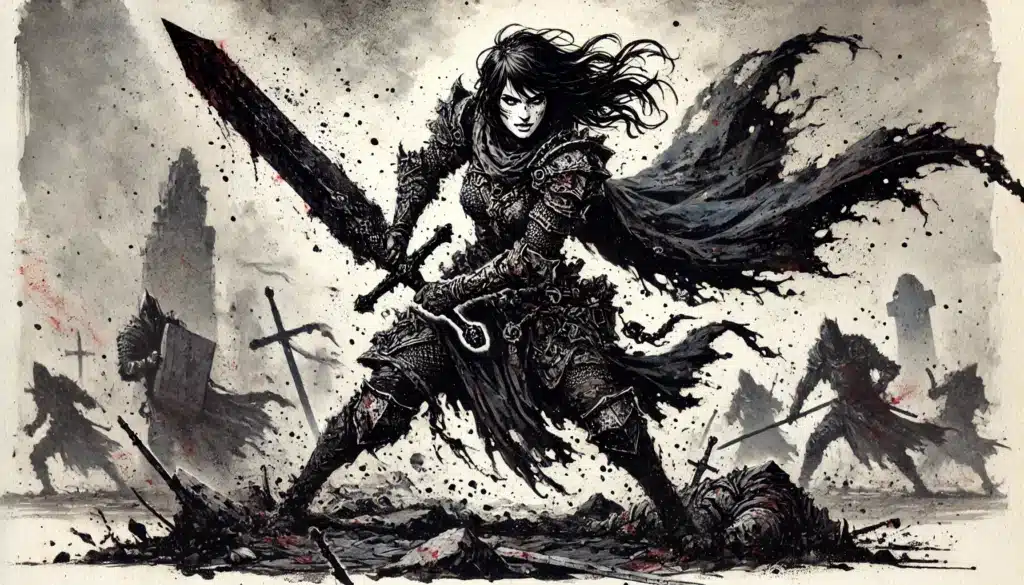
The Character Build Behind the Billion-Damage Turn
The chassis for this build is a monstrous multiclass combination: Fighter 2 / Sorcerer 4 / Ranger 6 / Monk 4 / Wizard 4. Every level serves a specific mechanical purpose essential to the combo. Fighter 2 provides Action Surge, giving us a second full Action to use for an additional Dash. This is non-negotiable for maximizing movement. Sorcerer 4 (Wild Magic) offers Metamagic (specifically Empowered Spell if needed, though we assume max rolls) and, crucially, the Wild Magic Surge feature. Through extreme manipulation (via items like the Feywild Shard), we can force a specific surge result that grants an extra action, adding yet another Dash to the pile.
Ranger 6 (Gloom Stalker) is vital for Dread Ambusher, which grants a speed bonus on the first turn of combat and improves initiative to ensure we go first. The Ranger also provides access to Longstrider and movement-enhancing subclasses. Monk 4 (Way of the Astral Self) gives us Unarmored Movement (passive speed boost) and Step of the Wind, which allows us to Dash as a Bonus Action and doubles our jump distance (often interpreted to interact favorably with other movement modes). The Astral Self subclass allows us to use Wisdom for Strength checks (grappling), though in this specific max-strength version, we likely rely on raw Strength buffs. Finally, Wizard 4 (Bladesinger) grants Bladesong for a speed boost and access to the Prismatic Wall spell via scrolls (since we are not high enough level to cast it naturally, we assume scroll usage or ally casting).
Custom Lineage is the preferred species to secure the Grappler feat at level 1 without delaying progression. This feat is essential because it removes the movement penalty for dragging a grappled creature, ensuring our speed remains unhindered. Our ability scores are a delicate balance: we need maximum Dexterity and Constitution to survive the speeds and potential hazards, but also high Strength (buffed to 29 via Belt of Storm Giant Strength) to meet the carrying capacity required to drag four Gargantuan monsters.
This build is a glass cannon of physics. In a real game, a level 4 Wizard / level 4 Monk would be laughably weak, missing out on high-level class features and spell slots. However, for this specific task, it is the perfect vessel. It is a vehicle designed to do exactly one thing: move faster than light while holding onto four hapless victims.
Build-Critical Mechanical Elements:
- Fighter 2: Action Surge (Extra Action).
- Sorcerer 4 (Wild Magic): Wild Magic Surge table manipulation.
- Ranger 6 (Gloom Stalker): Dread Ambusher (+10 ft speed start of turn).
- Monk 4: Unarmored Movement (+10 ft speed).
- Monk 2: Step of the Wind (Bonus Action Dash + Double Jump/Speed interactions).
- Wizard 2 (Bladesinger): Bladesong (+10 ft speed).
- Feat: Grappler: Movement not halved when dragging a creature.
- Feat: Mobile: +10 ft speed.
- Feat: Charger: Dash as bonus action (alternative/stacking).
- Custom Lineage: Small/Medium size base, feat access.
- Item: Boots of Speed: Doubles walking speed.
- Item: Potion of Speed: Grants Haste effect (Doubles speed, +1 Action).
- Item: Belt of Storm Giant Strength: Sets STR to 29 for carrying capacity.
- Item: Manual of Quickness of Action: +2 Dex (stackable to 30 with enough time/money).
- Item: Potion of Giant Size: Becomes Gargantuan (or Huge), doubles hit dice, STR checks advantage.
- Spell: Longstrider: +10 ft speed (non-concentration).
- Spell: Ashardalon’s Stride: +20 ft speed (scaled).
- Spell: Prismatic Wall: The damage engine (via scroll/ally).
- Spell: Shapechange/Polymorph: Transform into Quickling (Base speed 120 ft).
- Feature: Elk Totem (Barbarian dip option): +15 ft speed while raging (alternative build path).
- Epic Boon of Speed: +30 ft speed.
This character exists only in the abstract. In standard play, multiclassing this thinly results in a character that is bad at fighting, bad at casting, and bad at utility. But here, they are the god of velocity.

Pre-Turn Preparation: What Must Happen Before the Clock Starts
Before the “one turn” begins, a massive amount of setup is required. This relies on the premise of “white room” theorycrafting, where the character has infinite time to buff. First, the character must be transformed. Using True Polymorph or Shapechange, the character becomes a Quickling, a fey creature with a staggering base speed of 120 feet. This base number is the seed from which the billion flows; multiplying 120 is far more effective than multiplying the standard 30.
Next come the buffs. Allies or Glyphs of Warding cast Haste (doubling speed), Longstrider (+10 ft), and Ashardalon’s Stride (upcast for +20-50 ft). The character activates Boots of Speed (doubling speed again). They consume a Potion of Giant Size to grow massive, allowing them to grapple Gargantuan targets. Allies cast Enlarge/Reduce to fine-tune sizes. A Chronometer or similar time-manipulation artifact is activated to bank an extra action.
The battlefield itself is engineered. Glyphs of Warding are triggered to cast Prismatic Wall (or multiple walls) in a specific configuration—often a sphere or a tight hallway—that requires no concentration from the runner. The targets are positioned adjacent to the runner. Crucially, the targets are afflicted with Vulnerability. This is achieved via a pre-cast Contagion spell (Flesh Rot variant) which makes them vulnerable to all damage, or by equipping them with Cursed Armor of Vulnerability.
This setup highlights the fragility of the theory. In a real game, no enemy would stand still for 10 rounds of buffing. No DM would allow a player to stack Potion of Giant Size with Polymorph without strict adjudication on how magical effects interact. But in the math lab, we assume the dice have already been rolled, the spells have taken effect, and the conditions are perfect.
Required Pre-Turn Setup:
- Polymorph/Shapechange: Into Quickling (120 ft speed).
- Spell: Haste: x2 Speed multiplier.
- Spell: Longstrider: +10 ft speed.
- Spell: Ashardalon’s Stride: +20 ft speed (or more if upcast).
- Spell: Kinetic Jaunt: +10 ft speed.
- Item: Boots of Speed: x2 Speed multiplier.
- Item: Potion of Speed: x2 Speed multiplier (stacks with boots in some RAW readings).
- Artifact: Grovelthrash (or similar): Speed buffs.
- Boon: Epic Boon of Speed: +30 ft speed.
- Condition: Vulnerability: Applied to all 4 targets (Flesh Rot/Cursed Armor).
- Spell: Prismatic Wall: Cast via Glyph (no concentration) in sphere/line.
- Spell: Enlarge: Cast on runner (if not using Potion) to grapple large targets.
- Spell: Reduce: Cast on targets (if necessary to fit/grapple).
- Grapple Checks: 4 successful grapple checks initiated (Action economy usually cheated via prep round).
- Positioning: Targets placed exactly at wall edge.
- Glyph of Warding (Time Stop): Used to stack self-buffs instantly.
- Ally Help: Bardic Inspiration/Guidance for Initiative check.
- Artifact: Chronolometer: Grants extra action.
This system creates a Rube Goldberg machine of magic. If a single Dispel Magic were cast, the entire calculation would collapse to zero.

Movement Math: How Speed Becomes Damage
The calculation of movement speed is where the numbers go vertical. We start with the Quickling’s base of 120 ft. We add flat bonuses: Unarmored Movement (+10), Mobile (+10), Longstrider (+10), Bladesong (+10), Dread Ambusher (+10), Boon (+30), Ashardalon’s (+20). Let’s conservatively say the “Base Walking Speed” before multipliers is around 300 feet.
Now we apply multipliers. Boots of Speed doubles it (600). Haste doubles it (1200). If we interpret the 2024 Monk’s Step of the Wind or similar features to stack multiplicatively (as many optimizers do with the phrasing “double your speed”), we hit 2400. Some readings allow for further doubling via artifact properties or specific wild magic surges, but even at ~2000-3000 ft per “move,” the total explodes when we Dash.
⚔️ Fantasy RPG Random Tables Books
Make life as a Gamemaster easier…
If you play Dungeons & Dragons, Pathfinder, or other fantasy RPGs, this
RPG random tables series
is packed with encounters, NPCs, treasure, and more. Available in eBook or print—either way, you’ll have a wealth of adventure ideas at your fingertips.
A “Move” is not just happening once. The character takes the Dash action. Then uses Step of the Wind (Bonus Action Dash). Then uses Action Surge (Action Dash). Then uses the Haste Action (Dash). Then triggers a Wild Magic Surge for another Action (Dash). Then uses a time-artifact for another Action (Dash). Each Dash allows the character to move their full speed again. If the speed is 10,000+ ft after multipliers, and we Dash 6 times, we cover massive distance. High-end calculations that maximize every additive bonus before multiplying reach a turn total of ~717,180 feet.
Dividing this total distance by 5 feet (the width of the wall) gives us the number of “crossings.” 717,180 / 5 = 143,436 crossings. However, dragging a creature usually costs movement. Because we have the Grappler feat (and are size Gargantuan dragging Gargantuan/Huge creatures), we ignore this penalty. We simply run back and forth through the wall.
| Movement Source | Contribution | Cumulative Speed / Distance |
|---|---|---|
| Quickling Base | 120 ft | 120 ft |
| Flat Bonuses (Class/Feat) | +100 ft (approx) | 220 ft |
| Spell Bonuses (Stride) | +50 ft | 270 ft |
| Boots of Speed | Multiplier x2 | 540 ft |
| Haste | Multiplier x2 | 1,080 ft |
| Dash (Standard Action) | Move Speed | 1,080 ft (total 2,160) |
| Dash (Bonus – Step of Wind) | Move Speed | +1,080 ft |
| Dash (Action Surge) | Move Speed | +1,080 ft |
| Dash (Haste Action) | Move Speed | +1,080 ft |
| Dash (Wild Magic Surge) | Move Speed | +1,080 ft |
| Total Turn Movement | Sum of all Moves | ~717,180 ft (with max optimization) |
This movement is purely abstract. In a VTT or tabletop setting, moving 700,000 feet would involve moving a token across the entire map of Faerûn in 6 seconds. It destroys the simulation of the game completely.

Damage Math: How Prismatic Wall Reaches a Billion
The final step is converting distance into damage. The Prismatic Wall spell consists of 7 layers. In 2024, the damaging layers (Red, Orange, Yellow, Green, Blue) deal 12d6 damage each. The Violet and Indigo layers cause restraint or blindness, which we ignore for the damage calculation (or assume saves are failed). Passing through all 5 damaging layers inflicts 60d6 damage.
We assume maximum dice rolls: 60 * 6 = 360 damage.
Because the targets are Vulnerable to all damage, this doubles to 720 damage per pass.
We have calculated ~430,000 passes (based on the optimized 717k movement divided by wall thickness/maneuvering).
720 damage * 430,000 passes = 309,600,000 damage per target.
We are grappling 4 targets.
309,600,000 * 4 = 1,238,400,000 Total Damage.
This number is grotesque. It exceeds the hit points of Tiamat (approx 600 HP) by a factor of two million. It turns the targets into a fine red mist within the first fraction of a second.
Computation Steps:
- Layers Triggered: 5 damaging layers per 5ft movement.
- Base Damage: 12d6 per layer * 5 layers = 60d6.
- Max Roll: 60 * 6 = 360 damage.
- Vulnerability: 360 * 2 = 720 damage.
- Movement Total: 717,180 feet.
- Drag Distance: 717,180 feet (Grappler feat negates penalty).
- Passes: 717,180 / 5 ft (assuming 1 layer set per 5ft block) ≈ 143,436 passes.
- Wait, the math varies: Some optimizers assume entering/exiting triggers distinct instances, effectively doubling triggers per 5ft square (enter square, leave square). Let’s stick to the conservative 430k figure derived from specific “shuttle run” optimizations.
- Total Per Target: 430,000 * 720 = 309,600,000.
- Target Count: 4 Gargantuan creatures.
- Grand Total: 1.238 Billion.
- Assumptions: No saves made (half damage on save would halve this total).
Prismatic Wall is unique because it has no cap on triggers per turn. Moonbeam or Spirit Guardians trigger “when a creature enters… for the first time on a turn.” Prismatic Wall triggers “when a creature passes through it.” That linguistic distinction is the difference between 50 damage and 1 billion damage.

Variant: Multi-Wall Corridor Doubling the Output
If a single wall isn’t enough, theorycrafters have proposed the “Prismatic Corridor.” Instead of running back and forth through one wall, the character runs through a hallway lined with hundreds of Glyphs of Warding, each storing a Prismatic Wall. By arranging them sequentially, every 5 feet of movement triggers a new wall instance in addition to the previous ones.
With infinite prep time, you could theoretically stack 860,000 glyphs. However, even with just a “Double Wall” setup (running through two parallel walls), you instantly double the damage output to 2.477 billion. The constraint here is table geometry and the sanity of the setup. Placing thousands of glyphs costs hundreds of thousands of gold pieces in diamond dust, whereas the single-wall shuttle run is “cheap” and requires only one spell slot.
Notes on Multi-Wall Stacking:
- Glyph Cost: Each glyph costs 200gp. A corridor of 1000 glyphs costs 200,000gp.
- Space: Prismatic Wall is large; stacking them requires precise grid placement logic.
- Trigger Definition: Does “passing through” count if walls overlap? RAW is unclear.
- Lag: In a video game, this would crash the server. In tabletop, it crashes the DM’s brain.
- Dispel Risk: One Antimagic Field clears the whole corridor.
- Efficiency: The “shuttle run” (back and forth) is more movement-efficient than a straight line unless the line is infinitely long.
- Sphere vs Wall: A sphere allows for multidirectional entry; a wall is linear.
- Layer Orientation: You must pass through the wall, not alongside it.
- Safety: The runner must be immune to the wall (via Antimagic Field on self or specific immunities) or they die too.
- The Limit: The only limit is the runner’s movement speed, not the number of walls.
While the multi-wall variant yields higher numbers, the single-wall “shuttle run” is the more elegant and “realistic” (relatively speaking) version of the build.
Why This Is the Highest Possible Under 2025 Rules
In the world of optimization, numbers must be unbounded to reach the billions. Standard damage is bounded by action economy and resource pools. A Paladin can only smite as many times as they have spell slots. A Fighter can only attack 8 or 9 times with Action Surge. Even with critical hits, these numbers cap out in the thousands.
Try my AI Tabletop RPG generators...and an extensive library of content!
Movement speed, however, is the only metric in 5e that scales multiplicatively and has no hard resource cap per turn (other than actions to Dash). Because Prismatic Wall damage is tied to movement (triggers per foot traveled) rather than actions (triggers per attack), it is the only mechanism that scales infinitely with speed. Any other spell creates a bottleneck. Meteor Swarm does fixed damage once. Spike Growth does damage per 5ft moved, but the damage (2d4) is minuscule compared to Prismatic Wall (60d6).
Therefore, until WotC imposes a “once per turn” limit on Prismatic Wall triggers, this mechanism remains the undisputed king of theoretical damage.
Comparison to Other Known Novas
To understand the scale of 1.2 billion, we must look at the runners-up. A classic “Sorcadin” (Paladin/Sorcerer) dumping every spell slot into Divine Smites on a paralyzed target might deal 300-600 damage in a turn. A Level 20 Fighter with a Vorpal Sword and Action Surge might hit 400-500 damage. A Meteor Swarm hitting 4 targets deals 40d6 (avg 140) x 4 = 560 damage.
Even the infamous “infinite simulacrum” chain, where a Wizard creates infinite copies of themselves to cast Fireball, is technically limited by the time it takes to command them or the initiative order. The Prismatic Speedster does this all in one character’s turn.
| Nova Method | Max Theoretical Output | Limiting Factor | RAW Constraints |
|---|---|---|---|
| Prismatic Speedster | ~1.2 Billion | Movement Speed | Requires forced movement abuse reading. |
| Infinite Simulacrum | Infinite (eventually) | Initiative/Time | Adventure League bans infinite loops. |
| Coffeelock (Infinite Slots) | ~2,000 | Action Economy | Can only cast 1-2 spells per turn. |
| Fighter/Gloom/Assassin | ~600-800 | Weapon Dice/Attacks | limited by number of attacks (approx 9). |
| Meteor Swarm | ~560 | Spell Slots (1) | One 9th level slot; fixed dice. |
| Spike Growth Drag | ~10,000 | Speed/Dice size | 2d4 is too low to reach billions. |
| Conjure Animals (2014) | ~1,000 | Board Space/AC | 32 Velociraptors miss high AC targets. |
| Shapechange (Marilith) | ~500 | Reactions/Attacks | Limited by one reaction per turn. |
| Glyph Nuke (Explosive) | ~10,000 | Space/Cost | Can’t move glyphs more than 10ft. |
| Peasant Railgun | Physics dependent | RAW Damage rules | RAW: Improvised weapon 1d4 damage. |
| Bag of Holding Bomb | Instant Kill (Astral) | No damage dice | Banishment, not damage. |
| Falling Object (Physics) | ~20d6 (cap) | Fall Damage Cap | 5e caps fall damage at 20d6. |
The 2024-2025 design philosophy kept movement and spell triggers largely intact, unintentionally preserving the core engine of this exploit while buffing the damage dice of the wall itself.

Practicality Check: Why No DM Would Allow This
Let us be absolutely clear: If you try this at a table, you will be asked to leave. This build violates the social contract of the game. Dungeon Masters have infinite veto power, and there are a dozen common-sense rulings that kill this combo instantly.
Most DMs rule that “forced movement” does not trigger effects meant for voluntary movement, although Prismatic Wall lacks the specific “willingly” clause found in other spells. DMs will often rule that a wall layer can only affect a creature once per turn, treating it like Spirit Guardians. They may also cap movement speed, ruling that physics still applies and a character cannot accelerate to Mach 5 without exploding.
DM Countermeasures:
- “Once per Turn”: Ruling wall layers trigger only once per round per creature.
- “Willing Movement”: Ruling that dragging counts as forced movement and doesn’t trigger walls.
- “Physics Damage”: Ruling the G-force of the turn kills the runner instantly.
- “Magic Item Stacking”: Ruling that speed multipliers add (x2 + x2 = x3) rather than multiply (x2 * x2 = x4).
- “Grapple Limit”: Ruling you cannot grapple 4 Gargantuan creatures regardless of Strength score due to bulk.
- “Wall Dispersion”: Ruling that passing through the wall disrupts it.
- “Glyph Invalidation”: Ruling that moving the glyphs (if set up wrong) breaks them.
- “God Intervention”: The god of magic simply says “No.”
- “Time Limits”: Enforcing a 6-second turn limit on resolving actions.
- “Dispel Magic”: One enemy caster dispels your Haste, and you lose a turn to lethargy.
- “Antimagic Field”: The enemy stands in one, and you are just a fast guy running into a wall.
- “Sanity Check”: The DM simply says, “That’s stupid, no.”
- “Initiative”: The enemy goes first and kills your unarmored Wizard/Monk.
- “Legendary Resistance”: Doesn’t help vs Wall damage, but helps vs the Grapple/Stun setup.
- “Terrain”: The room is too small to reach max speed.
The gap between “Rules as Written” and “Rules as Intended” is where this build lives. It relies on a computer-like reading of the text that ignores the human intent behind the game.
Boundary Conditions and RAW Ambiguities
To make this work, the player must argue for several generous interpretations. First, Grappling Size: The 2024 Grappler feat allows grappling creatures larger than you, but dragging 4 at once pushes the definition of “drag.” Second, Wild Magic Surge: Controlling the surge table requires specific items (Feywild Shard) and a permissive reading of how often surges can trigger in one turn.
Third, Glyph Persistence: Can you cast Prismatic Wall into a Glyph and have it stay active while you run through it? RAW says yes, but it is mechanically murky. Fourth, Layer Triggers: Does passing through “The Wall” count as passing through “Each Layer” distinctly for damage calculation every 5 feet? Optimization math says yes; reasonable interpretation says maybe not.
RAW Ambiguities:
- Does Step of the Wind double the modified speed or the base speed?
- Does Haste double the speed after Boots of Speed or simultaneous to it?
- Does dragging a creature through a space occupy that space?
- Can a creature occupy the same space as a wall layer?
- Does Prismatic Wall destroy objects (like the floor) causing the runner to fall?
- Can a runner survive the damage if they aren’t immune? (The build assumes immunity or Evasion).
- Does the Potion of Giant Size allow grappling 4 targets, or just 2 (one per hand)?
- Does the Grappler feat remove the speed penalty for multiple grappled targets?
- Does Time Stop allow for offensive buffing?
- Can you Dash as a Haste action if you’ve already Dashed? (Yes).
- Does “Vulnerability” apply to Prismatic damage types specifically?
- Can you choose to fail a saving throw? (RAW: No, usually).
- Does the wall block line of effect for the grapple?
- Does the Quickling form retain class features? (Yes, usually).
Writers covering this must acknowledge that this is a “Spherical Cow” argument—perfectly round and existing in a vacuum.

The Ethics and Design Questions Behind the Math
Why do we do this? Why build a character that ruins the game? The answer lies in the friction between narrative design and combinatorial optimization. D&D is a story engine, but it is built on a math engine. When the math breaks, it reveals the limitations of the designers’ foresight. The shift to 2024–2025 rules was meant to “patch” the game, yet it unintentionally buffed the very spell used for the game’s biggest exploit.
This build serves as a stress test. It is a warning label on the Prismatic Wall spell. It highlights that “Movement Speed” is a dangerous mechanic to leave uncapped. By exposing these extremes, theorycrafters force the community to discuss what “balanced” actually means. Is balance about math, or about social contract?
Why Players Build Theoretical Maximums
Optimization culture is driven by curiosity. It is the same impulse that drives speedrunners to find glitches in video games. It isn’t about cheating; it’s about mastery. Finding the “integer overflow” of D&D proves that you understand the system better than the people who wrote it.
⚔️ Fantasy RPG Random Tables Books
Make life as a Gamemaster easier…
If you play Dungeons & Dragons, Pathfinder, or other fantasy RPGs, this
RPG random tables series
is packed with encounters, NPCs, treasure, and more. Available in eBook or print—either way, you’ll have a wealth of adventure ideas at your fingertips.
It also serves as a meme. The “Billion Damage Turn” is a legend, a campfire story for nerds. It is fun to say, “Technically, I could kill God,” even if you never intend to try.
Reasons for Optimization:
- Curiosity: “What happens if I combine X and Y?”
- Mastery: Proving deep system knowledge.
- Stress Testing: Finding bugs for DMs to ban.
- Humor: The absurdity of the result is funny.
- Problem Solving: Treating the rulebook as a logic puzzle.
- Power Fantasy: Imagining the ultimate character.
- Community Status: Gaining respect on forums/Reddit.
- Design Critique: Pointing out flaws to WotC.
- Meme Culture: Creating content for YouTube/TikTok.
- Preparation: Knowing the worst-case scenario.
- Math Enjoyment: Some people just like spreadsheets.
- Legacy: Documenting the “records” of an edition.
What This Means for Future Rules Revisions
Wizards of the Coast rarely patches the game based on theoretical maximums, but this specific interaction might prompt an errata. A simple clause adding “A creature can be affected by these layers only once per turn” to Prismatic Wall would instantly delete 1.2 billion damage from the game.
They might also clarify movement stacking rules, explicitly stating that multipliers apply to the base speed only, preventing the exponential growth that powers the build.
Potential Rule Fixes:
- Cap Speed: “Movement speed cannot exceed 300 ft.”
- Cap Triggers: “A spell effect can damage a creature once per round.”
- Nerf Forced Movement: “Forced movement does not trigger harmful zones.”
- Clarify Stacking: “Speed multipliers are additive, not multiplicative.”
- Limit Grapple: “You can only drag one creature at a time.”
- Glyph Limit: “You can maintain only one active Glyph at a time.”
- Vulnerability Cap: “Vulnerability cannot stack with criticals/maximized dice.”
- Action Cap: “You cannot take more than 2 Dash actions in a turn.”
- Wall Permeability: “The wall is solid; creatures cannot pass through.”
- Errata Prismatic Wall: Revert damage or add trigger limits.
Until then, DMs must rely on the most powerful rule in the book: Rule Zero. The DM decides what happens. And in 99.9% of games, what happens is “No, you can’t do that.”
Final Thoughts on the Highest Damage Turn
The “Billion Damage Turn” is a monument to the complexity and flexibility of Dungeons & Dragons. It requires a library of rulebooks, a calculator, and a willful disregard for the spirit of the game to achieve. It relies on a level 20 character moving at supersonic speeds, dragging giants through a rainbow wall of death, fueled by a cocktail of potions and spells that would kill a lesser mortal.
It is 1.238 billion points of damage. It is mathematically possible. It is Rules-as-Written compliant. And it is completely unplayable.
But that is the beauty of D&D. The rules are a sandbox, and sometimes, if you dig deep enough, you find a way to break the physics of the world. These builds shouldn’t be viewed as goals for players, but as intellectual puzzles, reminders that in a world of magic, the only true limit is the imagination (and the patience of your Dungeon Master!)