
We have all been there as Dungeon Masters where you realize your campaign has slowly turned into a chaotic name soup. You stare at your notes and realize you have introduced thirty different shopkeepers, five rival adventuring parties, and a dozen minor nobles, yet your players cannot remember a single one of them. NPC overload in D&D is a real killer of campaign momentum because it turns every social encounter into a guessing game where the players wait for you to remind them who they are talking to. It creates a situation where the players stop caring about the cast because the cast is simply too large to fit inside a working human memory.
This happens because of a phenomenon called cast creep which is the natural tendency for a DM to add a new face for every new function. You need a blacksmith so you invent one, then you need a quest giver so you invent another, and before you know it you are drowning in managing NPCs as a DM. The result is that you end up doing constant recap labor during the session just to keep the story moving. Instead of playing the game, you are acting as a living wiki for a group of players who have completely checked out of the social pillar of play.
The solution is not to simply write better characters or practice funny voices, but to implement a hard structural filter on your roster. We call this the D&D NPC management razor or the 3-Connection Rule. This system forces you to look at every character in your binder and demand they justify their existence through active connections to the game elements that actually matter. It is a beginner-friendly and low-prep method that stops you from over-prepping characters that will never hit the table effectively.
By using this rule, you will significantly reduce the cognitive load at the table and increase D&D campaign organization immediately. This system includes ruthless pruning, merging duplicate characters, fixing your intro pacing, and controlling the spotlight so the heroes remain the heroes. We are going to fix your campaign cast list by turning it from a sprawling mess into a tight, dramatic ensemble that your players will actually love and remember.
- NPC Overload D&D: Why Players Stop Remembering Your Cast
- The 3-Connection Rule: Party, Place, Problem
- The Rule in Practice: Audit Your NPC Roster in 15 Minutes
- Cap the Active Cast Per Session (5–7 NPC Limit)
- NPC Roles Must Be Singular: One Job, One Function
- Consolidate NPCs: Merge Without Breaking Your Story
- Promote One NPC, Demote Three (The Anti-Bloat Budget)
- Make NPCs Memorable Without Adding More
- Relationship Triangles Replace Relationship Webs
- Rumor Networks: One NPC Can Represent Ten
- NPC Spotlight Management: Stop NPCs from Stealing the Game
- NPC Intro Pacing: How to Introduce NPCs So Players Remember Them
- Low-Prep NPC Tracking: 3 Tags + One Line
- The Session-End Cast Audit: Cut, Merge, Promote
- Instant NPC Generator: The 3-Connection Roll Tables
- Final Thoughts: Fewer DND NPCs, More Impact
NPC Overload D&D: Why Players Stop Remembering Your Cast
The reason players forget your NPCs is rarely because the characters are boring, but usually because of cognitive load limits and poor scene economy. When a player sits down at the table, they are managing their character sheet, tracking resources, thinking about tactics, and trying to stay in character all at once. If you throw five unanchored names at them in a single hour, their brain simply dumps the data to save space for survival information. Player recall collapses when characters do not have clear handles or reasons to exist beyond “this person is here right now.”
Narrative clarity relies on the economy of characters, which means using the fewest number of actors to tell the most amount of story. If you spread important plot points across twenty people, the players have to track twenty threads, but if you tie those same plot points to three people, the players only have to track three relationships. Cast management is about preserving the players’ mental energy for the moments that matter rather than forcing them to memorize a phone book of fantasy names.
Try my AI Tabletop RPG generators...and an extensive library of content!
The harsh truth is that most of the “cool NPCs” we create are actually just clutter that dilutes the impact of the important ones. When players meet someone new who feels disconnected from the rest of the world, they instinctively treat them as set dressing rather than a person. The problem isn’t “bad NPCs” or unengaged players, it is simply a math problem of too many “unanchored” NPCs fighting for limited mental bandwidth.

The 3-Connection Rule: Party, Place, Problem
To solve the bloat, we apply the 3-connection rule to every single named character in your notes. The rule states that for an NPC to remain active in your campaign, they must have a direct connection to three things: the party, a recurring place, and an active problem. If an NPC only connects to the party but lives nowhere and has no problem, they are just a wandering shopkeeper who will be forgotten. If they connect to a place and a problem but have no relationship to the party, they are just background lore that the players will ignore.
This is your primary NPC connection rule and it acts as a filter to tell you which characters are real and which ones are ghosts. By ensuring every character hits these three points, you guarantee that every interaction moves the game forward in a meaningful way. It helps with D&D NPC tracking because you no longer need to track distinct personalities, you only need to track how the character serves these three structural pillars. The rule is not here to help you write backstories, it is here to help you cut the fat.
If you look at an NPC and cannot find these three connections, that is your permission to do one of three things: cut them entirely, merge them into someone better, or demote them to an extra. A character missing connections is a character that is dead weight in your narrative. We want a lean machine of a cast where every person the players talk to pulls on a web of consequences, geography, and plot.
⚔️ Fantasy RPG Random Tables Books
Make life as a Gamemaster easier…
If you play Dungeons & Dragons, Pathfinder, or other fantasy RPGs, this
RPG random tables series
is packed with encounters, NPCs, treasure, and more. Available in eBook or print—either way, you’ll have a wealth of adventure ideas at your fingertips.






What “Party Connection” Actually Means
A party connection is not just “they met once in a tavern” or “they hired the party for a job.” A real connection is a current, actionable dynamic that produces choices for the players right now. This means the relationship must have leverage, debt, emotion, or utility that forces the players to consider that NPC when they make decisions. It transforms the NPC from a quest dispenser into a dramatic tool that you can use to apply pressure or offer relief.
- Owes them: The NPC is in debt to the party for a past save.
- Fears them: The NPC knows what the party did and is terrified of crossing them.
- Wants something: The NPC has an open request or desire the party can fulfill.
- Offers access: The NPC controls a gate, key, or permission the party needs.
- Blackmails them: The NPC knows a secret the party wants kept quiet.
- Protects an ally: The NPC is the guardian of someone the party likes.
- Rivals a PC: The NPC competes for the same goal or status as a specific character.
- Idolizes them: The NPC is a fan or follower who mimics the party.
- Supplies them: The NPC is the exclusive source of a rare resource.
- Shares an enemy: The NPC hates the same villain the party hates.
- Distrusts magic/race: The NPC has a specific bias against a party member’s nature.
When you audit your list, ensure the connection is actionable, meaning it gives you a verb you can use to poke the players during a lull in the action.
What “Place Connection” Actually Means
Players remember geography better than they remember people, so you must anchor every NPC to a specific location they revisit. A place connection means the NPC is a fixture of a hub, a route, or a dungeon layer that the party returns to frequently. This serves as memory scaffolding because when the players think “we need to go to the Docks,” their brain automatically retrieves the “Dock NPC” file associated with that location.
- Starting Town: The mayor or bartender in the Tier 1 hub.
- Safehouse: The owner of the inn or tower where the party creates a long rest.
- Guildhall: The administrator at the faction base the party joined.
- Border Checkpoint: The guard captain at the bridge they cross every session.
- Temple: The cleric at the specific shrine where they buy healing potions.
- Ship: The quartermaster or captain of their transport vessel.
- Megadungeon Hub: The merchant sitting in the safe room on level 3.
- Library/Archive: The researcher who lives in the capital city’s lore dump.
- Market Stall: A fixed vendor in the central plaza they walk past daily.
- Ruined Landmark: A hermit living in the old watchtower the party cleared.
- Noble Estate: The steward of the castle the party is trying to infiltrate.
Recurring places are the anchors that keep your world from floating away, and sticking NPCs to them ensures the cast stays consistent.
What “Problem Connection” Actually Means
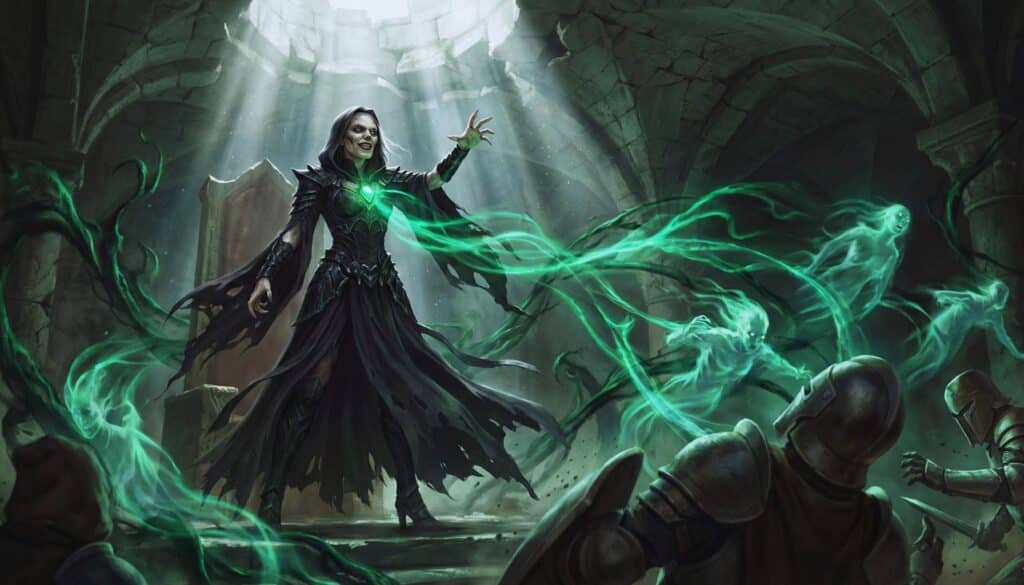
Finally, every NPC must be attached to an active problem, tension, or clock that is currently ticking down. This does not mean they are the villain, but it means they are affected by, causing, or trying to solve a conflict that the players care about. This connects the NPC to the plot so that interacting with them always provides information or consequences regarding the main story.
| Problem Type | NPC Connection | What Changes If Ignored? |
|---|---|---|
| Impending Invasion | They are stockpiling weapons illegally to prepare. | They get arrested, removing a merchant ally. |
| Magical Plague | Their child is sick and they need a cure. | The child dies, and the NPC blames the party. |
| Guild War | They are a spy for the underdog faction. | Their cover is blown and the safehouse burns. |
| Natural Disaster | They are denying the danger exists (climate denier). | The town is unprepared and takes massive damage. |
| Missing Person | They were the last one to see the victim. | The trail goes cold and the victim is sacrificed. |
| Political Coup | They are being bribed to open the city gates. | The enemy army enters without a siege. |
| Cursed Item | They bought the item and are slowly being corrupted. | They transform into a monster in the town square. |
| Resource Shortage | They are hoarding grain to sell at high prices. | Riots break out in the lower district. |
| Ancient Prophecy | They are translating the text incorrectly. | The party goes to the wrong dungeon. |
| Monster Hunt | They were wounded by the beast and seek revenge. | They hire incompetent mercs who get slaughtered. |
NPCs exist to move problems forward, so if an NPC is just happy and safe, they are furniture and not a character.

The Rule in Practice: Audit Your NPC Roster in 15 Minutes
You do not need to rewrite your whole campaign to fix this, you just need to perform a quick NPC roster cleanup before your next game. This is a simple workflow designed for D&D session prep NPCs that takes about fifteen minutes and saves you hours of headache later. We are going to look at your notes and brutally assess who deserves to be in the spotlight and who needs to be swept into the background.
This simple NPC management system for busy DMs happens between sessions because doing it live is impossible. You sit down with a coffee and your messy notes and you start checking boxes. The goal is to identify the dead weight that is dragging down your story and cut it loose so the good stuff can shine. Audits prevent future confusion far better than trying to retroactively explain who someone is three months later.
The 3-Connection Audit Checklist
Go through your list of named characters and score them: 3 points is a keeper, 2 points needs work, 1 or 0 points gets cut or merged. It is a harsh binary system that removes the “maybe I will use them later” hesitation that causes bloat.
| NPC Name | Party Link | Place Link | Problem Link | Action (Keep/Merge/Cut) |
|---|---|---|---|---|
| Captain Vane | Rivals the Fighter | The Docks | Smuggling weapons | Keep (Perfect anchor) |
| Old Man Jenkins | None | The Tavern | None | Cut (Just flavor text) |
| Lady Allara | Party owes her gold | Capital City | Politics | Keep (Add specific problem) |
| Blacksmith Gorn | Sells gear | Smithy | None | Merge (Combine with Vane) |
| Spy Master X | Hired party | None | War intel | Keep (Needs a location) |
| Baroness Tula | None | Castle | Tax dispute | Promote (Give party link) |
| Guard Steve | None | Gate | None | Demote (Remove name) |
| Priestess Elara | Healed Paladin | Temple | Plague cure | Keep (Strong links) |
| Thief Rix | Stole from Rogue | Sewers | Gang war | Keep (Good antagonist) |
| Merchant Bob | Sells ropes | Market | None | Cut (Generic vendor) |
| Sage Orem | Answered Qs | Tower | Prophecy | Merge (Put in Library) |
| Cultist 4 | Fought party | Dungeon | Summoning | Demote (Just a stat block) |
Remember that “Cut” is a feature, not a failure, because it clears the stage for the actors who actually matter.

Cap the Active Cast Per Session (5–7 NPC Limit)
Good table management D&D requires strict limits on how many unique personalities you portray in a single evening. You should cap your active cast to between 5 and 7 named NPCs per session to ensure that each one gets enough screen time to be memorable. If you try to roleplay twelve different people, they will all start to sound the same and your players will tune out.
The rest of your roster still exists, but they are “offstage” for this session, meaning they are mentioned in passing but do not have dialogue scenes. This forces you to focus your dramatic energy on a small group of people, making the roleplay scenes sharper and more distinct. Limiting the onstage cast improves pacing and stops the session from dragging into a series of meaningless conversations.
How to Keep NPCs “Present” Offscreen Without Adding More Scenes
You can keep the world feeling alive by having offscreen NPCs impact the game through indirect means. This maintains their relevance without requiring you to perform a scene or adding to the session time.
- Rumor Updates: The players overhear gossip about the NPC’s recent success or failure.
- Notices: A pinned request or bounty on a board signed by the NPC.
- Changed Guards: The NPC has hired new security, showing their paranoia.
- New Laws: A town crier announces a decree written by the noble NPC.
- Gifts: A courier delivers a package from the NPC to the party.
- Threats: A dead rat is left on the party’s doorstep with the NPC’s symbol.
- Price Shifts: The merchant NPC raises prices due to the “recent trouble.”
- Faction Propaganda: Posters appear in town supporting the NPC’s cause.
- Letters: The classic method of delivering info without a meeting.
- Closed Shop: The players find the NPC’s shop locked with a “Gone Fishing” sign.
- Overheard Arguments: Players hear the NPC shouting at someone else behind a door.
- Visual Changes: The NPC’s tower is now smoking or has a new flag.
Presence is about impact and consequence, not about how many minutes of screen time they occupy.

NPC Roles Must Be Singular: One Job, One Function
One of the fastest ways to confuse players is to create “Swiss Army Knife” NPCs who do everything. If one character is the quest giver, the shopkeeper, the lore expert, and the comic relief, the players will lose track of what that person actually represents. NPC tags and roles help you define exactly what function a character serves so the players can file them away mentally with a simple label.
⚔️ Fantasy RPG Random Tables Books
Make life as a Gamemaster easier…
If you play Dungeons & Dragons, Pathfinder, or other fantasy RPGs, this
RPG random tables series
is packed with encounters, NPCs, treasure, and more. Available in eBook or print—either way, you’ll have a wealth of adventure ideas at your fingertips.
Role compression means stripping away extraneous jobs and leaving the character with one clear purpose in the narrative. Players remember “The Smuggler” or “The Priest” much better than they remember “The guy who smuggles but is also a priest and sells potions.” By simplifying the role, you create a stronger hook for the scene economy because the players know exactly why they are talking to this person.
Role Compression Rules That Reduce Confusion Fast
To fix this, assign one primary role and at most one secondary role to each NPC, then cut everything else or move it to a different character.
- Quest Handoff: Their only job is to give the mission and the reward.
- Rumor Hub: They collect and sell information (Bartender/Beggar).
- Gatekeeper: They block access to a location or person.
- Rival: They compete directly with the party.
- Ally: They provide backup or resources in a fight.
- Faction Contact: They represent a larger organization’s interests.
- Moral Mirror: They question the party’s ethics.
- Victim: They need saving and represent the stakes.
- Expert/Sage: They provide specific lore or identification.
- Merchant: They facilitate commerce and trade (keep this boring!).
- Crafter: They upgrade or fix items.
- Antagonist: They actively oppose the party’s goals.
Fewer roles per NPC means a stronger identity and a much easier time for your players to remember who to ask for what.
Consolidate NPCs: Merge Without Breaking Your Story
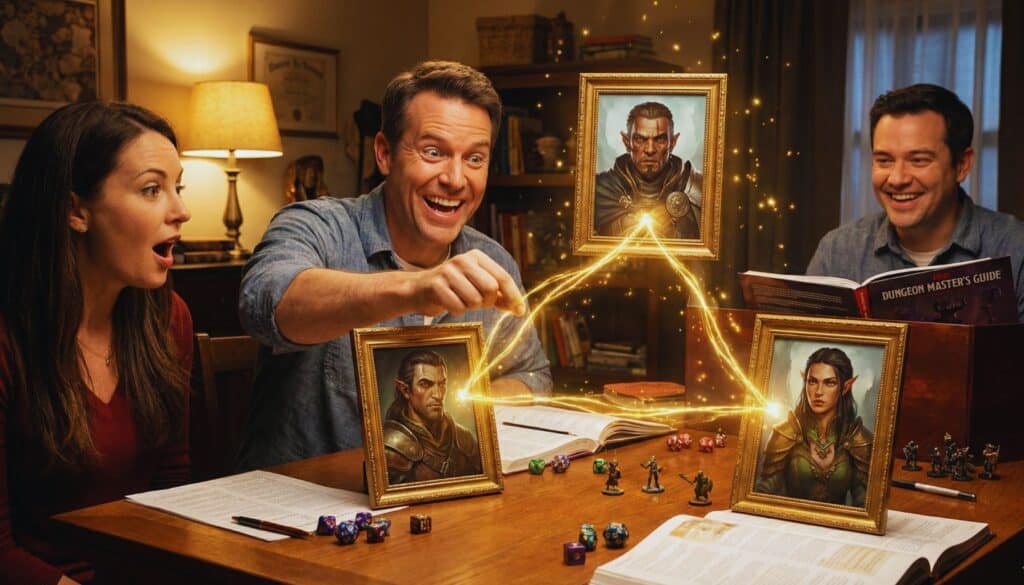
If you find you have two NPCs who serve similar functions, you should consolidate NPCs immediately. You do not need two different blacksmiths in one town, nor do you need a separate “quest giver” and “reward giver” for a simple side plot. To merge NPCs D&D style, you simply take the plot hooks from the weaker character and give them to the stronger character, creating one person with more relevance.
This might feel like “cheating” to a new DM, but it is exactly how veteran DMs keep campaigns coherent over months of play. Reduce NPC count by combining characters based on their structural function, not their personality. If you have a grumpy guard and a grumpy shopkeeper, make them the same person who works the gate by day and sells confiscated goods by night.
Merge by Function, Not Vibes
Look for structural duplicates in your notes and combine them to create a character who is twice as useful to the plot.
| Function | Common Duplicate NPCs | Merge Result | Immediate Payoff |
|---|---|---|---|
| Lore Dump | Old Librarian & Local Priest | The Archivist Monk | One stop for history and religion checks. |
| Gear Access | Blacksmith & Magic Item Seller | The Artificer | One shop for all upgrades; clearer economy. |
| Crime Hook | Pickpocket & Fence | The Thieves’ Guild Rep | Introduces the guild immediately upon theft. |
| Authority | Town Mayor & Guard Captain | ** The Martial Governor** | Political and military power in one tense face. |
| Healing | Temple Cleric & Alchemist | The Hedge Witch | Buying potions and getting cured happens together. |
| Travel | Stable Master & Ship Captain | The Transport Baron | Controls all movement in and out of the region. |
| Quest Giver | Distraught Parent & Town Elder | The Matriarch | Personal stakes + political power in one quest. |
| Rivalry | Cocky Bard & Enemy Mercenary | The Duelist Poet | Insults the party while fighting them; high drama. |
| Magic Support | Wizard Teacher & Scroll Seller | The Academy Quartermaster | Buying spells requires joining the faction. |
| Wilderness Guide | Ranger & Druid Circle Leader | The Warden | Knowing the land means knowing the politics of nature. |
Structure matters more than aesthetics because a merged character appears more competent and influential in the world.
The Retcon Bridge Line
When you merge characters, you might need to explain why “NPC A” is suddenly doing the job of “NPC B.” You fix this with a confident one-sentence retcon bridge.
- “Oh, ‘Galdor’ was just his undercover name; this is who he really is.”
- “They were actually partners working out of the same shop the whole time.”
- “The other guy died last week; this woman took over his contracts.”
- “That was actually her brother, but he’s out of town, so deal with her.”
- “The guild consolidated their leadership; he handles both departments now.”
- “She got promoted after the last adventure and runs the whole sector.”
- “He was wearing a disguise when you met him in the tavern.”
- “They are twins, but for game purposes, we’ll treat them as one contact.”
- “I realized I split this into two boring people, so now it’s one cool person.” (Meta honesty works!)
- “That previous NPC was actually an illusion projected by this wizard.”
- “He bought out the competition and merged the businesses.”
- “She was the brains behind the operation; the other guy was just a frontman.”
One confident sentence beats a long, awkward explanation and gets you back to the game faster.
Promote One NPC, Demote Three (The Anti-Bloat Budget)
To prevent the bloat from creeping back in, you need a strict budget for your cast. The rule is simple: every time you decide to promote a minor NPC to a recurring NPC status, you must retire, demote, or merge three others. This ensures that as your campaign grows in complexity, the number of faces the players have to track stays relatively stable.
This budget forces you to prioritize the characters that are generating the most drama and cut the ones that have served their purpose. Character bloat happens when we refuse to let go of old favorites who no longer have a role in the current story arc. By cycling characters out, you keep the world fresh without overwhelming the players with history.
Demotion Options That Keep the World Feeling Alive
Demotion does not mean you have to kill the character (though that works too); it just means moving them out of the active spotlight.
- Offscreen Transfer: They moved to another city to start a franchise.
- Promoted Out of Reach: They are now on the High Council and too busy to chat.
- Relocated: They were reassigned to a border fort far away.
- Replaced by Deputy: They retired and left a generic, nameless deputy in charge.
- Becomes Rumor-Only: They went into hiding and only exist as whispers.
- Imprisoned: They were arrested and are now out of the game.
- Died Offscreen: They fell victim to the villain to raise the stakes.
- Went Native: They joined a faction that forbids contact with outsiders.
- Ascended: They became a patron entity or warlock patron (very high level).
- Simply Busy: They are working on a “secret project” and cannot be disturbed.
Demotion preserves continuity and world history without keeping the character on your active session stage.

Make NPCs Memorable Without Adding More
The goal is to have fewer NPCs with higher recall, and memorable NPCs are built on specific hooks, not on complex backstories. You do not need more characters to make the world feel deep; you need NPC anchors and callbacks that make the existing ones stick. Players remember simple, exaggerated traits and physical objects far better than they remember subtle nuances of personality.
We use a system of anchors and NPC call-backs to trick the human brain into locking onto a character. If you give an NPC a distinctive prop or a verbal tic, the players will mimic it and remember it forever.
NPC Anchors: One Trait + One Tell + One Need
This schema is incredibly improv-friendly and allows you to build a memorable persona in seconds.
| Anchor Trait (Archetype) | The Tell (Physical/Verbal) | The Need (Motivation) | Example Line |
|---|---|---|---|
| Paranoid | Constantly cleans glasses | Safety/Security | “Did you check the windows? I heard something.” |
| Greedy | Rubs a gold coin | More Wealth | “That’s a nice sword… expensive looking.” |
| Arrogant | Looks down their nose | Recognition | “Do you know who I am? Kneel.” |
| Cowardly | Stutters when loud | To Escape | “P-please, no violence in here!” |
| Zealous | Quotes scripture | Convert Others | “By the Light, you must repent!” |
| Motherly | Offers food/candy | Protect Young | “You look thin, take this biscuit.” |
| Bored | Yawns/Checks nails | Entertainment | “Ugh, another dragon? How dull.” |
| Secretive | Whispers close up | Hide Truth | “Keep your voice down… they listen.” |
| Aggressive | Cracks knuckles | Dominance | “Are you looking at me, runt?” |
| Curious | Takes notes frantically | Knowledge | “Fascinating! How does it bleed?” |
| Drunk | Slurs/Hiccups | Forget Pain | “Just… hic… one more ale.” |
| Loyal | Salutes/Stands stiff | Serve Master | “The Duke’s word is law.” |
Anchors are consistency shortcuts for DMs that allow you to slip back into character instantly.
Callback Tokens: Objects Beat Names
Humans associate memories with physical objects more easily than abstract sounds like names. Give your NPCs a callback token—a physical item they always have or interact with.
- Wax Seal: Always playing with a red wax stamp.
- Prayer Bead: Clicking wooden beads nervously.
- Broken Monocle: Wears it anyway; it distorts their eye.
- Sea-Salt Gloves: Smell like the ocean; never takes them off.
- Rusty Key: Wears a large iron key around their neck.
- Exotic Pet: Has a lizard sitting on their shoulder.
- Walking Cane: Specifically carved with a snake head.
- Missing Finger: Points with a stump.
- Coin Trick: constantly rolling a coin over knuckles.
- Pipe: Blows smoke rings in specific shapes.
- Scarf: A brightly colored scarf that clashes with armor.
- Dice: Rolls dice to make decisions.
- Journal: Writing in a book while talking.
- Perfume: Overwhelming scent of lavender.
- Tattoo: Face tattoo that shifts slightly.
Props and objects outperform fantasy names in memory every single time.

Relationship Triangles Replace Relationship Webs
Stop drawing giant relationship webs with lines going everywhere; they look like conspiracy theories and are impossible to use during play. An NPC relationship map should be composed of simple relationship triangles. Triangles are controlled complexity: Character A has a problem with Character B, and they need Character C (or the party) to solve it.
This setup generates drama with minimal cognitive load because you only need to understand three points of data. Faction politics become manageable when you break them down into these bite-sized geometric conflicts.
Triangle Templates You Can Reuse Forever
You can reuse these templates over and over again with different skins, and the players will never notice because the drama feels fresh.
- Betrayal Triangle: A trusts B, but B is selling secrets to C.
- Debt Triangle: A owes money to B, so A hires C to steal it back.
- Inheritance Triangle: A and B are fighting over the legacy of dead C.
- Love Triangle: A loves B, B loves C, C loves nobody.
- Ideological Split: A and B lead a faction; C forces them to choose a side.
- Blackmail Triangle: A knows B’s secret; B manipulates C to silence A.
- Rivalry Triangle: A and B compete for a prize held by C.
- Protection Triangle: A pays B to protect C, but B is failing.
- Misunderstanding: A thinks B hurt C, but it was an accident.
- Resource Triangle: A has the supply, B has the demand, C blocks the trade.
Triangles keep intrigue playable because they have a clear start, middle, and end point for the players to interact with.

Rumor Networks: One NPC Can Represent Ten
You can make your world feel huge without adding more faces by using rumor networks. Instead of having the players talk to ten different peasants to get news, create one “Rumor Hub” NPC—like an innkeeper, a beggar king, or a well-connected priest—who acts as the funnel for information delivery.
Try my AI Tabletop RPG generators...and an extensive library of content!
This NPC represents the eyes and ears of the city. When the players talk to them, they are effectively talking to the whole network. This allows you to dump lore, plot hooks, and gossip through a single personality, compressing the roles of many into one. It keeps the world feeling populated without multiplying the number of faces you have to act out.
Designing a Rumor Hub NPC
The Rumor Hub should channel information, but they should also filter it through their own bias and needs.
| Rumor Source | What They Know | What They Want | How They Distort Truth |
|---|---|---|---|
| Drunken Beggar | City guard rotations | Booze money | Exaggerates danger to get more coin. |
| High Priestess | Noble scandals | Donations/Influence | Frames everything as a moral failing. |
| Tavern Keep | Adventurer movement | Full taproom | Omits info that scares away business. |
| Street Urchin | Thief guild activity | Food/Safety | Lies to protect their friends. |
| Guild Master | Economic shifts | Monopolies | Downplays risks to the market. |
| Court Jester | Royal secrets | Chaos/Laughs | Turns tragedy into a joke. |
| Town Guard | Criminal locations | Bribes | Blames “outsiders” for local crimes. |
| Old Widow | Neighborhood gossip | Company | Rambles and mixes up timelines. |
Rumor hubs create mystery breadcrumb trails while keeping your cast list manageable.

NPC Spotlight Management: Stop NPCs from Stealing the Game
Two hard rules can save your campaign from the dreaded “DMPC” (Dungeon Master Player Character) syndrome. First, NPCs never solve problems onscreen. Second, social encounter design demands that conversations resolve quickly into player action. NPC spotlight management is about ensuring that while your world is competent, the players are the only ones capable of changing the status quo.
If an NPC is too cool, too strong, or too smart, the players will sit back and let the NPC play the game for them. NPC competence is fine, but NPC protagonism is not. They can hold the door, decipher the rune, or distract the guard, but they must never strike the killing blow or solve the final puzzle.
NPCs Provide Tools and Consequences, Not the Winning Move
Keep your NPCs helpful without giving them “main character energy.”
- Allowed: Giving a map.
- Allowed: Making an introduction.
- Allowed: Selling resources.
- Allowed: Providing a warning.
- Allowed: Deciphering a language.
- Allowed: Holding a defensive line.
- Allowed: Creating a distraction.
- Allowed: Healing after the fight.
- Allowed: Offering a safe place to rest.
- Allowed: Identifying a monster’s weakness.
- Not Allowed: Dealing the final blow.
- Not Allowed: Solving the riddle.
- Not Allowed: Making the moral decision.
- Not Allowed: Leading the charge.
- Not Allowed: Stealing the loot.
- Not Allowed: Overruling a player plan.
Players must always be the decisive force in the narrative.
The Two Exchanges Social Scene Rule
To keep scenes from meandering, use the “Two Exchanges” rule. After the player and NPC have spoken back and forth twice (A-B-A-B), the scene must pivot to a decision, a die roll, or a cut.
- Offer a Choice: “So, do you want the sword or the shield?”
- Present a Dilemma: “I can help, but it will cost you your reputation.”
- Reveal a Cost: “The price is 500 gold, take it or leave it.”
- Ask a Direct Question: “Why are you really here?”
- Call for a Roll: “Make a Persuasion check to convince me.”
- Threaten Consequence: “Leave now or I call the guards.”
- Give Information: “Here is the key, now go.”
- End the Scene: “I have said too much. Goodbye.”
Short scenes are clearer, punchier, and infinitely more memorable than long philosophical debates.

NPC Intro Pacing: How to Introduce NPCs So Players Remember Them
Don’t dump your cast on the players all at once. NPC intro pacing dictates that you should drip-feed characters, reuse existing ones whenever possible, and always introduce new faces in the middle of a conflict. If you are wondering how to introduce NPCs so players remember them, the answer is never “in a list of names at a tavern.”
Introduction is a design decision, not a stroke of improv luck. When players meet someone new, that meeting should be an event. The character should be doing something active—arguing, working, fighting, or hiding—rather than just standing around waiting to be clicked on like a video game asset.
The “Name Last” Introduction Technique
The best trick is to introduce the Role, the Anchor, and the Conflict before you ever give the name. Players remember function and emotion first; the label comes last.
- “You see a Guard (Role) frantically polishing his helmet (Anchor) while yelling at a merchant (Conflict). He introduces himself as Sgt. Krell.”
- “A Wizard (Role) with singed eyebrows (Anchor) is trying to put out a fire on her desk (Conflict). She says she is Magister Vane.”
- “The Beggar (Role) playing with a silver coin (Anchor) blocks your path (Conflict). He calls himself ‘Rat’.”
- “A Noble (Role) wearing too much perfume (Conflict) is ignoring a peasant’s plea (Conflict). This is Lord Hextor.”
- “The Smith (Role) hammering with a golden mallet (Anchor) refuses to look at you (Conflict). He is called Dorn.”
- “A Scout (Role) missing one ear (Anchor) runs in bleeding (Conflict). She is Elara.”
- “The Barkeep (Role) wiping a spotless glass (Anchor) glares at the bard (Conflict). His name is Barnaby.”
- “A Priest (Role) holding a cracked holy symbol (Anchor) is weeping silently (Conflict). He is Father John.”
- “The Captain (Role) spinning a compass (Anchor) is arguing with the navigator (Conflict). She is Capt. Sarah.”
- “A Thief (Role) juggling daggers (Anchor) winks at the Paladin (Conflict). He is Jinx.”
By the time the name drops, the players already have a mental picture and a reason to care.

Low-Prep NPC Tracking: 3 Tags + One Line
You do not need a complex campaign wiki / DM binder to run a great game. In fact, over-organizing can kill your prep efficiency. A simple, low-tech tracking format using three tags and one status line scales infinitely and lets you run a massive world from a single sheet of paper. NPC note-taking should be fast enough to do during a bathroom break.
This system relies on D&D NPC tracking via tags. You don’t write paragraphs; you write keywords that trigger your memory.
Tag-First NPC Notes
Assign three tags: Role, Faction, and Tension. Then add one line for “Current Status.”
| Name | Role Tag | Faction Tag | Tension Tag | Current Status (One Line) |
|---|---|---|---|---|
| Varrick | Smuggler | Thieves Guild | Debt | Hiding in the sewers from the loan shark. |
| Lady A | Patron | City Council | Coup | Planning the masquerade ball ambush. |
| Grom | Blacksmith | None | Sick Child | Needs the rare herb from the swamp. |
| Silas | Spy | Cult | Cover Blown | Currently being interrogated by guards. |
| Elara | Healer | Temple | Crisis of Faith | Refusing to heal anyone until a sign appears. |
| Capt. X | Guard | The Crown | Bribed | Looking the other way at the docks tonight. |
| Morn | Innkeeper | Rebel | Stash | Hiding weapons in the wine cellar. |
| Zara | Mage | Academy | Experiment | Needs a live monster for testing. |
| Krell | Mercenary | Iron Company | Jobless | Drinking heavily at the tavern, looking for work. |
| Orin | Sage | Library | Blind | Trying to read the scroll by touch. |
| Pyp | Courier | Street Urchins | Message | Carrying a letter that will start a war. |
| Thul | Warlord | Orc Tribe | Invasion | Mustering troops at the canyon edge. |
| Bree | Farmer | Village | Drought | Crops dying, considering selling land. |
| Jax | Bard | Circus | Rivalry | Trying to humiliate the party face. |
Tags make retrieval faster than paragraphs because they work like search keywords for your brain.

The Session-End Cast Audit: Cut, Merge, Promote
Finally, establish a DM session prep workflow that closes the loop. At the end of every session, or the next morning, take three minutes to audit the changes. Continuity tracking is not about remembering everything; it is about updating the state of the world based on what just happened.
Small, regular pruning beats big, painful cleanups. If you do this every week, your cast list stays lean, mean, and highly effective.
The 3-Minute End-of-Session Routine
- Identify one NPC to Cut: Who did the players ignore? Delete them.
- Identify one NPC to Merge: Who serves the same function as someone else? Combine them in your notes.
- Identify one NPC to Promote: Who did the players love/hate? Give them a new Anchor or Secret.
- Update “Current Status”: Change the one-line status for any NPC the players interacted with.
- Check the 3 Connections: Does everyone left on the list still have a Party, Place, and Problem connection?
- Assign Offscreen Actions: Pick two NPCs to do something in the background (send a letter, start a rumor).
- Close the Book: You are done.
Maintenance is how veteran DMs keep long campaigns readable and enjoyable for years.
Instant NPC Generator: The 3-Connection Roll Tables
Sometimes your brain freezes right when the players decide to ignore your plot and walk into a random bakery. You need a character fast, but you do not want to generate a generic cardboard cutout that you will have to delete later. These D20 random tables are designed specifically to build characters using the 3-connection rule instantly. Instead of rolling for hair color or shoe size, we are rolling for structural relevance so that even an improvised character feels like a deep part of the plot.
⚔️ Fantasy RPG Random Tables Books
Make life as a Gamemaster easier…
If you play Dungeons & Dragons, Pathfinder, or other fantasy RPGs, this
RPG random tables series
is packed with encounters, NPCs, treasure, and more. Available in eBook or print—either way, you’ll have a wealth of adventure ideas at your fingertips.
Grab a d20 and roll once on each column to generate a character who is immediately ready for play. You will notice that we do not roll for names here because names are the least important part of the character’s function. We focus entirely on low prep mechanics that tie the new face to the party, the location, and the current tension. By the time you finish rolling, you will have a character who is legally required to care about the players and who the players are forced to care about in return.
Table 1: The Role & The Anchor (Who & How)
This table combines the job function with the memorable “hook” or behavior.
| d20 | Role (Function) | Anchor (Vibe/Tell) |
| 1 | Quest Giver | Nervous; constantly checks over their shoulder. |
| 2 | Merchant | Arrogant; polishes a specific expensive ring. |
| 3 | Gatekeeper | Bored; flipping a coin repeatedly. |
| 4 | Rumor Hub | Drunk; slurs words but has sharp eyes. |
| 5 | Healer | Motherly; forces food on the party. |
| 6 | Fence | Skeptical; chews on a toothpick or stem. |
| 7 | Guard | Corrupt; jingles an empty coin purse loudly. |
| 8 | Scholar | Condescending; corrects grammar constantly. |
| 9 | Noble | Flirty; hides face behind a fan or mask. |
| 10 | Beggar | Observant; playing with a small wooden doll. |
| 11 | Artisan | Perfectionist; refuses to look away from work. |
| 12 | Rival | Loud; laughs at everything the party says. |
| 13 | Spy | Generic; incredibly forgettable face (intentionally). |
| 14 | Priest | Zealous; quotes scripture in every sentence. |
| 15 | Mercenary | Scarred; sharpens a dagger while talking. |
| 16 | Innkeeper | Gossip; leans in uncomfortably close to whisper. |
| 17 | Official | Bureaucratic; stamps papers rhythmically. |
| 18 | Urchin | Fast; bouncing a rubber ball or rock. |
| 19 | Veteran | Tired; rubs an old aching war wound. |
| 20 | Cultist | Intense; unblinking eye contact. |
Table 2: The Place Connection (Where They Anchor)
This determines where the players will consistently find this NPC.
| d20 | Place Connection | d20 | Place Connection |
| 1 | The main tavern’s best table. | 11 | The city gates/checkpoint. |
| 2 | A specific street corner stall. | 12 | The local temple steps. |
| 3 | The guildhall notice board. | 13 | The docks or shipyard. |
| 4 | Inside the party’s favorite shop. | 14 | The ruined watchtower. |
| 5 | The town jail or dungeon. | 15 | The noble’s waiting room. |
| 6 | The library archives. | 16 | The bridge outside town. |
| 7 | The graveyard/mausoleum. | 17 | The sewer entrance. |
| 8 | The blacksmith’s forge. | 18 | The market fountain. |
| 9 | The mayor’s office. | 19 | A specific alleyway. |
| 10 | The stable/transport hub. | 20 | The magic academy lobby. |
Table 3: The Party Connection (The Hook)
This determines why the party cannot simply ignore this person.
| d20 | Party Connection | d20 | Party Connection |
| 1 | Owes the party money. | 11 | Knows a PC’s dark secret. |
| 2 | Is a childhood friend of a PC. | 12 | Is a fan/groupie of the party. |
| 3 | Hates a PC’s specific class/race. | 13 | Needs a specific item a PC has. |
| 4 | Worked for the villain previously. | 14 | Is related to a past NPC that died. |
| 5 | Has a crush on a party member. | 15 | Holds the key/pass the party needs. |
| 6 | Treats the party as their boss. | 16 | Is being blackmailed by a PC’s rival. |
| 7 | Doesn’t believe the party’s deeds. | 17 | Saw the party commit a crime. |
| 8 | Wants to join the adventuring group. | 18 | Competes for the same reward. |
| 9 | Their life was saved by the party. | 19 | Shares a deity with the Cleric/Paladin. |
| 10 | Is terrified of the party’s magic. | 20 | Sold the party a cursed item. |
Table 4: The Problem Connection (The Tension)
This determines what clock is ticking over the NPC’s head.
| d20 | Problem Connection | d20 | Problem Connection |
| 1 | Loan sharks are coming for them. | 11 | They are hiding a magical infection. |
| 2 | They are being evicted tomorrow. | 12 | They lost a shipment of contraband. |
| 3 | A monster is hunting their family. | 13 | They are being pressured to spy. |
| 4 | They are framed for a local crime. | 14 | Their business is failing rapidly. |
| 5 | A rival faction has threatened them. | 15 | They found a dangerous artifact. |
| 6 | They are planning a heist/crime. | 16 | A loved one has been kidnapped. |
| 7 | They need a rare cure immediately. | 17 | They are a target for assassination. |
| 8 | They know about an impending raid. | 18 | They are trying to flee the city. |
| 9 | They are being haunted by a ghost. | 19 | They are running out of supplies. |
| 10 | A blackmailer is bleeding them dry. | 20 | They are part of a forbidden cult. |
3 Example NPCs Created With This System
Here is how the dice rolls come together to create instant, playable depth using the lazy DM method.
Example 1: The Useful Coward (Rolls: 6, 17, 11, 1)
- Role/Anchor: Fence (Skeptical, chews toothpick).
- Place: The sewer entrance.
- Party Connection: Knows a PC’s dark secret.
- Problem: Loan sharks are coming for them.
- The Result: “Rat-Tooth” Rix is a nervous criminal fence who hangs out by the sewer grates. He knows the Rogue used to be an assassin (Secret) and threatens to talk, but he won’t actually do it because he is desperate for money to pay off the Guild Enforcers (Problem) who will break his legs at midnight. He is annoying, but the party needs him to stay quiet and alive.
Example 2: The Burdened Authority (Rolls: 7, 11, 2, 8)
- Role/Anchor: Guard (Corrupt, jingles coin purse).
- Place: The city gates.
- Party Connection: Childhood friend of a PC.
- Problem: Knows about an impending raid.
- The Result: Sergeant Miller is a corrupt guard who usually takes bribes, but he stops his old friend the Fighter (Friend) at the gate with real fear in his eyes. He is terrified because he took a bribe to leave the gate unlocked tonight for a bandit raid (Problem), but he realizes now that people will die. He needs the party to fix his mistake without exposing his corruption.
Example 3: The Arrogant Resource (Rolls: 2, 4, 13, 15)
- Role/Anchor: Merchant (Arrogant, polishes ring).
- Place: Inside the party’s favorite shop.
- Party Connection: Needs a specific item a PC has.
- Problem: Found a dangerous artifact.
- The Result: Valera the Jeweler is incredibly rude and wealthy, treating the party like dirt. However, she noticed the Wizard is carrying a specific gemstone (Need) that is the missing piece to an artifact she bought. She is currently cursed by the artifact (Problem) and her hand is slowly turning to stone, so she is forced to beg the “filthy adventurers” for help despite her pride.
Pro-Tips for Generating 3-Connection NPCs
When you use these improv tools for DMs, keep these quick tips in mind to ensure the characters stick in the players’ minds.
- The “Immediate Action” Rule: Never introduce the NPC standing still. Use the Problem Connection to describe what they are doing right now. If their problem is “Loan Sharks,” introduce them actively boarding up their windows or packing a bag in a panic. This creates narrative clarity instantly.
- Merge Before You Make: Before you write down the new NPC, glance at your existing list. If you roll a “Guard with a Secret,” ask yourself if you can just give that secret to the Guard Captain the players already met three sessions ago. Always look to consolidate NPCs before adding a new face.
- Contrast Creates Depth: If you roll a “Tough Mercenary” but get the “Motherly” anchor, lean into the contrast. A scarred barbarian who insists the Wizard eats his vegetables is infinitely more memorable than a scarred barbarian who just grunts. Use the random results to break stereotypes and create memorable NPCs.
When you need to create NPCs on the fly, keep the 3-Connection Rule at the forefront of your mind. Start by determining the NPC’s primary role and how they connect to the party. Ask yourself how their existence influences player choices; this actionable connection keeps them relevant. Next, anchor them to a specific location your party frequents—this not only provides context but also helps players visualize where they fit in the world.
Finally, introduce a pressing problem or conflict that the NPC is directly tied to, whether they are a victim of, a catalyst for, or a potential solution to it. Using this formula, you can craft imposing figures with depth in mere moments. Don’t hesitate to use visual aids like props or unique vocal tics to create memorable touches. Each detail can serve as an anchor, making them stick in your players’ memories long after the session ends. Remember, the goal is to infuse your NPCs with purpose and immediacy, ensuring that every character they encounter enriches their gameplay experience.
Final Thoughts: Fewer DND NPCs, More Impact
NPC overload in D&D is rarely a problem of creativity; it is a problem of clarity. When you flood the zone with too many faces, you dilute the drama and turn your game into a memory test. By applying the 3-Connection Rule, utilizing role compression, and setting strict onstage limits, you transform your cast from a burden into a toolset.
Remember that a living world isn’t defined by how many people live in it, but by how much the people who do live in it matter. The 3-Connection Rule ensures that every character the players meet is tied to the problems they need to solve, the places they visit, and the choices they make. It forces you to be ruthless about cutting the clutter and confident about merging the rest.