

There is a unique kind of heartbreak reserved for Tabletop RPG Dungeon Masters: the silence that follows a passionate NPC monologue. You have spent hours crafting a political intrigue, painting the scene with sensory details, and putting on your best voice, only to be met with blank stares or a monotone, “I roll Persuasion. 18.” It feels like a rejection of your effort, but more often than not, it is simply a disconnect in communication styles. The players aren’t necessarily bored; they are blocked.
The problem is rarely that your players lack creativity or interest. The issue is usually a design flaw in the facilitation of the game. We tend to view roleplay as a binary talent. You either have “it” or you don’t! But engagement is a byproduct of environment, safety, and opportunity. When players disengage, it is often because the cognitive load of the game mechanics, the social pressure of the spotlight, or the ambiguity of the scene has paralyzed their ability to improvise.
Most online advice for this problem is frustratingly surface-level. You will hear tips like “lead by example,” “do a funny voice,” or “reward inspiration,” but these suggestions assume the player is holding back out of laziness. They fail to address the psychological barriers that prevent engagement. If a player has social anxiety or is overwhelmed by their character sheet, watching the GM do a theatrical accent won’t help them; it might actually make them feel more inadequate.
This article takes a different approach. We are treating engagement as a design challenge, incorporating principles from psychology, accessibility, and modern game design. We are moving away from the “Matt Mercer Effect” and toward a model where roleplay is defined by agency and reaction. These are not nebulous cultural shifts that take years to implement; they are immediate, actionable table techniques.
The following nine tricks are designed to lower the barrier to entry, reduce cognitive load, and gamify the social aspect of the table. Whether you are running a crunchy tactical dungeon crawl or a narrative indie game, these tools will help you identify why your players are quiet and give you the specific levers to pull to get them talking, thinking, and acting in character.
- Why Players Don’t Roleplay (Even When They Want To)
- Trick #1: Design for Neurodiversity, Not Performance
- Trick #2: Use Diegetic Prompts Instead of Meta Questions
- Trick #3: Map Player Archetypes, Not Just Characters
- Trick #4: Plan Sessions by Emotional Beats, Not Plot Beats
- Trick #5: Gamify Roleplay with Micro-Rewards
- Trick #6: Shift Roleplay from Dialogue to Decisions
- Trick #7: Create Safe-to-Fail Roleplay Zones
- Trick #8: Externalize Character Voice with Props and Artifacts
- Trick #9: Use Asynchronous Roleplay to Prime the Session
- Final Thoughts: Engagement Is Designed, Not Demanded
Why Players Don’t Roleplay (Even When They Want To)
To fix engagement, we must first diagnose the blockage. The most common culprit is not apathy; it is anxiety and cognitive overload. TTRPGs are mentally expensive activities. A player must simultaneously track math, tactical positioning, game rules, social dynamics, and an imagined narrative layer. When the brain is taxed by calculating a saving throw or remembering a spell slot, the creative center responsible for improvisation often shuts down. A player staring at their sheet isn’t ignoring you; they are likely drowning in data.
Try my AI Tabletop RPG generators...and an extensive library of content!
Social friction plays an equally massive role. Many players suffer from “Spotlight Shock.” When the GM turns and asks, “What do you say?” the sudden pressure can induce a freeze response, especially if the player fears “doing it wrong.” Traditional advice privileges extroverted, fast-thinking players who are comfortable with verbal performance. For players who are reflective, shy, or neurodivergent, the demand for instant, first-person dialogue is a barrier that makes the game feel unsafe or exhausting.
Unclear expectations also kill roleplay. If the GM hasn’t explicitly defined the tone, players will default to the path of least resistance: mechanics. “I attack with my sword” is a safe, Rules-As-Written statement that cannot be misinterpreted. “I scream a war cry and lunge for his throat with desperation” carries social risk—what if it sounds cheesy? What if it doesn’t fit the tone? Without explicit permission and structure, players will retreat to the safety of the character sheet.
Ultimately, a lack of roleplay is usually a mismatch between table structure and player needs. If we continually punish silence with awkward pauses or force players into “actor” roles they aren’t comfortable with, we reinforce the behavior we are trying to stop. We need to view silence not as a failure, but as feedback: the current scene design is not providing the right handles for this player to grab onto.
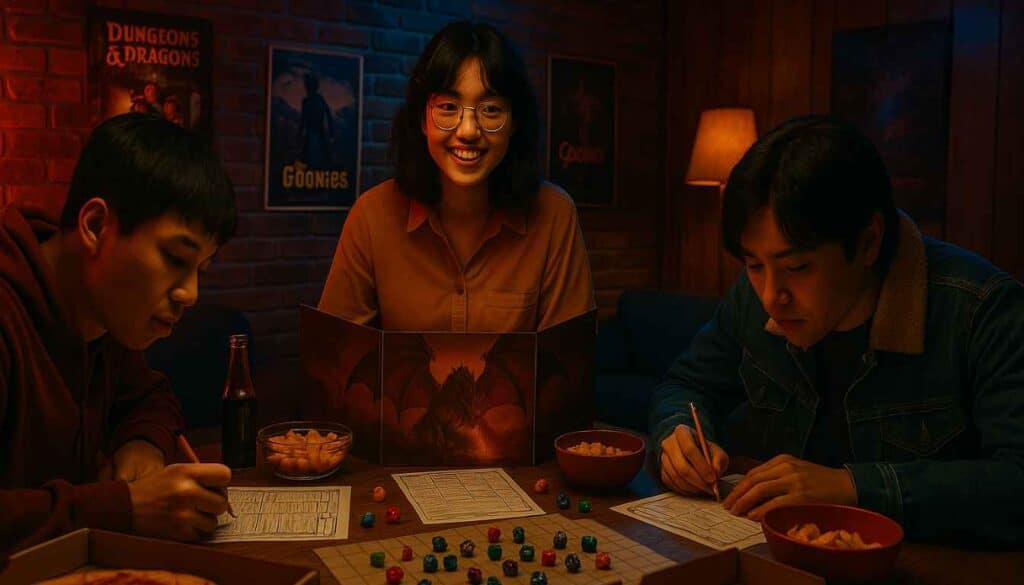
Diagnosing the Disconnect
To effectively diagnose the disconnect in player engagement, consider initiating a conversation at the start of your campaign about comfort levels and preferences regarding roleplay. Create a safe space for players to share their anxieties and comfort zones, whether they feel more at ease with direct interaction, emotional storytelling, or decision-making focus. This preemptive dialogue allows you to tailor your approach to the unique dynamic of your group, ensuring that each player feels heard and understood. By actively seeking this feedback, you can identify specific barriers—like anxiety over performance or discomfort with social situations—enabling you to implement targeted strategies that foster a more inclusive and engaged gaming environment.
⚔️ Fantasy RPG Random Tables Books
Make life as a Gamemaster easier…
If you play Dungeons & Dragons, Pathfinder, or other fantasy RPGs, this
RPG random tables series
is packed with encounters, NPCs, treasure, and more. Available in eBook or print—either way, you’ll have a wealth of adventure ideas at your fingertips.






| Disengaged Behavior | Likely Underlying Cause | Counterproductive GM Reaction |
|---|---|---|
| Phone Checking | Under-stimulation or seeking a dopamine regulation break (ADHD). | Banning phones or publicly shaming the player for “not paying attention.” |
| “I roll Persuasion” | Fear of social embarrassment or inability to improvise dialogue. | Refusing to let them roll until they “act out” the speech. |
| Silence / Staring | Processing delay; the player is thinking but needs more time. | Moving the spotlight immediately to a faster/louder player. |
| Joke-Making | Tension release; the dramatic stakes feel too vulnerable/heavy. | Getting angry or punishing the character in-game for the player’s joke. |
| Rules Lawyering | Seeking control in a chaotic narrative environment. | shutting them down aggressively, which increases their insecurity. |
| Passive Following | Fear of making a “wrong” choice that hurts the party. | Forcing them into leadership roles or solo scenes without support. |
When you reframe disengagement as a safety or processing issue, the solution shifts from “force them to talk” to “make it easier to speak.”
Trick #1: Design for Neurodiversity, Not Performance
Modern TTRPG tables are increasingly aware of neurodiversity, and for good reason: the hobby attracts people with ADHD, autism, and anxiety. A major barrier to roleplay is the assumption that it requires eye contact, emotional affect, and first-person acting. For a neurodivergent player, maintaining eye contact while doing mental math and inventing dialogue can be impossible. By removing the pressure to “perform,” you often unlock the ability to participate.
The most effective shift is normalizing Third-Person Roleplay. Instead of demanding a player speak as their character (“Halt, villain!”), allow them to describe their character (“Ragnar steps forward, looking furious, and tells the villain to stop”). This creates a layer of psychological distance that reduces performance anxiety. It allows the player to signal their intent without needing to find the perfect words in the moment.
Furthermore, we must address processing delays. Some players need five seconds to process a description before they can formulate a response. If the GM or other players jump in to fill that silence, the slower processor learns that their input isn’t needed. Building a table culture that respects “thinking pauses” allows players who usually stay quiet to formulate high-quality contributions.
12+ Adjustments for Accessible Engagement:
To create a truly inclusive gaming environment, it’s essential to implement adjustments that cater specifically to the diverse needs and experiences of all players at the table. Below, you’ll find a collection of 12+ adjustments designed to enhance accessibility and engagement, ensuring that every player can contribute meaningfully to the narrative. These strategies range from simple modifications to gameplay dynamics to intentional shifts in how we communicate and interact as a group. By integrating these ideas, you can foster a richer, more collaborative atmosphere where everyone feels empowered to share their creativity and perspectives, breaking down barriers and igniting passionate roleplay.
- Normalize Third-Person: Explicitly state, “You can describe what your character says rather than acting it out.”
- The “Thinking Finger”: Establish a hand signal that means “I have an idea but I’m processing, please wait.”
- Written Prompts: Allow players to pass notes or type in chat for sensitive roleplay moments.
- Pre-Scene Priming: Tell a player during a break, “I’m going to ask your character about their father in the next scene,” giving them time to prep.
- Visual Aides: Use character portraits or mood art so players can point to an emotion rather than describing it.
- Scripted Intros: Give players a pre-written “entrance line” for their character to break the ice at the start of a session.
- Structured Turns: Use initiative or a “pass the talking stick” method during social scenes to prevent interrupters from dominating.
- Explicit Tone Checks: Pause to ask, “Is this scene too intense, or are we good to keep pushing?”
- Sensory Breaks: Allow 5-minute breaks after high-energy roleplay to let players regulate their nervous systems.
- No-Eye-Contact Rule: Make it clear that players can look at their sheets, doodle, or fidget while roleplaying.
- Flashback Tokens: Allow a player to spend a token to describe a flashback, letting them add depth on their own terms.
- Safety Tools: Use X-Cards or similar tools visibly so players know they can bail out if RP gets too heavy.
When you lower the barrier for the most anxious person at the table, you lower it for everyone. You will find that even your “star actors” appreciate the breathing room.
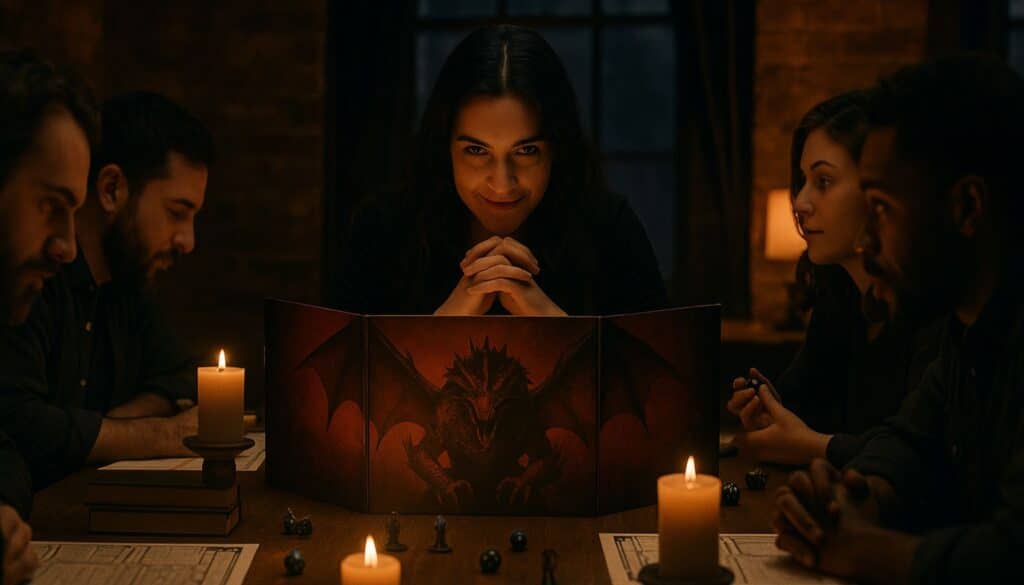
Trick #2: Use Diegetic Prompts Instead of Meta Questions
The most common way GMs try to spark roleplay is with the meta-question: “What do you do?” While open-ended, this question can be paralyzing because it offers infinite choices with zero direction. It forces the player to switch from “listening mode” to “author mode” instantly. A better approach is to use diegetic prompts—stimuli that exist inside the game world that demand a character reaction rather than a player decision.
A diegetic prompt targets the character’s senses or history. Instead of asking the Rogue, “Do you want to talk to the Prince?”, tell them, “The Prince notices the crest on your dagger and his eyes go wide with recognition. He whispers a name you haven’t heard since childhood. How do you react?” The first example asks the player to invent a scene; the second example anchors the player in the fiction and demands a reflex response.
This technique works because it bypasses the “performance anxiety” part of the brain and activates the “survival/reaction” part. It is easier to swat away a fly than to invent the concept of a fly. By cluttering the environment with sensory details—smells, directed questions from NPCs, physical discomforts—you force the character to exist in a physical space, which naturally leads to roleplay.
15+ Diegetic Prompts to Spark Reaction:
When seeking to ignite player engagement through roleplay, diegetic prompts serve as powerful tools that breathe life into the narrative and spark immediate reactions from your players. These prompts are designed to immerse the players in the world you’ve created, drawing on their characters’ senses, histories, and emotions. By crafting scenarios that resonate with their experiences or evoke strong sensory responses, you create an environment where players feel the urge to react instinctively. Below are 15+ diegetic prompts that can help you guide your players into authentic and exciting character interactions, allowing the story to unfold naturally as they embody their roles. These prompts provide a direct invitation to engage, making it much easier for players to step beyond their comfort zones.
- The Physical Tell: “Your scar begins to itch uncontrollably as you enter the room. What do you do?”
- The NPC Assumption: “The guard assumes you are the leader and shoves the map into your chest. Do you correct him?”
- The Sensory Trigger: ” The stew smells exactly like the one your grandmother made before she died. How does that hit you?”
- The Equipment Fail: “Your strap breaks and your shield clatters to the floor during the stealth mission. Everyone looks at you. Go.”
- The Dream Fragment: “You wake up with the taste of blood in your mouth and a single word echoing in your head. What is it?”
- The Mistaken Identity: “A drunk patron hugs you, mistaking you for his returned war buddy. Do you play along?”
- The Animal Instinct: “The horse refuses to let anyone but you mount it. How do you calm it down?”
- The Weather Shift: “The temperature drops 20 degrees instantly. You can see your breath. Who do you stand closest to for warmth?”
- The Object of Curiosity: “You find a locket with a portrait that looks exactly like you, but older. Do you show the party?”
- The Body Language Mirror: “The King leans forward aggressively. Do you match his posture or shrink back?”
- The Uncomfortable Silence: “The campfire is dead silent. The Bard is cleaning their lute nervously. Do you break the silence?”
- The Magical Echo: “Your sword hums in a low D-minor whenever the Warlock speaks. Do you hide it?”
- The Written Note: Hand a physical note to a player: ‘Don’t trust the elf.’ Watch them react in real-time.
- The Clothing Choice: “The gala requires formal wear. Describe the one thing you refuse to change about your outfit.”
- The Sudden Phobia: “There are spiders everywhere. We established your character hates them. How are you functioning right now?”
⚔️ Fantasy RPG Random Tables Books
Make life as a Gamemaster easier…
If you play Dungeons & Dragons, Pathfinder, or other fantasy RPGs, this
RPG random tables series
is packed with encounters, NPCs, treasure, and more. Available in eBook or print—either way, you’ll have a wealth of adventure ideas at your fingertips.
Immersion-driven prompts invite reaction. You are not asking the player to start the car; you are rolling the car down a hill and asking them to steer.

Trick #3: Map Player Archetypes, Not Just Characters
We often focus on character classes (Fighter, Wizard), but we ignore player classes. Engagement looks different for different people. A common GM mistake is to assume that the “Actor”—the player doing voices and leading conversations—is the only one engaged. This leads the GM to ignore the “Observer” or the “Tactician,” causing those players to check out because their style of play isn’t being validated.
To fix this, you need to map your players’ archetypes and feed them the specific content they crave. The Tactician engages by planning; if you force them to have an emotional breakdown, they will hate it. Let them roleplay by organizing the watch order or inspecting the defenses. The Instigator engages by pushing buttons; let them pull the lever. The Audience/Observer engages by watching; do not force the spotlight on them, or they will panic. They are enjoying the show, so let them watch.
Aligning Engagement Strategies
To effectively enhance player engagement, it’s crucial to understand that every player comes to the table with their own unique interests and strengths. Just as we meticulously craft our characters’ backstories and abilities, we should also take the time to identify and nurture the diverse player archetypes present at our table. By doing so, we can create tailored experiences that resonate with each individual’s play style, allowing everyone to actively participate in the narrative. This not only deepens their connection to the game but also reinforces a communal sense of investment and excitement. When players see their preferences recognized and validated, they feel empowered to explore their characters and stories, transforming the table into a shared space of creativity and collaboration.
| Player Archetype | Engagement Style | Common GM Mistake | Effective Engagement Strategy |
|---|---|---|---|
| The Actor | First-person dialogue, emotional arcs, voices. | Letting them monopolize the table time. | Use them as a “scene partner” to pull quieter players in. |
| The Tactician | optimizing plans, resource management, logistics. | Dismissing their planning as “boring” or “meta-gaming.” | Present roleplay as a puzzle: “Convince the guard using logic, not charm.” |
| The Instigator | Pushing buttons, taking risks, causing chaos. | Punishing every risk with death or failure. | Give them a “Big Red Button” that advances the plot rather than derailing it. |
| The Explorer | Investigating lore, poking the environment, secrets. | Hiding lore behind social checks they don’t want to make. | Reward investigation with physical props or secret notes. |
| The Observer | Watching, supporting, laughing at jokes. | Forcing them into the spotlight: “What do YOU say?” | Check in occasionally: “Does your character agree with this plan?” (Yes/No is safe). |
When you validate diverse expressions of roleplay, players feel seen. The Tactician checking for traps is roleplaying a cautious character. Acknowledge it, reward it, and they will naturally invest more.
Trick #4: Plan Sessions by Emotional Beats, Not Plot Beats
Dungeon Masters are trained to plan plot: “They meet the King, then kill the goblins, then find the key.” The problem is that plot is intellectual, but roleplay is emotional. If you want engagement, you need to plan an emotional roadmap. Ask yourself: “What do I want the players to feel in this scene?”
If you plan a scene around “Dread,” you describe the smell of rot, the flickering lights, and the nervous NPCs. This naturally primes the players to roleplay fear or bravery. If you plan a scene around “Camaraderie,” you create a low-stakes campfire moment with good food and ale. Players often disengage because the emotional tone is flat or confused. By explicitly designing emotional beats, you create a current that carries the players along.
10+ Emotional Beats to Design Around:
When crafting engaging sessions, it’s vital to consider the emotional landscape you want to navigate with your players. By intentionally designing scenes around specific emotional beats, you can guide their reactions and help them connect more deeply with their characters and the narrative at large. The following ten emotional beats serve as anchors for your storytelling, providing a framework within which players can explore vulnerability, courage, joy, and tension. By evoking these feelings through your descriptions and scenarios, you invite players to step into their characters’ shoes, fostering organic roleplay as they respond to the emotional currents you’ve laid out.
- Curiosity: A mystery that creates a “lean-in” moment. (Player reaction: Investigation, questions).
- Tension/Dread: A threat that cannot be fought yet. (Player reaction: Whispering, planning, huddling).
- Relief: A safe haven after a brutal gauntlet. (Player reaction: Exhaling, removing armor, chatting).
- Outrage: An injustice witnessed firsthand. (Player reaction: Anger, intervention, moral grandstanding).
- Triumph: A hard-won victory with clear rewards. (Player reaction: High-fives, boasting, celebration).
- Confusion/Disorientation: A magical anomaly or changing labyrinth. (Player reaction: Reliance on each other, debate).
- Greed/Temptation: A massive treasure with a catch. (Player reaction: Negotiation, risk assessment).
- Humor/Levity: A ridiculous NPC or low-stakes failure. (Player reaction: Laughter, lowering guards).
- Betrayal/Shock: A trusted ally turns or a truth is revealed. (Player reaction: Denial, argument, crisis).
- Sacrifice: A choice between two terrible options. (Player reaction: Solemnity, heavy decision-making).
When the emotional flow is clear, players don’t have to guess how to act. They simply ride the wave you have created. This clarity allows players to connect their characters’ actions and decisions directly to the emotions you’re cultivating, facilitating a more natural and immersive roleplay experience. For instance, if you have set a scene brimming with tension—perhaps characters are on the cusp of a betrayal—the players can instinctively tap into that energy, their choices reflecting the urgency and stakes involved. They might decide to be cautious or impulsive, and their dialogue can shift from hesitant whispers to fervent proclamations, mirroring the rising emotional tide. Additionally, this emotional cadence provides players with cues that help them navigate social dynamics at the table. When players sense that the atmosphere is heavy with dread or light with camaraderie, they are empowered to respond accordingly. It’s less about memorizing their character’s motivations and more about feeling the scene, allowing their instincts to guide their roleplay. As you masterfully steer this emotional current, you cultivate an environment where players not only express their characters but also weave their narratives into the fabric of the session, enriching the overall storytelling experience. By establishing such an emotional roadmap, you create a collaborative space where every player’s contributions resonate, elevating the collective narrative to unforeseen heights.

Trick #5: Gamify Roleplay with Micro-Rewards
The standard D&D 5e “Inspiration” system is often too vague and too scarce to drive behavior. If a player only gets inspiration once every three sessions for a “cool moment,” it won’t change their habits. To spark engagement, you need micro-rewards: small, immediate, mechanical benefits tied to specific roleplay actions. This appeals to the “gamer brain” and trains players to view roleplay as a mechanic that helps them win, rather than fluff that slows them down.
For example, tell your combat-focused group: “If you describe how your spell looks, you get +1 to the damage.” Suddenly, the quiet wizard is describing the smell of ozone and the color of the lightning. It’s Pavlovian, but it works. Over time, the training wheels come off, and the description becomes habit.
The Roleplay Micro-Reward Table
To effectively implement micro-rewards, a structured approach can help clarify what constitutes rewarding roleplay behavior. The Roleplay Micro-Reward Table is a versatile tool designed to guide both GMs and players in identifying specific actions that deserve recognition. By creating a visible, shared understanding of how roleplay can be incentivized, you cultivate an environment where players feel empowered to embrace their characters organically. Below, you’ll find examples of potential rewards mapped to roleplay actions, allowing for a clear connection between character engagement and in-game benefits. This table acts as a living document, adaptable to the unique dynamics of your table, fostering a sense of collaboration and enjoyment among your players.
Try my AI Tabletop RPG generators...and an extensive library of content!
| Roleplay Action | Micro-Reward Type | Behavior Reinforced |
|---|---|---|
| Describing the Attack | +1 Damage or +1 to Hit (One time). | Narrative combat description over rote mechanics. |
| Talking to Enemy | Enemy has Disadvantage on next attack (Hesitation). | Treating enemies as people, not stat blocks. |
| Using a Flaw | Gain a “Hero Die” (d4) to use later. | Playing against optimal strategy for character depth. |
| In-Character Banter | Heal 1d4 HP (Morale boost). | Inter-party bonding and dialogue. |
| Flashback Scene | Reroll a specific skill check related to the memory. | Creating backstory and emotional grounding. |
| Interacting with Environment | Advantage on the check. | Creative problem solving and immersion. |
| Protecting an Ally | Ally gains +2 AC for the round. | Teamwork and selfless character choices. |
| Stating a Fear | Recover a spell slot or resource (Catharsis). | Vulnerability and emotional honesty. |
Warning: Be consistent and transparent. Do not make players guess what earns a reward. State the rule at the start of the session: “Tonight, describing your kills gets you a bonus.” Use these rewards to jumpstart behavior, but feel free to phase them out once the culture is established.
Trick #6: Shift Roleplay from Dialogue to Decisions
Many players equate roleplay with “talking in character,” which triggers social anxiety. However, roleplay is actually about making choices. A mute character can roleplay profoundly by choosing to save the villain or burn the letter. If your players are quiet, stop asking for speeches and start asking for decisions.
Present the table with binary choices, moral dilemmas, and resource trade-offs. “You can save the civilians or catch the thief—not both. Choose.” This forces the players to discuss their values. “I think we should save the people because I’m a Paladin” is roleplay. “I think we need the money so we catch the thief” is roleplay. By shifting the focus to the decision, you take the pressure off the performance.
12+ Decision-Driven Roleplay Moments:
To effectively enhance player engagement through decision-making, it’s vital to create moments that challenge players to articulate their characters’ values and motivations. These “Decision-Driven Roleplay Moments” allow players to express their character’s essence without the pressure of crafting elaborate dialogue. In these scenarios, the stakes may not be life-or-death, but they are significant enough to encourage players to consider their characters’ beliefs and instincts. Below are 12+ examples of decision-driven moments that can spark meaningful roleplay, transforming quiet interactions into vibrant character-driven exchanges. These opportunities invite players to showcase their characters’ personalities through choices that resonate with their individual journeys and values, enriching the narrative and heightening engagement across the table.
- The Resource Split: “We have one potion and two wounded NPCs. Who gets it?”
- The Shortcut: “We can go through the haunted crypt (fast/dangerous) or the mountain pass (slow/safe).”
- The Mercy Kill: “The enemy is defeated but won’t stop screaming threats. Do you execute them or bind them?”
- The Loot Dispute: “The magic sword is cursed but powerful. Who takes the risk?”
- The Political Alliance: “Do we bow to the corrupt King or insult him and risk arrest?”
- The Truth or Safety: “Do we tell the village their hero is dead, or lie to keep up morale?”
- The Hostage Trade: “The villain offers to trade the hostage for the artifact. Do you do it?”
- The Tactical Sacrifice: “Someone has to stay behind to hold the door. Who is it?”
- The Forbidden Magic: “Using this ritual saves the town but corrupts the land. Do we cast it?”
- The Code Breaker: “The Paladin’s oath forbids entry, but the Rogue needs to get in. Do you split the party?”
- The Reputation Hit: “To succeed, we have to frame an innocent NPC. Do we do it?”
- The Final Blow: “Who strikes the killing blow on the Big Bad? Why?”
Actions communicate character as loudly as words. When a player chooses to sacrifice their own gold to help an orphan, they have told you everything you need to know about their character without speaking a single line of dialogue.
Trick #7: Create Safe-to-Fail Roleplay Zones
In a high-stakes dungeon, roleplay is risky. If I say the wrong thing to the Dragon, I might get the party killed. This fear of consequences suppresses experimentation. To spark engagement, you need “Safe-to-Fail” zones—scenes where the mechanical stakes are zero, and the only goal is character expression.
Tavern scenes are the classic example, but you can go further. Campfire chats, shopping episodes, festivals, and dream sequences allow players to “try on” their character’s personality without fear of a Game Over. If a joke lands flat in a tavern, it’s just an awkward moment. If a joke lands flat with the Lich King, it’s a TPK. Give your players a playground before you throw them into the war zone.
10+ Safe-to-Fail Scenes:
Creating “Safe-to-Fail” scenes can significantly enhance player engagement by providing low-pressure environments where character experimentation is encouraged. These scenes allow players to explore their characters’ personalities, develop relationships, and try out different voices or mannerisms without the fear of severe in-game consequences. Here are 10+ ideas for such scenes, designed to stimulate creativity and foster organic roleplay:
- The Campfire Watch: Two characters awake on watch. Ask: “What do you talk about to stay awake?”
- The Festival Games: Arm wrestling, archery contests, or drinking games. Mechanical rolls with low stakes.
- The Clothing Outfitter: Trying on new armor or fancy clothes. A montage of “fashion show” moments.
- The Cooking Scene: Describing what the characters are cooking for dinner and who helps.
- The Drunken Debrief: After a victory, the characters share stories at the pub.
- The Hot Springs: A relaxing moment to discuss scars, tattoos, or physical traits.
- The “Truth or Dare” Game: NPCs initiate a game to learn about the PCs.
- The Dream Sequence: A surreal shared dream where physics doesn’t apply.
- The Letter Writing: Characters spend downtime writing home. They can read the letters aloud or not.
- The Training Montage: One PC teaches another a skill (e.g., the Fighter teaching the Wizard to throw a punch).
Confidence built in these safe zones transfers to high-stakes scenes. Once a player knows what their character sounds like when ordering an ale, they are more likely to know what they sound like when challenging a god.
Trick #8: Externalize Character Voice with Props and Artifacts
Sometimes the blockage is simply that the player cannot “find” the character in their head. Physical props serve as cognitive anchors. When a player holds a physical letter, a heavy coin, or a map, it grounds them in the reality of the game. It externalizes the imagination, reducing the mental load required to pretend.
You don’t need expensive cosplay. A simple index card with a character motto, a specific dice set for a specific mood, or a token can work wonders. This is especially helpful for the “Voice” of the character. If a player holds a specific “speaking stone” or wears a specific ring when they are in character, it creates a ritual boundary that makes entering and exiting roleplay easier.
⚔️ Fantasy RPG Random Tables Books
Make life as a Gamemaster easier…
If you play Dungeons & Dragons, Pathfinder, or other fantasy RPGs, this
RPG random tables series
is packed with encounters, NPCs, treasure, and more. Available in eBook or print—either way, you’ll have a wealth of adventure ideas at your fingertips.
Using Artifacts to Spark Roleplay
When considering how to enhance roleplay, physical artifacts can serve as powerful tools to anchor players in their characters. Think of artifacts as significant reminders of a character’s identity or history. They can be as simple as a trinket or as elaborate as a handwritten letter. By incorporating tangible items into the session, players can tap into their characters’ motivations and emotions more seamlessly. These objects act as conversation starters, facilitate in-character dialogue, and provide a touchstone that players can reference, creating a richer connection to the narrative. Moreover, this approach helps to alleviate the pressure of live performance by allowing players to engage with their characters more comfortably and intuitively.
| Artifact Type | How It Supports Roleplay | When to Introduce |
|---|---|---|
| In-Game Letter | Physical text allows player to read “as” the character. | Discovery of clues or correspondence. |
| Character Motto Card | A sticky note with the PC’s core belief (“Protect the weak”). | Character creation; keep visible on sheet. |
| The Decision Coin | A coin the character flips to make choices. | When a character is indecisive/chaotic. |
| The Map | Gives the Tactician a physical object to reference/plan over. | Exploration or war room scenes. |
| Costume Piece | A hat, scarf, or ring that signals “I am in character now.” | Start of session to signal distinct mode. |
| Wanted Poster | A drawing of the PC with a bounty. Provokes pride/fear. | When entering a civilized area/town. |
Props subtly prompt in-character thinking. It is hard to look at a physical map of a besieged city and think about your grocery list. The object demands attention and invites the player into the magic circle.

Trick #9: Use Asynchronous Roleplay to Prime the Session
Some players are brilliant writers but terrible improvisers. The pressure of the live session shuts them down. To engage these players, move the roleplay between sessions. Use a Discord channel, a group chat, or email chain for “Downtime RP.”
Ask a “Question of the Week” in the chat, like “What is your character’s biggest regret?” or “What does your character think of the Paladin?” Allow players to answer at their own pace during the week. This does two things: it lets quiet players express themselves eloquently without interruption, and it “primes” the pump for the next session. When they arrive at the table, they have already been thinking about their character’s internal life for days.
8+ Asynchronous Roleplay Tools:
Asynchronous roleplay offers a unique avenue to deepen player engagement outside of the regular session, particularly for those who may struggle with on-the-spot improvisation. By leveraging tools that allow players to interact with their characters at their own pace, you can foster rich, thoughtful contributions that enhance the overall narrative. Here are 8+ asynchronous roleplay tools designed to spark creativity and build anticipation for your next session. These methods can help draw quieter players into the storytelling process, enabling them to explore their characters’ thoughts, motivations, and relationships in a more comfortable setting.
- The “Bluebook” Channel: A text channel for in-character journals or internal monologues.
- Campfire Chat: A text thread specifically for characters talking to each other during rests.
- The Rumor Board: Post rumors in chat and let players discuss them in-character.
- NPC Inboxes: Allow players to send “letters” to NPCs, and write back as the NPC.
- Dream Prompts: Send a private message describing a character’s dream and ask for their reaction.
- Shopping Lists: Let players handle shopping logistics in text so table time is saved for drama.
- AI Recaps: Use AI to summarize the last session’s story, but ask players to edit it “from their perspective.”
- Flashback Vignettes: Ask players to write a 100-word flashback related to the current villain.
Clarification: Keep this optional. Do not turn D&D into homework. But you will find that the players who are quietest at the table are often the most active in the text chat.
Final Thoughts: Engagement Is Designed, Not Demanded
If you take one thing from this article, let it be this: Engagement is a result of design, not demand. You cannot shame, beg, or force a player into roleplaying. You can only create an environment where roleplaying is the path of least resistance. By lowering the cognitive load, respecting neurodiversity, validating different playstyles, and using mechanical incentives, you make it safe and rewarding to engage.
Implement these changes gradually. Do not dump all nine tricks on your table in one night. Start with Diegetic Prompts and Third-Person Normalization. Watch how the energy changes. Then, introduce a Micro-Reward system. As trust builds, try a Safe-to-Fail campfire scene.
Observation is your most powerful tool. Watch your players. When do their eyes light up? When do they check their phones? When do they freeze? Adjust your techniques to fit the humans sitting in front of you. Roleplay is a spectrum of expression—from the theatrical actor to the silent tactician—and your job as the GM is to make every point on that spectrum feel welcome, valid, and heroic.
