

We have all been there. You are sitting behind the screen, describing a cavernous room or a bustling tavern, and you look up to see… nothing. No spark in your players’ eyes, no eager reaching for dice, just a polite, glazed silence. The energy in the room feels heavy, the pacing drags like a cart with a broken wheel, and every combat encounter feels like a math equation rather than a battle for survival. It is the dreaded “flat session,” and it is the nightmare of every Dungeon Master, regardless of experience level.
The reasons for this flatness are rarely singular. It is usually a cocktail of small issues: pacing that is just a beat too slow, stakes that feel abstract rather than urgent, or a mechanical grind that has sucked the narrative wind out of the sails. Sometimes the players are confused about their goals; other times, they simply don’t care because the emotional hook isn’t sinking deep enough. It is frustrating because you know the potential of your group, but for some reason, the magic just isn’t igniting tonight.
Diagnosing “flatness” is notoriously difficult because the symptoms change from table to table. For a group of tactical wargamers, flatness might look like a combat encounter with no terrain hazards. For a group of roleplayers, it might look like an NPC who acts like a vending machine rather than a person. You might feel it in your gut, a nagging anxiety that things are boring, but your players might just be tired from work. Pinpointing the actual source of the drag is the first step to solving it.
The good news is that you do not need to burn your campaign notes or take a month-long hiatus to fix this. You can turn a campaign around in a single night. Most of the time, the difference between a slog and a saga is a matter of turning a few specific dials: increasing the pressure, changing the objective, or shifting the spotlight. The solutions are often technical and structural rather than creative failings, meaning they are easy to implement once you know what they are.
This article is designed to be both a diagnostic tool and a repair kit. We will break down the root causes of low-energy D&D and provide actionable, low-prep solutions you can use immediately. We aren’t talking about rewriting your world lore; we are talking about techniques you can drop into your session this coming Friday to wake your players up and remind them why they love this game. Let’s get that energy back where it belongs.
Diagnosing Flatness at the Table
The most obvious sign of a flat session is distraction. When players start checking their phones, stacking dice into towers, or having side conversations about movies while you are describing a scene, the immersion has broken. However, there are subtler indicators. Listen to the planning phase. If players are spinning their wheels in endless circular debates without taking action, it usually means the path forward is unclear or the motivation to move is weak. Analysis paralysis is rarely about being careful; it is usually about being uninspired or confused.
Try my AI Tabletop RPG generators...and an extensive library of content!
Combat offers another clear diagnostic window. If a fight feels sluggish, with players taking long turns to decide on basic attacks, the stakes aren’t high enough. When players are engaged, they are leaning forward, already knowing what they want to do before their turn starts. If they are checking their character sheets with a sigh, looking for a bonus action just to use it, the narrative tension of the fight has evaporated. They are playing the mechanics, not the scene.
Predictability is another killer. If your players can guess exactly what the NPC will say or exactly how the dungeon is laid out, their brains go into autopilot. A flat session often lacks meaningful choices. If the party is just walking down a hallway because it is the only hallway available, they aren’t playing a game; they are riding a rail. True engagement comes from the anxiety and excitement of making a decision that could go wrong. Without that risk, the session flatlines.
It is crucial to distinguish between a single “off night” and a recurring pattern. sometimes, everyone is just exhausted from the work week, and no amount of DM wizardry will fix that. That is not a failure of the game; that is just life. However, if you notice these symptoms three sessions in a row, you have a structural problem. This distinction matters because you don’t want to overhaul your DMing style just because Dave from accounting had a bad day and brought that energy to the table.
Finally, be wary of your own anxiety distorting the picture. DMs are their own harshest critics. You might think a session was terrible because you forgot a rule or fumbled an accent, while your players had a blast. Don’t rely solely on your gut feeling. Observe behavior. Are they laughing? Are they worried? Are they asking questions? Silence isn’t always bad; sometimes it means they are thinking deeply. But bored silence has a distinct, heavy feel. Learn to read the room, not just your own insecurities.
⚔️ Fantasy RPG Random Tables Books
Make life as a Gamemaster easier…
If you play Dungeons & Dragons, Pathfinder, or other fantasy RPGs, this
RPG random tables series
is packed with encounters, NPCs, treasure, and more. Available in eBook or print—either way, you’ll have a wealth of adventure ideas at your fingertips.


The Core Causes of Flat Play
Flat sessions rarely stem from a single catastrophic failure. Instead, they die the death of a thousand cuts, usually due to accumulated small frictions. One common culprit is unclear narrative direction. If the players don’t know why they are doing something, or if the “why” feels trivial, they won’t invest energy into the “how.” They become passive participants, waiting for the DM to tell them where the fun is supposed to be.
Another major drain is repetitive encounter design. If every goblin fights to the death in a 30×30 empty room, the players stop thinking tactically and start running a damage-per-round script. Similarly, lack of dynamic NPCs creates a social vacuum. If every shopkeeper and guard has the same personality (or lack thereof), the world feels like a video game with bad AI. Players stop trying to roleplay because they feel like they are talking to cardboard cutouts.
Stakes management is also a frequent issue. If the stakes are too low, nobody cares. If the stakes are constantly “save the universe,” the players get compassion fatigue and stop caring. The sweet spot is personal danger and immediate consequence. Additionally, mechanical drag–looking up rules, counting hit points, arguing over line of sight–acts as a friction brake on the session’s momentum. Every time you stop to read a book, the balloon deflates a little bit.
Finally, table dynamics play a massive role. If one player is dominating the spotlight while others check out, or if the group has conflicting playstyles (one wants drama, one wants loot), the energy cancels itself out. Identifying which of these vampires is sucking the life out of your game is the first step toward driving a stake through it.
- Analysis Paralysis: Players are terrified of making the “wrong” choice, so they make no choice.
- The “Pixel Hunt”: Players don’t know where the plot is and are randomly poking things.
- Low Stakes: The outcome of the scene doesn’t seem to matter to the characters.
- Combat Slog: Enemies have too much HP and not enough damage output.
- Spotlight Hogging: One player is talking for 20 minutes while others disengage.
- Rule Bloat: Stopping every five minutes to check specific wording on spells.
- Generic Environments: Battles taking place in “white rooms” with no terrain features.
- NPC Static: Characters who have no goals, secrets, or strong traits.
- Goal Ambiguity: The party has forgotten the main quest or why they are on it.
- Risk Aversion: The players are playing too safely, refusing to take the bait.
- Railroading: Players feel their choices don’t impact the outcome, so they stop trying.
- Loot Fatigue: Rewards feel generic or useless, reducing the dopamine hit of victory.
- Tone Mismatch: The DM is running horror, but the players are playing slapstick comedy.
- Isolation: The characters aren’t talking to each other, only to the DM.
- Scene Drag: Keeping a scene going long after the interesting part is over.
Most of these problems are easier to solve than you think. You don’t need to be a professional actor or a game designer to fix them. You just need to identify the specific friction point and apply a little bit of grease. Once you see the cause, the fix usually reveals itself.
A One-Night Turnaround Plan
The core philosophy of the one-night turnaround is that drastic improvement doesn’t require major rewriting. You do not need to retcon the villain or change the campaign setting. You just need a “session reset.” This involves adjusting the pacing, adding a sudden spike of stakes, injecting novelty, or shifting the emotional tone immediately. It is about grabbing the players by the collar (metaphorically) and reminding them that the world is dangerous and alive.
Small, high-impact tweaks create immediate engagement. If combat is boring, cut the monster’s HP in half and double its damage. Suddenly, the fight is fast and terrifying. If the roleplay is stale, have an NPC burst in with a bleeding wound and a secret. These are levers you can pull in real-time. The goal is to shock the system just enough to wake everyone up.
You need to be willing to abandon your prep if the prep is boring. If you planned a long travel sequence but the table energy is low, skip it. “You arrive at the dungeon after a grueling week.” Done. Now you are at the action. This flexibility is your greatest weapon against flatness. Don’t cling to a boring plan just because you wrote it down.
The following table outlines quick fixes you can deploy tonight. Identify the problem you are sensing, and use the corresponding intervention. These are designed to be “plug-and-play” solutions that require minutes, not hours, of thought.
| Problem Type | Rapid Intervention Method | Player-Facing Result | What to Prepare |
|---|---|---|---|
| Aimless Wandering | The Orcs Attack: Drop a sudden, unavoidable combat or event immediately. | “We have to react NOW.” Panic and focus. | A simple stat block or hazard. |
| Boring Combat | The Glass Cannon: Halve remaining enemy HP, double their damage dice. | “This thing hits hard, kill it fast!” | Nothing; do it in your head. |
| Silent Table | The Direct Call: Ask a specific character, “How does your PC feel about this?” | Player is forced to internalize and share. | A list of probing questions. |
| Rule Arguing | The “Yes, But” Ruling: Grant the player’s wish but add a complication. Move on. | The game flow resumes instantly with added tension. | A willingness to be flexible. |
| Low Stakes | The Ticking Clock: Introduce a visible countdown (real time or rounds). | Urgency spikes; analysis paralysis vanishes. | A d6 to count down rounds. |
| Generic Social | The Weird Quirk: Give the NPC a distinct, bizarre physical habit or secret. | Players lean in to figure out “what’s up with this guy.” | One distinct trait (e.g., whispering). |
| Scene Drag | The Hard Cut: “You finish your conversation. Scene ends. Next scene start.” | Narrative momentum jumps forward. | Confidence to direct the flow. |
| Disengaged Player | The Spotlight: An NPC specifically targets that PC for help or harm. | The player is pulled back into the center of the action. | A reason the NPC cares about them. |
Remember, you only need one well-chosen lever to elevate the night. You don’t need to use all of these. Just picking one moment to inject urgency or emotion can color the entire session. It changes the memory of the night from “we walked around” to “we barely survived.”

Fixing Narrative Flatness
Narrative flatness manifests as a story that feels like it is treading water. The players might be completing tasks, but they don’t feel like they are progressing toward a meaningful conclusion. Plot threads dangle loosely without converging, or NPC motivations feel transparent and thin. The players might ask “what do we do next?” not out of excitement, but out of genuine confusion.
⚔️ Fantasy RPG Random Tables Books
Make life as a Gamemaster easier…
If you play Dungeons & Dragons, Pathfinder, or other fantasy RPGs, this
RPG random tables series
is packed with encounters, NPCs, treasure, and more. Available in eBook or print—either way, you’ll have a wealth of adventure ideas at your fingertips.
Story energy relies on three things: tension, revelation, and meaningful choice. If any of these are missing, the narrative goes flat. Tension asks “Will they succeed?” Revelation asks “What is really going on?” Meaningful choice asks “What are they willing to sacrifice?” If your session is just a series of transactions (go here, kill this, get gold), you are missing the narrative engine.
To fix this, look at your plot. Is there a question the players are dying to answer? Is there a threat looming over their heads? If not, you need to introduce one immediately. It doesn’t have to be the Big Bad Guy. It can be a local rival, a natural disaster, or a personal secret coming to light. Narrative flatness is cured by curiosity and fear.
Sometimes, the flatness comes from the players feeling safe. They know they have plot armor. They know the town is a safe zone. You need to violate that safety. Have the sanctuary be attacked. Have their trusted ally lie to them. Shatter the status quo to force them to pick up the pieces.
Finally, ensure that their actions have visible consequences. If they saved the blacksmith, mention that the blacksmith is now working on armor for the guards. If they insulted the duke, have the prices in town go up. A responsive world feels alive. A static world feels like a backdrop.
The Power of Immediate Stakes
You can inject stakes quickly by adding urgency. If the players have all the time in the world to solve a puzzle, it’s a chore. If the room is filling with water, it’s a thriller. Time limits are the easiest way to cure analysis paralysis and boredom. When the clock is ticking, perfect plans go out the window, and messy, exciting action takes over.
Moving threats are also effective. Instead of a monster waiting in a room, have a monster hunting them through the dungeon. This forces the players to keep moving, to make snap decisions, and to watch their backs. Consequences should also activate player instincts. Threaten what they love. If they love their loot, threaten a rust monster. If they love an NPC, threaten a kidnapping.
- The Physical Countdown: Put a giant d6 on the table. Lower the number every 10 minutes. Don’t say why.
- The Alarm: A loud horn blows in the distance. The enemy knows they are here.
- The Rot: Their supplies or equipment begin to decay due to magical environmental effects.
- The Rival: Another adventuring party enters the dungeon, trying to steal the loot.
- The Collapse: The ceiling is unstable. Every loud noise risks a cave-in.
- The Hostage: An innocent they care about is tied to the trap mechanism.
- The Disease: A player is infected and loses 1 max HP every hour until cured.
- The Eclipse: They lose their light source or magical power as the sun vanishes.
- The Theft: They wake up to find a key item missing.
- The Bystander: A fight breaks out in a crowded market; they must protect civilians.
- The Escort: They must keep a fragile NPC alive during a combat.
- The Choice: Two bad things happen at once in different places. They can only stop one.
Even small stakes shifts can wake up a stale narrative. You don’t need to threaten the apocalypse. You just need to threaten their comfort. Make them uncomfortable, and they will start acting like heroes.

Using NPCs to Spark Momentum
NPCs are your most flexible tool for narrative repair because they can do anything a player can do, but with DM knowledge. They can deliver unexpected information that flips the script. “actually, the dragon isn’t attacking the town; it’s fleeing from something worse.” Now the story has changed.
Emotional appeals work wonders. Players might ignore a generic quest board, but they rarely ignore a crying child or a dying soldier. Use NPCs to beg, bargain, and demand. Create conflict between NPCs to force the players to choose a side. Arguments are interesting; agreement is boring.
Try my AI Tabletop RPG generators...and an extensive library of content!
- The Betrayal: A hireling steals a potion and runs.
- The Confession: A dying enemy reveals they were forced to fight.
- The Complication: The quest giver is arrested before they can pay the party.
- The Old Friend: A backstory character appears in an unexpected place.
- The Heckler: An NPC mocks the party, goading them into a rash action.
- The Competitor: A bard is already telling a (false) version of their exploits.
- The Sycophant: An NPC follows them, hero-worshipping annoyingly loud.
- The Accuser: A guard mistakes them for wanted criminals.
- The Flirt: An NPC takes a romantic interest in the most awkward PC.
- The Coward: An escort NPC freezes in fear and refuses to move.
- The Oracle: A mad beggar shouts a prophecy about a PC’s death.
- The Merchant: A peddler offers a rare item but only for a non-gold price.
- The Spy: The party realizes they are being watched by a crow familiar.
- The Swap: The villain offers to hire the party for double the pay.
NPCs are the interface of the world. If your session is flat, have an NPC kick open the door and demand attention. It breaks the monotony and forces interaction.
Fixing Mechanical and Combat Flatness
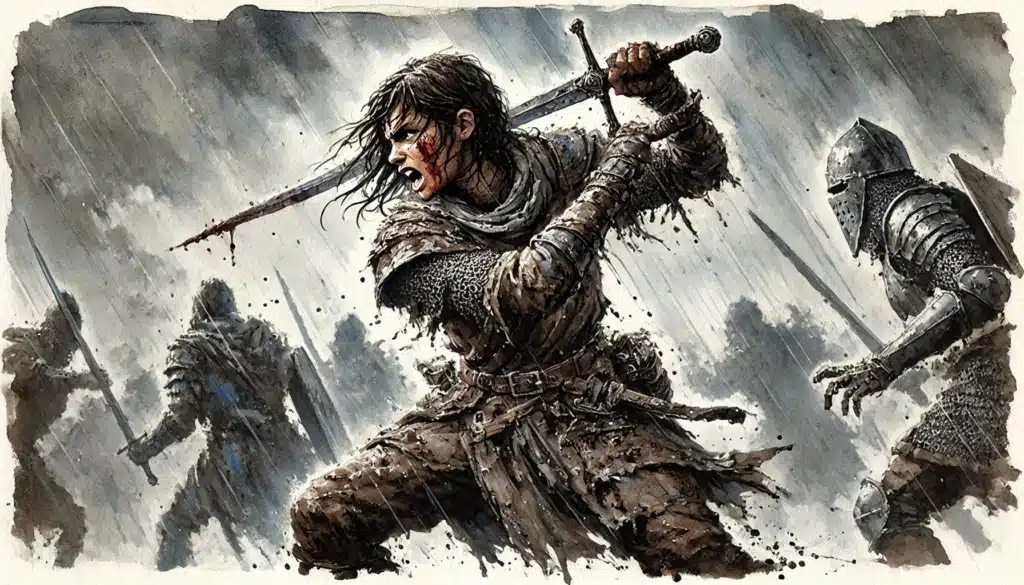
Mechanical flatness kills tension faster than narrative issues because D&D is, at its core, a game of mechanics. If the combat loop is “I move, I attack, I wait,” the game feels like a slow spreadsheet. Repetitive attack rolls and static battlefields lead to “phone checking” syndrome. When the players know they are going to win, and it’s just a matter of grinding down HP, the fun is over.
To fix this, you must disrupt the rhythm. Monsters should act unpredictably. They shouldn’t just stand and bang swords. They should grapple, shove, hide, flee, and use the environment. A goblin throwing sand in a fighter’s eyes is more memorable than a goblin rolling a 1d6 for damage.
Furthermore, combat shouldn’t just be about death. It should be about solving a tactical puzzle. If the answer is always “hit it until it dies,” the puzzle is boring. Change the win condition. Make them survive for 5 rounds, or stop a ritual, or catch a greased pig.
Dynamic Battlefield Tricks
The environment should be a participant in the fight. A flat room is a boring room. Add verticality, hazards, and changing elements. If a fire starts spreading, the safe zones change every round. If the fight is on a tilting platform, positioning becomes vital.
- The Third Party: A wandering monster enters and attacks both sides.
- The Weather: Heavy rain obscures vision and makes the ground slick (Dex saves).
- The Hazard: Lava flows, acid pits, or spike traps that trigger randomly.
- The Verticality: Archers on balconies, chandeliers to swing on, pits to shove people into.
- The Crowd: Panicked civilians blocking movement paths.
- The Magic: Zones of wild magic that trigger random effects on spellcast.
- The Darkness: Lights go out, forcing the fight into pitch blackness.
- The Vehicle: fighting on top of moving wagons or ships.
- The Transformation: The terrain changes (ice melts into water).
- The Objective: A lever that must be pulled to stop reinforcements.
- The Cover: Destructible cover that breaks after taking damage.
- The Gravity: Gravity reverses or shifts sideways.
- The Noise: Loud machinery makes verbal spell components impossible (Silence).
- The Artifact: A glowing crystal that buffs whoever stands near it.
- The Timer: The room is filling with poison gas.
These tweaks add novelty without requiring you to rewrite stat blocks. A basic bandit encounter becomes legendary if it takes place on a burning bridge.

Rewriting Combat Stakes Without Rewriting Encounters
Reframe the purpose of the fight. If the goal changes, the tactics change. This allows you to use the same monsters you planned, but with a completely different energy.
| Encounter Type | New Reframed Objective | Narrative Effect on Engagement |
|---|---|---|
| Bandit Ambush | Hold the Line: Protect the wagon for 4 rounds until help arrives. | Defensive playstyle; tanking becomes crucial. |
| Dungeon Guard | Silence: Kill them before they can ring the alarm bell. | High-stakes stealth and burst damage focus. |
| Boss Fight | Distraction: Keep the boss busy while the rogue steals the artifact. | Hit-and-run tactics; taunting and kiting. |
| Random Beast | Capture: The wizard wants the beast alive for study. | Non-lethal attacks; grappling and nets. |
| Undead Horde | Escape: Run to the exit; fighting is useless, only slowing them down. | Mobility and crowd control focus; pure panic. |
| Cultist Ritual | Disruption: Break the concentration of the chanters. | Precision targeting; ignoring the “tanks.” |
| Bar Brawl | Impress: Win the fight without drawing weapons or using magic. | Creative use of improvised weapons and skills. |
| Bridge Battle | King of the Hill: Push enemies off; don’t just kill them. | Shoving and positioning dominance. |
| Arena Fight | Performance: Use flashy moves to win the crowd’s favor. | Taking risks for “Style points” over efficiency. |
| Rival Party | Race: Kill the monster before the rivals do to claim the bounty. | Competitive DPS race; stealing kills. |
Encourage DMs to choose objectives that match player motivations. If your players are greedy, make the objective about looting. If they are heroic, make it about saving. This boosts investment instantly.
Fixing Social Energy Flatness
Sometimes the game mechanics are fine, and the story is fine, but the vibe is off. Social energy flatness is when the table feels awkward, quiet, or disjointed. This often happens when spotlight imbalance occurs—one player talks for 30 minutes while the others check out. Or perhaps expectations are mismatched; the DM is being serious, and the bard is making fart jokes.
This is a communication issue. Players might feel unheard or unsure of their role in the social hierarchy of the group. As the DM, you are the host of the party. You need to facilitate the conversation. If someone is quiet, invite them in. If someone is loud, pivot away from them.
Micro-Tweaks to Revitalize Player Engagement
You can apply small adjustments to fix this in real-time. Use targeted spotlighting. Don’t ask “What do you guys do?” Ask “Sarah, what is your Cleric thinking right now?” This forces engagement.
Curiosity prompts are also powerful. Describe a detail that specifically appeals to one character’s background. “Rogue, you notice a symbol that belongs to your old guild.” Now that player is hooked.
- The Direct Question: “Cleric, does this shrine make you uncomfortable?”
- The Foil: Introduce an NPC who hates the Face character but loves the Quiet character.
- The Secret Note: Pass a physical note to a player. They will feel special and engaged.
- The Split Party: artificially separate the loud players from the quiet ones for 5 minutes.
- The Callback: Reference a specific cool thing a player did three sessions ago.
- The Choice: “Do you want to kick the door or pick the lock?” Give two explicit options.
- The Reward: Give Inspiration immediately for a good roleplay moment.
- The “What do you look like?”: Ask a player to describe their spell effect or kill shot.
- The Pause: Stop talking. Let the silence hang until they fill it.
- The Pivot: “That’s a great point, Bard. Fighter, do you agree with him?”
- The Detail: Describe a scent or sound, not just visuals.
- The Assumption: “You would know about this history, Wizard. Tell us what happened.”
- The Stakes Check: Remind them what they lose if they fail.
- The Rotation: Go around the table in combat order, even out of combat, to ask for input.
- The Yes-And: Accept their crazy idea and escalate it.
- The Name Drop: Have an NPC address a specific PC by name.
Social engagement is the fastest fix available. It requires no prep, just social awareness. Make your players feel like the stars of the show, and they will act like it.

Tools You Can Add Tonight
Sometimes you need a prop. Physical engagement breaks the digital/mental loop. Plug-and-play tools like reusable challenges or simple minigames can radically lift the energy of a session. They act as “palate cleansers” for the brain.
⚔️ Fantasy RPG Random Tables Books
Make life as a Gamemaster easier…
If you play Dungeons & Dragons, Pathfinder, or other fantasy RPGs, this
RPG random tables series
is packed with encounters, NPCs, treasure, and more. Available in eBook or print—either way, you’ll have a wealth of adventure ideas at your fingertips.
Low-Prep Props and Cues
You don’t need to be a crafter. A crumpled piece of paper stained with tea (or coffee) is a treasure map. A handful of coins thrown on the table is a bribe. Music cues are huge. Change the playlist from “Peaceful Village” to “Boss Battle” and watch the posture of every player change instantly.
- The Letter: Hand-write a cryptic note and physically hand it to a player.
- The Coins: Use physical props for currency or poker chips for inspiration.
- The Soundboard: A sudden sound effect (monster roar, glass breaking).
- The Lighting: Dim the lights for a cave; turn them up for a divine presence.
- The Timer: An hourglass or phone timer visible on the table.
- The Food: Bring a snack that matches the in-game location (e.g., jerky for travel).
- The Map: Sketch a rough map on paper and let them draw on it.
- The Item Cards: Index cards with loot details they can hold.
- The Puzzles: A physical puzzle (like a disentanglement puzzle) they must solve.
- The Tokens: Use candy as enemies. You kill it, you eat it.
- The Music Change: abrupt silence or a sudden volume spike.
- The Voice: Change your posture and voice drastically for one NPC.
These tools rely on sensory novelty. They engage touch, hearing, and sight in ways that “theater of the mind” sometimes misses.
Plug-and-Play Minigames
Minigames refresh the pacing. They shift the game from “D&D mechanics” to “Game mechanics.”
| Minigame Name | Purpose | Materials Needed | Time to Run |
|---|---|---|---|
| Dice Poker | Social/Gambling encounter | d6s for everyone | 10 mins |
| The Chase | High-speed skill challenge | Narrative descriptions | 15 mins |
| Drinking Contest | Con saves vs Deception | None | 5 mins |
| Arm Wrestling | Strength contest (best of 3) | d20s | 2 mins |
| Target Shooting | Ranged attack accuracy | AC targets (10, 15, 20) | 5 mins |
| The Interrogation | Extract info without torture | Insight/Persuasion checks | 10 mins |
| Stealth Mission | Group stealth vs Perception | Map or Theater of Mind | 20 mins |
| Pit Fighting | 1v1 combat without death | d20s (no magic allowed) | 10 mins |
| The Heist | Planning and execution | Timer/Blueprints | 30 mins |
| Riddle Door | Intellectual break | A riddle found online | 5-15 mins |
Minigames offer immediate variety without disrupting the campaign flow. They are self-contained fun loops that reset the energy.

Player Psychology and Flatness
Ultimately, flat sessions are often a psychological issue. Players might be suffering from analysis paralysis, fear of failure, or simple boredom. Maybe they had a hard day at work and don’t have the mental capacity for complex tactics.
Group dynamics also matter. If there is meta-tension between players, the game will suffer. As a DM, you need to be part therapist. You need to read the energy.
Understanding What Each Player Wants Tonight
Player desires change. The guy who usually loves combat might be tired and just wants to hit things without thinking. The girl who loves roleplay might be feeling shy today. Read the short-term desires.
- The Tired Player: Wants simple turns. Don’t ask them complex tactical questions.
- The Bored Player: Wants chaos. Let them push the big red button.
- The Frustrated Player: Wants a win. Throw them a low-HP minion to crush.
- The Quiet Player: Wants to listen. Let them observe without pressure.
- The Anxious Player: Wants clarity. Reiterate the goal clearly.
- The Distracted Player: Needs a hook. Use a cliffhanger to grab them.
- The Creative Player: Wants to build. Let them describe the scene.
- The Tactical Player: Wants a puzzle. Give them a flank or terrain advantage.
- The Social Player: Wants to talk. Introduce a chatty NPC.
- The Loot Player: Wants a reward. Hint at treasure nearby.
- The Leader: Wants to plan. Give them a map.
- The Follower: Wants direction. Give them an order from an NPC.
- The Risk Taker: Wants stakes. Threaten their character.
- The Actor: Wants a scene. Give them a monologue moment.
- The Audience: Wants a show. Describe the action vividly.
Responsiveness, not planning, is the key to rescuing a flat session. If you give the players what their brains need in that moment, they will re-engage.
Putting It All Together: The One-Night Fix Blueprint
So, how do you do this? First, diagnose the flatness. Is it the story, the fight, or the vibe? Second, pick one intervention. Do not try to fix everything. Just fix the biggest leak. Third, apply the change confidently. Don’t apologize. Just do it. Fourth, observe the response. Did it work? If yes, keep going. If no, try a different lever.
You are correcting course in the moment. It is like steering a ship. You feel the drift, and you adjust the wheel. You don’t need a new map; you just need to turn.
A Sample One-Night Transformation
Imagine a session where the players are wandering a swamp, bored, checking phones. The DM realizes the energy is dead.
Problem: Narrative flatness and lack of stakes.
The Fix: The DM decides to use “The Hunt” mechanic.
Implementation: The DM stops the travel description. “You hear a massive splash behind you. Something has been tracking you for miles, and it just got closer. You have 3 rounds to find high ground before it reaches you.”
Result: Phones down. Players are scanning the map. They are shouting plans. The energy skyrockets.
| Problem | Chosen Fix | Observed Player Response |
|---|---|---|
| Aimless debating | The Orc Attack (Combat) | Immediate focus on survival tactics. |
| Bored Fighter | The Glass Cannon (Mechanic) | Excitement at dealing massive damage. |
| Quiet Bard | The NPC Flirt (Social) | Laughter and in-character banter. |
| Slow Dungeon | The Alarm (Stakes) | Rushed movement and hushed whispers. |
| Generic Loot | The Mystery Item (Prop) | Curiosity and group discussion. |
| Confused Goal | The Oracle (Narrative) | Clarity and renewed purpose. |
| Low Energy | The Music Change (Tool) | Visible shift in posture/mood. |
| Rule Lawyer | The “Yes, But” (Social) | Stopped arguing, accepted the risk. |
| Safe Camping | The Ambush (Combat) | Realization that nowhere is safe. |
| Repetitive Fight | The Lava Rise (Terrain) | Creative movement and positioning. |
| Disconnect | The Spotlight (Social) | Player felt crucial to the scene. |
| Tired Group | The Minigame (Pacing) | Relaxed fun, recharged batteries. |
This method is adaptable. It works for horror, comedy, or high fantasy. Experiment confidently. If a fix doesn’t work, try another. The players won’t know you are improvising; they will just think the adventure got exciting.

The Physical and Sensory Meta-Game
We often forget that Dungeons & Dragons is played by biological machines called humans. You can have the most gripping plot and the most terrifying villain, but if your players are sitting in uncomfortable chairs under harsh fluorescent lighting while crashing from a sugar high, the session will flatten out. The physical environment acts as the invisible container for your game. When that container is uncomfortable or draining, the imagination struggles to take flight because the brain is too busy managing the body’s distress signals.
This aspect of the “meta-game” is rarely discussed in DM guides, yet it is often the primary culprit for a low-energy night. Think about the difference between watching a movie in a theater versus watching it on a phone in a bright room. The content is the same, but the immersion is radically different. As the DM, you are not just the director of the story; you are the architect of the room. You control the sensory inputs that either support or sabotage the collective focus of the table.
Many DMs ignore the physiological needs of the group, assuming that “powering through” is a badge of honor. They play for four hours without a break, leading to decision fatigue and cranky roleplay. They allow the table to become cluttered with distractions, or they let the background music become a wall of noise that forces players to shout, exhausting them faster. These are physical drains on mental batteries.
Addressing the physical and sensory environment is the ultimate “one-night fix” because it requires zero creative prep. You do not need to write a monologue; you just need to dim the lights. You do not need to balance an encounter; you just need to call a break at the right time. By treating your players like human beings with physical limits, you can artificially extend their attention spans and keep the energy high for longer.
The goal here is to curate an environment that minimizes friction for the brain. We want to remove every physical obstacle that stands between the player and the character. When the body is comfortable and the senses are engaged but not overwhelmed, the mind is free to live in the fantasy world you have created.
Managing the “Sugar Crash” and Break Economy
Food and timing are the fuel of D&D, but they are often mismanaged. The “pizza coma” is a real physiological phenomenon where heavy, greasy food leads to a massive energy dip about an hour after eating. If you schedule your big boss fight right after a heavy meal, you are fighting biology. Similarly, sugar crashes from soda and candy can turn a hyperactive group into zombies halfway through the night. Managing what and when the table eats is a subtle way to control the energy curve of the session.
Breaks are equally vital. Many groups wait until someone desperate asks for a bathroom break to stop. This is a mistake. By the time someone asks, the group has likely been distracted and uncomfortable for twenty minutes. You should weaponize your breaks. Schedule them to happen before the energy dips, and use them as narrative tools. Ending a segment on a cliffhanger and saying “let’s take ten minutes” keeps the brain engaged even while the body rests.
The “Break Economy” also involves the pacing of the session itself. The human brain can only maintain intense focus for about 90 minutes before it needs a reset. If you try to run a four-hour combat without a pause, the last hour will be a slog of math errors and apathy. Structuring your session into acts, separated by clear breaks, allows players to recharge their social batteries and come back to the table ready to perform.
Finally, consider the timing of the session itself. If you are playing on a Friday night after a long work week, do not start with complex political intrigue. The players’ brains are fried. Start with action to wake them up. If you are playing on a Sunday morning, you can afford a slower burn. Matching your content to the physical energy levels of the players is a masterclass in pacing.
- The Cliffhanger Break: Always cut to break right after a big reveal, not after it is resolved.
- The 90-Minute Rule: Set a silent alarm to call a break every hour and a half, regardless of the action.
- The Hydration Station: Ensure water is more accessible than soda to prevent dehydration headaches.
- The “Stand and Stretch”: Forcing everyone to stand up during a tense moment physically resets their posture and energy.
- The Heavy Food Ban: Suggest lighter snacks (fruit, nuts) during the game and save heavy meals for after or way before.
- The “Bio-Break” Signal: Establish a hand signal for bathroom breaks so players don’t have to interrupt the narrative flow.
- The “Recap” Return: Start the post-break segment by asking a player to recap what just happened to re-engage focus.
- The Lighting Shift: Turn the lights up during breaks to signal “out of game” time, then dim them to signal “game on.”
- The Fresh Air: Open a window or step outside during the break to clear the “gamer funk” and CO2 buildup.
- The Caffeine Cutoff: Be mindful of caffeine intake late at night to prevent jittery, unfocused energy.
- The “Off-Screen” Talk: Use breaks to handle 1-on-1 secret conversations so the rest of the table can relax.
- The Hard Stop: Set a firm end time for the session to prevent the “slog” of playing past exhaustion.
If you control the biology, you control the psychology. A well-fed, well-rested, and hydrated table is a table that wants to kill dragons. A tired, hungry table just wants to go home.

Curating the Sensory Environment
The atmosphere of the room dictates the atmosphere of the game. Lighting is the most powerful tool you have. Harsh, overhead white light screams “office” or “classroom,” which puts players in an analytical, detached mood. Warmer, dimmer light screams “campfire” or “tavern,” which invites storytelling and intimacy. You don’t need expensive smart bulbs; a few lamps placed low in the room can change the entire vibe instantly.
Sound is the second pillar. Background music is great, but volume control is critical. If the music is too loud, players have to subconsciously strain to hear you, which causes “listening fatigue.” The music should be a texture, not a feature. Furthermore, silence is a weapon. Suddenly cutting the music creates instant tension. Use the auditory environment to cue the players on how they should feel without saying a word.
⚔️ Fantasy RPG Random Tables Books
Make life as a Gamemaster easier…
If you play Dungeons & Dragons, Pathfinder, or other fantasy RPGs, this
RPG random tables series
is packed with encounters, NPCs, treasure, and more. Available in eBook or print—either way, you’ll have a wealth of adventure ideas at your fingertips.
Temperature and air quality also matter more than you think. A hot, stuffy room makes people sleepy and irritable. A cold room makes them distracted. keeping the room slightly cool keeps people alert. If you are playing in a small room with five people, the carbon dioxide levels rise quickly, leading to drowsiness. cracking a window or running a fan is a mechanical fix for a flat session.
Table clutter is a visual noise that distracts the brain. If the battle map is covered in empty cans, chip bags, and random papers, the immersion is constantly being broken. enforcing a “clean table” policy helps players focus on the theater of the mind. The visual field should be dedicated to the game, not the garbage.
| Sensory Input | Common Mistake | One-Night Fix | Effect on Players |
|---|---|---|---|
| Lighting | Overhead fluorescent “big light” left on. | Use floor lamps or candles only. | Instant intimacy and focus; reduces “classroom” vibe. |
| Music Volume | Music competes with the DM’s voice. | Lower volume to 20 percent; use instrumental only. | Reduces “listening fatigue” and shouting; calmer table. |
| Room Temp | Too warm/stuffy (body heat buildup). | Open a window or use a fan; aim for 68F/20C. | Prevents drowsiness and the “mid-session slump.” |
| Table Clutter | Snacks and phones cluttering the grid. | TV trays for food; phones off the table. | Visual focus returns to the map and the story. |
| Seating | Uncomfortable or broken chairs. | Swap chairs or add cushions/pillows. | Reduces physical fidgeting and pain distraction. |
| Smell | Stale food odors or “gamer funk.” | Light a scented candle (wood/earth scents). | Triggers olfactory memory and immersion. |
| Visual Line | DM hidden behind a massive screen. | Lower the screen or stand up during combat. | Increases connection and authority; commands attention. |
| Dice Noise | Constant rolling on hard wood tables. | Use a felt dice tray or mousepad. | Reduces auditory clutter; makes rolls feel “official.” |
These sensory tweaks add novelty without requiring you to learn a new rule or voice. They act on the subconscious, telling the players’ primal brains that this is a safe, special place for imagination.

The Digital Fatigue Fix (For VTTs)
Online play suffers from a unique type of flatness called “Zoom Fatigue.” The brain has to work harder to process non-verbal cues through a screen, leading to faster exhaustion. Additionally, the temptation to “Alt-Tab” and check social media is constant. To fix this, the DM needs to change the pacing strategy. Digital sessions should be shorter and punchier than in-person ones. Three hours is the online limit for high energy.
Audio discipline is critical online. In person, cross-talk is manageable. Online, it is a nightmare that garbles everything. You need to be more of a director, explicitly calling on people by name to speak. “Rogue, go. Now Cleric, go.” This stops the awkward “no you go first” silence that kills momentum.
Visual engagement must be higher. You cannot rely on hand gestures the players can barely see. You need to use the VTT tools—pings, pointers, and changing art—to keep their eyes on the screen. However, you also need to encourage “theater of the mind” breaks where everyone looks away from the screen to rest their eyes.
- The “Camera On” Rule: Non-negotiable for engagement; seeing faces prevents checking out.
- The “Alt-Tab” Check: Randomly ask players to describe something on the screen to keep them honest.
- The Cursor Ping: Use the ping tool aggressively to direct attention to specific map details.
- The Short Session: Cap online sessions at 2.5 or 3 hours maximum to maintain high energy.
- The Audio Check: Ensure everyone has headphones to prevent echo (the number one vibe killer).
- The “Eye Rest” Scene: explicitly tell players “You don’t need to look at the screen for this part, just listen.”
- The Portrait Swap: Change NPC tokens to show “bloodied” or “angry” states to update visuals.
- The Chat Box: Encourage in-character text chat for banter that would otherwise clog the audio channel.
- The Music Bot: Use a high-quality bot; bad audio compression ruins the mood instantly.
- The Digital Prop: Share a handout image immediately when they find an item, don’t just describe it.
Digital play requires you to be a broadcaster. You have to project more energy to get it through the fiber optics. By managing the digital environment, you can turn a conference call into an adventure.
The physical and sensory meta-game is the foundation upon which your story sits. If the foundation is cracked, the house will lean. Fix the lights, feed the players, and time the breaks, and you will find that the “flatness” often vanishes on its own.
Final Thoughts
Flat sessions are normal. Even the best DMs in the world have nights where the magic doesn’t happen. It is not a reflection of your worth as a DM. It is just a variable you have to manage. The ability to respond creatively and quickly is far more important than perfect planning. A DM who can read the room and pivot is infinitely better than a DM who writes a perfect script but ignores the players.
One-night changes can produce dramatic improvements. You can turn a boring slog into a memorable highlight reel with a single decision. That “aha!” moment when the players lean in is worth the effort. It builds momentum that carries into the next session, and the next.
Try my AI Tabletop RPG generators...and an extensive library of content!
Embrace flexibility. Be willing to throw out your notes. Be willing to break the rules. Be willing to let the players guide the energy. Curiosity and player-centered design are your best tools.
So, next time you feel the energy dip, don’t panic. Reach into your toolkit, pull out a lever, and give it a hard yank. Shake things up. Your players will thank you for it. Now, go fix your session.

